
by Joan Kent | Oct 17, 2016 | Health and Wellness

One thing I probably don’t write about enough is dehydration and the problems it causes. Dehydration can start with a drop of as little as 1.5% of the body’s water. The average level is around 60%.
One of many problems dehydration can cause is craving for sugar. This post is about how that happens.
Did Our Ancestors Crave Sugar When Thirsty?
When our bodies need water, it does make sense that we may feel an urge to seek food. I used to interpret that as a lack of awareness some of my clients had of the difference between thirst and hunger.
But there’s an evolutionary basis for it.
In the hunter/gatherer days, water wasn’t always readily available. The search for food to supply water and quench thirst was logical. The vegetables or fruits that were so often eaten were high in water content.
Obviously, food options have changed dramatically over many centuries, but the urge to seek food when we’re thirsty may still be with us. Dehydration activates both hunger and thirst centers in the brain’s hypothalamus.
The inability to distinguish between thirst and hunger may still indicate a lack of awareness. But there are a few other reasons dehydration may trigger sugar cravings.
What Workouts Can Do
Post-exercise, dehydration often occurs. If the workout is long enough to continue past the onset of dehydration, the body’s use of glycogen — carbohydrate stored in muscle — speeds up and reduces stored glycogen levels more rapidly. That makes a post-workout craving for carbs more likely, since carbs are used to create glycogen. The carbs we crave will often be for sugar.
In my experience, clients frequently crave fruit after a workout. That may reflect the evolutionary drive to obtain water from food.
Yet bananas are the most popular post-exercise fresh fruit choice I’ve observed — even though they contain less water (74%) than other fruits like watermelon, strawberries, grapefruit, cantaloupe (over 90%) or peaches, pineapple, raspberries and oranges (all around 88%).
So choosing a banana after a workout doesn’t seem to mesh with the “water seeking” hypothesis.
Bananas are, however, relatively high in sugar (18g per cup), compared with many other fresh fruits that contain more water. The choice seems to be less about water and more about sugar.
As an aside, fruit is usually seen as healthful but can be addictive for those who are carb- and/or sugar-sensitive. More importantly in this context, fruit is absolutely not the best fuel for recovery after a workout, as I’ve covered in previous posts.
Speaking of Fuel…
Dehydration can make it difficult for the liver, which uses water, to release glycogen and other components of stored energy. That can lead to food cravings, according to John Higgins, M.D., associate professor of cardiovascular medicine at the University of Texas in Houston and the chief of cardiology at Lyndon B. Johnson General Hospital.
Cravings for sweet foods are common at such times because the process of glycogen production involves water and glucose, the body’s circulating sugar. Dehydration makes it more difficult for the body to produce glycogen.
There’s Also Serotonin
Dehydration interferes with brain levels of serotonin. That can result in a lack of satiety — the feeling we’ve had enough food and don’t need to start a new meal for a while.
Low serotonin levels can trigger the desire to eat more, and also bring on food cravings, typically for carbs like sugar. It may even make us more impulsive, so the cravings become more difficult to resist.
Why Else Is Hydration Important?
Dehydration isn’t just about sugar cravings. Many other reasons exist to stay hydrated. These include fatigue; dry mouth and bad breath; decreased mental performance; decreased athletic performance and an increase in perceived exertion; dry skin and loss of skin elasticity; constipation; irritability and other “off” moods; headaches; muscle cramps; dizziness; and fever or chills.
In one study in Physiology and Behavior, the number of driving errors doubled during a 2-hour drive when drivers were dehydrated.
A going rule for water consumption is to divide your body weight in pounds by 2. That gives you the number of ounces of water to drink to stay optimally hydrated. By this rule, a 160-lb person would need to drink 80 ounces of water, or ten 8-ounce glasses of water per day. At the very least, gauge your urine color. It should be very pale yellow, even clear.
Don’t forget to figure in water losses for sweaty workouts and any dehydrating beverages you may drink, like coffee or cola. A tough cycling class, for example, may result in sweat losses of 1 to 2 quarts of water. Compensate by drinking more water.
Stay hydrated and healthy — and see if your cravings for sugar diminish.

by Joan Kent | Sep 28, 2016 | Health and Wellness

Binge eating is legal, of course, and fairly common. It also appears to be a victimless crime. Who cares if you eat 3 quarts of mashed potatoes, or finish off a few pints of ice cream?
But what if we view the victim concept more broadly?
Health
Not many people binge on broccoli or kale. When someone binges, it’s usually on junk that can affect health negatively.
In general, binge trigger foods are known to be high in sugar, fat, or both. The most common binge foods include ice cream, cookies, chocolate, milkshakes, chips, pasta, and bread with butter and jam.
Most of these foods trigger high levels of insulin. That high insulin will result in a short-term increase in serotonin. That’s one reason we choose these foods for bingeing. But we’ll look at serotonin and other brain chemicals later.
Over time, high insulin can cause a variety of health-related problems: insulin resistance; type-2 diabetes; hypertension; high LDL (bad) cholesterol; low HDL (good) cholesterol; high triglycerides; heart disease; certain cancers; formation of series 2 prostaglandins, which trigger inflammation, pain and more; and inhibition of white blood cell function, leading to incomplete healing and chronic inflammation.
Because of food selection, quantities eaten, and the frequency of binges, the long-term health effects of binge eating shouldn’t be dismissed. The conditions may affect work attendance and productivity, and add costs for the companies that provide medical insurance for their employees.
Appetite and Weight
Sugar triggers a release of dopamine. Dopamine, a brain feel-good chemical, can prompt cravings for more sugar — perhaps later the same day, the next day, or even for several days following.
Sugar also triggers endorphins (beta-endorphin). Endorphin increases appetite by inhibiting the satiety function of the VMH (the ventromedial hypothalamus).
Obesity is more than a possible result of this specific effect of sugar on the brain; it’s real and epidemic. The obesity epidemic was brought to us courtesy of the sneaky, underhanded dealings of the sugar industry that started in the 1970s (or before) and continued for a few decades.
Dopamine and endorphins change food preferences in the direction of foods high in sugar, fat, or both. That further contributes to obesity.
Obesity itself has health consequences, many of which are in the list above. Sleep apnea, asthma, osteoarthritis, gallbladder disease, stroke, gout, depression and other mental issues can be added to the list.
These health problems may affect work productivity, and someone pays for medical costs linked with the problems, so again bingeing is not without consequences.
Moods and Behaviors
Bingeing on sugary foods can wreak havoc on mood. Moods can go up and down — and include irritability when glucose drops after the initial temporary boost.
Clients have told me that they’ve snapped at coworkers, their kids, their spouse, or a waiter. They’ve said, “I always promise myself I won’t do it, but then I do.”
It doesn’t benefit their personal or business relationships to have moods that are erratic, or to be irritable and impatient.
For that matter, some of my clients promise themselves they’ll stay away from a particular food, only to end up eating it.
Anytime our behavior is a mystery to us, it always has a neurochemical origin — and the foods people tend to binge on are big brain chemical changers.
It has been postulated that the biological need for serotonin underlies binge eating. Serotonin has been called — somewhat mistakenly — a happiness chemical. What serotonin actually does is lead to more of a lethargic state, which I believe is what binge eaters may be looking for, rather than happiness.
Serotonin opens the space, so to speak, between thought and action, making them less reactive to the stress around them. You might think of it as a serotonin coma: they’ve had a tough day at work, the kids are crying, the phone’s ringing, the dog is barking, but they feel almost distant from it.
Animals Do It and So Do People
Back in 1983, E.M. Stricker wrote, “Animals eat not for nutrition per se, but for optimal arousal.” The arousal Stricker referred to comes from the changes in brain chemistry that certain foods promote.
People do the same thing.
Binge eating is not a victimless crime. Health, appetite, food preferences, and weight may seem to affect only the binge eater. As suggested above, though, those can affect others through the health problems they cause and the costs to businesses in lost productivity and medical charges.
And because moods and behaviors are affected by the most common binge foods, we could say binge eating makes families, friends and coworkers the victims.
Most importantly, of course, binge eating and its effects on health, weight and mood make the binge eater the primary victim. Along with everything described above, there’s the “inner” effect. Binge eaters often experience shame and guilt that affect their self-esteem. Bingeing is typically done alone, and binge eaters worry about being caught.
The neurochemical piece is something I contribute to help binge eaters stop being the victims of their own eating behaviors and start feeling great.
Sometimes binge eaters who’ve tried everything to stop bingeing can’t stop because of cravings. I help them stop cravings and bingeing, so they can lose weight and reverse their health problems. For a free copy of “Stop Bingeing NOW! 3 Simple Steps For Stopping a Binge Once It Starts,” please visit www.LastResortNutrition.com
by Joan Kent | Sep 21, 2016 | Health and Wellness
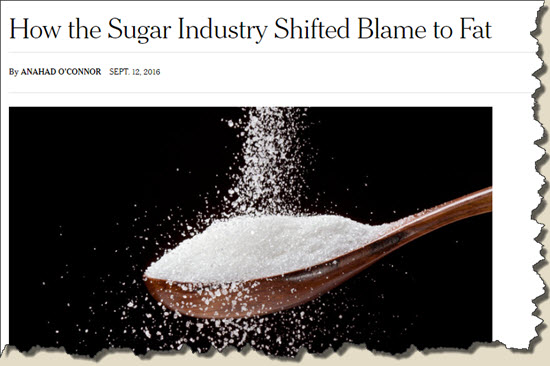
New York Times image
When I grew up in New York, print journalism was thriving and the New York Times was regarded as the finest newspaper in the U.S. I still view it that way.
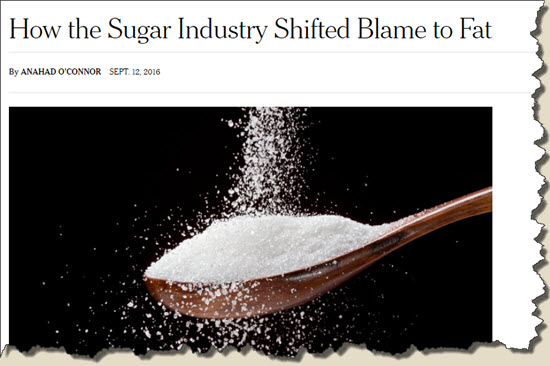
So am I allowed to brag that I scooped the NY Times?! Perhaps you’ve seen the recent article on how the sugar industry shifted blame to fat by paying scientists to move health research in that direction.
Over a year ago (June 2015), I wrote an article called “Why Sugar Hacked Science (And Your Health).” It described the sugar industry’s underhanded finagling to shift research to the so-called dangers of fats. I didn’t investigate or uncover payouts, just facts I had observed directly and in reading for my doctoral dissertation.
My article traced sugar’s link to the obesity trend, along with the impact on the fitness industry and more. And now we can bolster it with knowledge of the money trail.
Bottom line: The sugar industry was responsible for the U.S. obesity epidemic (and all the attendant health issues) because they didn’t care about anything but their own profits.
When we add to the picture its payouts to Harvard scientists, the sugar industry clearly emerges as nefarious, greedy, a bottom-feeder. As bad as Monsanto? Worse? You decide.
So What Happened? And Keep It Brief!
Science journals in the 1970s featured many articles on the negative health effects of sugar. Films were available. William Dufty wrote Sugar Blues in 1974.
I knew the sugar industry was a powerful lobby in Washington, D.C. By 1984, it had managed to spin fats as the new dietary enemy. We now know it was done with payoffs to scientists and prominent science journals like the New England Journal of Medicine.
From that point until the end of the 1990s (and beyond), we suffered through the low-fat craze. Remember? It was “the right way to eat.”
Scientists began researching health problems caused by high-fat diets, saturated fats, red meats, cheeses, and so on.
Food companies created low-fat and non-fat versions of their products. To replace lost flavor, the new products used sugar.
Dietary fats fell far below original recommendations of 30%, traditionally endorsed by the American Heart Association and the American Cancer Society.
My clients’ protein intake fell, too, especially in women looking to lose weight. Protein contains fat, so they started eating carbs instead. Lots of them.
Pasta, Anyone? Nonfat Frozen Yogurt? New Trends!
Recommendations for increased carbohydrates came from everywhere, but it would have happened anyway. Once you eliminate fat and avoid protein because of its fat, carbs are the only thing left.
The Pritikin Center recommended diets of 7% protein and below 10% fat, leaving 83% or more in carbs.
My clients’ food logs showed which carbs they were eating. Not vegetables, legumes or roots, but sugar and white flour.
During this low-fat craze, U.S. sugar consumption rose 25 pounds per person per year. That was just the increase, not the total consumption. It kept rising. By 1996, sugar consumption was up again for the tenth consecutive year.
That sugar/fat seesaw (one goes up, the other down) is acknowledged in science journals but not explained. In my doctoral dissertation, I explained the hormonal and neurochemical links.
Consumption of high-fructose corn syrup rose, too, based on 1991 USDA figures.
During that period, obesity in the U.S. became epidemic. After 20 years at 25% of the U.S. population, overweight shot up to 33% in the 1980s. The Minnesota Heart Health Program tried — and failed — to explain the increase with data on dietary fat.
In 1995, the American Journal of Clinical Nutrition devoted an entire supplement to the papers presented at a conference on dietary sugar. Presenters were hand-selected; I recognized their names instantly. They ALWAYS found that sugar had no negative consequences — on health, weight, cavities, or anything else. (Do you wonder who funded them?)
The result: Every food company attending — all big sugar-users — could claim that a scientific conference presented evidence that sugar is not bad for any reason.
The Fitness Industry Must Take Some Heat
By the late 1980s, the fitness industry had jumped on the low-fat train. (I got trapped on it, too.) Weight-loss guidelines reflected low-fat dogma.
Fitness conference goody bags were filled with low-fat, high-sugar bars. Fitness instructors (and others) ate them “for energy.”
In the early 1990s, I spoke to a group of fitness pros on health problems linked with sugar. An angry woman shouted, “I have the same degree you do” — we both had mater’s degrees in exercise physiology — “and you don’t know what you’re talking about!”
I have many other examples, but let’s not make this about me.
Controversy raged. Fitness industry publications railed against fats in one issue, against carbs in the next.
In 1998, just 3 years after its “sugar’s just fine” issue, the American Journal of Clinical Nutrition devoted an entire issue to the benefits of fats in fighting obesity and metabolic disorders. Several articles in it addressed the failure of low-fat diets to effect long-term weight loss.
We’ve Now Come Full Circle
People now recognize the danger of high-sugar foods. You may think the sugar industry will be unable to bamboozle us again.
But everywhere I go, I see a push for “sneaky sugars.” And consumers want to believe that agave isn’t sugar, or that products sweetened with fruit juice or coconut sugar are different.
A man walked out of my presentation when I answered that, yes, fruit is sugar.
What we’re told about nutrition in the U.S. is not what we should know or do. It’s what will benefit the food industries — they’re the real constituents of the USDA.
Sugar can cause inflammation, increase appetite, and trigger cravings, binge eating and mood swings. It can cause (yes) diabetes, insulin resistance, hypertension, and other metabolic disorders. It affects autistic kids.
Fructose, the sugar in fruit, is arguably the worst sugar. It’s the half of sucrose that makes it junk. Yet people are more reluctant than ever to give up fruit juice, syrups, or many servings of fruit. I’ve written book chapters on fruit as the “final frontier” in nutrition health. It probably is.
It’s fun to say that I scooped the NY Times, but much work remains to be done. I’m passionate about helping you conquer sugar so you can transform your health, stop binge eating, eliminate cravings, stop moods swings, and feel fantastic. Get started now. Grab your free copy of “3 Biggest Mistakes People Make When Trying To Quit Sugar” right here.

by Joan Kent | Sep 7, 2016 | Health and Wellness
1. Which foods are carbs?
The definition of carbohydrates is complicated, boring, and probably not something you’d want to learn. But your prospective nutritionist should know that carbs include vegetables and fruits, as well as the foods most people call carbs, good and bad. (Those include breads, pasta, cereals, potatoes, sweet potatoes, lentils, beans, quinoa, squash, rice, turnips, parsnips and other root vegetables.) For clarity, I call them starches.
2. Do you recommend low-carb diets? Why or why not?
This depends on how low you mean. Paleo diets are popular, but not always a good idea.
Low-carb eating may make a poor training diet. Hard workouts virtually demand healthful starches. Refueling with starch plus protein after a tough training helps replace glycogen, critical after a workout. Extremely low-carb diets can even trigger cardiac arrhythmias in some people.
Appetite control is easier with a food plan that includes healthful starches. This has to do with serotonin production. And if you’re not eating starches, you may crave sugar and/or alcohol.
3. Is weight loss just a matter of calories in/calories out?
The ideal answer is calories do make a difference but are absolutely not the whole story. Hormones — insulin is one key hormone in this — influence weight gain, the 24-hour fat oxidation rate, and more. What you eat influences weight, not just how much.
4. Will you work with my lifestyle / frequent business travel / doctor’s recommendations?
The ideal answer is “yes.” No food plan should be so unyielding that you can’t modify it for these factors. You may need to be willing to prepare — say, in advance of your travel dates. But the plan should allow for your individual needs, and the nutritionist should have suggestions.
5. What should I eat after a workout?
The best answer is starch and protein in a 3:1 ratio. The 3:1 can be easily calculated using calories or grams, since carbs and protein yield 4 calories per gram.
You need to eat no later than 30 minutes following your training. That may mean eating in the locker room and bringing appropriate foods with you. Avoid fats in that 30-minute window because they’ll slow the absorption of carbs.
Your nutritionist should know all of this, as well as why eating within the 30-minute window is critical.
6. I sometimes have mood swings (or feel depressed). Can foods change my moods?
Let’s assume you’ve talked to your doctor about your moods and received a qualified medical opinion about what you do or don’t need.
The answer to this question is definitely yes: foods can change your moods. A vague answer about eating well and feeling better as you become healthier is neither responsive nor helpful.
Foods affect moods because they modify brain chemistry. If your prospective nutritionist can’t explain the exact changes you can effect with diet — and if moods are a critical issue for you — you may need to find one who understands that.
7. Will I ever get rid of my sugar cravings?
The answer to this should be yes. Say you have frequent or strong sugar cravings. A nutritionist who talks about “curbing” cravings or tells you everyone has them might not be ideal for you. If he/she suggests eating a little of what you crave or substituting fruit, that’s also a red flag.
8. Should I eliminate any foods or food groups? Why or why not?
If the nutritionist suggests eliminating carbs, or fats, those diets may not work for a variety of reasons. But if she/he recommends eliminating specific types of junk — such as white flour or sugar — that’s good.
9. I hate vegetables and always have. Do I really need them, or can I just eat more fruit?
Vegetables and fruits are not equal. They’re certainly not interchangeable. Fruits have nutritional value but are no substitute for veggies.
The nutritionist should know that hating vegetables often indicates a high-sugar diet. The ideal step is to check that, then check your family history for factors that may make you carb-sensitive, sugar-sensitive, or both. Next would be a plan that modifies brain chemistry and changes your food preferences so vegetables no longer seem unpalatable.
10. I’ve heard of stomach hunger and mouth hunger. What’s the difference?
These terms are typically used to distinguish real hunger from appetite. But they confuse people. If you ask someone if she ate because of stomach hunger or mouth hunger, she may say, “I’m not sure.”
I describe hunger to be sure a client can recognize and feel it. I save “hunger” for real physical hunger — signals the body sends that it needs food. If someone eats for any other reason, that’s an urge or desire to eat. It’s less confusing.
Many nutritionists are available. These questions vary enough that they can help you screen your nutritionist from the wide field and find one who’ll help you do what you need.
Are you seeking nutrition support for mood issues, sugar cravings, fueling for workouts without the junk that’s out there? Perfect, that’s what I do. My field is Psychoactive Nutrition, how foods affect brain chemistry and hormones, and I’d love to help you.
Please visit www.FoodAddictionSolutions.com/Coaching and request a free Food Freedom Consult. Find out how a few tweaks can improve your moods, your energy, and your workouts — so you can feel fantastic every day.
by Joan Kent | Aug 24, 2016 | Health and Wellness

You don’t have to be an entrepreneur to eat like one.
My field is Psychoactive Nutrition. I use food to change brain chemistry and hormones.
It’s not about designing products to sell — or selling other people’s products. My clients eat ordinary foods they can buy at the grocery store, and I make food recommendations to help them think better, work better, flip their moods, perform better athletically, and stop being sick.
For a while, I’ve avoided the term psychoactive nutrition because I worried that folks would go glassy-eyed at the word “psychoactive”. But it feels like the right time to put that word on display and start telling people exactly how it can benefit them.
Let’s start with a simple definition of “psychoactive” from Taber’s, my favorite medical dictionary: “affecting mental state, such as a drug that has that action.”
Psychoactive nutrition uses different foods as the drugs that affect mental state.
Spoiler Alert: Foods also affect certain hormones, which in turn affect mental state. So hormones and brain chem may be linked.
Can Psychoactive Nutrition Make You an Entrepreneur?
Okay, psychoactive nutrition will not directly lead to a new career track. But it has been said that entrepreneurial tests are primarily mental. To the degree that how you eat can affect your work performance, you never know, right?
Too much excellent material has been written about the characteristics of entrepreneurs, so it wouldn’t make sense to write about that here. But it would make sense to mention a few traits that might be influenced by food.
An entrepreneur would want to have tenacity, think clearly, visualize goals and stay focused on them. She/he would listen and communicate well to avoid having to repeat instructions or redo tasks due to poor communication. These traits are among those influenced by the neurotransmitter dopamine. Eating to boost that chemical may in turn enhance the traits.
A good entrepreneur would also have the self-control to wait until he/she fully understood the situation before making important decisions, rather than going in a hasty, rash, or even destructive direction. In addition, she/he would show concern for fairness and avoiding harm to others. The neurochemical serotonin would enable these behavior traits.
What About Avoiding the 2:30 Slump?
Eating the right way can help you avoid energy ups and down, or the need for 2 or 3 cups of coffee to re-awaken you right after lunch. It may also eliminate that late-afternoon crash that makes concentration and focus difficult.
Think of the right lunch as enabling you to return to work as motivated as you were in the morning. (Let’s assume you ate right first thing in the morning!)
How Else Can Psychoactive Nutrition Help You?
Because of their effects on hormones, the foods you eat can help you manage — and even reverse — metabolic conditions. Those typically originate with insulin resistance. They include diabetes, hypertension, cholesterol, high triglycerides, and more. All of them are risk factors for heart disease.
Psychoactive nutrition can also help you control your appetite, your food preferences, and any food cravings you may have. In fact, it can help you eliminate cravings altogether. Eating to change your brain chemistry is one of the best ways to stop binge eating.
Sleep problems are often easy to fix with the right foods. And you can use psychoactive nutrition to stop mood swings and improve mood generally. Any of these may be related to either brain chemistry or insulin — or both.
So this post is neither a primer on how to eat nor a collection of recipes. My aim was to explain psychoactive nutrition and suggest that foods do more than provide calories and various nutrients.
Of course, they do that, but they also do much more.
by Joan Kent | Aug 16, 2016 | Engage Your Students, Health and Wellness
Do you feel completely in touch with your hunger? Do you know exactly when you’re hungry? Or when you stop being hungry? And what to do with that info?
This short post is about an exercise for getting in touch with your hunger.
Why Is That Important?
Let’s cut to the chase. Every client who has completed this exercise ends up feeling absolutely clear about when she’s hungry and when she’s not, feeling completely in control of her appetite and her eating — and feeling great about herself.
Please don’t think hunger is obvious to everyone. I’ve heard clients say, “Well, I ate breakfast at 7:00 am and now it’s 1:00 pm, so I must be hungry.” Obviously, that’s a thought process, not hunger.
One client began to cry when I suggested the exercise because she thought she’d have to starve all day long.
Another client got angry because she thought she’d have to eat “diet foods” all day. I’m not even sure which foods she meant, or how she got that idea. The subject of diet foods had never come up in our nutrition appointments.
Okay, What’s This Amazing Exercise?
I read about this exercise years ago in a book that I simply can’t remember. As a PhD, I like to cite my sources and would be happy to give credit if I could. If anyone knows who created the exercise, please let me know.
That said, here it is:
– Pick a day when you have a light schedule. Your goal is to get hungry as often as possible during the day.
– As soon as you feel hungry, eat. But eat small amounts of food — just enough to take away the hunger. This will ensure many hunger experiences over the course of the day. If you follow these instructions, you might sometimes feel hungry within, say, 15 to 20 minutes after the last time you ate. (That’s the convenience of a lightly scheduled day.)
– Move away from your usual eating habits. Instead of eating first thing in the morning, for example, check in with your stomach to see if you’re hungry. If you’re not, wait until you are. Then eat.
– Avoid “preventative eating.” Don’t eat extra food now to prevent hunger later. As soon as you’re hungry later, you get to eat again.
– Don’t ignore your hunger signals and try to “tough it out” as long as you can. The idea is to cement the relationship between hunger and eating.
The natural hunger cycle is as primal as it gets: Hunger means eat. When hunger ends, stop eating. When hunger returns, eat. Repeat and repeat.
What This Exercise Is Not
Some mistakenly view this exercise as a weight-loss trick. It’s not meant to be. As explained, it’s designed to put you in touch with your hunger so there’s no question about how hunger feels, how much food is necessary to end the hunger, how it feels when it returns, and so on.
Still, eating in tune with your hunger may, over time, help with weight loss. Of course, you may want to increase the size of your portions to reach a point of “gentle fullness” so you don’t have to experience hunger so often throughout the day.
So What’s the Point?
Without a natural starting point for eating, we have no natural stopping point.
I’m convinced this hunger exercise is the most effective way for clients who lack awareness of their hunger and fullness to discover the wholesome, healthy connection between hunger and eating.
Whenever I’ve used this with a client, the result has always been an increase in the client’s confidence — no more confusion about when to start eating, when to stop, or even how much food to have.
Would you like help with normalizing your appetite and your food preferences? That’s what I help clients do — make painless food changes. Why not visit www.FoodAddictionSolutions.com/Coaching and request a Food Freedom session, absolutely free? Find out just how easy it can be to get your eating patterns on track — effectively and without struggle — so you feel fantastic.
