Showtime, ain’t no time to be trying something new!

Showtime, ain’t no time to be trying something new!

0554F706

I started to share this over at pedal-on.com and quickly realized that this is another Best Practice for Indoor Cycling Instructors.

Suggestion to anyone reading this who is planning to use Spotify in class.

A cycling coach / friend of mine taught me that race day is never a good day to try something new.

The mark of a Rookie is someone who changes his seat height the night before a big event, or slams the latest energy drink on the way to the race – only to find the new saddle height feels weird and uncomfortable… and the stimulants have your heart (and mind) racing so fast you're worried about what effect all of these changes will have on the race you've trained months for that you're an emotional wreck as you roll to the line and are off the back before the end of the 1st lap.

Experiment during your training and only bring what's familiar to the starting line. Same is true with using Spotify in your class. I've lost track of how many calls and emails I have gotten that begin with; the first time I tried to use Spotify in my class ____________________ happened. It worked perfectly at home… I have no idea why it didn't __________.

Show your professionalism by doing a dry run at your studio before you attempt to use Spotify to deliver your class music.

Teach a whole class by yourself and experiment with your new toy;

  • Will it play with Air Plane Mode turned on?
  • Can you find your playlist if it's buried in a folder?
  • Is the cross fade working correctly?
  • Hit a few of the wrong buttons… do you know how to get back?
  • Accidentally tap the shuffle (no, just tapping it again won't return it to ordered play) … can you quickly turn shuffle off?
  • Get sweaty and try to scroll through the playlist – can you without inadvertently changing tracks?
  • Have some sweat drip on the screen – will you resist the temptation to wipe it off with your towel = changing songs? or learn that you can dab the screen without messing everything up?
  • Do your local files play when the should?

I'm sure this is only a partial list of the potential problems (feel free to add your own) you could suddenly be faced with, if you run into class without taking the time to become proficient with Spotify.

Originally posted 2013-02-02 12:27:43.

Showtime, ain’t no time to be trying something new!

Should I Move More or Not?

bike-blur-bicycling-biking-mountain-photography-durango-co-iron-horse

Talking after class with members, is an infinite source of feedback for me. Today was a great example.

My friend Georgia Green and her friend Mark were in class this morning. You met Georgia and learned about her and Mark's plans to ride 10,000 miles this summer in Podcast 342.

After class Georgia commented; “how do you (meaning me) ride with such a stable upper body?” I don't see many Instructors, or participants who can do that. My response was that after 20 years riding and racing bicycles, my legs tend to work pretty well together 🙂 Explaining more, I offered that excessive upper body movement is often the result of some muscular imbalance while pedaling = each leg's force is balanced by an equal, but opposite force from the other, throughout the pedal stroke.

While I appreciated her comment, on my way home it got me thinking:

  • Am I too solid/stable when I'm riding?
  • Should I move more? Perhaps even extenuate my movements, to communicate my effort using my body?

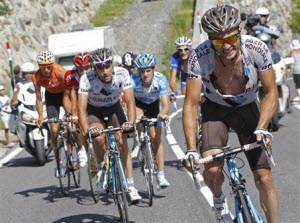
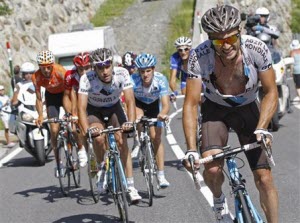
[wlm_private ‘PRO-Platinum|PRO-Monthly|PRO-Gratis|PRO-Seasonal|Platinum-trial|Monthly-trial|PRO-Military|30-Days-of-PRO|90 Day PRO|Stages-Instructor|Schwinn-Instructor|Instructor-Bonus|28 Day Challenge']Road cyclists have very little upper body movement while seated, even when they're producing crazy wattages. This video does a nice job demonstrating how stable these Pro's are when they ride. In the run up to the sprint finish they're probably going way over 30 MPH = a continuous 350 watts or more.

Switch now to this short video and you'll see where “if you don't do it outside, you don't do it inside” really doesn't apply.

Watch how Spinning® MI Mike Michaels moves side to side – a lot. I'll bet he doesn't do that on the road – it wastes too much energy. Here's another showing something similar, this time from Josh Taylor:

All that movement is show, right? Josh, as an experienced bicycle racer, wouldn't move like that in a race > the people he's riding with would think there's something wrong with him. I don't know about you, but watching Josh's movement has me wanting to move along with him. Which I guess is the point of this article; Just sitting there and pedaling smoothly may have you looking like a Pro out on the road, but you're riding inside.

How can you tell if you're moving?

Mike and Josh have an advantage over you and me > they have been filmed presenting multiple times. So they get to watch themselves and, seeing what they look like riding, they can visualise changes they can make to ride with additional… I think the word is flourish.

2015-05-28_12-56-47


Have you ever filmed yourself? This could be another reason to rig up a simple stand for a cell phone and then watch how you move. Even if you don't go the video route, you might try adding or accentuating your upper body movement. Adding a little extra flourish just might give your class a reason to follow you.[/wlm_private]

I'm going to attempt to do this in my future classes. Are you willing to give it a try?


Originally posted 2018-05-31 13:07:13.

Showtime, ain’t no time to be trying something new!

Are you teaching to the squeaky wheels?

Howdy Fit Folk!

John Macgowan has so graciously invited me to contribute to the vast wealth of knowledge that is the ICI/PRO community--  woohoo!!  Lucky me. 🙂 To those of you that I had the great pleasure of meeting at the 2011 ICI/PRO conference, hello again!  To those of you that I have yet to meet, I look forward to many opportunities to open a dialog, discuss new concepts and create amazing ideas.

Speaking of ideas, I love good ones!  I know it's been a good day if I've had at least --what I consider-- one good idea. Generally speaking, my best ideas come from thought-provoking conversations with others.  With all the wonderful discussions I'm reading on the posts and forums, I'm bound to have a lot of good days moving forward.

So pull up a chair (if you dare!) and enter the head-space of Cam...  I wish you the best of luck!

Happy reading,

Cameron Chinatti

Director of Education for Stages Indoor Cycling

Here's what I've been thinking about today...[wlm_private 'PRO-Platinum|PRO-Monthly|PRO-Gratis|PRO-Seasonal|Platinum-trial|Monthly-trial|PRO-Military|30-Days-of-PRO|90 Day PRO|Stages-Instructor|Schwinn-Instructor|Instructor-Bonus|28 Day Challenge']

Cameron Chinatti Director of Education Stagesâ„¢ Indoor Cycling

Do you ever find yourself spending a disproportionate amount of your mental and perhaps physical energy trying to please or quell the “squeaky wheels”? Typically the squeaky wheels are your most loyal attendees. They sit in the front row, they have "their" special bike, they enjoy filling out lengthy complaint cards, and they dislike any of your substitute instructors. These are the squeaky wheels, always generating a low-level disturbance. More on these folks in a moment!

Recently, a friend of mine shared a link to a blog post titled "Don't Tell Me I'm Wasting My Time!"

Intrigued, I decided to check it out. The author of the post, Marjorie Clayman, is an expert in the field of enhancing the use of Social Media as it applies to the marketing world. Her frustration, as she puts it, "...is the selfishness that exists in the online world when it comes to covering topics that relate to beginners." As you'll see in her article there is a perfect parallel to the challenges that we all face as teachers of indoor cycling.

Now, back to those squeaky wheels!

We tend to teach specifically to please these individuals because we become acutely aware of their verbal tendencies. This makes it very challenging to recognize the needs of the 29 other individuals in the room. More importantly, we fail to see the hundreds if not thousands of potential participants that have never set foot in our classes.

As Marjorie puts it, "If you approach content on occasion from the perspective of someone who is brand spanking new to this space, you will get to meet people and help people whom you may not have met in any other way. What can be more valuable than that?"

So, are your squeaky wheels unconsciously (hopefully not consciously!) creating a "secret society" that makes the newcomer feel uninvited? How do we please them both? In the words of the great Bob Marley, "You can't please all the people all the time." Quite the conundrum, I know.

When you feel the pressures of oiling the squeaky wheels or as my friend and Schwinn Master Trainer Shannon Fable calls it, "teaching to the front-row frowners," take a personal inventory moment. Are you trying to please them to keep an angry person off your back or are you considering the needs of all?

In my time as a Co-Director of a group exercise schedule consisting of 120 classes per week, I fielded many squeaky wheel complaints.

Here are my Top 5 takeaways from my time spent with the dreaded comment cards box:

1. Never throw your team under the bus! It may be tempting to tell the class to fill out a comment card and cast a vote for you to have more classes on the schedule, but a) that's a bit self-serving and b) there are so many reasons why the schedule is created the way it is. Cost per head per instructor, school schedules, child care schedules, maintenance, special programming, weekly class balance, etc. Likewise, if you have a personal gripe about something at your facility, telling your participants to fill out a comment card in order to achieve your goal accomplishes one thing: The squeaky wheels learn that if they are loud enough, they'll get their way, even if it is not in the best interest of the program. This leads to my 2nd mantra...

2. Think big picture. Contrary to popular belief, the individuals that attend your classes are not actually your members. They belong to the facility and you belong to the program or programs that the facility offers. You represent a piece of a puzzle. The more you think of yourself and your fellow instructors in this manner, the more the participants will view you all as a cohesive unit. Amazingly, participant complaints become positive shout-outs when the instructors have a sense of solidarity amongst the team.

3. Stick to your guns. You and your fellow instructors are the resident experts at your facility and you are there to guide your entire class in a safe and effective workout. The squeaky wheels may think that it's cool when Jane Doe instructor takes their saddles away, but you as the professional have to step up sometimes and say what needs to be said. Of course, you must keep in mind that your position is really that of a customer service specialist. So, how can you easily stick to your guns and provide a top-notch customer-first experience? Enter the Bad News Sandwich.

4. Bad News Sandwich. Here's an example of a bad news sandwich.

"Hey Sally, I totally understand where you're coming from and I hear you. You're right. Riding an entire class without the seat is very challenging and it does make you "feel the burn." However, there are actually more effective ways to achieve the same end result and in an environment that is safe for everyone. Can you imagine how terrible it would be if someone were to fall on the seat post during our class?! I'm sure I would lose my job and I would feel awful. After all, my job is to help people achieve optimal health, not promote injury. I know you understand the predicament I'm in; I have to look after everyone's well being -- including yours. Let's discuss a plan that will work around your fitness goals. I'm sure we can come up with something that will challenge you even more."

Okay, so that was a bit on the cheesy role-play side of things, but I'm sure you've had similar conversations before. Just remember: Bad News Sandwich = Recognition of issue or compliment (Good News) + Addressing the issue (Bad News) + Recognition of issue (Good News). You can't go wrong with the Bad News Sandwich. Or ending emails with a smiley. 🙂

5. Equal attention for all. Some people may disagree with me on this one, but no one at your facility should be valued higher than anyone else. This goes for members and instructors! Even if a member has been paying dues for 20 years, the new person that just joined or just attended class for the first time should get the same kind of attention and treatment. Likewise, an instructor that packs the room and has been teaching for years is as much a part of the team as the newer instructor that supports a different set of participants (and thus increasing the number of unique users). The minute a hierarchy starts to form, problems arise. Suffice it to say, everyone plays an equally important role in developing a top-notch indoor cycling program.

Think about your classes this week whether indoor cycling, group strength, step, etc. Ask yourself: Am I teaching to the person that looks miserable or am I teaching to everyone? Am I dividing my attention equally amongst my attendees?  Don't overdo it when it comes to greasing that squeaky wheel-- you never know when the chain might fall off.[/wlm_private]

Please share with the ICI/Pro community: How have you been addressing the "squeaky wheel" situations? Any good stories or ideas to share?

Originally posted 2011-11-10 13:22:22.

Showtime, ain’t no time to be trying something new!

Staying Safe Online = Knowing The Strength Of Your Password

Last spring I was getting a flood of emails from hacked email accounts 🙁

Because we are regularly emailing close to 10,000 Instructors, my email address is in all those contact lists. When an account is compromised, the first thing the hackers do is send an email to everyone on your list. That email typically includes a nasty link that, when your mom/dad/babysitter or club department head clicks, could infect their computer with a virus or worse… like taking complete control of your computer.

It even happened to me – an old yahoo.com email I haven't used in years started sending out spam emails. Embarrassing to say the least.

I wrote two posts here & here about the importance of using a good/strong password to prevent this from happening to you. Here were my suggestions.

… take your existing password (if it has 8 or more letters) and add one capital letter and two special characters.

So “password” would be greatly improved by changing it to “@Password!”

Another option would be to combine three easy to remember words, separated by special characters. The three girls in my life are Amy, Abby and Carly so a reasonably secure password could be Amy&Abby&Carly. You can use your first name, your dog’s name and your city or any other three words and special character combination.

One more suggestion — You may have heard you should have a different password for every website — unrealistic. But I personally use a few different passwords, depending on the type of website where I have a user name.

  1. One simple password for sites that don’t matter (No email or financial data) Here’s where you can use “password” :)

  2. One password for important sites (No financial data)

  3. A complex password for each website that has financial, medical or credit data. Create a prefix password and add the name of the institution at the end like; @Password!=visa or @Password!=bank or @Password!=401k

To be clear, my example of @Password!=visa would in actuality be: @Password!=FirstBankVisa but please don't use “password”  instead use an easily remembered root word. Password is the number one, err – password and it's the very first word the hackers try.

But how do you know what you've created is really a good/strong password? This online password strength checking tool can tell you the relative security of any password you dream up. Suggest testing a slightly different version of your password – change one digit-just in case this site is an elaborate scam to actually steal passwords. It did come to me from a trusted source… but you never know. 

So “password” (without the quote marks) returns:

Please don't use this password.

Please don't use this password.

Which is pretty much like posting your password online, but @Password!

Much better

Much better

Is a big improvement, while @Password!=FirstBankVisa should be pretty secure.

Now you're talking :)

Now you're talking 🙂

So until we all have the new iPhone 5S with fingerprint recognition, please protect yourself and change your passwords.

Originally posted 2013-09-11 14:49:42.

Showtime, ain’t no time to be trying something new!

ICI/PRO Podcast #237 – Scripted Starts and Flawless Finales Part 2

Now here's part 2

As promised, ICI/PRO members will enjoy hearing part 2 of my interview with Lawrence Biscontini where he describes the importance of a scripted transition, as part of “Scripted Starts and Flawless Finales”.

I didn't address this during the interview (but it is obvious when you hear him speak) – Lawrence must be a Mensa Candidate.  His website lists that he teaches and presents in; English, Spanish, Italian, and Greek – which amazes me as I struggle with just plain English.

Download the transcript of this podcast.

Originally posted 2018-05-15 05:58:10.

The Weekly Ride – 10/22/18 Halloween Endurance

The Weekly Ride – 10/22/18 Halloween Endurance

Welcome to the The Weekly Ride by Cycling Fusion

Welcome to our new era of The Weekly Ride, you get:
  • Full Ride PDF
  • Apple Music Playlist
  • Spotify Playlist
  • File to Download the Ride directly into My Fitness DJ (Yes, no Programming)
  • The Ride will be available for purchase in the iClass Builder Store (No Programming)
  • A Podcast of the ride being delivered by a master instructor.

(more…)

Originally posted 2018-10-29 20:39:40.