by Joan Kent | Mar 14, 2016 | Health and Wellness, Zone based Heart Rate Training

In a previous post that I co-wrote with Jim Karanas, we described specific physiological adaptations of aerobic — aka cardio or endurance — training.
As you may recall, they include increases in blood volume, tidal volume, and stroke volume. The capillary network increases, as well, as do the size and number of mitochondria. Other changes also occur, but these are the ones that move oxygen to the working muscle.
Recent research has shown that endurance/cardio exercise — not strength work or interval training — can make rodent brains bigger.
Okay, forget how much that last part sounds like the plot of a 1950 sci-fi film. Let’s look at other research.
A long-term study followed 1,583 middle-aged men and women with no personal history of either dementia or heart disease over 2 decades. Before-and-after tests done 20 years apart showed that the ones who had kept in shape tended to have larger brains, while the poorly conditioned participants had lost gray matter.
Holding on to gray matter prevents cognitive decline and decreases the risk for dementia. No specific type of exercise was explored in that study, however.
And that leads us to the long-raging debate over Cardio and High-Intensity Interval Training (HIIT).
HIIT Advocates Always Stack the Deck
Let me be clear: I have absolutely nothing against high-intensity intervals. I use them often in my own workouts and when teaching.
But something interesting occurs when staunch advocates of HIIT compare the relative benefits of HIIT with those of standard cardio.
They tend to cheat.
In the hands of the die-hard HIIT fan, the word “cardio” has become code for lame-o exercise at the lowest levels of intensity. It should come as no surprise that the benefits — if any — of such lame workouts would fall far short of the benefits of HIIT.
And no one challenges the criteria. So let’s challenge them.
You Can Go Hard AND Long
It’s simply not true that intense training must involve short intervals of, say, 20 to 60 seconds. If you train well aerobically — and train seriously enough to achieve the aerobic benefits above — you can maintain a high level of work for a pretty long time.
HIIT advocates seem to ignore the fact that elite marathon runners, for example, run faster than 5-minute-mile pace for 26.2 miles. Most people would find it difficult, if not impossible, to run a single 5-minute mile. It’s a fast pace. Elite marathoners go faster than that for a couple of hours.
As Matt Fitzgerald — well-known marathoner, trainer, and author of several books and many articles — states, “well-trained endurance athletes really don’t have to slow down much as they increase the duration of their efforts. We are not the folks reading magazines on elliptical trainers.”
I’m the furthest thing from an elite athlete you can find, but even I have done a couple of cycling time-trials on Mt. Diablo. The first one took me 44 minutes at a consistent heart rate of 173 — quite high for me, making the climb a combination of hard and long. (Okay, I told you I’m no elite athlete.)
The training combination that appeals to me most is to fit a set of about 8 intense intervals into a long training of moderate or moderately high intensity.
It’s not just my personal preference, though. Evolutionary evidence suggests that this way of training is precisely what we were always meant to do.
(Part 2 will explore the evolutionary reasons that this is what we’re meant to do.)
by Joan Kent | Feb 22, 2016 | Health and Wellness

About a year ago, I received questions from a man in my email community. They were good ones, so I devoted part of a seminar to them.
“I want to know how food can create low mood and low energy. I mostly want a methodical way to fix things. I'm also interested to know if your tastes can change over time so that you'll like good foods.
“As someone who has never really had high mood or energy for the better part of 8 years now despite trying many exercise programs, diet is really my last thing to try. It would be nice to have some idea what can happen.”
Overall, low mood or energy is probably the result of how the foods we eat can affect glucose and brain chemistry.
I’ll simplify (oversimplify) and keep the answer to three basic aspects: glucose, serotonin, and protein.
Food Affects Glucose, Mood and Energy
Some foods can cause large fluctuations in blood glucose. The result can be a pattern of sharp rises in glucose, followed by sharp drops. Some people are highly susceptible to those fluctuations, so they feel good when glucose is up, and crummy when it’s down.
The most important factor in the glucose drops is not how low, but how fast, it falls.
Those fast glucose drops can bring on a variety of symptoms in susceptible people. Some symptoms may be physical (headaches, low energy), some may be emotional (irritability, depression, mood swings), and some may be mental (confusion, decision-making difficulties). Yet all of them — and many more — may be related to glucose peaks and valleys.
Foods that can trigger big glucose fluctuations are typically junkier carbs, such as cookies, cakes, pastries, white flour breads and other products — or even combinations of starches and saturated fats (potatoes with butter, for example).
Food Affects Brain Chem, Moods and Energy
If someone who’s carb-sensitive — defined as exaggerated insulin release in response to certain carbs — eats lots of junky carbs, he/she can make lots of serotonin. It’s linear: big insulin means big serotonin production. We’ll skip the mechanism because I’ve covered that in previous posts, and in my book.
We know that serotonin receptors can and do down-regulate — for example, in response to anti-depression meds that target serotonin levels.
Down-regulation is a decrease in the number of receptors plus a decrease in the sensitivity of the ones that remain. The result? Serotonin won’t work as well.
That’s why dosages may need to be adjusted over time.
Now, to my knowledge, no one has researched serotonin receptor down-regulation with respect to food.
But ever since I did the research for my dissertation, I’ve had a theory that such a down-regulation of serotonin receptors might very well occur in carb-sensitive people who eat lots of junky carbs, such as sugar. Call it an educated speculation.
If that’s the case, it would explain rotten moods resulting from a less-than-optimal diet.
And That Brings Us Back To Protein
Protein in your diet allows you to make the brain chemicals — serotonin is only one — that boost mood and also prevent cravings for junk.
Protein contains the amino acids to make brain chemicals that make us feel alert and mentally energized.
Protein triggers hormones that produce satiety and decrease the desire for carbs. Both can help prevent overeating junky carbs that trigger low energy and low moods. The same hormones can also prevent continuation of a poor diet that may cause those undesirable effects.
I’ve pushed the benefits of protein many times. No discussion of energy, mood and food would be complete without it.
Eating “good” fats will also help to boost mood, but I vowed to keep this to 3 oversimplified points. So let’s save fats and mood for another post….
by Joan Kent | Feb 8, 2016 | Engage Your Students
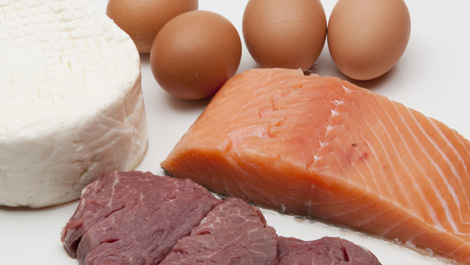
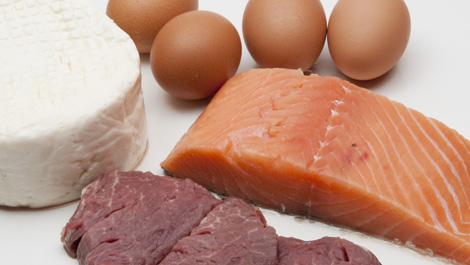
Some years ago (1997 to be exact), the American Journal of Clinical Nutrition featured an article stating that women’s protein needs had been underestimated up until then.
In the same issue, a different article discussed the higher rate of serotonin turnover in women’s brains versus that of men. (Serotonin is made from the amino acid tryptophan. Amino acids are the building blocks of protein.) So women need protein for that reason.
The same year, Smith et al. published a study in the Lancet describing the relapse of depression in susceptible women after rapid depletion of tryptophan.
It’s a long-held theory of mine that people who minimize the importance of dietary protein don’t recognize the need for what I call “brain protein.” And it turns out that protein is now being evaluated and declared important for several other reasons, some of them of specific concern to women — weight loss, satiety, lean body mass, athletic performance, and more.
– In 2012, adult protein requirements were assessed as 10% higher than previously assessed, for both men and women and all age groups (Millward, 2012).
– A 12-week weight loss study in overweight adults showed that higher protein intake promoted better retention of lean body mass in both trunk and legs (Tang et al., 2013).
– Maintaining adequate protein intake with aging may help preserve muscle mass and strength in adult men and women. Type of dietary protein may affect muscle mass and strength differently. Animal protein promoted higher lean leg mass with higher intake, while plant protein did not (Sahni et al., 2015).
– Older women in the higher protein group (1.1g/kg/day vs. 0.8g/kg/day) had lower body mass index and lower fat-to-lean ratio than those in the lower protein group. The lower protein diet also resulted in impaired strength in both upper and lower extremities (Gregorio et al., 2014).
– Even distribution of protein intake — approximately 30g of protein per meal — stimulated muscle protein synthesis more effectively than the typical pattern of skewing protein toward the evening meal, with a breakfast higher in carbs and lower in protein (Mamerow et al., 2014).
– A recent seminar on protein’s role in weight loss and satiety, offered by the American Council on Exercise, also recommended a protein pattern of 30 grams per meal, 3 times a day.
– Two studies indicated a need for increased dietary protein intake so that the so-called “nutritionally non-essential amino acids” would be adequate for animals and humans to achieve optimal growth, reproduction and resistance to metabolic and infectious diseases (Hou et al, 2015; Wu et al, 2013). Essential amino acids are ones that are not synthesized by the body and must be consumed in food. Non-essential amino acids were traditionally assumed to be adequately synthesized by the body for maximal growth and health. These 2 studies counter that assumption.
– Female football players have protein needs similar to those of male players (Maughan and Shirreff, 2007).
– Women strength athletes may require more protein than either endurance-trained or sedentary women. The recommendations are for less emphasis on high-carb intake and more emphasis on quality protein and fat consumption to enhance training adaptations and general health (Volek et al, 2006). Compared to men, women seem to be less reliant on glycogen during exercise and less responsive to carb-mediated glycogen synthesis during recovery.
– Minimum protein intakes should be approximately 25% of total calorie intake (Fulgoni 2008). Many adults, men and women, get only 15% of their energy intake from protein.
– In a 12-week study, a daily high-protein (35g)breakfast prevented gains in body fat. A “normal” protein breakfast did not. The high-protein breakfast reduced hunger and led to voluntary reductions of about 400 calories per day (Leidy, et al 2015).
Regarding the long-touted RDA of 0.8g protein/kg/day, Stewart Phillips, PhD, FACSM, FACN, and professor at McMaster University states, “nothing about that level should be recommended, and you’re allowed to eat much more. In fact, for older persons and athletes, there are benefits to consuming protein at levels above the RDA.”
Indoor cycling instructors are athletes, and regular participants may be, as well.
by Joan Kent | Jan 12, 2016 | Engage Your Students, Health and Wellness

Looking back, I suppose it’s understandable that it took me 3 appointments to figure out what was going on with my client.
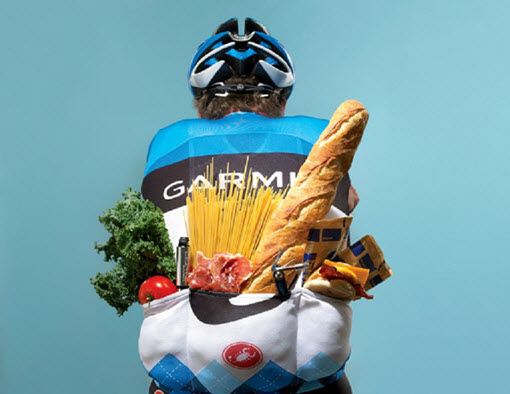
First and perhaps foremost, this client, whom we’ll call John, was a cyclist.
John came in for his appointment in rather odd clothes, but that’s hardly noteworthy in the California bay area. He wanted to lose weight.
John was already thin. Still, his desire to lose weight didn’t seem noteworthy, either. In my experience, cyclists often try to lose weight to give them an advantage on the road, particularly on hills. Many cycling routes in California are known for the tough climbs they present.
The leaner a cyclist can become — particularly if he or she can maintain strength and power — the faster he can climb those hills.
Typically, my clients who are athletes (of any type) are interested primarily in results. They welcome suggestions and recommendations that will help them get those results. That tends to be true even if my recommendations seem contrary to what they’ve heard elsewhere.
What set John apart from other athletes was his reluctance to do anything I asked him to do nutritionally.
My recommendations for John were nothing out of the ordinary. They all had to do with ensuring that he was properly fueled for both his training rides and his events. In order to keep his energy at peak levels and limit the loss of lean mass, I suggested making his weight loss gradual and carefully trimming calories from the non-ride portions of his day — and certainly not from his pre-ride meals, his on-the-bike fueling, or his immediate post-ride refueling. That fuel was too critical in his continued performance and power.
But John wanted to cut calories from all of those “fueling moments,” as well as the rest of the day. He didn’t want to do it gradually or carefully.
So we had 3 appointments of food log reviews, more questions, and John’s somewhat odd answers. In his third appointment, he requested supplements to speed up his weight loss, and it was clear that he was an anorexic.
First, he didn’t fit the demographic. Only about 0.1% of anorexics are men.
And, again, he was a cyclist, so the desire to lose weight wasn’t a red flag.
I don’t work with anorexics because I’ve found that there are psychological issues involved that are beyond my area of expertise and beyond the scope of my practice.
Since I don’t feel qualified to deal with the issues of anorexia, I refer clients to those who are.
This post doesn’t end with a final set of suggestions or food recommendations, other than to point out that it’s sometimes necessary to look beyond the obvious when dealing with clients. Each one is unique.
by Joan Kent | Dec 29, 2015 | Engage Your Students, Health and Wellness

Serotonin is a brain chemical with different functions.
– It’s a neurotransmitter that’s targeted and enhanced by several antidepressants.
– It’s the precursor of melatonin, the “sleep hormone” and anti-inflammatory.
– It affects satiety and modulates general food intake and carbs specifically.
– It’s a vasoconstrictor.
– At high levels, it can make us lethargic.
– It plays a role in energy expenditure and motor activity.
Exercise can raise levels of serotonin. Typically, that’s considered beneficial because serotonin is often referred to — somewhat mistakenly — as a “happiness” hormone.
But among athletes, increased serotonin is known to exert a negative influence on endurance training by bringing on fatigue. Various studies over the past decade or so have shown this to be true in both human and animal studies.
The connection between serotonin and fatigue during endurance exercise is more pronounced in high-intensity (“exhaustive”) training.
Red Ginseng
Red (panax) ginseng has been promoted as an ergogenic aid for endurance athletes. Having never tried it, I can’t vouch for its effectiveness.
Tests on animals, however, suggest that the mechanism behind the ergogenic benefit of ginseng lies in its ability to suppress brain levels of serotonin.
The side effects of red ginseng vary and may include anxiety, headache, insomnia, nervousness, or dizziness. If consumed with coffee, it can cause irregular heart rhythms. Anyone taking meds for hypertension should avoid red ginseng.
Peony Root
Other animal studies show that peony root (paeonia radix) works similarly. It reduces fatigue by blocking the synthesis of serotonin during exercise.
The drawbacks of peony root are stomach upset, rashes in sensitive people, or its ability to slow blood clotting. That may lead to negative interactions with anticoagulant meds — either prescription drugs like Coumadin or over-the-counter items, such as aspirin, ibuprofen, or naproxen (Naprosyn).
Acupuncture and glucose
Still other animal studies have shown that acupuncture at selected sites or glucose injections in the brain can improve treadmill running by suppressing serotonin synthesis and release.
So the serotonin/fatigue connection in athletes and animals has been shown time and again.
Protein To the Rescue
When I long ago learned of the connection between exercise-induced serotonin and fatigue, my first thought was of protein. A combination of mid-ride protein and starch would tend to block serotonin synthesis, I figured.
Sure enough, research supports that.
Protein added to a carb supplement has been shown, for example, to enhance running endurance capacity in football players toward the end of a game.
Experiments on rats trained on a treadmill and given free access to food and a choice between water and a water/amino acid solution showed that the rats preferred the amino acid solution when made to run on the treadmill. Tests revealed decreased brain serotonin in those rats. This suggests an ergogenic benefit of the amino solution.
How Can You Use This Info?
Fatigue has multiple symptoms that may occur simultaneously. For best results overall, a few basic workout guidelines should help.
Stay hydrated, of course, always. Dehydration produces severe fatigue (and worse).
Don’t overdress. Hyperthermia can increase perceived effort and derail endurance efforts.
Add protein to your fuel mix. Preferable types would be fairly easy to digest, such as organic pea protein powder. It could easily be added to the recipe for Dr. Joan’s Potato Goo, described in a previous post.
Wishing you excellent results with your endurance workouts in the year ahead!