
by | Aug 2, 2010 | Health and Wellness, Melissa Marotta

“Help! One of my Indoor Cycling students told me that he is taking meds for his blood pressure, and he’s asking questions about what this means for his training. I have no idea! What should I know about this?”
– K.P., Phoenix, AZ
Melissa Marotta writes:
Since ICI launched its medical research column, we have received dozens of questions from instructors all struggling with the same issue: “How do blood pressure-lowering (“antihypertensive”) medications affect the “bread and butter” of what we do?” Yours is an extremely common predicament, and we congratulate you for empowering yourself to seek out the information you need to best serve your clients.
While many group exercise instructors and personal trainers are certified through programs designed to prepare them to train folks without major medical problems (with perhaps cursory mention of some common medication names on a single page in a manual), it doesn’t take long before they get thrown a curveball. And while we may be very responsible in a) providing information limited to the scope of our expertise and b) securing that a client has received physician approval before engaging in exercise, this doesn’t do much to alleviate the anxiety we feel in that moment where we haven’t a clue how to even begin to answer the question at hand.
This article is not meant to take the place of advanced certification in working with special populations; however, I hope it will be a helpful reference to acquaint you with how to approach a rider who asks you how to make sense of how antihypertensive medications may impact training.
What is Hypertension?
(more…)
by | Apr 15, 2010 | Health and Wellness, Melissa Marotta
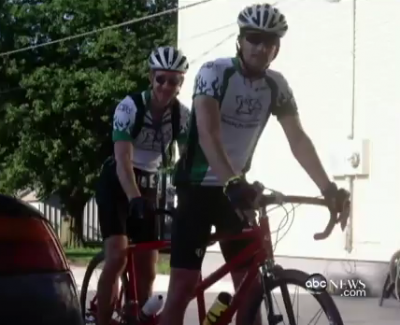
Dr. Jay Alberts and friend on his tandem bicycle
Last week, the new York Times ran a fascinating article describing the case of a man with severe, debilitating Parkinson’s disease — who, while remaining largely able to walk, can ride his bike for several miles every day. Here is a link to a video showing him riding.
Since the article ran, I’ve received several emails from ICI subscribers, students, and classmates alike — all asking the same thing: “What’s the deal with this? How is this possible?” Truth be told, I had no idea. So, I decided to find out.
UPDATE: 2/10/14 There has been considerable research done to quantity the symptom relief experienced by people suffering with Parkinson's disease, by riding a tandem bicycle or on Indoor Cycles. Learn more by listening to this interview with Dr. Jay Alberts with Pedaling for Parkinson's.
UPDATE September 25 2014:
We are now offering an ACE approved Parkinson’s Cycling Coach training program. To learn if you qualify click here.
Background
What is Parkinson’s Disease?
Parkinson’s disease is a neurodegenerative condition (primarily affecting older people, though can occur any time) characterized by progressive destruction of part of the brain called the substantia nigra, which is responsible for the production of a brain chemical signaling molecule (see also: neurotransmitter) called dopamine. Since dopamine is the primary neurotransmitter of movement, Parkinson’s disease is marked by gradually worsening motor function. Its cardinal signs include difficulty initiating movements (“akinesia”) and slowness in maintaining movements (“bradykinesia”), including swallowing and speaking. Problems with balance, gait, and tremor are also very common1.
Current treatment options include Levodopa (essentially, synthetic dopamine) with supplemental use of drugs that boost dopamine or block its breakdown. Deep brain stimulation of the affected portions of the brain has also shown promising results. Still, even with treatment, the disease often causes significant disability and decreased quality of life2.
The Role of Exercise
The focus of treatment for Parkinson’s disease is largely medication-based. While a role for supplemental therapy with non-medication treatments (including exercise) has been thought to be important, most research over the years has focused on its effects on quality of life, not motor symptoms directly. In recent years, this is changing. There have now been recent studies demonstrating improved independent functioning3, balance and gait4, and walking endurance with exercise therapy5. In animal models, exercise has been thought to contribute protection against further brain deterioration6 — and even to potentially induce repair at the level of the brain7.
Can’t Walk but Can Ride a Bike?
Although exercise is recommended for patients with Parkinson’s disease to supplement their treatment with medications, the scenario described in the new York Times article is not the norm. What appears to be at play here is not merely a success story of exercise therapy; rather, it is a specific neurological phenomenon. Bike-riding, in this case, is not functioning merely as exercise. It is actually a mechanism whereby damaged brain pathways are being overridden. Allow me to explain.
You see, movement initiation can be in response to either an external (“exogenous”) or internal (“endogenous”) stimulus. Turns out, “akithesia” (lack of movement initiation) in Parkinson’s disease is largely a failure of ability to respond to endogenous stimuli. The exogenous pathway, however, remains intact8.
A phenomenon called “akinesia paradoxa” (like it sounds: paradoxical akinesia) has been well-described in the neurological literature since the late 1960s. This refers to the ability of people who have difficulty initiating movement somehow being able to move in the presence of visual cues (lines, objects, colors) at their feet8. Remove visual cues? “Frozen” again.
There is no research specifically on cycling-supplied visual cues responsible for akinesia paradoxa. It is reasonable, however, to think that perhaps it is the repetitive linear road markings that might be at work here. Or perhaps the cue isn’t visual at all — like music, which has also been studied in relationship to akinesia paradoxa, any one of the sounds (gliding, scraping, squeaking, etc.) we hear our bikes make as we ride can also be thought of as a repetitive cue. What may go unnoticed to us and our preoccupied senses may indeed be responsible for creating movement in the movement-less.
As amazing as this sounds, we must be careful not to go too far in our interpretations. All we know is that akinesia paradoxa happens — in response to a visual cue that generates a brain signal for movement, movement can happen. Research is still lacking as to whether these successful “cued movement” episodes have any long-term impact on disease severity. Still, this is an active and fascinating area of ongoing research. We’ll see what happens…
The writer is a third-year medical student at the University of Vermont College of Medicine. She is also a STAR 3 Spinning instructor, Certified Personal Trainer (ACE), and author of the popular blog Spintastic (http://spintastic.blogspot.com/), which applies patient-centered medicine to motivational coaching..
References
Crizzle M, newhouse IJ. Is Physical Exercise Beneficial for Persons with Parkinson’s Disease? Clin Jl Sport Med. 2006. 16(5): 422-425.
2 Rao SR, Hofmann LA, Shakil A. Parkinson’s Disease: Diagnosis and Treatment. American Family Physician. 2006. 74:2046-54,2055-6.
3 Yousefi B, Tadibi V, Khoei AF, Montazeri A. Exercise therapy, quality of life, and activities of daily living in patients with Parkinson disease: a small scale quasi-randomized trial. Trials. 2009. 10:67.
4 Gobbi LT,Oliveira-Ferreira MD, Caetano MJ, Lirani-Silva E, Barbieri FA, Stella F, Gobbi S. Exercise programs improve mobility and balance in people with Parkinson's disease. Parkinsonism Relat Disord. 2009: 15(Suppl 3):S49-52.
5 White DK, Wagenaar RC, Ellis TD, Tickle-Degnen L. Changes in Walking Activity and Endurance Following Rehabilitation for People with Parkinson Disease. Arch Phys Med Rehabil. 2009. 90:43-50.
6 Zigmond MJ, Cameron JL, Leak RK, Mimicks K, Russell VA, Smeyne RJ, Smith AD. Triggering endogenous neuroprotective processes through exercise in models of dopamine deficiency. Parkinsonism Relat Disord. 2009. 15(Suppl 3):S42-5.
7 Hirsch MA, Farley BG. Exercise and neuroplasticity in persons living with Parkinson’s disease. European Jl of Phys and Rehab Medicine. 2009. 45(2): 215-29.
8 Kaminsky TA, Dudgeon BJ, Billingsley FF, Mitchell PH, Weghorst SJ. Virtual cues and functional mobility of people with Parkinson's disease: a single-subject pilot study. J Rehabil Res Dev. 2007;44(3):437-48.
9 KM & Valenstein E. Clinical neuropsychology.. 2003. Oxford Univ Press: 4th Ed. p 299.
by | Mar 3, 2010 | Health and Wellness, Melissa Marotta
“Sometimes I can’t catch my breath when I’m riding, especially in the winter. I’ve never been told that I have asthma before — but could that be what this is?”
– J.S., Asheville, NC
Melissa Marotta writes:
First off, sorry to hear about your discomfort! Feeling like you can’t breathe is an incredibly scary experience for a lot of people. There are a number of conditions that could produce symptoms like yours, including the “exercise-induced bronchospasm” (formerly called “exercise-induced asthma”) phenomenon that I will describe in this article — so I encourage you to see your physician to help you figure out what’s going on for you, personally. This way, you can sooner get the appropriate treatment you need.
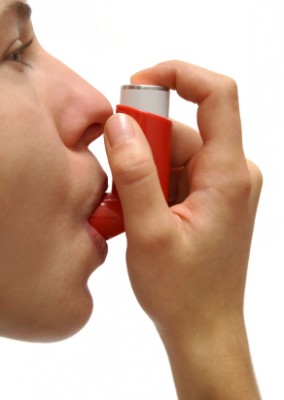 Many people have heard of exercise- or exertion-induced bronchospasm (EIB) but there is often some confusion about what the term actually describes. It refers to narrowing of the airways in association with exercise, both amongst people who have asthma (90% of patients with asthma experience an exacerbation of symptoms with exertion) and amongst people who do not. Research suggests that greater than 10% of general population may also suffer from EIB. Studies of elite athletes report a prevalence of EIB between 11-50%1. At particular risk are those athletes engaged in activities that require large volumes of air to be moved (i.e., cyclists, runners, swimmers, skiers, rowers, etc.) and those who exercise in cold, dry, or polluted (i.e., indoor rinks) conditions2.
Symptoms of EIB can be quite varied, let alone vague (i.e., non-specific discomfort, breathlessness, fatigue that might be “expected” under conditions of heavy exertion). Thus, EIB often goes undetected. Athletes, in particular, may be less likely to complain about discomfort1. That’s why it’s extremely important that you are aware of this phenomenon, so as to help those you coach (or yourself!) to recognize it and seek appropriate diagnosis and treatment.
What are the symptoms of EIB?
(more…)
by | Feb 6, 2010 | Health and Wellness, Latest News, Melissa Marotta
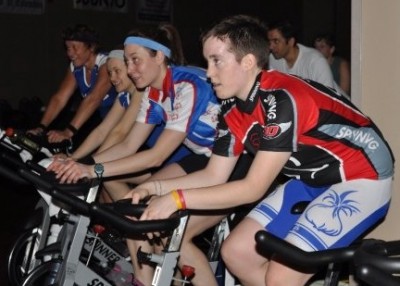 It gives me (beyond) great pleasure to announce that the state of Vermont will be hosting the 10th Annual Ride for a Reason indoor cycling marathon to benefit the Special Olympics on Sunday, March 21, 2010. The event will be held at the Sheraton in Burlington, Vermont.
Along with myself (STAR 3 Instructor Melissa Marotta, Vermont), Spinning Master Instructors Anthony Musemici (New York) and Angie Scott (Vermont), and STAR 2 Instructor David Means (Vermont), Jennifer will co-lead what will undoubtedly be an inspiring and invigorating six-hour endurance challenge. 150+ riders at last year's event raised nearly $40,000 to support the athletes of the Special Olympics.
To join us all for the big event in Vermont, you can visit http://www.vtso.org/spinning_marathon.php
You can register for the full day (6 hours), put together a relay team to split up the day, or simply register for any number of hours you'd like to ride.
by | Jan 6, 2010 | Health and Wellness, Melissa Marotta
“A student approached me after one of my indoor cycling classes, complaining of an intense headache and asking me what I thought. I didn’t know what to say, so I just told her to see her doctor! Any thoughts?”
– S.H., Darien, NY
Melissa writes:
First off, kudos to you for having the courage to acknowledge the limits of your expertise. You did exactly the right thing to refer your student to see her physician.
Exercise-induced, or exertion headaches are yet another incompletely understood phenomenon (that tends to be what I end up writing about on ICI/PRO, after all!). Headaches that occur during or immediately after exercise are well-described in the literature and are thought to be quite common: it is estimated that 1 out of 100 people experience at least one exertion headache at some point in their lives1. However, large prospective studies are lacking to identify exactly what causes them2.
We can think about exertion headaches as one of two flavors: primary, which are not connected to any underlying problems, and thus not serious, and secondary, attributable to some other, potentially serious medical problem but triggered by exertion. Most exertion headaches are primary. Exertion headaches are often described as “throbbing” bilateral (both sides) pain, lasting anywhere from 5 minutes to 48 hours. Secondary exertion headaches can also include vomiting, visual changes, and neck stiffness, and can last for several days3.
We know that exertion headaches occur under conditions of “strenuous” activity. But why?
The leading theory on headache, migraine or otherwise, is that it is related to changes in blood flow to the brain (both increased and decreased flow — all that counts is that there is a change). Revving up one’s system, perhaps due to inadequate warm-up, or starting an intense training program without appropriate build-up, indeed causes changes in blood flow all over, which influences blood flow to the brain4. Even during responsible exercise, there is increased oxygen demand not only in skeletal and cardiac muscle but also to the brain. To increase blood flow to the brain to enhance oxygen delivery, the vessels of the brain dilate. It is this exercise-induced vasodilation which can cause headache5.
Moreover, exercising in warm conditions (i.e., outside on a hot summer day, improperly ventilated Spinning studio) can independently lead to vasodilation (think: heat dilates vessels; cold constricts vessels — we’ll revisit this later).
Hypoglycemia, or low blood sugar, can also cause headache6. Reminding students to make sure that they eat something (check out ICI Podcast #3 with dietitian Tyler Young on tips for pre- and post-exercise fuel) before and after they train, and during exercise for a training session lasting longer than 60 minutes, is an important responsibility we as instructors should take seriously. Our nutritional fuel has major ramifications for our metabolic adaptations during and after exercise, which I will describe in an upcoming ICI column.
So what to do about exertion headaches?
Anyone who experiences an exercise-induced headache (intense pain during or after strenuous exercise) for the first time should see their physician for evaluation, as well as anyone who experiences changes in their exercise-induced headaches. After determining that these headaches are not the result of an underlying problem, the physician will often prescribe an anti-inflammatory drug (like indomethacin, which constricts blood vessels) for the athlete to take immediately when he or she feels a headache coming on7.
But the mainstay of exertion headache treatment is prevention, through the reduction of risk factors. Proper warm-up before exercise, proper cooling and ventilation of exercise settings, as well as adequate sleep, nutrition and hydration can reduce the occurrences of exertion headaches8.
In addition, research supports the use of head-cooling for the treatment of headaches. Just as heat causes the blood vessels in the brain to dilate, cold causes the same vessels to contract. By applying ice packs around the head or submersing large portions of the head in ice water (i.e., under a faucet or a locker room shower immediately after indoor cycling class), this can reverse the vasodilation process and stop the headache9. Neat, huh? (And while anecdotes don’t mean much, this is how I treat my own exercise-induced vasodilation headaches. Works every time.)
TAKE-HOME POINTS
Exertional or exercise-induced headaches are a common but incompletely understood phenomenon. Most exertional headaches do not reflect any serious medical problem. However, if someone experiences a headache during or after exercise for the first time, or a headache more severe than usual, he or she should see their doctor for evaluation.
Like all other recommendations to prevent, well, anything: Warm-up. Exercise in ventilated areas. Sleep enough, eat enough, drink enough. Once option maybe to use a Chill-Its Cooling Towel. And if all else fails, stick your head under the sink under the most frigid water you can bear.
Melissa Marotta is a Family Medicine Resident Physician at Middlesex Hospital. She is also a STAR 3 Spinning Instructor, Certified Personal Trainer (ACE), and author.
[plulz_social_like width=”350″ send=”false” font=”arial” action=”like” layout=”standard” faces=”false” ]
References
- Exercise Headaches. Mayo Clinic. http://www.mayoclinic.com
- Turner, J. Exercise-related Headache. Current Sports Medicine Reports: Feb 2003 — 2(1).
- Exercise Headaches. Mayo Clinic. http://www.mayoclinic.com
- Nadelson, C. Sport and Exercise-induced Migraines. Current Sports Medicine Reports: Feb 2006: 5(1): 29-33.
- Turner, J. Exercise-related Headache. Current Sports Medicine Reports: Feb 2003 — 2(1).
- Ibid.
- Exercise Headaches. Mayo Clinic. http://www.mayoclinic.com
- Nadelson, C. Sport and Exercise-induced Migraines. Current Sports Medicine Reports: Feb 2006: 5(1): 29-33.
- Singh RK, Martinez A, Baxter P. Head Cooling for Exercise-Induced Headache. J Child Neurol 2006;21:1067-1068
by | Oct 9, 2009 | Health and Wellness, Melissa Marotta
Melissa Marotta, MS-II, University of Vermont College of Medicine
STAR 3 Spinning Instructor
Certified Personal Trainer, American Council on Exercise http://spintastic.blogspot.com/
 Feeling Lousy
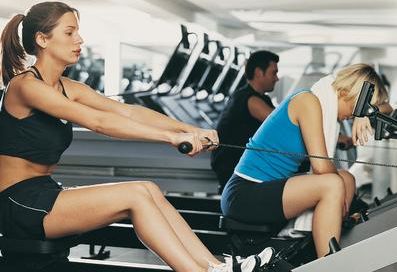
A 35 year old woman presents to her primary care doctor reporting that she has been “feeling lousy” for a few weeks. Upon further questioning, she describes that she has difficulty concentrating at work, is frequently irritable and anxious, and has had changes in her appetite. She hasn’t been sleeping well, feels generally sluggish, and has no interest in sex — or anything else, for that matter.
So what’s the deal? Viral infection? Major depression? Anemia? Vitamin D deficiency?
Maybe not.
“You exercise?” asks the woman’s doctor.
Suddenly, her eyes lit up. “Oh yeah. I totally LOVE my Spinning classes! They kick my ass.”
Hmmm. Relevant? Maybe.
Turns out, excessive high-intensity training with inadequate recovery can result in nervous system, hormonal, and immunological changes1. This manifests itself as not only compromised athletic performance but also as disturbances in cardiac function, sleep and energy, cognitive performance, mood, sweating, and immunity. Sub-ideal, right? Right.
WHAT IS OVERTRAINING?
Sorry for the cliff hanger, this article was way too long to post. Here is a link to it.
If you are not on our list to receive our weekly email newsletter, you can sign up here.
