
by Joan Kent | Oct 6, 2017 | Health and Wellness, Master Instructor Blog

Image from http://postercabaret.com
By Team ICG® Master Trainer Joan Kent
As many of you know, cholesterol is absolutely vital to our lives and our health. It’s a waxy, pearl-colored, solid alcohol that’s produced primarily in the liver, but is so important every cell in the body can make its own.
Cholesterol has widely varied and important functions. It’s the precursor of all steroids: adrenal hormones, sex hormones, vitamin D and bile acids. It helps to structure cell membranes and modifies their fluidity to compensate for diet-induced changes. It helps to transmit neural impulses. It makes skin “waterproof.” It helps to transport triglycerides. It can function as an antioxidant.
Classifying cholesterol as good or bad hinges on whether it’s linked with cardiovascular disease or protects from it. A recent article states that high HDL (“good”) cholesterol doesn’t make up for high LDL (“bad”) cholesterol. This post is about the real cause of high LDL.
Many people think that eating fats raises serum cholesterol. When they try to lower their cholesterol, they reduce dietary fats. But dietary fat doesn’t necessarily raise serum cholesterol.
Cholesterol synthesis is controlled by an enzyme (HMG-coA-reductase) that’s triggered by insulin secretion. So foods that raise insulin secretion will increase serum cholesterol. Saturated fat raises cholesterol, but not because it’s fat. It raises cholesterol because it stimulates insulin secretion. Unsaturated fats don’t.
Insulin-triggering foods are more likely to increase our cholesterol than healthful fats. It’s just another way that sugars and processed carbs — and the high insulin secretion they promote — turn out to be bad for us. Good fats help us train well and stay healthy, so the distinction is important.
It works like this. Say you’ve just treated yourself to a lobster — cholesterol and all — with nothing else. As you digest, the cholesterol is released into your bloodstream. Special receptors, found in each cell, surface and pull cholesterol into the cells to be used in the ways listed above. As cholesterol is pulled into the cell, two things happen: 1) cholesterol production inside the cell stops, and 2) serum cholesterol drops because the cholesterol has been transported into cells.
What if you’ve had more than lobster? Say you’ve also consumed some serious insulin triggers: a drink, melted butter, bread and more butter, dessert. The insulin those foods stimulate starts cholesterol production within your cells. As a result, the special receptors don’t need to pull cholesterol from the bloodstream into the cell because the cell is making its own. Serum cholesterol remains high.
So why is LDL bad and HDL good? Because of their functions.
HDL is a scavenger. It gathers excess LDL and takes it to the liver to be broken down, and to the intestine to be excreted.
LDL transports vital cholesterol through the bloodstream to all of the cells that send up receptors to pull it inside. Along the way, though, cholesterol can stick to arterial linings and create plaque formations. That negative process is known as atherosclerosis. The plaque itself is a combination of LDL and sticky platelets.
If you’re wondering what makes the platelets sticky, sugar does a spectacular job. And the combination of higher LDL/lower HDL is written up in science journals as the expected result of a low-fat, high-carb diet.
Knowing this is important, so we don’t eliminate the wrong stuff. A previous post (Controlling the Sugar/Fat Seesaw) listed several benefits of eating healthful (unsaturated) fats, including enhanced endurance. Whether your students ride outdoors or stick to indoor cycling, cutting way back on good fats won’t help them lower LDL-cholesterol. And it may hurt their endurance. The best thing for them to do is keep the good fats, limit saturated and trans-fats, and cut down on junky carbs.
A few years ago in California, a U.S. national cycling champion taught a workshop on racing and recommended a high-sugar diet: “All the things you think you can’t eat, ladies!” She listed cookies, cupcakes, pastries, donuts, chocolate milk and more. I would disagree with her approach, which is probably all too common.
But here I’m simply presenting a way your students can lower “bad” cholesterol without decreasing endurance. Good fats can stay; bad fats and carbs should go. And sugar is ugly.
Save
by Joan Kent | Oct 4, 2017 | Best Practices, Health and Wellness, Master Instructor Blog

Early cycling classes. Late nights. Approaching holidays. Fall quarter can be a busy time, and it might be difficult to get enough sleep each night. But it's important to do so because sleep deprivation affects several factors related to health and weight management.
For one thing, sleep deprivation, even short-term, can lower leptin levels. Leptin is a powerful satiety hormone that tells the brain/body it’s had enough food and doesn’t need more. (Leptin’s functions are far more complex and diverse than these, but for the purposes of a short post on sleep, health and weight, this will serve.) The name leptin means “thin”, so if it’s not working properly or is in short supply, it can create the opposite effect.
Another thing inadequate sleep can do is raise levels of ghrelin. The hormone ghrelin works in opposition to leptin and stimulates the part of the brain that promotes eating. This “monster” hormone increases appetite, decreases metabolic rate, and even promotes a preference for fats.
Because ghrelin has such a negative influence on appetite and weight, it pays to know what else triggers it. A high-fat diet (even a high-fat meal) can do that, so keep your fat intake moderate. The type of fat — saturated or unsaturated — doesn’t seem to affect ghrelin levels but, for health reasons, unsaturated fats — omega-3s and omega-9s — are recommended. One obvious exception is raw, organic coconut oil: it’s saturated but extremely healthful. Still, use it moderately.
Sleep deprivation can also reduce melatonin. When we sleep, the brain releases melatonin, an anti-inflammatory hormone that can help heal any number of things in the body. Since inflammation is the source of most (some sources say ALL) disease, getting enough sleep is a key to staying healthy.
Getting too little sleep can trigger pro-inflammatory chemicals that make us less responsive to insulin, and that's never a good thing – either for health or for weight. Insulin resistance underlies many metabolic disorders. Those disorders include diabetes, hypertension, high triglycerides, high cholesterol, heart disease, breast cancer, colorectal cancer, polycystic ovary syndrome and polycystic kidney disease. Because these disorders tend to occur in clusters, someone with one is likely to have several.
Insulin resistance can contribute to weight gain, as well. If you have students who struggle with their weight, this is worth passing along to them. We typically hear that insulin resistance is the result of obesity/overweight. That’s true, but insulin resistance can actually cause overweight, too. I’ve mentioned this in previous posts, but here’s a brief summary. Body tissues differ in their sensitivity to insulin. The primary site of insulin resistance is skeletal muscle. Insulin resistant muscle doesn’t respond to insulin, so glucose isn’t transported to muscle tissue and is instead transported to fat deposits. In short, anything that decreases insulin sensitivity is bad news for health and for weight. (Diet can be a significant cause of insulin resistance, but we’ll limit this article to the effects of sleep deprivation.)
So the bottom line is pretty straightforward. Be sure to make sleep a priority, even when — or especially when — you're busy.
Save
by Amy Macgowan | Sep 20, 2017 | Health and Wellness, Melissa Marotta

Q: “I've been on a beta-blocker (atenolol) for my high blood pressure. Lately I find that I can't keep up with the profiles my instructor presents in the Spinning classes I take. When I push to the target energy zones, I feel like I am overexerting myself. I'm exhausted. Can you help me understand how this medication might be affecting my heart rate?”
– J.T.
Melissa writes:
An excellent question indeed. I'm glad you've noticed that something isn't quite as you expect, and that you've empowered yourself to get to the ‘heart' of what's going on. (Bad joke…)
Beta-blockers are one kind of well over 15 types of different medications used to treat hypertension (high blood pressure), some of which you may also have heard of: angiotensin converting enzyme (ACE) inhibitors, angiotensin receptor blockers (ARBs), calcium-channel blockers, diuretics, and many more. Each class of drugs works on different receptors in different locations (heart, blood vessels, lungs, skeletal muscles, etc.), and thus has different effects. I will limit my discussion here to Beta-blockers, and defer the others for a later article.
(more…)

by Joey Stabile | Aug 30, 2017 | Best Practices, Correcting Form, Health and Wellness
Paul Swift from BikeFit sent out an infographic showing proper wrist alignment – their example is for a mountain bike, but the concept is identical no matter what you're riding. If you've been to WSSC, BikeFit is the company who provides the very popular bicycle shoe cleat alignment / adjustment service.
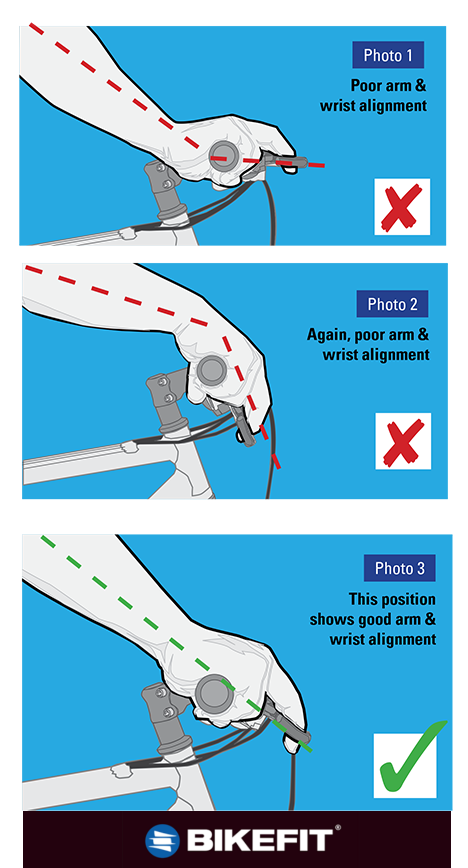
Complaints about hand numbness are typically the result of riding with hyper-extended wrists. We've explored the need for proper hand position in detail here at ICI/PRO in these posts:
Correcting Student’s Form — Proper Hand Position
More on preventing carpal tunnel / hand numbness in your students
5 Tips that will help you (and your hands) feel more comfortable on your bike
Save
Save
Save

by Joan Kent | Jul 24, 2017 | Health and Wellness
The #1 fear most people have when it comes to sugar addiction is not being able to quit eating sugar. More accurately, they fear how terrible they’ll feel when they stop eating it – and fear that will drive them back where they started.
The good news is it doesn’t have to be that way.
It took me quite a long time to get to where I am today with my sugar addiction – off sugar and with no cravings. But let’s be fair – I had no one back then to give me specific instructions or helpful coaching.
Instead, I was reading articles in science journals that sounded something like this: “Radio assays were performed on rat brain….”
Yes, the information was that exciting – and that remote from my personal struggles with sugar. For me, quitting sugar was about putting bits and pieces together and turning them into a formula to follow.
Now that sugar is recognized as addictive – and sugar addiction is recognized as problematic and widespread – books and guidelines on quitting are everywhere. I’ve written both.
So how long DOES quitting sugar take?
Getting rid of cravings for good will take a while, but quitting takes much less time. The answer is less than a week – if you do it right.
I’d love to help you do it right. Please visit www.FoodAddictionSolutions.com/Coaching and request your free Last Resort Nutrition® Cravings-Crusher Consult. Find out how great you can feel and how much energy you can have when you’re off sugar and free of cravings!

by Joan Kent | Jul 11, 2017 | Best Practices, Health and Wellness

My biggest mistake with sugar was actually a series of several mistakes. Are you making them, too?
First was my Mindset Mistake: I resisted the idea of having to give up sugar. Yes, I knew I was addicted to it but was sure I wouldn’t have to quit.
Second was my Approach Mistake: I started looking for loopholes. Believe me, no one ever looked harder for a sugar loophole than I did, so I can say with confidence there isn’t one. But I didn’t believe that back then!
Third was my Behavior Mistake, which of course was a direct outgrowth of the first two: I used Sneaky Sugars. A new and popular item at that time was “all fruit” jelly – as if that wouldn’t have an addictive effect on me. I’d buy and eat it by the jarful. Another was a fake ice-cream-type dessert that had me at “hello” – hooked on the first spoonful.
Yikes.
Many trending sugars are available now, showing how sneaky the food industry can be, along with some old faithful entries: agave, coconut sugar, maple syrup, honey – and Organic Sugar. ‘Cause that doesn’t affect the brain; it’s organic….!!!!
If I could start all over, I’d be more Zen about sugar: No attachments. No aversions.
I’d accept that my addiction meant needing to give up sugar – and give it up much sooner.
I’ve never regretted quitting sugar but do regret the time I wasted – and the frustrations I caused myself – by not facing my addiction to it for real, once and for all. No one knew this stuff back then.
If you’re somewhere in the sugar Mindset / Approach / Behavior labyrinth and would like some help, perfect! That’s what I do. Just visit www.FoodAddictionSolutions.com/Coaching and request your free Last Resort Nutrition® Consult. Find out how easy it can be to get on track and move toward better health, more energy than you’ve imagined – and a life without cravings.
In the somewhat belated – but always relevant – spirit of Independence Day, what’s your freedom worth to you? Freedom from sugar and from cravings may be the greatest gift I can give you. Just go here.
