by Joan Kent | Feb 22, 2017 | Health and Wellness
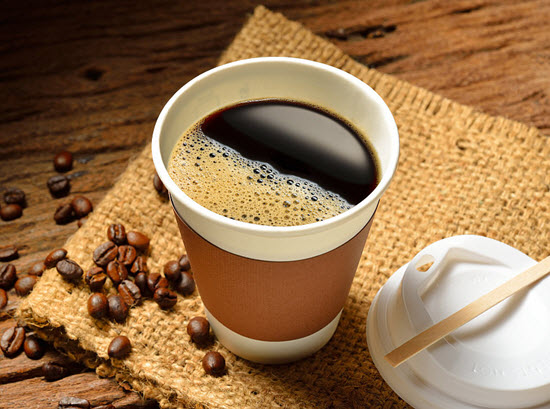
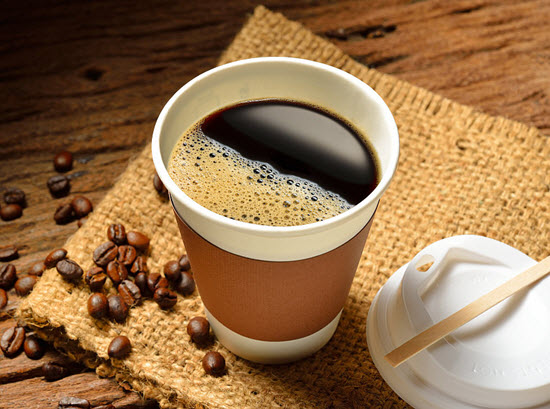
Obviously, it’s not necessary to know how caffeine works to be able to use it. It can be helpful in boosting pain relief from other pain-relievers or by itself. It’s especially good for muscle pain relief — great news if you work out hard.
Scientists speculate that caffeine’s pain-relieving power comes from 3 mechanisms:
– It blocks release of adenosine.
Adenosine is a brain chemical that carries pain signals to the brain.
– It activates adrenalin pathways in the brain.
Those pathways include the body’s own pain-killing mechanism.
– It stimulates the central nervous system in a way that changes the processing of pain signals.
Of the 3, I like the first one best. The second 2 don’t actually explain clearly (at least to me), but the first does. Here’s why.
Adenosine prevents the release of 2 brain chemicals — norepinephrine and dopamine — presumably so the amounts available at a given time are kept within control.
When we consume caffeine, the caffeine blocks adenosine. It occupies the adenosine receptors and prevents adenosine from “getting in.” As a result, dopamine and norepinephrine are released in larger amounts. That’s why coffee makes us feel alert.
But norepinephrine also has analgesic power, so it offers a bonus — it wakes us up and helps to relieve pain.
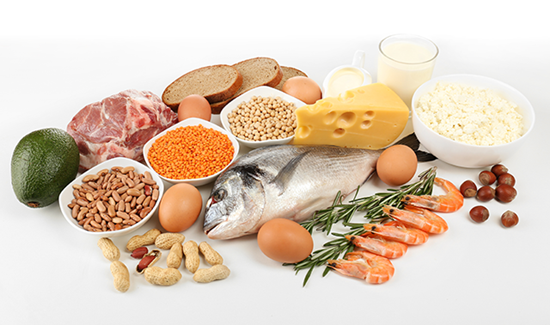
Norepinephrine is made when we eat protein foods: fish, eggs, chicken, beef, lamb, pork, turkey, shrimp, crab, yogurt (with 18-22 g of protein per serving). For non-animal protein, use high-quality vegan protein powders from peas, hemp and other vegetable sources. (Kale, for example, doesn’t have enough.)
The take-away? Be sure to eat protein foods regularly, so your norepinephrine stores are adequate when you need to release them by consuming caffeine.
For additional tips like these — or for more serious health issues — visit www.FoodAddictionSolutions.com/Coaching and request your free Eating Empowerment Consult. Find out how easy it can be to get your nutrition and your health back on track.
by Joan Kent | Feb 14, 2017 | Health and Wellness
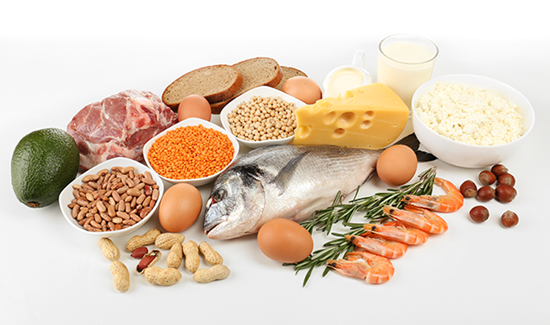
On a few separate occasions, I’ve heard people from various health occupations declare that protein is “overrated.” It seemed to me those folks were thinking of “body” protein — for muscle building and the like — rather than brain protein. This brief post covers the top 3 reasons to take a different view of protein.
1. Protein provides amino acids.
Amino acids are the precursors of several key brain chemicals — dopamine, norepinephrine, and serotonin. Those neurochemicals affect the brain in a number of ways.
Dopamine and norepinephrine boost alertness and brain reward. Norepinephrine and serotonin improve mood and help fight depression and other “off” moods. All of them are brain feel-goods.
2. The female brain turns over serotonin at a faster rate than the male brain.
As a result, women need protein throughout the day. That provides the amino acid tryptophan in sufficient quantities to help the brain make enough serotonin and prevent various mood issues.
In addition, protein foods provide B vitamins. Vitamin B-6 helps to make serotonin synthesis (or re-synthesis) possible.
3. Protein is the macronutrient that offers the highest satiety.
Satiety is the feeling that we’ve had enough food and don’t need to go back for more. One underlying reason for this is that protein triggers production of cholecystokinin (CCK). It’s the most powerful satiety hormone the human body produces.
Yes, there are other reasons to eat protein, but let’s stick with these 3 for this post.
The above reasons are compelling ones to keep eating true protein foods — fish, chicken, grass-fed beef, eggs, shellfish, and more — throughout the day. If you’re against eating animal products, by all means substitute high-quality protein powders.
Vegetable proteins are having their moment right now. But for some people, the amount of protein available in kale, for example, won’t provide enough protein to make big changes in the brain. Vegetable protein powders, though, offer more.
Whatever form of protein you decide to use is up to you, of course. Just don’t skimp on protein if you’re seriously interested in alertness, better moods, and greater satiety.

by John | Nov 30, 2016 | Health and Wellness
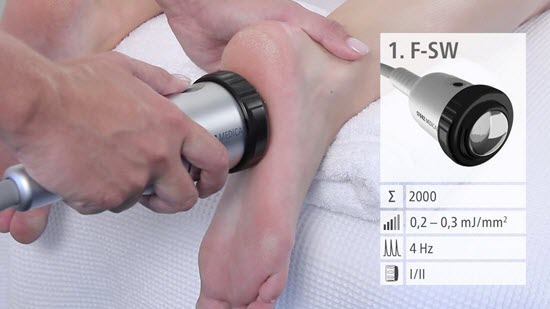
I've got a hunch that you know someone (friend or class participant) who suffer from plantar fasciitis. This new, noninvasive procedure sounds promising.
HAMDEN >> Alex Horjatschun was in excruciating pain from tendinitis, caused by a bone spur on his heel. On a scale of 1 to 10, it was a definite 10.
“I would get up off the couch and I would be limping,” he said, and it was difficult to do his workouts or stand for any length of time.
Normally, tendinitis and plantar fasciitis, which is closely related to tendinitis, are treated with surgery or with high-powered shock waves, both of which require anesthesia.
But Horjatschun is one of the first patients to be treated with a new machine that uses lower-level sound waves – the Storz Duolith SD1. “This machine has the benefits of having the patient direct you to the areas that hurt because it’s a midrange energy level that’s tolerable,” said Horjatschun’s podiatrist, Dr. David Caminear of Connecticut Orthopaedic Specialists.
Caminear was one of the authors of a double-blind study to test the Duolith, which recently received approval from the Food and Drug Administration. The study was published in the Journal of Bone and Joint Surgery, “arguably the most prestigious orthopedic journal in the world,” Caminear said.
“I was a little skeptical of how it was going to work … but after the first treatment (the pain) seemed to really subside and after the third treatment it was like night and day,” said Horjatschun, who lives in the Valley. (He asked that his hometown not be identified for personal reasons.)
“The pain now is maybe a 1, if that,” Horjatschun said. The treatments “decreased the inflammation and now it’s gone away.”
Tendinitis is inflammation of a tendon that connects a muscle to a bone. Plantar fasciitis affects the bands that connect to the heel and help stabilize the foot. Both conditions can be tremendously painful.
Caminear and his colleague, Dr. Jeffrey DeLott, were among the podiatrists at six sites across the country that participated in the study. “It’s Level 1 evidence, which in the medical world is the highest level you can get,” Caminear said. In the study, neither doctor nor patient knew whether the Duolith or a “placebo” machine was being used.
To be considered a successful therapy, patients had to report greater than 60 percent pain relief, Caminear said, and 65 percent of patients did, which is considered a success. In other words, six in 10 patients who were subjected to the Duolith machine experienced at least a two-thirds reduction in pain.

by Joan Kent | Nov 30, 2016 | Health and Wellness

Nutrition coaching can be a gratifying business when clients get results. But it can be rather frustrating when clients fail to follow instructions — particularly for reasons that seem illogical, arbitrary, or even a little self-destructive.
Looking at weight-loss timing, for example. Much damage can occur from the time we first go off-course with our eating to the day we decide — somewhat arbitrarily — it’s the “right” day to begin anew.
Take the “Diets Start on Monday” Thing
Who was the first person to decide that Monday is the right day for healthful eating to begin? A heck of a lot of off-track eating can happen between the decision that you need to change your diet and that new-leaf Monday.
Or maybe the time span is only the weekend. Plenty of junk-outs can still crop up in anticipation of the deprivation that will come with Monday.
And if you catch yourself falling off your new food plan on Tuesday or Wednesday, what will the rest of the week look like if you wait till the following Monday? Imagine how many extra desserts or drinks you might squeeze in, how many extra pounds you might gain.
Don’t Wait Till New Year’s Day
For that matter, who decided that January 1 is the day to re-set after holiday chaos? The holiday season lasts at least 5 weeks. Why go through the same behaviors, and then set the same goals every year?
Two clients — married to each other — used to drink their way heavily through the year and “dry out” (their words) in January. I discovered their January dry-out didn’t last the full month of January. It barely covered the first 3 weeks of the year.
We needed to make changes
A few other clients of mine have difficulties with sugar, alcohol, and weight gain. They’ve told me (separately) that they intend to keep eating and drinking through the holidays and start following a healthful plan in January.
Again, changes seem to be in order.
Food, Alcohol, and Highway Lane Dividers
What if we delayed fixing things in other areas of our lives? Like driving, for example.
No doubt you’ve momentarily driven over the raised lane dividers on the road — the ones that make the tires bump when you move into the next lane. What did you do?
It’s not a trick question. You probably course-corrected immediately and centered yourself back in your lane. It’s the only safe and sane thing to do.
The crazy, self-destructive decision would be to let the car keep moving into the wrong lane until it crashed.
Course Correction Is Everywhere
In other examples, we notice when we’re off course and adjust our steering instantly, literally or figuratively.
All travel involves course correction — spacecraft, airplanes, sail boats — without delay. Entrepreneurs risk failure if they don’t plot a new direction when a business drifts off-course.
Hopefully, healthful eating is a plan you’ll follow for the rest of your life. Forget starting on a Monday, or New Year’s Day, or first thing in the morning. We’re in the middle of the holiday season now. Sugar and alcohol are virtually everywhere.
My only recommendation is to view your health as a lifetime project. Whatever harm you may have done thus far this season, simply stop and course correct. Anytime, and sooner is better. Imagine the wreckage you can prevent if you course correct right now, instead of waiting another month or so.
All-or-nothing thinking is a rigid perspective that can get us in trouble if we let it. True flexibility can encompass a few indulgences — as well as getting back on target right away, at the very next meal.
Just do what you’d do if you crossed over a lane divider. Steer back and re-center immediately. It may be just that important for your health.
Looking for help with your holiday or post-holiday food plan? Perfect, because I make it easy. Just visit www.LastResortNutrition.com and request your free Eating Empowerment consult. Find out how small tweaks can make a big difference and help you feel great.

by Joan Kent | Nov 22, 2016 | Health and Wellness

So. Happy Holidays, right?
About 69% of people say their stress levels go up during the holidays. Some of the stressors are crowds and long lines, gaining weight, getting into debt, and lack of time. There are others, of course, but these are at the top.
Ironically, the coping strategies people tend to use to deal with stress during the holidays are food and alcohol — which of course can make any weight gain worse.
So let’s look at 6 tips that minimize the holiday damage to your food plan.
Workout Survival
Exercise is very important because it’s a stress-buster. If you can keep your workouts going through the whole holiday season, you’ll feel much better and might not need to stress eat or drink as often.
Try an early morning workout — before anyone in your family is up and around. Fewer demands on you will help you get your workout first thing.
If that doesn’t work for you, try the BTN tactic: Better Than Nothing. BTN workouts are short — perfect for a day that leaves no room for something longer. No matter how busy you are, you can probably find 10, 11, or 12 minutes for a BTN workout.
BUT! To make this useful, it has to be physiologically meaningful. You have to pair the short duration with high intensity intervals. This approach is in keeping with research that shows high intensity interval training to be effective — some say much more effective than longer, slower cardio.
Sample format: Warm-up for 3 minutes — 1 minute easy, 1 minute a little harder, 1 minute a little harder. The rest is all about intervals and recovery. Try 40 seconds very hard, with only 20 seconds of partial recovery. Keep that going for the remaining 7 minutes.
If 40 seconds is too long, try 30 seconds very hard, with 30 seconds of recovery. If exercise is new for you, make your work interval 20 seconds and your recovery 40 seconds.
Remember the old Nike slogan and Just Do It!
Office Survival
Avoid the break room! Every office is set up differently, but the question is this: Where do they keep the holiday goodies? Stay out of that room as much as possible.
Party Survival
Never skip meals in an attempt to avoid calories on a party day. That’s just a binge waiting to happen. Eat as usual to prevent overdoing it when you get to the party and face all the temptations.
Buffet Survival
Eat some food before you go. The best choice would be protein foods (some chicken, turkey, fish or other protein you have on hand).
When you get to the buffet, give yourself a full serving of protein first. That would be 3 to 4 ounces of turkey, ham, whatever the buffet meal includes.
Next, cover at least half your plate with vegetables. Naked veggies are best with sauce on the side, or at least choose the clearer sauces or dressings.
Last, pick a small indulgence that you’d like. Don’t waste calories on foods you can get any old time. Do you really need another dinner roll? Instead, save the calories for one of Aunt Mildred’s fantastic cranberry muffins.
Now step away from the buffet! Don’t eat your meal while looking at all the food you didn’t take. Just concentrate on what you have.
The most helpful order would be to start (and finish) your protein first. It will change your brain chemistry so you actually want less food.
Next, fill up on the vegetables; they’re low in calories. Finally, have that terrific muffin.
Bonus tip: Limit yourself to one indulgence per holiday meal. If you can summon real inner strength, limit yourself to one indulgence per day!
Alcohol Survival
Avoid alcohol whenever possible. It changes brain chemistry in a way that will make you want more food — and junkier food, too.
If you do drink alcohol, alternate 1 alcoholic beverage — wine, beer or mixed drink — with 1 glass of sparkling water (or ordinary cold water). Keep alternating throughout the evening.
Meal Control as Survival
If you’re given any control over the meal, jump at the chance!
“Bring a dish” is a perfect invitation for you to put together a beautiful vegetable platter or salad. If you’re asked to bring a dessert, bring fruit and nuts.
Many guests will appreciate it. It’s simply not true that everyone will grab the highest fat selection or the most decadent dessert if they’re given a choice.
If you have control over the meals at home, consider modifying all recipes all season long. Everyone has a great recipe for mashed potatoes, for example, but you can substitute chicken broth for butter or cream. Cutting butter and sugar in half in other recipes probably will go unnoticed by your family.
And avoid glazing veggies or fruits. That just adds unnecessary sugar.
These are just a few helpful tips to get through holiday parties and dinners with less damage, less weight gain, and less stress. Part 2 will cover more great tips to help you sail through the holidays.
How great would it feel to get ahead of your New Year this holiday season? What if you could jump into next year already feeling and looking good? What if you could focus on things that really matter in January instead of having to lose the weight you gained over the holidays?
Just go to www.LastResortNutrition.com , scroll to the bottom, and click to select a FREE Eating Empowerment consult. I’d love to help you make this your best — and healthiest — holiday season ever.

by Joan Kent | Nov 14, 2016 | Engage Your Students, Health and Wellness

With the holidays rapidly approaching, we’ll soon feel the stress they bring.
Did you know one of the top stresses is weight gain? Alcohol can contribute to that in several ways. It’s often a big part of holiday celebrating and socializing, so let’s look at the ways.
– Alcohol has lots of calories.
Alcohol has 7 calories per gram. Protein and carbs yield 4 calories per gram. Only fats have more calories with 9 per gram.
– Alcohol triggers lots of insulin.
High insulin may trigger hypoglycemia in susceptible people. In turn, that may increase appetite, cause mood changes, or bring on cravings. Insulin also inhibits fat oxidation and may promote storage of the fats we eat.
– Alcohol increases appetite.
Drinking alcohol releases endorphins (beta-endorphin). Endorphins inhibit the center of the brain that makes us feel we’ve had enough food and won’t need more for a while. That can lead to more frequent desire for food — and more food at a given meal.
– Alcohol makes us want different foods.
Endorphins again. Endorphins shift food preferences and cravings toward sugars and fats. Eating more of those foods can increase calorie intake and weight gain. It may even lead to insulin resistance!
Insulin resistance isn’t just the result of overweight, as we usually hear. It can cause it — along with a variety of metabolic disorders.
– Alcohol can mess up our moods in several ways.
Alcohol changes brain chemistry and may lead to depression or anxiety, for example. But any negative mood can cause cravings. The cravings won’t be for good foods, but for junk. Between cravings and the junk they make us want, we may eat more.
Serotonin typically drops with alcohol use over time. Low serotonin affects mood, triggers cravings, AND makes us more impulsive. That combination may make it more difficult to resist cravings of any kind — including more alcohol.
– Alcohol disturbs sleep.
Alcohol prevents the deep stages of sleep (theta- and delta-wave) that are most restorative. Poor sleep can trigger the monster hormone ghrelin. Ghrelin increases appetite and food intake while it slows metabolism.
Alcohol may also cause middle-of-the-night insomnia. Insomnia might make it difficult to exercise — or to show up for early morning workouts. Insomnia may lead to depression or other bad moods, and that may decrease your motivation to work out altogether.
As you can tell, alcohol can contribute to weight gain and the stress it brings. The sabotage of alcohol goes beyond calories in/calories out.
Even worse, most of the factors above — with the exception of calorie density — hold true for sugar, as well. Limit alcohol this holiday season for better health, better moods, better sleep, and better weight management.
Yes, holiday time seems like a tough time to work on health. But it can be done — and will make you feel great going into the New Year. For help with cravings of any type, or any “odd” food issues, just contact me at drjoan@LastResortNutrition.com .We can find a simple and effective plan to move you where you’d like to go in a way that’s easy and do-able.
