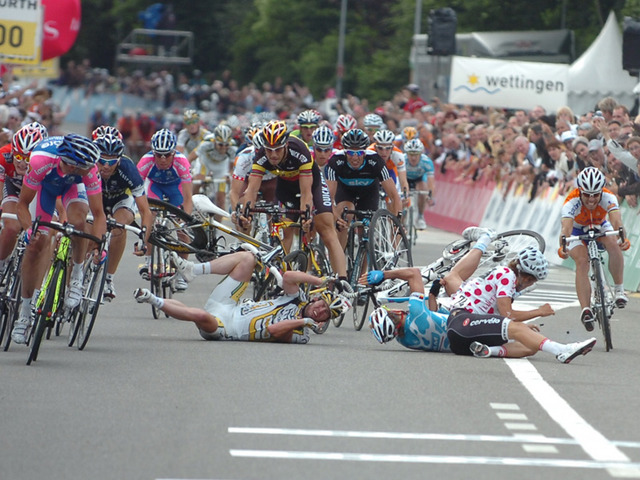
I'm getting so tired of hearing indoor cycling instructors say “If you don't do it on a bike outside you shouldn't do it on a bike inside”. This statement is repeated over and over again on social media. In Facebook groups like Indoor Cycling Instructors battles will rage on for days about topics like weights on the bike, tap backs or appropriate RPM ranges. Often these movements will be labeled “Dangerous”. I often wonder if the instructors who say “If you don't do it on a bike outside you shouldn't do it on a bike inside” have ever ridden a bike outside. I can think of no more dangerous activity than riding outside. Cyclist literally put their lives at risk ever ride.
This video below shows how “safe” riding outside can be.
Something else I find interesting is the same person who screams “If you don't do it on a bike outside you shouldn't do it on a bike inside!!!!!” will in the very next post ask if anyone has a suggestion for a hill climbing song with a BPM of 72. Hmmm, when I ride outside I don't listen to music because that IS dangerous and I certainly wouldn't limit myself to riding at one specific RPM. So, if this instructor really believed “If you don't do it on a bike outside you shouldn't do it on a bike inside” then they shouldn't be using music during indoor cycling class!
Have you every had someone come to your class, all kitted out in their cycling team's matching outfit (all the way down to gloves and sox), not follow anything you say the entire class then approach you after class and want to discuss their “training program”?
This conversation usually starts with this, color coordinated, rider “apologizing” for not following along during class and is usually followed by a BIG condescending “BUT, I ride outside!” As if to say whatever you and the other riders are doing in this studio is worthless to me because “I ride outside”. So I usually say, “That's great, happy to have you in class today, what Category rider are you?” This question is usually followed by a confused look. To which I ask “What Category do you race in?” The response to this question is almost always “I don't race, I just ride outside”. So then I ask this rider if he/she is training for any specific event like a century or multi-day touring ride? I sometimes get a “Yes” but most often I hear “No, I RIDE OUTSIDE!” as if this is supposed to mean something special to me. At this point the outside rider likes to tell me that they are only using my class for “base building” to prepare them for riding outside and that the intervals I do in most of my indoor cycling classes are too intense for base building. When this statement is made I agree and let this low intensity junkie know that I coach multiple endurance athletes who are training for events like Ironman, marathon, multi-day bike touring events, mountain bike enduro races and that I have completed 8 Ironman events myself. I let this “base builder” know that I'm a firm believer in the power of building a strong base for the higher intensity work that is to follow in a periodized training program. The word “periodized” usually gets me a confused look from this outside, base building, rider. So I explain that if you are using the winter months to build base, in order to reach your full potential it's necessary to add some higher intensity interval based training after the base building period. The answer to this statement is usually “I don't follow a specific training program I just ride outside”. I'll then ask “How are your outside rides organized?”, to which I'll get an response telling me how the ride leader will send out an e-mail telling the group what matching outfit to wear for the ride tomorrow, what time and coffee shop the ride will start at, what coffee shop the ride will rest at and what coffee shop the ride will finish at and approximately how long the ride will be. Then I'll ask “how far and how long are these rides?” And I'll get an answer like 40 miles in 4 hours. My response is usually, “So you are actually on a 12 month long base building program”. I explain that if you are riding at a low intensity now, in class, AND riding at a low intensity throughout the summer on your organized group rides you are never really taxing your cardiovascular system and you will actually get slower and slower over time. I'll usually get a frustrated “BUT I RIDE OUTSIDE” response and I'll calmly respond that your body doesn't care weather you're inside or out, low intensity is low intensity and a 4 hour ride with multiple coffee breaks is by definition a low intensity ride which by definition is a base building ride.
As the logic of my argument starts to sink in, this long slow distance loving, 12 month a year base building, kit wearing, condescending outdoor rider asks me in a huff “So, what would you recommend?” I respond by explaining that if you are not following a periodized training program developed by a reputable coach and if you are not training for any specific event, but only to enjoy your rides outside I would recommend that during the winter months doing some high intensity training. I explain, due to the weather and lack of daylight during the winter months many riders are forced to train at a much lower volume. I recommend, due to this lower volume, increasing fitness through higher intensity shorter training sessions. I'll justify that this training method is gaining popularity with many of the worlds top coaches. Since this, espresso drinking, outdoor rider probably doesn't respect my knowledge because I ride inside I'll ask for his/her e-mail address so I can forward some articles on this training method (articles like The Myth of Winter Base Training for Cyclists). My final recommendation and probably the hardest for this outdoor rider to stomach is, when coming to indoor cycling classes, to follow along with the class profile. Many indoor cycling instructors also ride outside and actually know what they are doing and what they are taking about. Many have college degrees in the field, years of experience and are certified to teach indoor cycling through reputable organizations. WE KNOW WHAT WE ARE DOING!!!!!!! If you follow our programs you will get more fit.
If you can win this rider over and they start to see fitness gains he/she will be a become a lifelong fan of you and indoor cycling.
Most weeks I teach around 12 indoor cycling classes between 4 different clubs. I enjoy the variety of facilities, locations and different types of membership bases. I also like to see how different group exercise programs are run and administered. There is one trend I'm seeing that is starting to really bother me.
My job title in most facilities is Indoor Cycling Instructor and as you would expect my my job description includes all the various points of providing members with the best indoor cycling experience possible. The trend that is disturbing is the addition of excessive cleaning and bike maintenance that has been added to my teaching duties. In some facilities this extra cleaning is optional and, if done, is reimbursed. The cleaning/maintenance rate may be lower than my instructor rate but I appreciate the fact that the administrators at these clubs value my time. In other gyms the extra time spent cleaning is not optional, it's expected, and it's not reimbursed. This is not simply picking up and tidying the room after class it's sweeping the floor, cleaning all the mirrors, taking out the trash or wiping down 10 or more bikes. In most cases it's 15-30 minutes of extra, unreimbursed, work. I know this doesn't sound like much but I don't believe anyone should be asked to work for free and if I was required to do an extra 30 minutes of unreimbursed work after all my classes it could quickly add up to 6 hours of unpaid time per week.
Have you ever done the math? Below is a the breakdown of how all these little tasks can cut into your instructor rate.
I assumed a rate of $30 per class. If you get paid more, these extra tasks are actually more costly to you.
I assumed 30 minutes of prep time. If you spend more time preparing class your actually hourly rate will be even less.
Most facilities and certifications recommend arriving to class 15 minutes early.
Most facilities and certifications recommend being available after class to answer any questions or converse with participants for 15 minutes.
If cleaning is required it takes at least 15 minutes to be done properly, sometimes longer.
Some facilities are requiring a social media presence and want instructors to promote their classes on Facebook, Twitter and/or Instagram. I assume this takes an average of 5 minutes per post.
As you can plainly see, your hourly rate can quickly be whittled away when all these uncompensated tasked are added to your job duties.
I often hear, from owners, managers or in customer service training workshops the importance cleanliness. Administrators will say that cleanliness is their top priority and often their top complaint. E-mail after e-mail will address that member complaints about lack of cleanliness are up and that “We all have to work together to keep the facility cleaner. Take just a few more minutes after each class to make sure the room is spotless.” When something in my life takes top priority I'm willing to invest in it, whether it be money or time. If a facility says that cleanliness is it's TOP PRIORITY then it should also be willing to invest in it and hire more maintenance staff or at the very least pay it's instructors for the time they spend making the room spotless after each class.