I stumbled across this new power monitoring system that displays your data on a big screen + saves your data so you can compare your efforts from class to class. More evidence of the emergence of Indoor Cycling 2.0!
Flywheel believes in encouraging top quality performance. Our on-bike proprietary technology and the world’s first TorqBoard, displaying real time ride stats, allow you to achieve your personal best. And our online performance measurement tool lets you track your fitness goals long after you leave the studio.
If you know anything about this post a comment with the information. I have a request in to the club founder for an interview.
Being a Power Training fanatic that I am, I also regularly monitor the forums and various blogs about power on the internet. I came across a fantastic thread of conversations on the Google Wattage forum (a place where serious cyclists, with serious money, talk about serious power). If you don’t ride outside, you might not be aware that there is a general disdain from cyclists about indoor cycling, and especially Spinning®. They lump all indoor riding into the same bucket and consider it a last resort for getting their ride on.
Unfortunately, they have missed more than the point. If you are a member of ICI/PRO, you already know how much fun riding indoors can be. This alone is a good enough reason to give indoor cycling a second look if you live in a climate that locks you out of riding outside for months on end. However, it’s the performance improvements that are the real draw of indoor cycling. There a number of cycling workouts that are nearly impossible to accomplish outside. This applies to both Heart Zone® centric workouts as well as Power workouts. Many of these workouts are designed to accomplish some of the coveted objectives of higher VO2, greater power, and an elevated threshold.
Tomorrow we officially hit the half way point of our 16 week Winter Training program at the Global Ride Training Center. We’ve employed the Keiser M3 power indoor bikes and Cycling Fusion principals to maximize our use of the indoor environment. However, the foundational basis of all this training is anchored in the most important engine we are tuning – the cardio vascular system. For that, we are major proponents of the Heart Zones Training methods. Twenty four of us are preparing for personal bests and new levels of performance in the great outdoors on two wheels.
Those that have read my Cycling Fusion manifesto know that I’m passionate about pulling the indoor and outdoor world of cycling together. In our 16 week Winter Training program we have a third who have never done any significant rides outside, a third who are on my USA Cycling race team (men and women sanctioned races only), and a third who are just avid cyclists. Most however, have never really trained inside, so this program has been a big experiment for the bulk of the class.
Consequently I felt it important to give them some motivation to fuel the second 8 weeks since we are moving out of a 90% focus on Heart Zones training, and moving into a 75% focus on Power Training. Nothing speaks louder than results, so I retested some of the class to show the real facts of our progress so far. I retested a small sample, since the entire class will be retested at the end of the 16 weeks.
If you live in a state that is relatively flat (3% grade or less on most roads), then generating power will be more for generating speed, overcoming wind resistance, toning leg muscles, and in general getting fitter. However, if you live in one of our hilly states, you know well that it’s all about the climbing.
In fact, unless you are a time trial specialist, the main determining factor for whether you can be competitive in racing, or successful at that century ride you’ve always dreamed of doing, will be how you ride in the hills. As a spectator of professional cycling, you may have also noticed that it is the mountain stages that typically determine who will make the podium, and who waits till the next race to make their mark. At the end of the day, climbing is just about the most important discipline to conquer in outdoor riding. To that end, the Cycling Fusion Speed & Power Climbing chart can help you train in the hills.
Across the top of the chart are the grades of a given climb. The left side represents the speed you will travel up the hill if you can generate the Watts/Lb that is reflected in the intersection of the two. For example, if you want to climb a 7% hill at 10 mph, you will need to generate 1.5 Watts/Lb. How do you know what grade a given hill is? There are numerous mapping programs that can tell you the average grade of a given section of road, you can get a reading from certain bike computers or GPS devices, or finally, you could calculate it if you know the elevation gain, distance and a little algebra.
Notice on the sample chart below, that the cells representing 1.0 or 1 Watt/lb are highlighted in red or pink. This is because the power created at this level permits the rider to climb most hills at a reasonable speed.
During the development of the Cycling Fusion Power Training System, we did numerous indoor and outdoor comparisons of power numbers, which included different victims (er volunteers) riding specific hills with specific grades and observing their average speed and power that was recorded from top to bottom. These field tests, as well as the general riding principles of the road provide the basis for 1 Watt/lb as the gateway to outdoor climbing. Consider also these facts:
Below 5 mph, it is extremely difficult to keep a bike on line, rolling straight, safe and steady.
Below 5% grade it’s not much of a hill. As a point of reference, rail trails are typically 3% grade at their highest, and on occasions 4% because trains could not generally negotiate grades steeper than that.
In looking at the top end of the applicable grades, research on road construction guidelines has shown us what we as avid cyclists already knew from experience, that double digit grades are rare, and construction crews avoid building roads that steep when possible, but there are times when that is not possible. There are a number of references on the internet that corroborate this fact; a couple appear below. Maine and New Hampshire each show guidelines that range from 5% to 12%:
Consequently, the facts above permit us to construct a sort of minimum set of hill grades and speeds that should be manageable if one wants to ride outside, unimpeded. That is, the desire is to ride up each hill, not needing to get off and push the bike. This range is a speed starting at 5 mph, and a grade that can be negotiated up to 10% grade. The configuration below represents the minimum output required to keep riding within these guidelines. In general, it is 1 Watt/lb or less:
Notice that 10% does not quite make the 1.0 Watt/Lb guideline. Since we know that double digit grades are more rare, and often of shorter length, we can assume that the rider can use power in their Climbing or Explosive zones to conquer these sections.
Instead of admitting we are lazy, we say we are busy. Instead of being honest about our eating, we claim we just “can’t seem to do anything to lose weight”. Instead of being disciplined with our time, we complain that there just aren’t enough hours in the day. We have become overweight, out of shape, and worst of all, we feel justified because everyone else tells us that it’s “OK”.
Since when did it become politically correct to make your friends and family feel good about becoming a health risk and flirting with heart disease, diabetes and worse. Somehow we’ve convinced ourselves that we really can’t do anything about the way we look, the way we feel, or even what we do, because life just gets in the way. We remind ourselves, and those in our circle of influence, that life today isn’t as simple as it once was, and that we barely have enough energy to just keep up. Jobs, kids, family obligations, commitments to friends, church or community involvement, all seem to come before our own selves. We rationalize that we are doing it for them, and thus, we are able to let our own health and well being take the proverbial back seat on the procrastination train to nowhere. (more…)
So you’ve been reading all this stuff about Heart Zones and max HR (heart rate), and blah, blah, blah right. You’ve heard it before — nice ideas, but really, your club just isn’t into that. You don’t wear a heart monitor, none of the instructors do, heck, they don’t even sell them at your facility. Only the techno geeks and cycle freaks use those right?


 Being a Power Training fanatic that I am, I also regularly monitor the forums and various blogs about power on the internet. I came across a fantastic thread of conversations on the
  Tomorrow we officially hit the half way point of our 16 week Winter Training program at the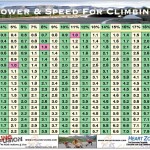

 We have become a nation of excuse makers.
 So you’ve been reading all this stuff about