
by Joan Kent | Jul 29, 2013 | Instructor Training, Master Instructor Blog
By Team ICG® Master Trainer Joan Kent
(Jim Karanas has been travelling on ICG business and hasn’t been available to supply posts for ICI-Pro for several weeks now. I’m sure his many followers are disappointed, but I hope this brief post will be of interest and practical use for instructors and students of indoor cycling.)
Over 15 years ago, Frank Day created independent crank arms for bicycles. With independent crank arms, one leg can’t assist the other in turning the pedals. The cyclist can’t relax on the upstroke, but must actively raise the pedal, using the hip flexor and hamstring. If the rider does it right, the pedal stroke will be smooth and feel like a “regular” bike. If the pedal stroke is wrong, the entire stoke will be off in timing and simply fall apart. Mastering independent crank arms forces the rider to pedal more efficiently. It’s said to increase power, as well. Another benefit is that the right and left leg muscles become more balanced, whereas fixed crank arms could perpetuate any strength imbalance between the sides. Finally, the rider gets to train ancillary muscles and coordination.
I never gave much thought to independent crank arms until I started Kranking in 2007. As most of you know, Johnny G created Spinning. (Where would any of us be today without that?) He also created Kranking and put independent crank arms on the Krankcycle.
Johnny knew Spinning would never “go” if he used independent crank arms because cyclists and riders of stationary fitness cycles in the gym were too accustomed to fixed crank arms. (One of my friends, a highly accomplished cyclist and a regular in Jim’s classes, did a 95-mile ride with independent crank arms, which impressed me no end. He’s an obvious exception.)
Kranking, however, had no such limitation because there were no expectations about the crank arms. The Krankcycle is a complete departure from the upper body ergometer. Few people like UBEs anyway, so departing in one more way was unlikely to meet with resistance. Enter independent crank arms on the Krankcycle, with all the benefits they provide.
All of that said and out of the way, here’s the point of this post. Kranking can help you and/or your students develop better pedaling technique on an indoor cycle.
In order to Krank without letting the crank arms “clunk” as they go around the axis, you need to smooth out the basic arm stroke. One of the best ways to do that is to imagine and feel that you’re making the biggest circle possible by pushing the crank arm around the largest circumference you can.
In Silicon Valley, where I’ve done a lot of teaching, the engineers think I’m crazy when I say that (“The crank arms are this long and won’t change!”), but use your imagination and make the biggest circle possible. Push outward against the edge.
Keeping the crank arms together on the double Krank stroke takes coordination. Keeping them 180 degrees apart for a split rotation, as the legs are positioned on a bike, takes even more work. It will improve your upper body coordination, muscle balance and core strength. Once you’ve smoothed out the basic stroke and mastered keeping your arms exactly 180 degrees apart for a good 15 minutes or longer, you’re probably ready to transfer what you’ve learned to indoor cycling.
I honestly don’t have any specific training plan for you to follow here and wish I could present one. What happened to me after doing a lot of Kranking is that I noticed my cycling felt different. My pedal stroke on the bike — indoors and out — felt smoother and more even. I found myself pushing to the “outside” of the circumference of the circle as an automatic and natural motion.
It would be great to report that I did pre- and post-Kranking power tests on the bike, but as researchers say, it was a serendipitous finding, and purely anecdotal. Other faithful Krankcycle users did confirm having the same experience on bikes.
Of course, you could — and can — improve your pedaling technique on a bike with PowerCranks. But your students might not have access to one, while many gyms have Krankcycles.
At any rate, if you’re looking for a way to help your students improve and balance their pedal stroke, this might be the unconventional solution. And it’s fun. Please let me know how it works.
by Joan Kent | Jul 15, 2013 | Health and Wellness, Master Instructor Blog
By Team ICG® Master Trainer Joan Kent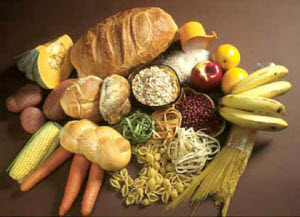
Because of the bad press carbs have received for a number of years — and the new gluten-free trend is only its most recent manifestation — many of your students may be avoiding carbs.
People who avoid “carbs” tend to define them as starches (bread, pasta, crackers, cereals, potatoes) and sugars (cakes, cookies, candy and syrups). I include agave in that last group, but few people want to acknowledge it as the sugar it is.
As indoor cycling instructors probably know, there are plenty of other carbs out there, such as vegetables, lentils, beans, sweet potatoes and more. Many of them are good for us, particularly as fuel for training.
It’s a bad idea for your students to avoid carbs, especially if they’re working out on a regular basis. Here are a few reasons for that, some of which you may already know.
Avoiding carbs doesn’t fit well with athletic training, especially tough training. In extreme cases, a low-carb diet could cause a full-fledged bonk. But even without that, low-carb eating can make it difficult, if not impossible, for the student to reach higher workloads in high-intensity classes.
A very low-carb diet can lead to cardiac arrhythmia, particularly in people who train hard. If you run hard workouts in your classes, you might need to remind your students to eat some starches both prior to, and following, a class. Fueling and refueling appropriately are important factors in fitness and health. In turn, the right carbs become an important factor in both.
Eating too few starches can increase appetite. This has to do with serotonin production, which involves carbs. Serotonin gives us a feeling of satiety, that we’ve had enough food and don’t need to seek more. Satiety caused by serotonin can be general, and its lack may lead to increased appetite. Satiety caused by serotonin can also be carb-specific, so a high-carb lunch might lead to a lower-carb dinner.
Someone who avoids starches as a general dietary strategy may not feel the satiety that starches (and serotonin) would produce. They may crave lots more food in general, and/or carbs in particular.
If your students avoid starches, the cravings could lead them to sugars. Because that general feeling of satiety might not be there, when they finally eat sugar, they’re likely to eat a lot of it. Sugar is dietary trouble, and health issues may ensue. (Don’t get me started.)
Eating too few starches can also lead to cravings for alcohol. See the preceding paragraphs for the mechanism of action; it’s the same for sugar and alcohol. I’ve seen this in many food logs submitted by clients — low starch intake, combined with substantial alcohol consumption. Alcohol can cause a host of heath, sleep and mood issues, as covered in previous post.
Less known is that the long-term effects of a low-carb diet can include an up-regulation of insulin receptors. Up-regulation is sometimes misunderstood. It takes place when the level of insulin is low, such as when the diet contains few insulin-triggering foods. In its ever-vigilant effort to maintain homeostasis, the body responds to the shortage of insulin-triggering foods by increasing both the number of insulin receptors and the sensitivity of the existing ones.
The result is that the body is ready to receive ANY insulin that’s triggered and respond vigorously to it. In someone who’s susceptible, that may translate to serious weight regain if and when the student returns to “normal” eating, even if only for a temporary period of time.
If your students need, or want, to avoid gluten, they can still consume healthful starches. Gluten-free starches include vegetables, lentils, various beans, sweet potatoes, yams, turnips and other root vegetables, squash, quinoa, and brown rice. These foods can help your students avoid the various health issues described above and keep them training well and often.
by Joan Kent | Jul 8, 2013 | Master Instructor Blog
by Team ICG® Master Trainer Joan Kent
The subtleties of teaching authentic-style indoor cycling are what make it exciting. One difficult thing to teach is the feeling of how resistance varies when you’re turning a big gear on a flat road, as opposed to climbing.
Several years ago, I learned how to use 80 rpm to simulate “big-gear flats.” I’ve been told there’s no difference between indoor flats at 80 rpm and indoor climbing at 80 rpm, that it’s just a matter of terminology. But, despite the similar resistance, the training feels quite different.
Say you’re powering your bike at 80 rpm on a flat in your big chain ring, doing 20 mph. Now let’s say you’re climbing a 4% grade in your small chain ring at 80 rpm, doing 10 mph. The cadence is the same; the intensity is likely to be similar. How do you interpret the difference in the resistance? Is it worth communicating to your class?
This has actually turned out to be a favorite training approach of mine, so I thought I’d pass along what I’ve learned for anyone who hasn’t yet done this in class and might want to try.
The first difference is what we see, the terrain. You want to describe the flat road to your classes and fix in their minds that they’re moving down that flat road very fast because of the big gear. As all of you know, a big gear feels like high resistance on the legs, with a long distance covered on each revolution of the pedals. Get the class to visualize and feel their speed on the flat road.
If you’re using video, clearly you’d want to select a flat road — the longer the better — and have them keep their eyes on the road as they ride.
Another difference is where on the saddle you sit. On a climb, we shift back a bit on the saddle, giving the down-stroke a slightly more forward thrust and creating an almost elliptical shape in the pedal stroke. On a big-gear flat, our position is moved a bit forward (“on the rivet”), making the legs circle smoothly but with more of an up-and-down, piston-type action.
A third difference is hand position. While the hands would be separated on the horizontal portion of the handlebars for a climb (known by some indoor cyclists as position 2), they stay centered on the handlebars (in position 1) for these big-gear flats. This is to keep you more centerline on the bike, as you would be on a flat road when going fast.
A fourth difference between big-gear flats and climbing has to do with upper-body motion. On climbs, we may rock the body side to side, since indoor cycles obviously don’t move the way outdoor bikes do, and we’re simulating the bike motion. But on a flat road, the upper body is still. Keeping the hands centered on the handlebars, as described above, will also help to eliminate any side-to-side action of the torso as you ride.
Another aspect of upper-body positioning involves the degree of forward lean. On an outdoor climb, the hill angle puts the front wheel much closer to your face, but that doesn’t happen on a flat, so we simulate the flat indoors by maintaining a “normal” forward angle of the torso.
The final difference I’ll describe here between climbing and riding in a big gear on a flat road has to do with cadence. On big-gear flats, the cadence never drops below 80 rpm, although everyone knows it may on climbs. Stay in a monster gear and stay at 80 rpm. Keep the resistance as high as possible without dropping to a climbing cadence.
This is where beat-match can be absolutely invaluable. If the cadence begins to fall as your legs fatigue, you can beat-match the music to stay true to the 80-rpm cadence while keeping the gear as big as you can handle. Continuing to visualize moving very fast down the flat road will help, as well.
The cadence and the resistance are everything in this training. Encourage your students to fidget as little as possible. Encourage them to ride from the center and stay close to it, keeping one hand on the handlebars at all times. You might tell them to “cut as fine a line through the atmosphere” as they can.
When done this way, this training — an all-time favorite of mine, as I mentioned — feels quite different from climbing, especially if the music is a consistent 80 rpm with an upbeat feel.
After a solid warm-up, I run my classes through three or four of these 5-minute intervals at or above threshold heart rate, with relatively long recovery between intervals. A long high-cadence spin after the last interval helps to recover the legs, too.
If you’ve never done this and give it a try, I hope it adds a new dimension to your class. Please let me know how it goes.
