by Joan Kent | Feb 14, 2017 | Health and Wellness
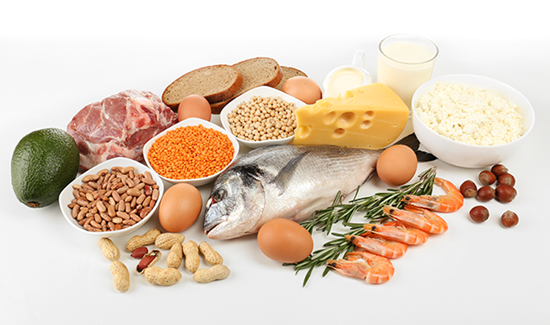
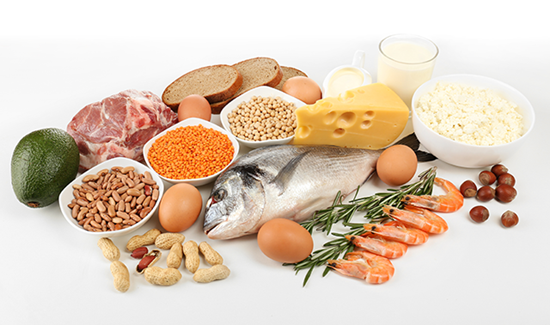
On a few separate occasions, I’ve heard people from various health occupations declare that protein is “overrated.” It seemed to me those folks were thinking of “body” protein — for muscle building and the like — rather than brain protein. This brief post covers the top 3 reasons to take a different view of protein.
1. Protein provides amino acids.
Amino acids are the precursors of several key brain chemicals — dopamine, norepinephrine, and serotonin. Those neurochemicals affect the brain in a number of ways.
Dopamine and norepinephrine boost alertness and brain reward. Norepinephrine and serotonin improve mood and help fight depression and other “off” moods. All of them are brain feel-goods.
2. The female brain turns over serotonin at a faster rate than the male brain.
As a result, women need protein throughout the day. That provides the amino acid tryptophan in sufficient quantities to help the brain make enough serotonin and prevent various mood issues.
In addition, protein foods provide B vitamins. Vitamin B-6 helps to make serotonin synthesis (or re-synthesis) possible.
3. Protein is the macronutrient that offers the highest satiety.
Satiety is the feeling that we’ve had enough food and don’t need to go back for more. One underlying reason for this is that protein triggers production of cholecystokinin (CCK). It’s the most powerful satiety hormone the human body produces.
Yes, there are other reasons to eat protein, but let’s stick with these 3 for this post.
The above reasons are compelling ones to keep eating true protein foods — fish, chicken, grass-fed beef, eggs, shellfish, and more — throughout the day. If you’re against eating animal products, by all means substitute high-quality protein powders.
Vegetable proteins are having their moment right now. But for some people, the amount of protein available in kale, for example, won’t provide enough protein to make big changes in the brain. Vegetable protein powders, though, offer more.
Whatever form of protein you decide to use is up to you, of course. Just don’t skimp on protein if you’re seriously interested in alertness, better moods, and greater satiety.

by Joan Kent | Jan 16, 2017 | Engage Your Students

These days, everyone seems to know that sugar is bad news and should be avoided.
Sometimes I feel as if I’ve heard every possible question about it, but a few sugar questions pop up over and over again. Here are 3 of them.
– If I quit sugar, will I have to do it forever?
No nutrition question is ever wrong or out of bounds. But this one is asked from the person’s current sugar mindset.
For someone who’s hooked on sugar, just thinking about giving it up is scary. That’s probably because any sugar addict knows that cravings and symptoms are likely to occur if and when they try to do without it.
The idea of going without sugar forever seems even worse — not only scary, but also impossible and dismal. How can life be worth living without sugar?
Here’s the good news. What’s true about giving up sugar is things change. Often a lot.
Once you’re past the addiction, for example, other foods start to taste different — better. Really. It is possible to enjoy the delicious flavors of foods that aren’t sweet when you’re no longer hooked on wanting everything to taste sweet.
Here’s another change. After going without sugar for a while (think several months, rather than just a few days) you may be able to taste a little bit without experiencing any relapse.
The bad news might be that it won’t be possible to go back to eating the “bad old way” without rekindling the sugar addiction. But since that ‘bad old way’ may have caused the health, mood or focus problems that made you decide to quit sugar, how bad is it really to let it go?
– Aren’t all foods okay in moderation?
Not everyone can achieve moderation around certain foods.
In the same way that some people can drink alcohol in moderation while others can’t, some people can open a candy bar, take a bite, and leave the rest on the desk for days — till they decide to take a second bite. Obviously, that’s moderation.
Not everyone can do that. For a sugar addict, a bite of a candy bar is all too likely to lead to repetition — another bite, then another, then another. It’s also likely to lead to another candy bar — or some other sugary food, such as the cookies in the office break room that day.
– Can I still have agave, maple syrup, honey, or dark chocolate?
I call this the “loophole” question.
It takes other forms, too. Some clients have asked me if it’s okay to take weekends off from their food program.
Clever (sneakier?) clients have asked if it’s okay to take weekends off from logging their food intake. I guess they think I won’t realize they’re trying to give themselves room to eat whatever junk strikes their fancy, while keeping no record of any of it for me to review.
If you’re looking for loopholes, you’re probably still in the powerful grip of sugar.
I recommend making a commitment to yourself — dull, unsexy and arduous as that may sound — to quit and stick with it.
What’s great is how you’ll feel once you’ve taken the plunge. Once your health improves — along with your medical tests, your skin, your mental clarity, and your moods — the junk will seem less important.
In fact, you may wonder how you ever let sugar take control of your appetite, your moods and your life in the first place.
Or why you ever resisted getting rid of it!
Are you thinking about quitting sugar but feeling a bit scared? Do you think you might need help? Perfect, because that’s what I do. Just visit www.FoodAddictionSolutions.com/Coaching and request your free Food Breakthrough session. Find out how easy it can be to make a few changes that get you on the right path — and how easy it is to stay on it!

by Joan Kent | Nov 14, 2016 | Engage Your Students, Health and Wellness

With the holidays rapidly approaching, we’ll soon feel the stress they bring.
Did you know one of the top stresses is weight gain? Alcohol can contribute to that in several ways. It’s often a big part of holiday celebrating and socializing, so let’s look at the ways.
– Alcohol has lots of calories.
Alcohol has 7 calories per gram. Protein and carbs yield 4 calories per gram. Only fats have more calories with 9 per gram.
– Alcohol triggers lots of insulin.
High insulin may trigger hypoglycemia in susceptible people. In turn, that may increase appetite, cause mood changes, or bring on cravings. Insulin also inhibits fat oxidation and may promote storage of the fats we eat.
– Alcohol increases appetite.
Drinking alcohol releases endorphins (beta-endorphin). Endorphins inhibit the center of the brain that makes us feel we’ve had enough food and won’t need more for a while. That can lead to more frequent desire for food — and more food at a given meal.
– Alcohol makes us want different foods.
Endorphins again. Endorphins shift food preferences and cravings toward sugars and fats. Eating more of those foods can increase calorie intake and weight gain. It may even lead to insulin resistance!
Insulin resistance isn’t just the result of overweight, as we usually hear. It can cause it — along with a variety of metabolic disorders.
– Alcohol can mess up our moods in several ways.
Alcohol changes brain chemistry and may lead to depression or anxiety, for example. But any negative mood can cause cravings. The cravings won’t be for good foods, but for junk. Between cravings and the junk they make us want, we may eat more.
Serotonin typically drops with alcohol use over time. Low serotonin affects mood, triggers cravings, AND makes us more impulsive. That combination may make it more difficult to resist cravings of any kind — including more alcohol.
– Alcohol disturbs sleep.
Alcohol prevents the deep stages of sleep (theta- and delta-wave) that are most restorative. Poor sleep can trigger the monster hormone ghrelin. Ghrelin increases appetite and food intake while it slows metabolism.
Alcohol may also cause middle-of-the-night insomnia. Insomnia might make it difficult to exercise — or to show up for early morning workouts. Insomnia may lead to depression or other bad moods, and that may decrease your motivation to work out altogether.
As you can tell, alcohol can contribute to weight gain and the stress it brings. The sabotage of alcohol goes beyond calories in/calories out.
Even worse, most of the factors above — with the exception of calorie density — hold true for sugar, as well. Limit alcohol this holiday season for better health, better moods, better sleep, and better weight management.
Yes, holiday time seems like a tough time to work on health. But it can be done — and will make you feel great going into the New Year. For help with cravings of any type, or any “odd” food issues, just contact me at drjoan@LastResortNutrition.com .We can find a simple and effective plan to move you where you’d like to go in a way that’s easy and do-able.

by Joan Kent | Nov 1, 2016 | Big Box Instructor, Engage Your Students

Not every binge eater has binge-eating disorder (BED). But even those who binge less frequently than people with BED, or on less food, may struggle to control their eating.
That can be especially true when holiday treats — and holiday stresses — are all around us.
My PhD research was on women with BED. Before that, I ran a class for women who didn’t have BED but still binged at times. They were longing to change their eating behaviors. The class was called Food & Eating Recovery.
This post is on how binge eaters handle cravings. You may wish to pass this along to any class participants who have told you they have trouble controlling their food.
Binges and Cravings Were Familiar To Me
If you’ve read my book Stronger Than Sugar — or if you read my articles regularly — you already know that I’m a recovered sugar addict. In the bad old days, I did plenty of sugar-triggered bingeing.
I’ve also resisted many cravings. They showed up frequently. I wanted sugar almost all the time back then, but was able to resist most of the cravings for most of the day. (But not all days.) No doubt that helped me limit the number of my binges.
My dissertation included lots of evidence that eating sugar triggers binges. That was certainly true for the group that did not eliminate sugar during the 8 weeks of the study.
What I Learned Was New To Me
When the topic of cravings came up in the F&E Recovery class, we talked about resisting cravings. I figured everyone would relate to that behavior because they’d done it, too.
Was I wrong!
Most of the women in the class looked at me as if I were speaking Klingon. So eating behaviors were different in this group of bingers.
Instead, the notion of ignoring a craving seemed to be foreign to them. When they craved a specific food, they ate it — or as close as they could get to it at the time.
Did That Affect Their Weight and Health?
It did. As you might imagine, the women in the F&E Recovery class who gave in to all their cravings were more likely to be overweight. In many cases, they were obese and had metabolic conditions or other health issues.
As my research showed, sugar has a lot to do with both weight and health.
Regarding weight, the vast majority of cravings were for sugary foods. The sugary foods the women ate when they craved sugar were typically also high in fat.
Why? Studies of “sweetness ratings” show that fat makes sugar taste sweeter. That may be one reason that a craving for sugar will lead to ice cream or brownies, rather than a roll of Lifesavers.
Of course, the fat added extra calories. But that wasn’t all.
Besides the calories, sugar triggers the release of a brain chemical — endorphin — that increases appetite. So giving in to a craving was likely to result in a high-calorie episode for the participants.
Sometimes — and for some of the women, often — it was a full-fledged binge.
Because sugar’s so addictive, many women in the F&E Recovery class were hooked on it. When they tried to go without it, they’d have more cravings. And, not surprisingly, more sugar, more fat, and/or more binges.
What’s the Best Way To Handle Cravings?
If you’re tough enough to resist, you might try doing that — as often and for as much of the day as you can. It can help with weight control and health.
But that may not work for you. I’ve previously posted an effective, short-term solution for cravings: liquid B-complex. (Please check with your doctor before trying this.)
For a long-term solution to cravings — in other words, eliminating your cravings completely — a change in diet is probably the answer. I can help you make that easy. Just visit www.FoodAddictionSolutions.com/Coaching and request your free Eating Empowerment call. Find out how simple it can be — and how great you can feel — once you’re free of cravings and completely in control of your food and eating.

by Joan Kent | Oct 17, 2016 | Health and Wellness

One thing I probably don’t write about enough is dehydration and the problems it causes. Dehydration can start with a drop of as little as 1.5% of the body’s water. The average level is around 60%.
One of many problems dehydration can cause is craving for sugar. This post is about how that happens.
Did Our Ancestors Crave Sugar When Thirsty?
When our bodies need water, it does make sense that we may feel an urge to seek food. I used to interpret that as a lack of awareness some of my clients had of the difference between thirst and hunger.
But there’s an evolutionary basis for it.
In the hunter/gatherer days, water wasn’t always readily available. The search for food to supply water and quench thirst was logical. The vegetables or fruits that were so often eaten were high in water content.
Obviously, food options have changed dramatically over many centuries, but the urge to seek food when we’re thirsty may still be with us. Dehydration activates both hunger and thirst centers in the brain’s hypothalamus.
The inability to distinguish between thirst and hunger may still indicate a lack of awareness. But there are a few other reasons dehydration may trigger sugar cravings.
What Workouts Can Do
Post-exercise, dehydration often occurs. If the workout is long enough to continue past the onset of dehydration, the body’s use of glycogen — carbohydrate stored in muscle — speeds up and reduces stored glycogen levels more rapidly. That makes a post-workout craving for carbs more likely, since carbs are used to create glycogen. The carbs we crave will often be for sugar.
In my experience, clients frequently crave fruit after a workout. That may reflect the evolutionary drive to obtain water from food.
Yet bananas are the most popular post-exercise fresh fruit choice I’ve observed — even though they contain less water (74%) than other fruits like watermelon, strawberries, grapefruit, cantaloupe (over 90%) or peaches, pineapple, raspberries and oranges (all around 88%).
So choosing a banana after a workout doesn’t seem to mesh with the “water seeking” hypothesis.
Bananas are, however, relatively high in sugar (18g per cup), compared with many other fresh fruits that contain more water. The choice seems to be less about water and more about sugar.
As an aside, fruit is usually seen as healthful but can be addictive for those who are carb- and/or sugar-sensitive. More importantly in this context, fruit is absolutely not the best fuel for recovery after a workout, as I’ve covered in previous posts.
Speaking of Fuel…
Dehydration can make it difficult for the liver, which uses water, to release glycogen and other components of stored energy. That can lead to food cravings, according to John Higgins, M.D., associate professor of cardiovascular medicine at the University of Texas in Houston and the chief of cardiology at Lyndon B. Johnson General Hospital.
Cravings for sweet foods are common at such times because the process of glycogen production involves water and glucose, the body’s circulating sugar. Dehydration makes it more difficult for the body to produce glycogen.
There’s Also Serotonin
Dehydration interferes with brain levels of serotonin. That can result in a lack of satiety — the feeling we’ve had enough food and don’t need to start a new meal for a while.
Low serotonin levels can trigger the desire to eat more, and also bring on food cravings, typically for carbs like sugar. It may even make us more impulsive, so the cravings become more difficult to resist.
Why Else Is Hydration Important?
Dehydration isn’t just about sugar cravings. Many other reasons exist to stay hydrated. These include fatigue; dry mouth and bad breath; decreased mental performance; decreased athletic performance and an increase in perceived exertion; dry skin and loss of skin elasticity; constipation; irritability and other “off” moods; headaches; muscle cramps; dizziness; and fever or chills.
In one study in Physiology and Behavior, the number of driving errors doubled during a 2-hour drive when drivers were dehydrated.
A going rule for water consumption is to divide your body weight in pounds by 2. That gives you the number of ounces of water to drink to stay optimally hydrated. By this rule, a 160-lb person would need to drink 80 ounces of water, or ten 8-ounce glasses of water per day. At the very least, gauge your urine color. It should be very pale yellow, even clear.
Don’t forget to figure in water losses for sweaty workouts and any dehydrating beverages you may drink, like coffee or cola. A tough cycling class, for example, may result in sweat losses of 1 to 2 quarts of water. Compensate by drinking more water.
Stay hydrated and healthy — and see if your cravings for sugar diminish.
