
by Joan Kent | Aug 28, 2018 | Engage Your Students, Health and Wellness
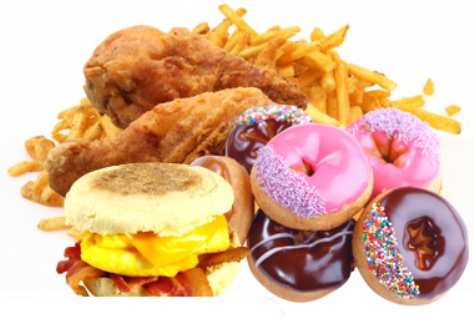
A previous post covered ways that sugar can increase fat consumption. One way is that fat makes sugary foods taste sweeter. That may mean a sugar/fat combination tastes preferable to a sugar-only food, such as hard candy.
Clients have told me that, when they eliminate sugar from their diets, they can actually enjoy snacking on a brown rice cake topped with a slice of tomato or sprouts.
When they’ve been eating sugary foods, though, such a snack seems unappealing and unpalatable. At those sugar-laden times, they find themselves wanting different things: bologna or salami sandwiches, for example, or other heavy foods.
Those heavier foods have more fat in them than the first snack, so the clients are consuming extra fat — even though they weren’t necessarily seeking high-fat foods in the first place.
In my dissertation, I named this “secondary fat consumption.”
Secondary fat consumption can occur in several different ways:[private PRO-Platinum|PRO-Monthly|PRO-Gratis|PRO-Seasonal|Platinum-trial|Monthly-trial|PRO-Military|30-Days-of-PRO|90 Day PRO|Stages-Instructor|Schwinn-Instructor|PRO-Studio|28 Day Challenge]
– We eat more of a fatty food (like peanut butter) when we have sugar (jelly) to eat with it and make it taste better.
– We eat sugar, which triggers endorphins, as explained above. That shifts our preferences to other foods that trigger endorphins — to more sugar or to high-fat foods, or both.
– We crave something sweet and want the sweetest taste we can get — so we instinctively choose a sugar/fat combination, instead of, say, a hard candy with sugar only.
Unfortunately, that’s not the worst of it. High-fat foods we eat trigger the hormone ghrelin. To me, it always seemed like a Monster Hormone.
For one thing, ghrelin slows metabolism. Who wants that?
At the same time, ghrelin stimulates the part of the brain that increases appetite (the lateral hypothalamus). That gives “secondary fat” a chance to increase calories — not only through the secondary fat calories themselves, but also through all the other foods we might suddenly want to eat simply because that secondary fat has triggered ghrelin and our appetite.
It’s obvious that there’s potential for a self-perpetuating cycle in this, and that it can toboggan its way down a slippery slope and pick up speed.
It also seems obvious that — bottom line — sugar is the culprit in this metabolic mess.
Avoiding sugar is one important factor in transforming your health, increasing your energy, and feeling great. Heart disease, the #1 cause of death in the U.S., has been linked with inflammation. So have diabetes, hypertension, cancer, and more.
Inflammation is strongly affected by nutrition, and sugar’s effect on insulin and hormones makes it a strong contributor to inflammation. Dare I advise, yet again, not to eat it?[/private]
by Joan Kent | Jul 5, 2018 | Engage Your Students, Health and Wellness
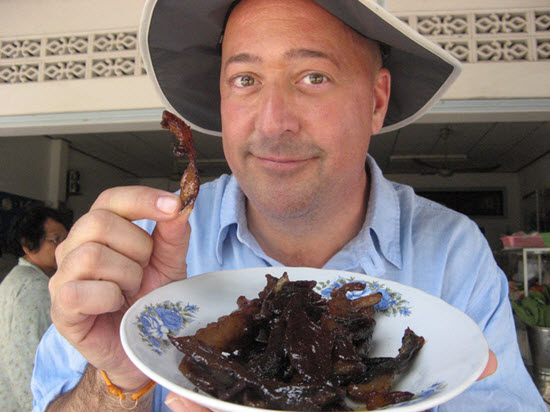
No, these don't include anything from Andrew Zimmern
This short post covers 6 relatively unknown — and odd — tips that can help us control how much we eat.
Odd Tip #1: Hide Your Breakfast Cereal
This first tip comes from Brian Wansink, PhD, who is well known for his work on food psychology and eating behaviors. His research has revealed that simply keeping breakfast cereal in full view throughout the day — say, on the kitchen counter — has an impact on weight.
Two facts came forward with this.
It didn’t make a difference if the cereal was junky (Fruit Loops, Cocoa Puffs) or more healthful (oatmeal). Just keeping it visible was the salient factor.
Also, the difference in weight between revealers and concealers averaged 21 pounds.
Since it doesn’t affect meals directly, keeping cereal in the kitchen cabinet seems like an easy way to help control food intake.
Odd Tip #2: Change Your Plate Color
I’ve come across this tip in two ways.
1) Using a plate that’s the same color as the food you’re eating encourages eating more food.
Of course, meals typically include several foods of different colors. A practical way to use this might be to think in terms of side dishes you’d like to limit. For example, if the side dish is white — potatoes, pasta, white rice — it might be a good idea to avoid using a white plate.
2) Then there’s the color blue. Eating from a blue plate seems to make people eat less. One theory is that the color blue is “off-putting.”
I wonder this matches up with the first part because there’s no blue food. (Yes, blueberries are purple.)
So if we want to keep eating lots of vegetables, maybe we should avoid green plates(!).
Odd Tip #3: Limit Your Food Variety
Variety seems to make us eat more. That could be one reason that a buffet-style meal encourages overeating.
But I’ve also heard that keeping too many different types of food in the kitchen could have a similar effect, prompting us to want to sample the different foods.
Maybe the best way to enjoy variety would be to change shopping lists from week to week, rather than buying lots of different foods at one time.
Odd Tip #4: Use Smaller Serving Spoons
The test study I read about used M&Ms to investigate how people ate from a big, full bowl of the candies in an office setting. Apparently, a large scoop invited greater M&M consumption than a teaspoon.
I wonder if there’s an unconscious link between the number of “spooning” actions and how much food we’re willing to take. One scooping action may seem less greedy than 5 teaspoons, even if the quantity is the same.
A practical way to make use of this at home might be to use a smaller serving spoon for the foods you’d like to limit (for example, mac & cheese) and a larger one for vegetables and other healthful fare.
Odd Tip #5: Change Your Eating Rate
Slowing down is a meal tip that’s been around for a long time, and it seems intuitive that eating slowly would decrease food volume. But that didn’t seem to work for women, although it did for men.
What worked for both men and women was to begin the meal at a normal rate of eating, then slow down to about half speed for the rest of the meal.
The article I read didn’t specify exactly when to slow down, so I’d suggest just after the initial hunger has passed.
Odd Tip #6: Eat Smaller Food.
Cutting food into very small pieces seems to limit the amount we’ll eat.
Again, I wonder if it relates to arm action, the plate-to-mouth action. If it takes more of those actions to eat the food, maybe we unconsciously limit the number of times, rather than the amount of food per se.
Whatever the reasons behind these odd tips, they don’t involve eating different foods or counting calories, just a simple shift in behaviors.
I’m for whatever works, so why not give them a try? And if they help with holidays meals, so much the better. Please let me know which, if any, work for you.
by Joan Kent | Mar 15, 2018 | Engage Your Students, Health and Wellness, Instructor Training
Clients ask me about lactose all the time. A brief survey of facts about lactose had to begin with milk.
Many books and articles exist on the health problems associated with milk. They include breast, prostate and ovarian cancers; allergic reactions in infants; and increased risk of bone fractures, type 1 diabetes, multiple sclerosis, acne, ear infections, and constipation.
Obviously, the health hazards of milk deserve a full discussion of their own.
Monsanto has had a hand in this, but for brevity, this post will address lactose only.
Lactose Intolerance
Lactose intolerance is an inability to digest lactose, the sugar in milk and other dairy products. It’s caused by a deficiency of lactase, the enzyme necessary for breaking down lactose.
The result will typically be gastrointestinal symptoms and signs, such as bloating, flatulence, diarrhea, nausea and even vomiting.
Lactose intolerance may be genetic, cultural (occurring more frequently in cultures that don’t rely on dairy products as a food source), and even exposure-related. Those accustomed to consuming dairy products frequently, especially as children, may experience higher tolerance overall.
Age can be a factor, as well. Some clients have noticed GI distresses due to dairy products as they get older.
Rates of lactose intolerance may range from 5% in northern European countries to as much as 90% in African and Asian countries, where milk and other dairy products are not consumed.
Some anti-dairy articles recommend milk products for Scandinavians only — and not even all Scandinavians, just blond-haired ones.
Is Lactose Hiding In Your Food?
Unexpected foods may contain lactose. A client who was working hard to get away from sugar had planned to try stevia, but reported to me that she couldn’t use it because she was lactose intolerant.
That made no sense until the next time I visited Trader Joe’s, which is where the client had gone for her groceries. Trader Joe’s carries 2 types of stevia. One is in a small plastic bottle that contains 100% pure stevia. The other is in a much larger bottle and contains stevia plus lactose as a sweetener.
Now, I just don’t get adding sweeteners to sweeteners, but I’m the die-hard Sugar Patrol, so don’t ask me. People even add sweeteners to fruit — frozen, canned, dried, baked — another thing I don’t get. But I digress.
At any rate, there’s more to be said about stevia, since some people may have a sugar reaction to it. That can include, but is not limited to, later cravings for sugary foods. But let’s save the stevia discussion for yet another post.
Bottom line, lactose is an added sweetener used in certain foods. Read all labels.
When Clients Quit Sugar, What Happens?
This brings us to Lactose as Sugar.
As a sugar addiction expert, I’ve seen a common pattern in client food logs. Someone who’s in the process of kicking sugar might start eating more milk products — cheese, yogurt, cottage cheese, and so on.
It’s worth noting and stopping if you’re serious about quitting sugar.
As mentioned above, the negative heath consequences of dairy products are many. Whether you’re lactose intolerant or not, subbing lactose for the sugars you’re trying to quit can and will be counterproductive. Lactose can have the same effect as any other sugar on someone who is sugar-sensitive.
If you’re quitting sugar, quit lactose, too. Your vigilance will reward you.
by Joan Kent | Nov 6, 2017 | Engage Your Students, Health and Wellness

“I don’t understand. She trains well.”
The program manager made that comment when a participant in our weight loss program didn’t get results. I was both an athletic coach and the lead nutritionist.
His comment exasperated me. Of course she trained well. She was an expert at that because of her food issues. She’d junk out, then “train well” to burn off the unwanted calories.
It wasn’t always the same ‘she’ — but she was typically a sugar addict. Sugar addicts don’t necessarily have difficulty training.
Training is the easy part. Early classes at the gym, hitting the weight room, weekend runs, core strength, scheduling with a trainer. No problem.
They don’t refuse to cooperate with the instructor. Workouts don’t threaten their addictive behavior.
The sugar addict wants to eat junk, work out to compensate for it, and keep the addiction going.
Nutrition Rules Push Sugar Addicts’ Buttons
Food guidelines, on the other hand, meet with stonewalling. My nutrition program — highly successful with most participants — annoyed the “resisters.”
I’ve posted about resisting weight loss, but one client kept demanding more and more specific instruction. Our guidelines were never good enough.
First, she claimed not to know what to eat. She wanted menus. When we provided those, she wanted more: exactly which foods to eat, exactly when to eat them, and precise quantities for her calorie and weight-loss needs.
The program manager saw this as our problem. I immediately recognized it as a smokescreen. “Until we provide those things,” he said, “she feels as if her program hasn’t begun.”
His comment was profound — but not in the way he thought.
Registering for a robust weight-loss program looks like a sincere desire to lose weight. Asking for more specifics seems like part of that sincere desire to lose — if you don’t know the games people will play to avoid doing the necessary work.
I’ve been around the defiance of resistant weight-loss clients a long time and see it differently: As long as we didn’t supply what she requested, that was her excuse not to change her eating. Not to give up pizza, margaritas, wine, or nachos. (All of these were in her seldom-kept food log.) Not to move forward — to any degree — until things suited her to a T.
If we had done everything she wanted, she would have had more complaints and more demands.
Bottom line? She saw the lack of personalized info as the chink in the armor, the point of attack. A good friend of mine who works as a life coach said, “It’s better for her if the program fails than if she does. Again.”
This life coach friend disliked many of her weight loss clients because of the games they played. Guess I’m not the only one who has noticed this nonsense.
Not all of you are coaching weight-loss clients, but if you are, here are a few suggestions.
– Encourage them to be honest.
What do they want? Whether their weakness is sugar, alcohol, butter, or something else, their goals should be what they really want.
It’s no crime for them to decide they don’t want to lose weight or end their food addiction.
– See the finish line with no time element.
I learned that from my ultra-endurance athletic coach. Don’t worry about fast results. These days, some people push rapid weight loss. That’s fine if the clients prefer, but there’s no race.
If it’s more comfortable to “set it and forget it”, they can decrease their calories by, say, only 200 to 300 per day. It will take longer to reach the goal, but that’s the only drawback. So what?
They do it daily, forget about it, and let the pounds melt slowly while they go about their business.
– If your client is addicted to sugar or other food, concentrate on the addiction first.
If the client takes on too much at once, it could sabotage the effort. Dealing with addiction first is a strong, solid step toward weight loss. Once eating is under control, the other goals will fall in place.
– Recommend qualified help and a proven system.
Everyone seems to have ideas on how to get rid of sugar cravings, and some of them are almost ridiculous. With the right help, it’s a straightforward process. The wrong advice can make it agonizingly difficult.
Suggest that your clients find a solid system and stick with it.
Save

by Joan Kent | May 15, 2017 | Health and Wellness

This brief post offers one possible reason you may have difficulty sticking with your food plan.
Let’s start here: Do you have food cravings? And are the cravings specifically for sugary foods and other junk?
Next: Do you give in to the cravings by eating some of the foods you crave, especially sugar?
If the answer is yes, it’s possible that your way of handling the cravings is actually creating more cravings.
It’s all too easy to blame premenstrual hormone fluctuations, for example, but eating sugar when you crave it is a virtual guarantee that you’ll crave it again – later in the day, the next morning or other times of the day, and possibly for two or more days after you’ve had it.
No, this isn’t the case for everyone. Some people really do have a take-it-or-leave-it reaction to sugary foods.
Still, food cravings are common. And it seems to be common “wisdom” that the way to deal with those cravings is to eat a little bit of whatever you crave.
I absolutely must question the wisdom of that perspective. Of course, eating what you crave will take away a craving temporarily – after all, you just ate what you craved.
But the cravings will return – often stronger than before. You may be setting yourself up for these future cravings, and almost guaranteeing that they become too strong to resist.
What To Do Instead
Admittedly, this approach takes self-discipline when you have a craving, but here it is.
For short-term craving relief, here’s a solution I’ve proposed before, but I stand by it.
– Reach for 1 teaspoon of liquid B-complex when you have a craving. (Please first check with your doctor to find out if this solution is appropriate for you.)
– Make sure you’re using B-complex, rather than any individual B vitamin.
– Give the B-complex a few minutes – really! – to do its work.
– Get on with your life, craving-free.
Now let’s say your doctor has told you not to use B-complex, or you don’t have any available when a craving strikes. What’s an alternative?
One way to go is to have a little high-fat food – even one that you might not consider particularly healthful. Examples might include nuts (yes, roasted and salted are fine), cheese, guacamole, or other high-fat fare.
Combining those fats with a small amount of starch (most people say “carbs”) is a good choice. If you feel it won’t be enough, add something hot and spicy. This is one reason guacamole will work well.
In any case, the combination will modify your brain chemistry so it resembles the neurochem you’d create by eating sugar – only you’ll simply bypass the addictive response you might have to sugar.
It’s a surprisingly good deal.
If I could do one and only one thing for my clients (and my non-clients), I would love to communicate the foolishness of eating what you crave – especially if the food is addictive.
A self-perpetuating cycle is characteristic of food addictions – and absolutely not worth the taste of sugar or the follow-up taste of more of the same.
If you’d like help eliminating cravings or even quitting sugar for good, that’s what I do. Just visit www.FoodAddictionSolutions.com/Coaching and grab your free Eating Empowerment Consult. Find out how easy it is to regain control, increase your energy, and feel fantastic.
