by Joey Stabile | Aug 1, 2026 | Best Practices, Engage Your Students, Instructor Tech Help
While it may seem redundant to say, most indoor bikes do not move. Please, stop and think about that for a moment. We are not talking about forward motion or distance, of course an indoo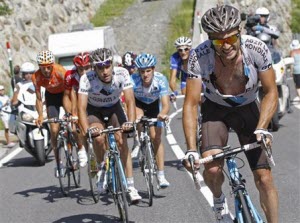 r bike does not move forward. But what about the other motions that are involved in cycling.
When a rider is out of the saddle, most riders sway the bike from side to side a bit. Why does this happen? Generally, it is the mechanical reality of the situation due to applying extreme power to each pedal. Since the pedals are not on the centerline of the bike, applying a large force to the right pedal will, physically speaking, apply a rotational force that pushes the top of the bike to the right and the bottom of the bike to the left. Without this counterbalancing motion, the wheel would kick out to the side. By swaying the bike in the opposite direction, the amount of force that can be applied to the pedals is increased without crashing.
The second primary aspect of swaying the bike is that it allows the rider to engage their upper body (especially core and arms) into the movement which increases power.
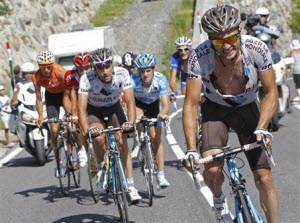
Take a moment and watch some of the pros race, they only have about a 12 degree sway; less than most avid riders. This is due to their efficiency and power.
The last aspect of swaying the bike is that it allows the rider to more thoroughly align their biomechanics with the work that is being done. By tilting the bike, the rider is able to keep the leg that is driving down with a majority of the force in alignment lessoning the outward lateral stress on the joints.
With the exception of a few new bikes on the market, most indoor bikes do not provide movement side-to-side, and none of them replicate the true motion of an outdoor bicycle. Because of this limitation, instructors must emphasize relaxation when riding and allow gentle upper-body movement. Attempting to maintain a still upper body can place the spine and surrounding muscles at risk from the forces being generated by the legs.
I hope this helps, Joey
Originally posted 2019-02-25 06:00:00.

by Joan Kent | Feb 26, 2021 | Big Box Instructor, Instructor Tips and Tricks
What do you do when you want to train but need a break from cycling? Indoor rowing is an excellent alternative. If you’re into power training, this is for you.
Most of my teaching of indoor cycling was done in Performance Max, a program that included both cycling and indoor rowing. I took the program as a participant for 14 years and taught it in a different location for 12. This post covers the basics of starting to row.
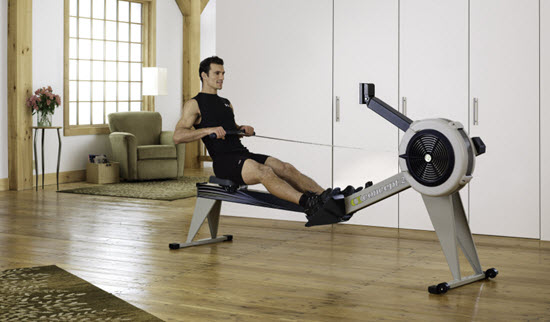
Truly, the only indoor rowing machine worth using is the Concept 2 Rowing Ergometer (“erg” for short). Yes, other rowing machines exist, but no one who rows takes them seriously. The Concept 2 is the gold standard. The current models are the D and the E (slightly higher off the floor). The longest-standing model is the C, which was the one-and-only for many, many years. (I have one, love it, and wouldn’t trade it for a D for anything!)
If you have access to a Concept 2 erg and are new to rowing, learn correct technique from the start. It’s easier to learn it the right way than to unlearn the mistakes that people commonly make when trying to row on their own. If you teach at a gym with an instructor who really knows rowing, that’s ideal because you’ll get good instruction and correction. Years of teaching rowing have shown me that correction is essential.
If you don’t have either an erg or personal instruction, visit the superb Concept 2 website (concept2.com). This 5-minute video teaches rowing technique step by step and repeats the steps clearly and slowly.
There’s also an “erg finder”. Enter your location, the type of facility you want (e.g., health & fitness club), and the distance you’re willing to travel. You’ll get a list of clubs with addresses and the number of available ergs there. You might want to call to verify the info. (When I looked for ergs in San Francisco, the club I taught at for years was listed as having only 1 erg; that was wrong. Farther down the list, though, the same club was listed again, accurately, with 17.)
Once you’ve learned to row, you can take advantage of Concept 2’s Workout of the Day. You can choose short (30 minutes), medium (40-45 minutes), or long (60+ minutes). It’s available on the website daily — or can even be delivered to your inbox.
A few points to keep in mind:
– Rowing is not an upper-body activity. It’s a full-body activity that centers on leg power. Sliding seats were added to rowing shells in the 1870s to optimize the superior power of the lower body. The best training I’ve heard on this came from a Performance Max instructor who rowed on the U.S. National team: “The arms are an afterthought.”
– Rowing has a definite learning curve. In the beginning, it may feel frustrating not to have sufficient power in your stroke to reach a high heart rate. That will change with practice. Believe me, rowing heart rates can go very high, typically higher than in cycling.
– Because of the learning curve, novices often use a higher damper setting than necessary. The damper opens the drum to let in more air, increasing the resistance. Skilled rowers, however, use a moderate setting and create effort by accelerating quickly at the start of the stroke (the catch).
– The most common mistake is bending the knees too soon after you finish the stroke. (This will make sense once you’ve watched the video or gotten some instruction.) It’s almost instinctive and can be difficult to correct. One effective correction is to stop rowing and hold for 2 seconds after you’ve extended the arms before letting your knees bend. Repeat with each stroke for a few minutes.
– Rowing should NOT be done with a straight back. Curving the shoulders slightly forward will engage your core and protect your back. A straight back is more likely to be injured.
Holding an even and consistent pace can be difficult to learn. Jim Karanas, who created the PMax program, always said rowing builds character: With every stroke, the computer tells you you’re a failure [i.e., your pace is off], but you have to keep going.
Working on pace feels like moving meditation. Skilled rowers doing sustained efforts even look relaxed and meditative.
So here’s to a character-building, meditative yet exciting alternative to cycling. I think you’ll like it. You might even find yourself adding it to your training on a regular basis.
Podcast: Play in new window | Download
Originally posted 2014-07-07 08:42:14.
by Joan Kent | Feb 7, 2021 | Master Instructor Blog
By Team ICG® Master Trainer Joan Kent
It’s possible, even likely, that you have cycling class members with hypertension. It’s possible that they’ve been told by their doctors to cut back on salt in their diets. If not, it’s still possible that they’re cutting back on salt because that’s the prevailing wisdom for controlling blood pressure.
As we all know, sodium is loss in sweat. The more we sweat, the more we lose. Long and/or intense trainings or hot environments result in greater sweat production and greater sodium loss. Symptoms of low sodium can include disorientation, nausea, fatigue, even seizures or collapse. Even in a controlled indoor environment, warm outdoor temperatures can increase sweating.
As important as sodium levels are, it’s obviously not a good idea for our students to cut back on salt intake without letting the prescribing M.D. know that they take cycling classes and often sweat profusely in them. In warmer weather, this becomes even more important.
But this post isn’t just about salt. High-carb diets may raise blood pressure because of the increased insulin they trigger. There are several mechanisms by which high levels of insulin can raise blood pressure.
High insulin levels increase sympathetic nervous system activity, leading to vasoconstriction. That increases both heart rate and blood pressure.
Insulin also stimulates the proliferation/multiplication of the smooth muscle cells lining the arteries. That may narrow the size of the arterial opening (lumen) and increase blood pressure, sort of in the same way that a narrower hose can increase water pressure.
Insulin promotes the production of serotonin, a brain chemical that’s also a vasoconstrictor. Vasoconstriction can raise blood pressure. The relationship between insulin levels and serotonin production is pretty much linear, so the more insulin secreted — say, in response to a high-carb diet — the more serotonin is produced. The more serotonin, the more vasoconstriction, and so on.
As mentioned in a previous post, high insulin levels can increase production of series 2 prostaglandins, which are hormones that control cellular functions. Among their numerous negative health consequences, Series 2 prostaglandins cause inflammation and increase blood pressure.
So what should we recommend for our cycling students?
First, it’s always a good idea to stay away from simple (or as I like to call them, junky) carbs and limit alcohol. That can help to keep insulin levels from skyrocketing.
Second, avoiding all-carb meals/snacks is another good idea. Meals and snacks that include protein and healthful, unsaturated fats have less impact on insulin levels.
Third, avoid processed (also junky) foods that are loaded with sodium that we consumers can’t control.
Fourth, modify — but don’t eliminate — salt. We need it to replace what we lose in a cycling class. The upper limit is 2300 mg, or 1500 mg for older or hypertension-prone individuals. But for someone who sweats profusely, it might be possible to exceed those limits safely to a degree. It’s also possible to go too low, and one way of gauging that is by urine production. If you feel you can’t hold 50% of your water intake, that’s a sign that you could need more salt.
As some of you may be aware, there’s a long-standing table salt/sea salt debate raging. Some sources maintain that the natural minerals in sea salt reduce the overall sodium content. Or that the larger size of sea salt crystals reduces the amount of salt in a teaspoon. Or that the more intense flavor of some sea salts encourages reduced consumption. These factors are said to make sea salt more healthful, but arguments appear to be inconclusive. One suggestion for sea salt users might be to take a kelp tablet daily to compensate for the absence of iodine that’s typically added to table salt. Or to buy sea salt with added iodine. Iodine’s necessary to prevent goiter.
Rather than join the Great Salt Debate, my point in this post is to encourage moderate consumption of salt among our cycling participants concerned with sodium and hypertension, primarily to avoid the negative consequences of low sodium.
Even more importantly, I’d encourage smart consumption of the best carbs to avoid the various mechanisms — related to insulin secretion — that can and DO cause hypertension, even with a low-sodium diet.
Originally posted 2013-07-01 08:22:47.
by Joan Kent | Oct 25, 2020 | Engage Your Students, Master Instructor Blog

USA Women's Rowing Team – image credit boothbayregister.com/
If you’re about to start teaching a class that includes both cycling and rowing, here are a few tips.
Stay off the bike. To handle all the variables in a cycling/rowing class, you’ll need to be on your feet, moving around the room.
Will you warm up? On-bike stretches won’t work in a split class. Decide whether you’ll begin with a full-class stretch and warm-up, or have the participants take care of that on their own. Active Isolation Stretching is the most efficient in class — it warms the body as you stretch — but they all take up training time.
Pre-plan your trainings. You’ll need a specific and detailed rowing workout, along with your planned cycling workout. They don’t have to run parallel. That is, a 6:00 flat on the bike doesn’t have to run in sync with a 6:00 interval on the rowing ergometer (erg). They can if you prefer.
Feel the differences between the two workouts. Rowing workouts are often rigidly timed. That makes them effective and easy to cue. But some of the most unpleasant cycling workouts I’ve ever done were created by an instructor who was primarily a rower. His classes seemed to be created with a calculator and a slide rule (a what?). Instead, use cycling workouts that are similar to the ones you run now. Then you can mold your rowing workouts without alienating your riders.
Gear your music for the bikes. It’s less important to match music to a rowing drill, so keep handling your music the way you have been. There are exceptions — mostly performance-related — but generally this holds true.
Memorize the steps for setting the erg monitor. Concept 2 Models D and E use a complex procedure for setting time or distance. You’ll have to cue it every time. If you switch mid-workout from time to distance, be prepared to re-cue. Example: “Press Select Workout. Press New Workout. Press Intervals Time. DO NOT set the time yet! Use the Back Arrow to go back to the “tens” column. Set that for 1. Now use the Forward Arrow to get to the “ones” column. Change that to 0.” [At this point you have to cue setting the rest interval.] “Now press the check mark at the bottom of the screen.”
That lengthy description sets the timer for a 10-minute interval. If they set the “ones” column first to 0, it will default to an automatic “:20” (20 seconds). That messes up everything, and you’ll have to spend time changing it.
Note: The above cues are an illustration. You’re not done till you’ve set the rest interval (assuming you want repeating intervals). If you press the check mark midway through the process, you have to begin again. It will happen.
Don’t kill the Concept 2 people. All of the above is why the simple Model C was wonderful, but you’ll get used to the D/E. And you WILL remember the cues. I wrote the procedure from memory.
Always cue the rowers first. Let’s say you’ve decided to run the workouts in parallel format, which is easier for you. Separate the groups on their equipment. Cue the rowers while the riders roll their legs. Tell the rowers what to do during their warm-up (say it’s 10 minutes). Easy warm-up shortcut: Have them press “Just Row”. They row as instructed and stop when the computer clock reaches 10:00. While they row, you run a 10-minute bike warm-up. Once the warm-up is done, the riders roll and recover while you cue the rowing training — and setting the monitor.
This approach syncs the major changes for the two groups. The intervals will be of the same duration, but what the groups do during the intervals can be as similar or as different as you like.
Create a timeline. If you like multitasking, feel free to create workouts that don’t resemble each other at all. You may need some sort of timeline to track what’s happening. If you’re a spreadsheet geek, that approach will be fun for you. If you’re able to keep track of two different workouts mentally with no cheat-sheet, just go for it.
A timeline could be just a basic log with 3 to 4 columns. Minutes (0:00 to 30:00) go in the left column, rowing drills in the next, the cycling workout in the third column, and perhaps notes and prompts for you in the fourth column. Use a stopwatch. You’ll check your watch and know exactly what everyone should be doing at any given minute.
All of this planning makes improvising and modifying a lot easier. You have your plan, yet still feel ready to change whenever time or circumstances call for it.
At the 30-minute mark, switch equipment. The change will take a few minutes, so shorten the warm-up, but give everyone a chance to accustom the target muscles to the new activity for the second half of the class. Re-start your watch and repeat the body of the training.
If you can manage to do all of this AND deliver content — exercise physiology, technique, and training philosophy — your classes will be engaging and informative, and appeal to a broad base.
I hope these instructions are clear. I’d be happy to answer questions.
Originally posted 2014-07-14 10:24:52.
by Joan Kent | Oct 7, 2020 | Instructor Training

New Year’s Resolutions are upon us, but that doesn’t mean clear sailing. Things that can waylay resolutions are everywhere. Christmas candy will be on sale till early January, when the Valentine candy goes out and will be on display till February 14. February 15 it goes on sale. That brings us to March, when the Easter candy appears — even in years that Easter is late in April. And so on through the year.
Everyone offers tips for sticking to your resolutions. Ideas for quitting sugar, for example, may include (Don’t take notes here!) having fresh fruit instead of juice or dried fruit; flavoring plain yogurt with fruit or honey; using artificial sweeteners; switching to dark chocolate from milk chocolate; limiting sugar to desserts only; weaning yourself off desserts by reducing the weekly number; substituting wine or spirits for high-sugar mixed drinks.
Those tactics don’t — and can’t — work for those of us who have a sugar addiction. Here are a few suggestions — and some of them are just common sense.
1. Keep sugar and other junk food out of the house. Totally. Don’t buy it and tell yourself you won’t eat it. Don’t buy it and tell yourself you’ll have just a small portion. Don’t make your kitchen a binge blowout waiting to happen. Just don’t.
2. Stop putting your willpower to the test. I keep reading that we have only limited conscious self-control, limited willpower — and it certainly appears to be true. Instead, look for ways to change the situation. Ask the waiter to remove the breadbasket from the table. Don’t even ask for the dessert menu. Reread Suggestion 1. The fewer willpower tests you have each day, the fewer lapses you’ll experience later that day.
3. Train yourself to end a meal without dessert, no matter what time of day it is, no matter what everyone else is doing, no matter what others think, no matter what other say, no matter what habits you learned as a child. It takes practice, but it’s worth it.
4. Lie. (That’s fun to say because it grabs attention.) Don’t worry — I’m definitely not telling you to become untrustworthy and lie for no reason or about important matters.
But, seriously, sugar is a need-to-know issue. Does everyone at the dinner table need to know that you’re turning down dessert because you’re addicted to sugar? Or trying to lose weight? Both reasons will bring out every form of sabotage your “friends” can serve up:
“You’ll eat less tomorrow.”
“You’ll work out harder tomorrow.”
“Just a little can’t hurt.”
“But I made it myself.”
Harsh as it may seem, anyone who sabotages you is not a friend. If you have to pretend to want the food, claim to be full from the terrific dinner and ask for a doggie bag. On the way home, stop at the nearest trashcan and dump it. Don’t take it home and tell yourself you’ll make it last several days. Reread Suggestion 1.
5. That brings up another important point, covered in a previous post: Learn to throw away food, especially stuff that’s not really food, but junk. No compunctions here. The U.S. overproduces food significantly, and on a daily basis. Tossing the junk is survival, NOT a sin, as you may have been taught.
6. Little things add up. Focus on short-term actions — what you can do right now to avoid sugar. A recent study showed this approach — versus thinking about the long-term goal — was better for weight loss. It works for quitting sugar, too. Plan your next meal: how can you make it healthy? Buy nutritious foods when you shop. Develop an end-of-day ritual for the first 20 minutes after you arrive home to keep you out of the kitchen.
There won’t be any sugar in there, anyway, right?
As I’ve written in previous posts, motivation is not necessarily enthusiasm. It also tends to fade when daily life presents its daily challenges. But using these suggestions consistently can be transformational.
Enthusiasm is entirely optional. In fact, it’s often the result of consistent action.
Please feel free to share this article with riders and friends!
Originally posted 2014-12-29 09:20:32.
