
by Joan Kent | Apr 17, 2026 | Instructor Training

John says: with no kids at home, this should be easier 🙂
Well, Halloween candy has been on display since August, and we know what that portends for the rest of the year.
But why wait to get your health in order? Here are 10 reasons to quit sugar now —even if you think you don’t want to do it.
1. Quitting sugar can help you prevent or even reverse insulin resistance.
Mainstream thinking on insulin resistance is that overweight is the cause. That’s true, but a limited view. What we eat can greatly influence whether or not we develop insulin resistance — or type 2 diabetes, which frequently follows it.
2. Quitting sugar can help you reduce your cholesterol.
Cholesterol synthesis isn’t necessarily the result of a high-fat diet. The rate-limiter in cholesterol formation is an enzyme (HMG-coA reductase) that’s triggered by insulin. Sugar can stimulate big insulin, so it’s a major factor in serum cholesterol. People now say that cholesterol doesn’t really matter — but metabolic syndrome is a cluster of conditions. If you have one, you probably have more. Keeping cholesterol down by avoiding sugar helps in general — especially if you combine that with preventing or reversing insulin resistance, an underlying condition for several metabolic disorders.
3. Quitting sugar can prevent premature hunger signals.
When sugar promotes high insulin production, glucose can drop pretty low and pretty fast. The speed it drops is the main factor in triggering premature hunger signals — making you hungry for food you don’t need simply because you ate sugary junk.
4. Quitting sugar can reduce “secondary fat consumption.”
Okay, I made up that name. But eating extra fat is something that happens all the time when we eat sugar — think of ice cream, chocolate, rich cakes, cookies. For one thing, fat makes sugar taste sweeter. Also, when you get a craving for sugar, you might reach for something with lots of fat in it, too.
5. Quitting sugar can make healthful foods taste better to you.
Eating sugar triggers endorphins (beta-endorphin). That changes food preferences so that healthy foods seem less appealing. When you quit sugar, eating good foods — like vegetables — will probably be more appetizing.
6. Quitting sugar reduces cravings.
Eating sugar can cause cravings. Yes, for more sugary foods, definitely. But also for other kinds of junk food that have sneaky sugars in them.
7. Quitting sugar can reduce calorie intake.
If you’re not responding addictively to sugar — and eating more sugar and other foods because of that — it will be easier to watch your calories.
8. Quitting sugar can improve your health.
Sugar can impact health directly by increasing inflammation in the body through several mechanisms. Reducing inflammation can improve your health and decrease pain.
9. Quitting sugar can improve your mood and your energy.
People who are carbohydrate sensitive secrete more insulin than normal when they eat sugar. That can set up a “peak-and-valley” pattern in their glucose levels. When you’re at a peak, your energy and mood may feel optimal, but when you’re in a valley, things aren’t feeling good at all.
10. Quitting sugar can improve the overall nutritional value of your diet.
If you’re not killing your appetite with sugary junk, you’ll have room for healthful foods. If you’re not steered in a junky direction by endorphins, you’ll eat more healthful foods. If you’re not eating the usual sugary treats, you may increase the fiber in your diet. If you’re eating wholesome foods, your B-vitamin intake could go up and change your brain chemistry completely.
So it’s up to you and always will be. Will you quit now or wait? Will you quit at all? All I’m saying is quitting sugar can help in these ways — and several others that are not on this list of 10 can also help make you feel great.
Wishing you great health, great moods, great energy, great success in quitting sugar.
Originally posted 2015-09-08 16:07:09.
by Joan Kent | Oct 7, 2020 | Instructor Training

New Year’s Resolutions are upon us, but that doesn’t mean clear sailing. Things that can waylay resolutions are everywhere. Christmas candy will be on sale till early January, when the Valentine candy goes out and will be on display till February 14. February 15 it goes on sale. That brings us to March, when the Easter candy appears — even in years that Easter is late in April. And so on through the year.
Everyone offers tips for sticking to your resolutions. Ideas for quitting sugar, for example, may include (Don’t take notes here!) having fresh fruit instead of juice or dried fruit; flavoring plain yogurt with fruit or honey; using artificial sweeteners; switching to dark chocolate from milk chocolate; limiting sugar to desserts only; weaning yourself off desserts by reducing the weekly number; substituting wine or spirits for high-sugar mixed drinks.
Those tactics don’t — and can’t — work for those of us who have a sugar addiction. Here are a few suggestions — and some of them are just common sense.
1. Keep sugar and other junk food out of the house. Totally. Don’t buy it and tell yourself you won’t eat it. Don’t buy it and tell yourself you’ll have just a small portion. Don’t make your kitchen a binge blowout waiting to happen. Just don’t.
2. Stop putting your willpower to the test. I keep reading that we have only limited conscious self-control, limited willpower — and it certainly appears to be true. Instead, look for ways to change the situation. Ask the waiter to remove the breadbasket from the table. Don’t even ask for the dessert menu. Reread Suggestion 1. The fewer willpower tests you have each day, the fewer lapses you’ll experience later that day.
3. Train yourself to end a meal without dessert, no matter what time of day it is, no matter what everyone else is doing, no matter what others think, no matter what other say, no matter what habits you learned as a child. It takes practice, but it’s worth it.
4. Lie. (That’s fun to say because it grabs attention.) Don’t worry — I’m definitely not telling you to become untrustworthy and lie for no reason or about important matters.
But, seriously, sugar is a need-to-know issue. Does everyone at the dinner table need to know that you’re turning down dessert because you’re addicted to sugar? Or trying to lose weight? Both reasons will bring out every form of sabotage your “friends” can serve up:
“You’ll eat less tomorrow.”
“You’ll work out harder tomorrow.”
“Just a little can’t hurt.”
“But I made it myself.”
Harsh as it may seem, anyone who sabotages you is not a friend. If you have to pretend to want the food, claim to be full from the terrific dinner and ask for a doggie bag. On the way home, stop at the nearest trashcan and dump it. Don’t take it home and tell yourself you’ll make it last several days. Reread Suggestion 1.
5. That brings up another important point, covered in a previous post: Learn to throw away food, especially stuff that’s not really food, but junk. No compunctions here. The U.S. overproduces food significantly, and on a daily basis. Tossing the junk is survival, NOT a sin, as you may have been taught.
6. Little things add up. Focus on short-term actions — what you can do right now to avoid sugar. A recent study showed this approach — versus thinking about the long-term goal — was better for weight loss. It works for quitting sugar, too. Plan your next meal: how can you make it healthy? Buy nutritious foods when you shop. Develop an end-of-day ritual for the first 20 minutes after you arrive home to keep you out of the kitchen.
There won’t be any sugar in there, anyway, right?
As I’ve written in previous posts, motivation is not necessarily enthusiasm. It also tends to fade when daily life presents its daily challenges. But using these suggestions consistently can be transformational.
Enthusiasm is entirely optional. In fact, it’s often the result of consistent action.
Please feel free to share this article with riders and friends!
Originally posted 2014-12-29 09:20:32.
by Joan Kent | Aug 28, 2018 | Engage Your Students, Health and Wellness
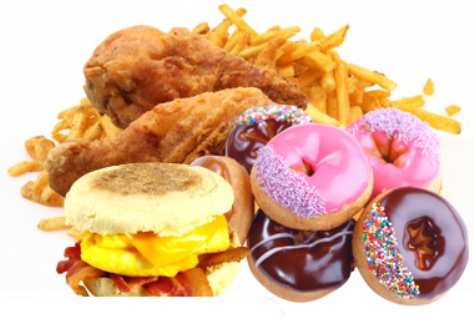
A previous post covered ways that sugar can increase fat consumption. One way is that fat makes sugary foods taste sweeter. That may mean a sugar/fat combination tastes preferable to a sugar-only food, such as hard candy.
Clients have told me that, when they eliminate sugar from their diets, they can actually enjoy snacking on a brown rice cake topped with a slice of tomato or sprouts.
When they’ve been eating sugary foods, though, such a snack seems unappealing and unpalatable. At those sugar-laden times, they find themselves wanting different things: bologna or salami sandwiches, for example, or other heavy foods.
Those heavier foods have more fat in them than the first snack, so the clients are consuming extra fat — even though they weren’t necessarily seeking high-fat foods in the first place.
In my dissertation, I named this “secondary fat consumption.”
Secondary fat consumption can occur in several different ways:[private PRO-Platinum|PRO-Monthly|PRO-Gratis|PRO-Seasonal|Platinum-trial|Monthly-trial|PRO-Military|30-Days-of-PRO|90 Day PRO|Stages-Instructor|Schwinn-Instructor|PRO-Studio|28 Day Challenge]
– We eat more of a fatty food (like peanut butter) when we have sugar (jelly) to eat with it and make it taste better.
– We eat sugar, which triggers endorphins, as explained above. That shifts our preferences to other foods that trigger endorphins — to more sugar or to high-fat foods, or both.
– We crave something sweet and want the sweetest taste we can get — so we instinctively choose a sugar/fat combination, instead of, say, a hard candy with sugar only.
Unfortunately, that’s not the worst of it. High-fat foods we eat trigger the hormone ghrelin. To me, it always seemed like a Monster Hormone.
For one thing, ghrelin slows metabolism. Who wants that?
At the same time, ghrelin stimulates the part of the brain that increases appetite (the lateral hypothalamus). That gives “secondary fat” a chance to increase calories — not only through the secondary fat calories themselves, but also through all the other foods we might suddenly want to eat simply because that secondary fat has triggered ghrelin and our appetite.
It’s obvious that there’s potential for a self-perpetuating cycle in this, and that it can toboggan its way down a slippery slope and pick up speed.
It also seems obvious that — bottom line — sugar is the culprit in this metabolic mess.
Avoiding sugar is one important factor in transforming your health, increasing your energy, and feeling great. Heart disease, the #1 cause of death in the U.S., has been linked with inflammation. So have diabetes, hypertension, cancer, and more.
Inflammation is strongly affected by nutrition, and sugar’s effect on insulin and hormones makes it a strong contributor to inflammation. Dare I advise, yet again, not to eat it?[/private]
by Joan Kent | May 8, 2018 | Health and Wellness, Instructor Training

Type 2 diabetes is epidemic in this country, and typically begins with insulin resistance.
What we usually read or hear about insulin resistance is that it’s a result of overweight/obesity. This is not always the case, since the reverse can be true. Insulin resistance (IR) may actually cause overweight. What’s important to remember is that no matter which comes first — IR or overweight — the metabolic consequences are exactly the same.
This post is on the role that dietary sugar and fructose can play in causing insulin resistance, and the ways in which that can happen. IR appears to result from changes in both receptor number and receptor activity or sensitivity.
A high-carbohydrate diet can lead to IR, particularly if the carbs are high on the glycemic index. Sugar would be a prime example of a high-glycemic carb. High-glycemic carbs are quickly absorbed and trigger a high insulin response. The high levels of insulin secretion can in turn lead to a diminished response by the body to insulin, due to something known as “down-regulation”. Down-regulation is a term originally borrowed from brain chemistry research. It refers to a reduction in both the number of insulin receptors and the sensitivity of the receptors. The changes mean that whatever insulin is available no longer works as well as it did before.
Down-regulation is even more likely to occur for someone who is carbohydrate sensitive. Carb sensitivity is an exaggerated insulin response to sucrose or other carbs. The possibility of down-regulation of insulin receptors is even greater with that extra-high insulin release. And down-regulation of insulin receptors occurs fairly rapidly.
So eating sugar — especially lots of sugar, as might occur with sugar addiction — can cause insulin resistance.
What about fructose?
There’s a rather odd adaptation here. Fructose has been shown to change muscle fibers from type 1 to type 2b. Type 1 is a high-endurance fiber that responds well to insulin, while Type 2b is better for explosive power but less responsive to insulin. It has been suggested that this is the mechanism behind the well-known fact that fructose triggers IR. Yes, the original research was done on animals, but studies on human subjects have shown similar results — although training can modify the results somewhat.
The bottom line is that fructose — which, as you may recall, is half of the sucrose molecule — may cause insulin resistance in this interesting way. It might even be hypothesized that sucrose (granulated table sugar that everyone knows is junk) is capable of causing insulin resistance through both mechanisms: down-regulation of insulin receptors and modified muscle fiber type due to the fructose in it. Especially if it’s eaten in large quantities — for example, by someone who's addicted to sugar.
Please recall that all research seems to confirm that the fructose in sucrose is what makes sucrose the junk that it is.
Healthful recommendations? Skip the sugar, definitely skip processed fructose or concentrated fruit juice used as a sweetener, and get your wholesome nutrients primarily from vegetables and only incidentally from fruit. It’s not what you’ll hear most places, but it may work better than what you will hear elsewhere.
by Joan Kent | Dec 6, 2017 | Health and Wellness, Master Instructor Blog
By Joan Kent
One significant reason for sugar cravings is withdrawal. Withdrawal can promote cravings under various circumstances.
If someone has recently stopped drinking alcohol, cravings for sugar can be strong and frequent. This involves the brain chemicals stimulated by alcohol. The same three chemicals (dopamine, beta-endorphin, and serotonin) are also stimulated by sugar.
The similarity makes sugar a short-term substitute for alcohol when cravings occur. It also explains why people in recovery from alcohol (or drugs) may crave sugar and may eat it often or in large quantities. Or both.
The phenomenon is so common that AA meetings typically feature back-of-room treats that are laden with sugar: cookies, brownies, cakes, pastries. That approach can backfire, but we’ll get to that in a moment.
If someone is addicted to sugar, quitting sugar can lead to cravings. The effect may sometimes be similar to the symptoms of alcohol withdrawal or opiate withdrawal — and also similar to the symptoms of hypoglycemia (low blood glucose).
(As a side note, I postulated years ago that hypoglycemia — especially reactive hypoglycemia, the rapid glucose drop following sugar ingestion in susceptible people — was a specific case of sugar withdrawal. Reviewing the lists below makes it seem there’s a case to be made for that.)
Research shows that cravings are highest when withdrawal is most severe. The higher the level of intake prior to abstinence, the greater the withdrawal and subsequent craving.
Anyway, let’s look at the symptoms in the different cases.
Alcohol withdrawal symptoms include anxiety, nervousness, depression, fatigue, irritability, shakiness, mood swings, nightmares, pupil dilation, clammy skin, headaches, insomnia, nausea, vomiting, sweating, muscle tremor, confusion, rapid heart beat.
Symptoms of hypoglycemia include shakiness, nervousness, anxiety, sweating, chills, irritability, confusion, rapid heartbeat, lightheadedness, dizziness, hunger, nausea, sleepiness, blurred vision, tingling or numbness in the lips or tongue, headaches, weakness, fatigue, anger, sadness, lack of coordination, nightmares, seizures, unconsciousness, confusion, difficulty speaking, night sweats, waking up tired, irritable or confused.
Opiate withdrawal symptoms include agitation, anxiety, muscle aches, eye tearing, insomnia, runny nose, sweating, yawning, abdominal cramping, diarrhea, dilated pupils, goose bumps, nausea, vomiting, fever.
Research on lab animals that have been made addicted to sugar lists withdrawal symptoms that resemble those of opiate withdrawal.
An internet search on symptoms of sugar withdrawal offers lists that include hunger and the desire for sugary foods; headaches; low energy, fatigue; mood swings, crankiness; muscle aches and pains; nausea and other gastric upsets; chills or sweating, especially at night; runny nose; yawning; insomnia.
As you can see, there is quite a bit of overlap in these various symptom lists.
So is sugar withdrawal just like withdrawal from opiates or alcohol? Some would say yes. Some would say that’s too big a stretch. After all, the body has only so many ways of expressing itself, so a similarity in symptoms doesn’t necessarily link them.
But we do know that sugar affects, either directly or indirectly, the same brain chemicals that are affected by alcohol and opiate drugs. As mentioned above, the similarity makes sugar a short-term substitute for alcohol.
However! Eating sugar when you crave either alcohol or sugar can backfire, due to a phenomenon known as priming (i.e., a little makes us want more).
Some people insist priming doesn’t apply to food, just to alcohol or drugs. Clinical experience shows that it does apply, and that avoiding possible priming cues goes a long way toward ending cravings. My advice would be to take priming seriously if you want to end sugar cravings.
[If you have students who need help dealing with sugar cravings and sugar addiction, please let me help. My new program, Last Resort Nutrition® with Joan Kent, starts soon. I also offer individual coaching.]
