
by Joan Kent | Oct 16, 2017 | Health and Wellness, Master Instructor Blog

By Joan Kent
My last few posts have dealt with aspects of sugar addiction, including sugar’s effect on health. It’s important — you want to be healthy, right?
Still, I’ve avoided one topic because it’s almost guaranteed to alienate people — fructose. The sugar found in fruit. It’s nasty. We’ll get to the details on that soon enough.
Some people are surprised that fruit could be bad. After all, it’s natural. And whenever people talk about healthful eating habits, it’s one of the first things mentioned. “Eat lots of fruits and vegetables!” As if they’re equal. Fruits even come first in that recommendation.
I might agree with the recommendation in part, but would suggest limiting fruit servings to 1 or 2 per day. A serving is half a cup, or a medium-size fruit. Not much fruit, compared with vegetables. (You can go crazy with those veggies.)
I’ve always balked at “Five a day.” Once upon a time (pre-1991), the Basic Four Food Groups consisted of Meats, Milk Products, Grains, and FruitsandVegetables. The original 1991 Food Guide Pyramid was developed to give us a better idea of the relative proportions to eat. The second tier from the bottom was divided unevenly, into 2-4 fruit servings and 3-5 vegetable servings. Apparently, that was too nuanced, too specific. And so the slogan “Five a day” was coined, referring to the minimum number of servings of each and blending them back together, as in the Basic Four.
(I can’t even count the clients I’ve had who were more than happy to get their 5 a day from fruit and skip those pesky vegetables altogether. But I digress.)
The fructose takeover in beverages and prepared foods was designed to cash in on the lower cost of fructose, and the image it had as a “healthy sugar”. Sucrose (granulated table sugar) was seen as unhealthful. Yet fructose has negative health implications, some more serious than others. All of them contribute to a negative picture overall.
What does fructose do that’s bad for our health?
It’s cariogenic, so it causes cavities. It triggers sugar cravings in susceptible people.
It’s frequently malabsorbed, leading to abdominal complaints (bloating, flatulence, diarrhea). Many people are unable to completely absorb fructose in the amounts commonly found in high-fructose corn syrup products.
Due to rapid utilization by the liver, fructose has multiple metabolic effects. Long-term fructose use can lead to high triglycerides, an independent risk factor for heart disease.
Fructose can also decrease glucose tolerance and raise insulin levels. (If that sounds as if it could lead to insulin resistance and diabetes, you’re right.)
Whether people start with triglyceride issues or not, these changes are the expected results of increased fructose. People who respond to fructose normally show these changes at intakes of around 20% of total calories. Carbohydrate-sensitive people can show these negative responses to as little fructose as 7% of total calories.
Carbohydrate sensitivity is defined as exaggerated insulin secretion to sucrose, but fructose and other carbs can trigger the high insulin, as well.
Sucrose can cause many of these same effects. Sucrose is a disaccharide, half glucose and half fructose. ALL of these sucrose problems are attributed to the fructose in it, not the glucose. And no debate on this exists in the science journals.
So everyone agrees that fructose is what makes sucrose the junk that it is.
Fructose is ineffective as a pre- or post-workout fuel, and it actually does even more health damage than the stuff I’ve listed above. For example, both fructose and the sweetener sorbitol (converted to fructose in the liver) accumulate in the lens of the eye in diabetics, causing osmotic damage.
Let’s end instead by pointing out that even trending sugars can be junk. That includes agave, maple syrup, dates, and acai berries.
Getting away from fructose is a wise and healthful course of action. Because it may be difficult, though, cutting back on fructose could be seen as the final frontier in conquering sugar addiction.
Save

by Joan Kent | Oct 17, 2016 | Health and Wellness

One thing I probably don’t write about enough is dehydration and the problems it causes. Dehydration can start with a drop of as little as 1.5% of the body’s water. The average level is around 60%.
One of many problems dehydration can cause is craving for sugar. This post is about how that happens.
Did Our Ancestors Crave Sugar When Thirsty?
When our bodies need water, it does make sense that we may feel an urge to seek food. I used to interpret that as a lack of awareness some of my clients had of the difference between thirst and hunger.
But there’s an evolutionary basis for it.
In the hunter/gatherer days, water wasn’t always readily available. The search for food to supply water and quench thirst was logical. The vegetables or fruits that were so often eaten were high in water content.
Obviously, food options have changed dramatically over many centuries, but the urge to seek food when we’re thirsty may still be with us. Dehydration activates both hunger and thirst centers in the brain’s hypothalamus.
The inability to distinguish between thirst and hunger may still indicate a lack of awareness. But there are a few other reasons dehydration may trigger sugar cravings.
What Workouts Can Do
Post-exercise, dehydration often occurs. If the workout is long enough to continue past the onset of dehydration, the body’s use of glycogen — carbohydrate stored in muscle — speeds up and reduces stored glycogen levels more rapidly. That makes a post-workout craving for carbs more likely, since carbs are used to create glycogen. The carbs we crave will often be for sugar.
In my experience, clients frequently crave fruit after a workout. That may reflect the evolutionary drive to obtain water from food.
Yet bananas are the most popular post-exercise fresh fruit choice I’ve observed — even though they contain less water (74%) than other fruits like watermelon, strawberries, grapefruit, cantaloupe (over 90%) or peaches, pineapple, raspberries and oranges (all around 88%).
So choosing a banana after a workout doesn’t seem to mesh with the “water seeking” hypothesis.
Bananas are, however, relatively high in sugar (18g per cup), compared with many other fresh fruits that contain more water. The choice seems to be less about water and more about sugar.
As an aside, fruit is usually seen as healthful but can be addictive for those who are carb- and/or sugar-sensitive. More importantly in this context, fruit is absolutely not the best fuel for recovery after a workout, as I’ve covered in previous posts.
Speaking of Fuel…
Dehydration can make it difficult for the liver, which uses water, to release glycogen and other components of stored energy. That can lead to food cravings, according to John Higgins, M.D., associate professor of cardiovascular medicine at the University of Texas in Houston and the chief of cardiology at Lyndon B. Johnson General Hospital.
Cravings for sweet foods are common at such times because the process of glycogen production involves water and glucose, the body’s circulating sugar. Dehydration makes it more difficult for the body to produce glycogen.
There’s Also Serotonin
Dehydration interferes with brain levels of serotonin. That can result in a lack of satiety — the feeling we’ve had enough food and don’t need to start a new meal for a while.
Low serotonin levels can trigger the desire to eat more, and also bring on food cravings, typically for carbs like sugar. It may even make us more impulsive, so the cravings become more difficult to resist.
Why Else Is Hydration Important?
Dehydration isn’t just about sugar cravings. Many other reasons exist to stay hydrated. These include fatigue; dry mouth and bad breath; decreased mental performance; decreased athletic performance and an increase in perceived exertion; dry skin and loss of skin elasticity; constipation; irritability and other “off” moods; headaches; muscle cramps; dizziness; and fever or chills.
In one study in Physiology and Behavior, the number of driving errors doubled during a 2-hour drive when drivers were dehydrated.
A going rule for water consumption is to divide your body weight in pounds by 2. That gives you the number of ounces of water to drink to stay optimally hydrated. By this rule, a 160-lb person would need to drink 80 ounces of water, or ten 8-ounce glasses of water per day. At the very least, gauge your urine color. It should be very pale yellow, even clear.
Don’t forget to figure in water losses for sweaty workouts and any dehydrating beverages you may drink, like coffee or cola. A tough cycling class, for example, may result in sweat losses of 1 to 2 quarts of water. Compensate by drinking more water.
Stay hydrated and healthy — and see if your cravings for sugar diminish.
by Joan Kent | Nov 2, 2015 | Health and Wellness
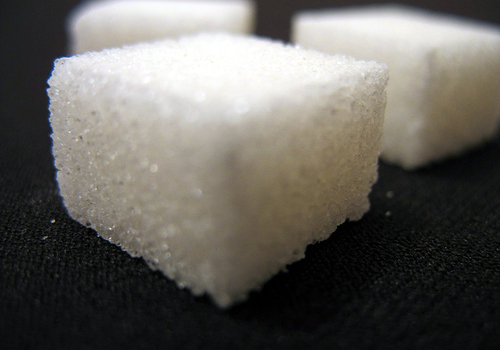
The sugar industry has powered its way through Washington as one of the most imposing lobbies, ever since the 1980s.
You may have read recently that sugar is under attack, specifically the industry’s substantial federal subsidies.
At first that might seem like good news, but the primary leader of the attacks is none other than the Corn Refiners Association.
These days, everyone knows sugar’s bad stuff. This ‘new’ news is actually old news. As covered in a previous post, the original studies on the evils of sugar date back to the 1970s. That was before the sugar lobby gained its stronghold.
Once the sugar industry came into power, all nutritional hell broke loose. Fat became Dietary Enemy #1 — sadly, the fitness industry was all over that viewpoint — and US obesity became epidemic.
It took a couple of decades for the pendulum to swing back to sugar. Yes, it’s about time.
But the worst news about the attack on sugar industry subsidies might have to do with what’s coming as a result. Logic tells us that, if the sugar industry loses its subsidies, sugar prices will skyrocket. In a perfect world, that might reduce sugar consumption, not unlike the decrease in smoking that followed sky-high cigarette prices.
The real, and unfortunately more realistic, nutrition danger is that demand for sweet foods won’t decrease.
What Might Happen Then?
One possibility is nothing will change. Hardcore sugar fans will simply pay the higher prices and keep eating their favorite desserts.
The other is that a cheaper alternative will be offered and devoured — exactly what the corn refiners must be plotting.
What will happen if high fructose corn syrup (HFCS) replaces sugar?
Much bad stuff has been written about HFCS — and it sparked controversy. Of course, the pro-HFCS side came from the Corn Refiners Association, so we can obviously ignore that as a highly vested interest.
Let’s simply skip over the looming shift in power in Washington and stick with food — as if sugar in any of its forms could be considered food.
What Does The Science Show Us?
Studies comparing fructose to glucose have measured the response of the hypothalamus to the two sugars. The hypothalamus helps regulate signals of hunger and satiety, as well as reward and motivation.
In comparison tests, subjects consumed either a fructose-sweetened beverage or one sweetened by glucose. Within 15 minutes, test results showed substantial differences in the activity of the hypothalamus. Glucose reduced activity in the feeding center of the hypothalamus, but fructose prompted a small increase.
The glucose drink also increased the participants’ feelings of fullness, which suggests they’d be less likely to keep eating after having something sweetened with glucose. That might relate to its effect on insulin. Insulin plays a role in fullness and reducing food reward.
Fructose is metabolized differently by the body and triggers less insulin secretion than glucose does.
Unlike glucose, fructose also fails to reduce circulating ghrelin, a monster hormone that increases appetite and food intake, while decreasing metabolism.
Sugar contains equal parts fructose and glucose. HFCS contains more fructose. All (all) research shows that fructose is the health troublemaker, not glucose.
Implications For Future Fructose Use
Obesity is epidemic and associated metabolic disorders (diabetes, hypertension, heart disease and more) are on the rise now, and largely because of sugar.
Imagine how bad things will get if sugar is replaced by HFCS.
James Davis, of the Freedom Partners Chamber of Commerce, said his group opposes special breaks for sugar and corn growers alike.
Davis said, “We’re not real interested in climbing in bed with the corn lobby to accuse the sugar industry of being prostitutes. We oppose all forms of corporate welfare.”
That’s a politician’s statement for sure, and this post will abstain from the politics of this issue.
And I’m certainly NOT pushing sugar over HFCS.
But wouldn’t it have been astounding if Davis’s second sentence had been, “We oppose all forms of sugar”??
by Joan Kent | Oct 27, 2015 | Engage Your Students, Health and Wellness

The client’s food log was extreme. She kept track of every bite she ate and calculated the calories in each item. In the food log, she described every workout she did and the calories she had burned. She was working out several times a day.
But the most extreme thing about her food log was that it included almost nothing but sugar: pastries, chocolate, malted milk Whoppers, fat-free muffins.
Her health issues were also somewhat extreme, at least in severity. The problems were varied. She had irregular menstrual cycles, endometriosis, breast engorgement and tenderness, chronic fatigue, and quite a bit more. Perhaps unsurprisingly, none had been diagnosed as linked with her diet.
She didn’t feel ready to quit sugar, but was willing, in her words, “to cut back.”
While I saw a drawback or two with that approach, I was convinced that her long list of health issues had a great deal to do with the sheet volume of sugar she was consuming. All day, every day. I was ready for any improvement I could encourage her to take.
Basics of Sugar Reduction
Cutting back on sugar is pretty basic; everyone knows these basics:
Skip desserts.
Avoid sodas.
Don’t snack on cookies or other sugary foods.
Don’t add sugar to coffee or tea.
Many more.
But environment matters. Especially at home, where what you have — or don’t have — in your kitchen can make a huge difference. Figuring out which foods to stop buying — and which ones would be okay to swap for them — is important. The bad news: It requires an ordeal called Reading Labels.
It’s important to know what to look for on those labels. Sugar can hide behind many names. Here are the names I’m currently aware of — but please keep in mind that the list keeps growing as new sugars are created. Some are technically not sugar, but have virtually identical effects on insulin and brain chemistry. A few are simply different names for the same thing. For example, Cane Sugar and Sugar Cane are, obviously, the same.
Overt and Covert Sugars
Agave
Alcohol
Barley Malt
Beet Sugar
Brown Sugar
Cane Juice
Cane Sugar
Corn Sweetener
Corn Syrup
Date Sugar
Dextrose
Erythritol
Fruit Juice Concentrate
Fructose
Glucose
Glycerin
Glycerol
Granulated Sugar
High Fructose Corn Syrup
Honey
Hydrogenated Starch Hydrolysates (HSH, Maltitol Syrup, Lycasin)
Isomalt
Job’s Tears
Lactitol
Lactose
Lycasin
Malted Barley
Malt Extract
Maltitol
Maltodextrin
Mannitol
Maple Sugar
Maple Syrup
Molasses
Polydextrose
Powdered Sugar
Raisin Juice
Raisin Syrup
Raw Sugar
Rice Syrup
Sorbitol
Succanat
Sucralose
Sucrose
Sugar
Sugar Cane
Turbinado Sugar
Unrefined Sugar
Xylitol
Why Use the List?
What’s true is the first time or two that you shop using this list — and it’s a good idea to take it with you to the grocery store at first — you might need to spend a little extra time reading all the labels.
The good news: After a couple of trips to the store, you’ll know what you can buy and what to skip. At that point, shopping will be just as easy as it is now.
As for my sugar warrior client, she’s been working on reducing sugars for a while now. Yes, during her cutting back process, some of my fears were justified. Eating little bits of sugar made her crave more sugar. That made it tough, even impossible, for her to eliminate cravings. She still thinks of desserts as a viable option when she’s stressed, and has to tell herself “no” each time. The individual “no” doesn’t always work.
But her health has been improving. Her energy has increased a lot. And that has provided enough encouragement and motivation to get her committed to quitting sugar altogether.
Nutrition geek that I am, that’s what I live for; it is, after all, all about the client.
by Joan Kent | Oct 5, 2015 | Engage Your Students, Health and Wellness

This brief post will cover a seemingly minor point that sounds like nothing but does a lot.
If you’d like to move your students a major step closer to a lifetime of healthful eating, you can do that in a single step.
The key is to get your students to ask one question before they eat anything – pre-workout, post-workout, breakfast, lunch, dinner, or snack.[private PRO-Platinum|PRO-Monthly|PRO-Gratis|PRO-Seasonal|Platinum-trial|Monthly-trial|PRO-Military|30-Days-of-PRO|90 Day PRO|Stages-Instructor|Schwinn-Instructor|Instructor-Bonus|PRO-Studio]
The question is simply this: “Will eating this stabilize me or destabilize me?”
In this context, stability refers to two things – blood glucose and brain chemistry.
Stabilizing Glucose
Stabilizing glucose refers to keeping things in a normal range with gentle and gradual “ups” after meals or snacks, and gentle and gradual dips when hunger is about to occur.
“Gradual” is the operative word.
Stable glucose levels don’t rise to a sharp peak, as they might after, say, a sugary pre-workout “breakfast” and then plummet right after that.
They might plummet in those who are susceptible. Those folks are called carb sensitive because they secrete extra insulin when they eat certain carbs.
Sugar would be one of the key triggers of that extra insulin, but it’s not the only one. Junk like white flour – and even fruit – can trigger too much insulin, as well.
Stabilizing Brain Chemistry
Stabilizing brain chemistry involves several chemicals that change with the food we eat.
The 4 chemicals are dopamine, norepinephrine, serotonin and beta-endorphin (which most people call endorphins).
When those chemicals are at optimal levels, they prevent cravings and keep us feeling pretty good.
But some people have lower baseline levels of one (or more) of the 4 chemicals. That makes them feel a bit worse (sometimes a lot worse) than someone whose brain levels are even.
It also makes them more sensitive to the effects of junky foods like sugar.
When they eat those junky foods, they get an exaggerated reaction of those brain chemicals – either through an extra-high release or through extra-high production. Or both.
The exaggerated reaction might feel great for a while.
It’s also where addiction comes in, making someone who has experienced it want more junk that will give them that great feeling – and take away the blah feeling they could have day to day.
As you can probably tell, that’s almost guaranteed to cause a repeat of the whole cycle.
Which Foods Will Help?
Stabilizing foods are wholesome fats (such as nuts) and protein foods – or even protein powder.
If you can get your students to eat something from each of those categories every time they eat, you’ll help them stabilize glucose and brain chem.[/private]
At first, your students may not like having to go to a little extra trouble in this way, but – in the long run – they’ll feel great, perform better in your classes, and give you the credit you will deserve for changing their eating habits in a simple way.
