
by Joan Kent | Sep 15, 2015 | Health and Wellness

Here’s some information about sugar and appetite that most people don’t know. Of course, those of you on ICI/PRO may know it if you’ve read my posts.
Anyway, here’s the info.
Endorphins
Sugar triggers beta-endorphin, usually called endorphins. Endorphins inhibit the part of the brain that causes satiety — the feeling that we’ve had enough food and don’t need to eat more. That part of the brain is the VMH.
When we eat sugar, the VMH is blocked by the endorphins that sugar triggers. So we want more food at a given meal. Or we may want to eat again sooner than we normally would.
Endorphins can also change which foods we want, as mentioned in a previous post. They’ll probably make you want more endorphin-triggering foods — those would be sugars or fats.
Either way, sugar is likely to change your food landscape.
Priming
Endorphins from sugar trigger another brain chemical, dopamine — just enough to make us want to eat more sugar. This is probably the best reason not to follow the common advice to eat a little bit of sugar when you crave it. (Terrible advice!)
Some people are more susceptible to this ‘priming’ effect than others. If it affects you, you may find yourself wanting more sugar after you’ve eaten just a little bit.
Withdrawal
People joke about being chocoholics or sugar addicts, but people who are affected by it know it isn’t a joke. If you eat sugar often, you may find that you crave sugar when it’s not around — or when some time has passed since you’ve had any. That could be a sign of withdrawal.
If you’re also feeling a little (or a lot) cranky, it most likely is withdrawal. If so, you’ll probably crave sugar and eat more of it.
Bottom Line
Sugar can impact appetite dramatically. As covered in a previous post, it can also increase fat in our diets. Think of all the sugary foods — such as ice cream or chocolate cake — that contain a lot of fat, along with sugar. Those fats are typically not healthful ones, making a bad nutrition slam even worse.
By the way, alcohol can affect appetite in similar ways, and sometimes with even more impact than sugar. But that’s a different post.
by Joan Kent | Jun 15, 2015 | Engage Your Students, Health and Wellness

The current nutrition buzz is that sugar’s bad news. It is.
The fact that admitting this is considered a new direction by nutritionists, dietitians and the public shows how off-base the nutrition field was for such a long time. It even makes the nutrition field appear ridiculous.
At least, to me. I’ve been blasting sugar for 20+ years, at times getting blasted back for doing it.
But it’s worth tracking the events, so we can blame the culprits who deserve it….
Once Upon a Time, Sugar Was Bad
In science journals in the 1970s, sugar’s negative health effects were getting lots of attention. Films were available — some very good. A popular book was written on problems of sugar consumption: Sugar Blues, by William Dufty.
Interestingly, Sugar Blues was written before much (if anything) was known about the brain chemicals triggered by sugar. And way before any connection was made between sugar and appetite, cravings, health, moods, and more.
It wasn’t till 1975 that endorphin (beta-endorphin) was “discovered.” So the 1974 book was a little ahead of its time. And yet it was timely because scientists were researching sugar.
That wasn’t good news for the sugar industry. And the sugar industry is a powerful lobby in Washington, D.C.
If you don’t think food industry lobbyists influence the government, an eye-opening book is Food Politics by Marion Nestle. She describes the laborious, frustrating process of developing the original Food Guide Pyramid.[wlm_private ‘PRO-Platinum|PRO-Monthly|PRO-Gratis|PRO-Seasonal|Platinum-trial|Monthly-trial|PRO-Military|30-Days-of-PRO|90 Day PRO|Stages-Instructor|Schwinn-Instructor|Instructor-Bonus|28 Day Challenge']
Nestle was working for the USDA and visited daily by beef and dairy industry reps. Their complaints — and the pressure they applied — were significant factors in the Food Guide Pyramid, released in 1991.
Those complaints made the original Pyramid vague and confusing for consumers in several ways. Years later, it had to be revised for clarification. (That’s a side issue, but stay with me.)
The take-home point is that the food industries are the real constituents of the USDA. We, the consumers, are not. Our health is of far less concern to that government agency than placating its constituents.
Which brings us back to sugar in the late 1970s.
The sugar industry didn’t care for the scientific emphasis on the health problems linked with sugar and began working its evil.
Sugar Devil Spins Fat As the Enemy
By 1984, fats had been designated the new Dietary Demon.
From that point until the late 1990s — and beyond — we suffered through the low-fat craze. And a craze it was, although it was disguised as the Right Way To Eat.
Some people still believe it! They even cite Ancel Keys, whose work has since been debunked by several sources.
During that time, several things happened — none good, except for the sugar industry.
First, scientists turned away from sugar and began looking at fats.
They investigated health problems linked with high-fat diets, saturated fats, red meats, cheeses, and other “bad fats.” New scientific findings emerged and found their way into mainstream media.
In 1995, an entire supplement of the American Journal of Clinical Nutrition (AJCN) published the papers from a conference on dietary sugar.
The presenters were hand-selected from researchers whose names I immediately recognized. They consistently found that sugar had no negative consequences on health, weight, or even cavities.
Do I have to tell you that funding for these scientists come from makers of sugary food products?
Here’s the take-away: After the conference, all companies attending (General Mills, Kraft, and other big sugar-users you know) could “legitimately” claim that their reps had attended a scientific conference — where it was conclusively shown that sugar is not bad for any reason whatsoever.
Also during the low-fat craze, the food industry developed low-fat and nonfat versions of their products. Conveniently for the sugar industry — and not coincidentally — the products used sugar to replace the flavor lost when fat was removed.
One example? Cream cheese. The full-fat product contains no sugar, but the nonfat version did and does. A line of low-fat frozen foods — ironically named Healthy Choice — added sugar to every product, including soup. Other companies followed.
Product developers even created artificial fats. Remember Olean and Olestra? (How about the side effects, such as anal leakage? Perhaps that’s a story for a different post.)
With all of these low- and nonfat foods available, dietary fat fell far below the original recommendation of 30%.
That 30% had been endorsed by the American Heart Association and the American Cancer Society — until the low-fat craze hit us.
My clinical observation was that protein intake fell, too, especially among women. Protein contains fat — sometimes a lot — so women who were concerned with weight loss just let that go. They started eating carbs, and lots of them.[/wlm_private]
Part 2 is about how we became a nation of sugar junkies and what happened when fitness professionals finally saw the light.

by Joan Kent | Apr 13, 2015 | Engage Your Students, Health and Wellness, Your Fitness Business

Participant resistance was such a big part of running a weight-loss program, I didn’t even realize it was a thing to write about (if that makes any sense). It just went with the territory.
“Resist” has many synonyms: oppose, battle, combat, duel, fight back, put up a fight, defy, struggle against, stonewall. Why would someone join a weight-loss program — and pay lots of money — only to do these?
Participants resist in many ways. Below are only a few examples of actual participant behavior during the 13 years I ran a program combining athletic performance training and a robust nutrition plan geared to weight loss and ending sugar addiction.[wlm_private ‘PRO-Platinum|PRO-Monthly|PRO-Gratis|PRO-Seasonal|Platinum-trial|Monthly-trial|PRO-Military|30-Days-of-PRO|90 Day PRO|Stages-Instructor|Schwinn-Instructor|Instructor-Bonus|28 Day Challenge']
Names have been changed to protect the guilty.
Jeffrey
Jeffrey was our first participant. He got used to having my full attention and turned petulant when other participants joined. From that point on, he continually criticized the program and stopped following instructions. When I said peanut butter was okay to eat, he ate a 1-pound jar in a day.
John
John was in the program for almost a year before he lost any weight. Once his weight started dropping, he told me that, at first, he wanted to prove it wouldn’t work, so he made sure it didn’t.
Kathy
Kathy complained about hearing sugar addiction info in both a live class and a webinar, instead of realizing she heard it twice because it was key. After a private consult, she waved to me from the window of Pete’s (the coffee place) while eating. Based on Pete’s menu, draw your own conclusions about the food.
Kimberly
Kimberly was a vegetarian, miserable, touchy, and quick to anger. She masked it with a phony-soft voice but complained to management about everything (especially me). Even her doctor had told her she needed protein. I knew on Day 1 she’d never finish the first quarter. She didn’t.
Tom
Tom was an alcoholic who reacted to the rule about avoiding alcohol with a strange grin. He dropped out and rejoined over a year later. He reacted to the alcohol rule with the same grin, dropped out again and never came back.
Shelly
Shelly was in sales and said she had to drink with clients. She had many reasons she couldn’t get around drinking. She never lost weight until she did the AIDS ride from San Francisco to L.A. (without alcohol).
Kristin
Kristin’s attendance at trainings was poor. Because it was a progressive, periodized training program, not a drop-in class, she didn’t progress. She also wanted detailed menus instead of guidelines. When we didn’t supply menus right away, that became her excuse to eat pizza, drink wine, and never keep a food log.
When we developed menus, she complained they weren’t specific enough. She wanted to know precisely what SHE should eat every hour of every day. She gave me The South Beach Diet and said our nutrition program was just like it. It wasn’t, but I never understood why she didn’t just follow that diet instead of eating nachos and drinking margaritas. Or what any of this had to do with never logging her food intake as instructed.
So why do people pay lots of money and then resist? Here are a few reasons.
Alcoholism
Addiction defies rules of reason and logic. It’s a complex topic, very briefly covered in a previous post (Sweet Tooth or Sugar Addiction: What’s the Difference?). Alcohol can sabotage weight loss, as covered in another post.
Sugar Addiction
See above. People will go to extreme lengths to avoid giving up their favorite foods. Lots of blame gets thrown.
Not Taking Responsibility
They’re overweight because of a spouse’s work schedule. Or they go to restaurants frequently. Or they never learned what to eat as kids. Or… fill in the blank.
Plausible Diversion
Registering and paying for an expensive, intensive program showed their sincere desire to lose weight. If they didn’t lose, it was the fault of the program, not because they never did the work to make it happen.
[/wlm_private]
These stories aren’t pretty — and they’re crummy memories — but they’re 100% true. If you have a similar experience with your students, maybe something here can help you start them moving in the right direction.
by Joan Kent | Mar 17, 2015 | Health and Wellness, Strength Training
Liquid B complex is the only Nutrition Magic I know. It can stop a sugar craving within a few minutes. But every so often, people will tell me they tried it and it didn’t work. How could that be?
Careful questioning revealed a few common reasons that prevent B complex from working effectively. Here’s what I’ve discovered.
Not Using Liquid B Complex
The liquid formulation seems to speed up the effect so we can feel it within a few minutes. Tablets take longer and might be good for regular supplementation, but a “craving emergency” is better dealt with by using liquid B.
If you already take a daily B-complex tablet, you can safely add liquid B on a day that you get a craving. On the other hand, if you’ve used liquid B for a craving before taking your usual dose of B, there’s no reason to take the tablet that day.
A one-day “overload” of B vitamins won’t be harmful, but it’s best to avoid it on a regular basis. (If you have any questions about this, please check with your doctor.)
Taking B12 Instead of B Complex
For reasons I’ve never been able to understand, people misinterpret “B complex” as “B12.” It’s possible that this dates back to the once-upon-a-time practice of getting B12 injections for energy.
Whatever the reason, B12 is only part of the complete complex — and not even the most important B vitamin in trampling cravings. Yet this misinterpretation has happened so often, I now clarify immediately whenever I recommend B complex to a client.
So again, use LIQUID B COMPLEX. Not tablets, not B12, not any other individual B vitamin.
Not Eating Any Protein
When this mistake is made, it’s usually by folks who haven’t worked with me as clients. All of my clients know I stress the importance of protein.
Protein is a key element in the craving-killing plan. B vitamins work as catalysts to help form specific brain chemicals. Those chemicals can end cravings (and also prevent them) when they’re at optimal levels. But the brain chemicals are made from amino acids — which we learned in 7th—grade biology as “the building blocks of protein.”
We can’t make the necessary brain chemicals without protein.
Junking Out On Sugar First
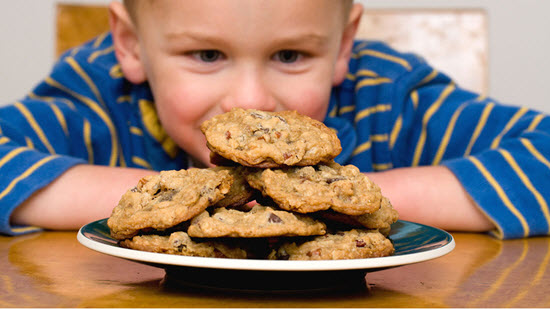
If you’ve eaten half a bag of cookies, please don’t expect B vitamins to stop you from eating the other half. The neurochemical changes that the cookies have set in motion are powerful — and even more powerful for some people than for others.
For reasons beyond the scope of this post, those brain changes will probably make you want the rest of the cookies.
Suffice it to say there’s simply no way that a teaspoon of liquid B complex can override the strong effects of whatever sugar you may have just eaten. The most helpful idea is to use B vitamins to stop your craving so you don’t eat the cookies in the first place.
I’ll throw in a side note. If you find it too easy to reach for cookies because you’re home and they’re conveniently located in your kitchen cabinet, please do yourself a huge favor: Don’t keep cookies in your kitchen. Throw away the ones you have. Don’t buy more.
It Works If You Work It
Liquid B complex is still the only nutrition magic I know. It’s effective; it’s quick. But it’s not a stand-alone miracle. It’s best used as part of a sincere attempt to reduce dietary sugar.
Please stay aware that B vitamins are a short-term solution for stopping sugar cravings. Getting rid of cravings permanently requires changes in diet.
And, yes, changing diet can virtually eliminate cravings. Think of the freedom that could mean for your students.
by Joan Kent | Feb 16, 2015 | Best Practices, Engage Your Students, Health and Wellness, Master Instructor Blog
As a nutritionist who coaches many clients with sugar addiction, I find myself talking about willpower frequently and thinking about it a lot.
I used to take a hard line against willpower — or rather, against people’s view of it. On behalf of my clients, I resented those who smirked when the clients reacted to sugary temptations with vulnerability and conflict. “You don’t have to eat it,” they would smirk. I’m not a fan of smirking.
Time and again, I remind my clients of how misguided that smirking view of willpower is.
Would we tell a smoker who’s trying to quit to carry a pack of cigarettes in her purse, and place a pack in the car, in the office and in every room of the house, just to prove she has willpower?
Would we tell someone who’s trying to stop drinking to get a job in a bar or hang out with his drinking buddies while they party, just to prove he has willpower?
So why do we expect someone going for weight loss to sit in a room full of brownies and jellybeans and not take a bite?
If your goal is to lose weight, the only thing you have to do is lose weight. You don’t have to show you’re a tower of strength. Keep tempting foods out of the house so they don’t challenge your willpower.
The tower-of-strength willpower view is misguided at best. It typically comes from people who don’t understand sugar addiction or why someone may have trouble resisting sugar that’s readily available.
But have you noticed a shift lately in the attitude toward willpower?
I remember motivating slogans. Things like, “Willpower is a muscle. The more you use it, the stronger it gets.” Things like, “Where there’s a will, there’s a won’t.”
The slogans seem inspiring — but they can make someone feel like a failure for not exerting willpower in certain situations.
Willpower 2015[wlm_private ‘PRO-Platinum|PRO-Monthly|PRO-Gratis|PRO-Seasonal|Platinum-trial|Monthly-trial|PRO-Military|30-Days-of-PRO|90 Day PRO|Stages-Instructor|Schwinn-Instructor|Instructor-Bonus|28 Day Challenge']
The new view of willpower is that it’s finite, and actually in short supply. It’s now considered a conscious state that’s strong early in the day but diminishes as the day wears on. Apparently, it’s not a muscle that strengthens with use. It runs out because of something called Decision-Making Fatigue.
The more decisions we have to make over the course of the day — choosing between a donut or egg whites for breakfast, skipping a muffin at the morning meeting, avoiding dessert at lunch, ignoring the tray of cookies in the snack room at 3:30 p.m. — the more difficult it becomes to say “no” when we get home at night.
So is willpower a lifestyle habit that can be developed and strengthened? Or is it a limited resource that has to be meted out and saved for the moments it really counts?
And I wonder whether the limited-willpower viewpoint reflects rising obesity rates. Is it an attempt to explain them?
I’ll boldly go where no one seems to be going. Could this new Law of Diminishing Daily Willpower have anything to do with the fact that sugar is everywhere, and in everything?
Because sugar is everywhere, it’s an external trigger, making us want the goodies we see or smell. Cinnabon, anyone?
Because sugar’s hidden in everything, it’s an internal trigger, changing brain chemistry and priming us to eat more.
If sugar didn’t run our food industry, maybe we’d have stuck with the old view of willpower. It was around for a long time. I recall hearing those “inspiring” sayings before the obesity epidemic.
Maybe sugar is the reason for diminishing willpower — and the change in viewpoint about it.
Maybe. But I still say you don’t have to prove you’re a tower of willpower to get your nutrition goals. Set things up so you can win and just get them.[/wlm_private]
