
by Joan Kent | Apr 17, 2026 | Instructor Training

John says: with no kids at home, this should be easier 🙂
Well, Halloween candy has been on display since August, and we know what that portends for the rest of the year.
But why wait to get your health in order? Here are 10 reasons to quit sugar now —even if you think you don’t want to do it.
1. Quitting sugar can help you prevent or even reverse insulin resistance.
Mainstream thinking on insulin resistance is that overweight is the cause. That’s true, but a limited view. What we eat can greatly influence whether or not we develop insulin resistance — or type 2 diabetes, which frequently follows it.
2. Quitting sugar can help you reduce your cholesterol.
Cholesterol synthesis isn’t necessarily the result of a high-fat diet. The rate-limiter in cholesterol formation is an enzyme (HMG-coA reductase) that’s triggered by insulin. Sugar can stimulate big insulin, so it’s a major factor in serum cholesterol. People now say that cholesterol doesn’t really matter — but metabolic syndrome is a cluster of conditions. If you have one, you probably have more. Keeping cholesterol down by avoiding sugar helps in general — especially if you combine that with preventing or reversing insulin resistance, an underlying condition for several metabolic disorders.
3. Quitting sugar can prevent premature hunger signals.
When sugar promotes high insulin production, glucose can drop pretty low and pretty fast. The speed it drops is the main factor in triggering premature hunger signals — making you hungry for food you don’t need simply because you ate sugary junk.
4. Quitting sugar can reduce “secondary fat consumption.”
Okay, I made up that name. But eating extra fat is something that happens all the time when we eat sugar — think of ice cream, chocolate, rich cakes, cookies. For one thing, fat makes sugar taste sweeter. Also, when you get a craving for sugar, you might reach for something with lots of fat in it, too.
5. Quitting sugar can make healthful foods taste better to you.
Eating sugar triggers endorphins (beta-endorphin). That changes food preferences so that healthy foods seem less appealing. When you quit sugar, eating good foods — like vegetables — will probably be more appetizing.
6. Quitting sugar reduces cravings.
Eating sugar can cause cravings. Yes, for more sugary foods, definitely. But also for other kinds of junk food that have sneaky sugars in them.
7. Quitting sugar can reduce calorie intake.
If you’re not responding addictively to sugar — and eating more sugar and other foods because of that — it will be easier to watch your calories.
8. Quitting sugar can improve your health.
Sugar can impact health directly by increasing inflammation in the body through several mechanisms. Reducing inflammation can improve your health and decrease pain.
9. Quitting sugar can improve your mood and your energy.
People who are carbohydrate sensitive secrete more insulin than normal when they eat sugar. That can set up a “peak-and-valley” pattern in their glucose levels. When you’re at a peak, your energy and mood may feel optimal, but when you’re in a valley, things aren’t feeling good at all.
10. Quitting sugar can improve the overall nutritional value of your diet.
If you’re not killing your appetite with sugary junk, you’ll have room for healthful foods. If you’re not steered in a junky direction by endorphins, you’ll eat more healthful foods. If you’re not eating the usual sugary treats, you may increase the fiber in your diet. If you’re eating wholesome foods, your B-vitamin intake could go up and change your brain chemistry completely.
So it’s up to you and always will be. Will you quit now or wait? Will you quit at all? All I’m saying is quitting sugar can help in these ways — and several others that are not on this list of 10 can also help make you feel great.
Wishing you great health, great moods, great energy, great success in quitting sugar.
Originally posted 2015-09-08 16:07:09.

by Joan Kent | Jan 17, 2021 | Instructor Training

Let me start with a clarification. This post is not about missed business opportunities or client fees. It’s about the disappointment of not getting to serve prospective clients with needs that were tailor-made for my expertise, for one reason or another.
Helping people get results is something I’m committed to doing. Not to be able to do so when I know how effectively my guidelines and suggestions could turn things around for them is disappointing, even frustrating.
Here are a few examples. Maybe you have a few similar examples of your own, participants who dropped out before they could benefit from your program.
Missed Client #1
A self-described sugar addict contacted me to schedule an appointment. During the appointment, she revealed her health and mood issues. She had many.
In general, clients like this don’t actually have 100 things wrong with them. More typically, they have one or two underlying problems that may manifest through multiple signs and symptoms. In this woman’s case, it seemed obvious that how she was eating was the cause of virtually all of her problems. I was certain we could have effected a dramatic change in her health and wellbeing.
The appointment was scheduled for an hour, but I let it run about 45 minutes over that because she seemed to need to talk. By the end, I was quite pressed for time, so I made a single, easy-to-follow food suggestion. I then sent her a carefully outlined plan of how we’d work together.
Her reason for not working with me was the cost, no chance to discuss payment options.
Missed Client #2
Clients who’ve had success with my system refer others to me, which I greatly appreciate. Yet sometimes I don’t get a chance to work with those referrals.
One successful client was able to bring his diabetes, erratic glucose, high triglycerides and high blood pressure under control by following my guidelines.
He wanted his friend, also diabetic, to get similar benefits, so he told the friend about me. Unfortunately, he added, “She’ll tell you to stop eating sugar.”
The friend’s response was, “I’m not ready to do that,” and that was the end.
In actuality, I would never tell a new client to stop eating sugar. There are quite a few steps I’d have him or her take first before we even looked at any sugar problem.
Could I have helped this diabetic gentleman? I have absolute confidence that the answer is “yes.” But I never even met him so it was a non-starter.
Missed Client #3
Carol (not her real name) recently signed up on my website for nutrition coaching. She described her problem in ways that I knew would respond to my system:
– negative reactions to sugar and white flour
– powerlessness over those foods
– a pattern of skipping meals till she was starving
– symptoms of ADD, anxiety, persistent fears, negative thinking, irritability
– a possible learning disorder.
“I always feel like I’m hanging on by a thread,” she wrote. “I’m 49 and OVERWHELMED.”
The items on her list would have responded extremely well to changes in food — and the results could have been life changing. I contacted her initially by email, and followed up with a phone call. She never replied.
These are only a few examples out of many, sparked by year-end ruminations. If I hadn’t had such success with other clients this year — and believe so strongly in what I do — it would matter far less.
Maybe you specialize in power training, or functional strength training on the bike. Maybe you’re a superb personal trainer in addition to being a superb indoor cycling instructor. Maybe you’ve had similar disappointments with some of your participants.
End-of-year disappointments aside, what’s great about what we do is the number of people we do get to help — and that, of course, is the best thing to focus on for the holidays, and going forward into the new year.
Originally posted 2015-12-22 08:22:19.
by Joan Kent | Oct 7, 2020 | Instructor Training

New Year’s Resolutions are upon us, but that doesn’t mean clear sailing. Things that can waylay resolutions are everywhere. Christmas candy will be on sale till early January, when the Valentine candy goes out and will be on display till February 14. February 15 it goes on sale. That brings us to March, when the Easter candy appears — even in years that Easter is late in April. And so on through the year.
Everyone offers tips for sticking to your resolutions. Ideas for quitting sugar, for example, may include (Don’t take notes here!) having fresh fruit instead of juice or dried fruit; flavoring plain yogurt with fruit or honey; using artificial sweeteners; switching to dark chocolate from milk chocolate; limiting sugar to desserts only; weaning yourself off desserts by reducing the weekly number; substituting wine or spirits for high-sugar mixed drinks.
Those tactics don’t — and can’t — work for those of us who have a sugar addiction. Here are a few suggestions — and some of them are just common sense.
1. Keep sugar and other junk food out of the house. Totally. Don’t buy it and tell yourself you won’t eat it. Don’t buy it and tell yourself you’ll have just a small portion. Don’t make your kitchen a binge blowout waiting to happen. Just don’t.
2. Stop putting your willpower to the test. I keep reading that we have only limited conscious self-control, limited willpower — and it certainly appears to be true. Instead, look for ways to change the situation. Ask the waiter to remove the breadbasket from the table. Don’t even ask for the dessert menu. Reread Suggestion 1. The fewer willpower tests you have each day, the fewer lapses you’ll experience later that day.
3. Train yourself to end a meal without dessert, no matter what time of day it is, no matter what everyone else is doing, no matter what others think, no matter what other say, no matter what habits you learned as a child. It takes practice, but it’s worth it.
4. Lie. (That’s fun to say because it grabs attention.) Don’t worry — I’m definitely not telling you to become untrustworthy and lie for no reason or about important matters.
But, seriously, sugar is a need-to-know issue. Does everyone at the dinner table need to know that you’re turning down dessert because you’re addicted to sugar? Or trying to lose weight? Both reasons will bring out every form of sabotage your “friends” can serve up:
“You’ll eat less tomorrow.”
“You’ll work out harder tomorrow.”
“Just a little can’t hurt.”
“But I made it myself.”
Harsh as it may seem, anyone who sabotages you is not a friend. If you have to pretend to want the food, claim to be full from the terrific dinner and ask for a doggie bag. On the way home, stop at the nearest trashcan and dump it. Don’t take it home and tell yourself you’ll make it last several days. Reread Suggestion 1.
5. That brings up another important point, covered in a previous post: Learn to throw away food, especially stuff that’s not really food, but junk. No compunctions here. The U.S. overproduces food significantly, and on a daily basis. Tossing the junk is survival, NOT a sin, as you may have been taught.
6. Little things add up. Focus on short-term actions — what you can do right now to avoid sugar. A recent study showed this approach — versus thinking about the long-term goal — was better for weight loss. It works for quitting sugar, too. Plan your next meal: how can you make it healthy? Buy nutritious foods when you shop. Develop an end-of-day ritual for the first 20 minutes after you arrive home to keep you out of the kitchen.
There won’t be any sugar in there, anyway, right?
As I’ve written in previous posts, motivation is not necessarily enthusiasm. It also tends to fade when daily life presents its daily challenges. But using these suggestions consistently can be transformational.
Enthusiasm is entirely optional. In fact, it’s often the result of consistent action.
Please feel free to share this article with riders and friends!
Originally posted 2014-12-29 09:20:32.
by John | May 4, 2020 | Instructor Training, Strength Training

The increase was a 67 to 76% increase in energy expenditure for all standing cycling
conditions. Image from the study.
New research sponsored by ACE demonstrates that standing (vs. sitting) burns more calories, as long as you keep everyone out of the saddle long enough. This study was conducted by a team lead by Dr. Len Kravitz at the University of New Mexico.[wlm_private ‘PRO-Platinum|PRO-Monthly|PRO-Gratis|PRO-Seasonal|Platinum-trial|Monthly-trial|PRO-Military|30-Days-of-PRO|90 Day PRO|Stages-Instructor|Schwinn-Instructor|Instructor-Bonus|28 Day Challenge']
The study you can download here; Metabolic Cost of Weighted Vests During Standing Cycling was designed to look at the effect of adding additional weight (with a weighted backpack) to an Indoor Cyclist and learn the metabolic affect from how long you're out of the saddle:
Abstract
Whether cycling on the road or pedaling in a club cycle class, this mode of activity is done using
both seated or standing positions. Previous research has examined the effect that cycling position
exerts on physiologic parameters such as heart rate (HR), oxygen consumption (VO2), or rating
of perceived exertion (RPE) during exercise (1—3). This research was intended to simulate hill
climbing, which is applicable to a majority of road cyclists. However, no prior research has
examined the effect of wearing a weighted vest during stationary standing cycling. As well, no
research has investigated the effect of extended bouts of stationary standing cycling (1, 2, 3 and
4 minutes) on metabolic parameters. The implications for this research may directly impact
individuals engaged in fitness center stationary cycling classes, which have become very popular
in recent years.
Anything to burn more calories
I met Dr. Kravitz in the Fall of 2012 at a fitness conference. Once he learned my interest in Indoor Cycling, he excitedly told me about his idea to study the potential training and calorie expenditure effects of adding weight to an Indoor Cyclist. If I'm remembering correctly, he expressed the understanding that weight loss / weight management is high on the list of reasons our riders come to class. If strapping on a backpack full of bricks was going to help someone reach their goal weight, I was all for learning more – and then share it with you.
Based on the chart above, it doesn't appear that adding weight has nearly the affect that simply getting everyone out of the saddle does.
The first minute is just practice
The biggest take-away from this study for me, was the huge jump in calorie expenditure that occurs beyond the first minute.

Will seeing this change how you structure time out of the saddle?
Energy expenditure stabilized between minute 3 and 4 on all standing cycling conditions. This information provides program design suggestions for personal trainers and club cycle instructors desiring to optimize caloric expenditure utilizing research-driven methodology. Clearly, the inclusion of standing cycling bouts for 2 to 3 minutes during a cycling bout meaningfully increases energy expenditure. This increase in oxygen demand occurs during standing, with or
without a weighted vest (up to 15%BW was used in this study). According to Tanaka et al (3), this energy expenditure increase is attributable to the increased muscle blood flow and/or involvement of a larger muscle mass with standing cycling.
[/wlm_private]Dr. Kravitz's team has done a number of other studies that you may find of interest. I interviewed Doctoral student Micah Zuhl in 2012 and discussed the article he co-wrote with Dr. Len Kravitz entitled HIIT vs. Continuous Endurance Training: Battle of the Aerobic Titans. ICI/PRO Podcast #201 — HIIT vs Endurance Training with Micah Zuhl
Originally posted 2013-11-10 09:00:43.
by Joan Kent | Dec 20, 2018 | Instructor Training
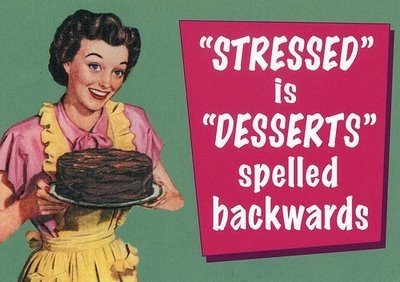
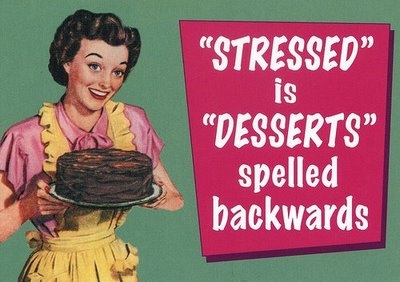
Food cravings would be no problem if they were for broccoli and kale. How perfect would that be? But those aren’t the foods — or kinds of foods — we tend to crave, mainly because they don’t cause much (if any) change in brain chemistry.
Cravings tend to be for foods that feel like comfort foods: from Christmas cookies and other holidays treats to plain old mac and cheese. Foods with sugar, flour and fats are the go-to comfort foods — and the ones we crave — because they’re big brain chem changers.
This short post will cover two ways that cravings can sabotage us: 1) by derailing a weight-loss plan, and 2) by derailing our work productivity.
Cravings and Weight Loss
Cravings prompt many of us to eat the foods we crave. Before you say, “Duh”, that’s not as obvious as it seems. It’s definitely possible to eliminate cravings so they don’t make us eat those foods.
But let’s say you haven’t eliminated the cravings and you do eat what you’ve been craving. The foods you eat will often make you eat more — yes, more of the craved stuff, but also more food in general.
The endorphins (beta-endorphin) triggered by sugary foods, for example, can inhibit the part of the brain responsible for satiety — the feeling that we’ve had enough food and don’t need any more for a while. And the meal can just keep going.
Those endorphins can also make us eat different foods than we typically would. They might lead us to eat more sugar, more fat, or both. Even if you’re just looking for something sweet, that sweet treat will often also contain fat and provide far more calories than you expected.
Obviously, weight-loss plans end up suffering as a result. An effective short-term fix for any craving is a teaspoon of liquid B-complex. (Please check with your doctor to be sure this is a strategy you can safely use.) If your doctor gives you the okay, the craving will be gone in a matter of minutes.
Cravings and Work Productivity
If you eat sweet or starchy foods when you crave them, both trigger a high release of insulin. That can cause sleepiness or “fogginess” that call out for a caffeine fix. It’s especially true for those who are carb-sensitive — who produce more insulin after eating sugar, for example.
Who is carb sensitive? Typically, anyone with a family history of hypertension, alcoholism, diabetes, hypoglycemia, or obesity.
Extra caffeine may work, but may lose some of its effectiveness if you’ve had lots of coffee during the day already. Staying alert and productive is far easier when you balance out any high insulin-triggering foods with protein and lots of vegetables.
Plant sources of protein have commanded much attention lately, but may not provide enough protein to balance out the insulin effects in someone who’s carb-sensitive. If you’d rather not eat animal proteins, make a point of mixing some vegetable protein powder with water.
Have that mixture anytime you’ve been giving in to comfort food cravings. It won’t reverse all the effects of sugars and flour, but it can help.
