
by Joan Kent | Aug 4, 2014 | Health and Wellness, Master Instructor Blog

Photo © Team CSC & Tim De Waele
Stage races span the duration spectrum. Shorter stage races that are done over a weekend might feature a time trial and road race on Day 1, for example, then a criterium on Day 2. These points on fueling for stage races are culled from several sources — cycling books, cycling magazines, websites, and my coach.
Ideal fueling starts with Body Recalibration — not my term, just a fancy name for conditioning your body for recovery. Recovery should begin at least 6 weeks before race season. (An even better practice is to eat well year-round, but we have to start somewhere — and I’m well aware that this post is late in the season).
Start by eliminating junk — assuming any of you ever indulge in such stuff! Junk includes alcohol, sugar, caffeine, high-fat chips, and such. If you’re in the habit of fueling with sugar before and during trainings, it’s a good idea to eliminate that as part of this process.
My coach always said that endurance athletes never mind expending energy, but don’t want to waste it. Wasted energy refers to anything without a performance payoff. Having to detox from chemicals and junk like sugar wastes energy.
Next, add the good stuff. Eat foods in a natural state whenever possible (whole foods, rather than processed). Stress vegetables (3-6 cups a day), rather than fruit. Fructose is associated with lots of health issues and isn’t good fuel for training.
If it’s possible to eat organic, do. That’s less important if we don’t eat the skin. So organic nuts matter less, but organic apples are a big deal. At least stay away from The Dirty Dozen — the foods with the highest pesticide levels: apples, strawberries, grapes, celery, peaches, spinach, bell peppers, imported nectarines, cucumbers, cherry tomatoes, imported snap peas, potatoes. Three foods recently added to the list are kale, collards and hot peppers, so it’s a Dirty 15.
Eat the same types of foods that you eat during your training. Race day is not the time for nutritional surprises. Believe it or not, if you’ve been junking out all the way up to race day, you might as well eat that way for the races.
Don’t deplete carbs or skip meals, especially race-day breakfast. Eat some extra starches 1-2 days before the event.
The primary nutrition concerns in training and racing are:
– Replacing water. Dehydration reduces blood volume; increases heart rate and perceived exertion; impairs thermoregulation, mental performance, and endurance.
– Replacing sodium. Low sodium can result in disorientation, nausea, fatigue, seizures, or collapse. Salt your food instead of using salt supplements.
– Saving glycogen during the race so it’s there at the end when you need it. (This may be a good place for Dr. Joan’s Potato Goo…)
– Replacing glycogen after the race so you can perform well in the next stage. High GI starch and protein in a 3:1 or 4:1 ratio replace glycogen better than sugar, including fruit. Don’t eat fats right after the race. They slow carb absorption.
Eat 3 hours or more before the start of the race. If you’re not adapted to that, consider it part of Body Recalibration. Avoid eating 30-60 minutes before the start, which may be too close to the effort. Find a food combination that works for you, but avoid all-carb (especially all-sugar) meals. They can lead to reactive hypoglycemia in some athletes and cause bonking. Instead, include protein and fat.
Refuel within 30 minutes after your race. Always. Be fanatical about it. Glycogen replacement is maximized during that 30 minutes because glycogen synthetase is in its active form and facilitates peak storage. Eating within 30 minutes counteracts cortisol’s breakdown of muscle protein for energy and will reduce soreness — very important for the next stage. If you miss the 30-minute window, your muscles may be temporarily insulin resistant for several hours. That prevents best glycogen replacement and may interfere with your performance in the next stage.
Eat again 2 hours later and 4 hours later — or 3 hours prior to the next stage. If you race twice that day, stay aware of how many calories you’re expending and consuming. Many convenient devices are available that are worn on your wrist and provide this information.
Racing at over 20 mph while drafting may burn roughly 12 kcal/kg/hr. Without drafting, that could increase to 15 kcal/kg/hr. Gender, size, and muscle mass all affect those values. Cycling efficiency (good technique) can lower them. The more you ride overall, the less you may burn.
The goal during racing is to postpone fatigue, not replace all of the calories you’ve burned. Full calorie replacement should occur during recovery.
Refuel within 30 minutes after the last race of the day, especially if you have to race again the next day!
And keep in mind that these points may also help on days that you teach several classes.
by Joan Kent | Jul 21, 2014 | Health and Wellness, Master Instructor Blog

By Joan Kent –
It was, as the saying goes, déjà vu all over again.
There we were, toward the end of the day at a conference that featured lectures on health problems from eating gluten, health problems from free glutamate, and similar topics. The audience accepted the information enthusiastically — along with the slides that showed extremely long lists of foods that contain the offending substances. In other words, long lists of food to avoid.
Finally, late in the afternoon, I gave my presentation on sugar as a limiting factor in health. The previous speaker had run well over his limit, cutting my allotted time down to 32 minutes. It would be tight but still do-able; this was not a “tough room.” I began to go through my slides and deliver my teaching points.
A man in the audience asked if I was talking about “added sugar” or was including natural products like fruit. I answered that sugar did include fruit — and that fructose, the sugar in fruit, can cause a variety of health problems.
In fact, all of the negative health consequences of sucrose, a disaccharide that’s half fructose and half glucose, are attributed to the fructose in it, not the glucose. Even though you can find disagreements in science journals on virtually everything, no disagreement on this topic exists in the science lit. Researchers all seem to agree that fructose makes sucrose the junk that it is. (These points have been covered in my previous post, “Fructose: The Sugar No One Thinks Is Sugar”.)
Well, the man became angry and even left before the end of my short presentation. Believe me, I’d seen reactions like that before. Sugar is a topic I’ve presented on many times over the years (since 1990, in fact, when everyone was still obsessing about fats). Audience reactions to sugar information have often been strong, and that’s interesting because those were presentations, not personal consultations.
In a presentation, I have no idea what the audience members eat, so nothing can be taken personally. Or should be taken personally. But addiction isn’t rational or logical. One question in a short test for alcoholism is, “Have people ever annoyed you by criticizing your drinking?” The key word in the question is “annoyed”. Mess with someone’s addiction, and they get angry.
Maybe we should start asking fruit addicts if people have ever annoyed them by telling them fruit is sugar.
It has seemed lately that people don’t care about sugar addiction, including their own. Fairly recently, an obese woman told me that she knew she was addicted to sugar but was “okay with it.” That reminded me of the final criterion for substance dependence in the DSM-IV — which has been moved into first place in the DSM-V criteria for substance abuse disorder: Continued use despite adverse consequences.
The past decade or more has shown a nutrition awareness shift that actually harkens back to the 1970s. In the 1970s, science journals were filled with articles on the negative impact of sugar on health. Videos were available, and at least one popular book was written on the subject (Sugar Blues).
In the wake of this, the sugar industry — a powerful lobby in Washington — got busy, and, starting about 1983, three things happened.
1. Fat became the new dietary demon, and everyone started eating low fat this and nonfat that.
2. Sugar consumption between 1984 and 1999 increased by 25-45 pounds per person per year. (25-45 lbs represents the increase, not total consumption.)
3. Obesity in the U.S. became an epidemic.
No doubt the sugar industry was, and is, quite happy with those results.
Now we’re back to a more realistic evaluation of food. Fats are recognized as not being as bad as we used to think — and we know some of them are supremely healthful. Everyone knows that sucrose is junk. Researchers, at least, know that fructose is what makes sucrose junk.
But if all we’ve done over the past 15 years is switch our addiction to fruit, I’m not sure we’ve made any progress. Especially when people get just as angry when I advise them not to eat too much fruit as they used to get when I advised them not to eat sugar.
by Joan Kent | Jun 30, 2014 | Engage Your Students, Health and Wellness
Have any of your students ever told you they want to lose weight, even though you (and everyone else) think they “look fine”? What advice have you given them? This post is about the unconventional advice I gave a nutrition client when everyone was telling her the opposite.
The client, “Susan”, came to me and complained about being a size 6. She didn’t like being that size and insisted that she had to be a 4. Susan had been to several other nutritionists and fitness instructors, and had also talked to her friends about this problem. Everyone, professionals and friends alike, had drawn the same conclusion. They told her she looked great the way she was (which was true; she did) and just needed to develop a more realistic view of her body.
Some people, they told her, aren’t meant to be size 4, and you need to accept that.
Before I make any recommendations for a client, I always begin by asking lots of questions. So that’s what I did with Susan.
I took her unhappiness with her weight seriously, rather than dismissing it as some sort of character flaw. I’m convinced that someone who feels uncomfortable at a given weight may actually be tuning in to what her body’s telling her, not pining to look like her favorite fashion model.
It turned out that Susan’s eating was under control portion-wise for most of the day, although, in the evenings, she often binged.
But what made the strongest impression on me was the way Susan conducted the food journal review. When she showed me the log, she went through every single entry with me. She read the foods aloud and told me the story behind everything she’d had at each meal. I heard about cravings, the reasons for each selection, and more.
Obviously, Susan liked being in control. I decided that was the clue to this whole thing. No one likes feeling out of control when it comes to food and eating. That has been the source of self-esteem issues in many of the clients I’ve worked with over the years. The main difference for Susan between sizes 4 and 6 was not her appearance, but what it took to be a 4. As a 4, she had felt in control. Now she was bingeing.
So we addressed the bingeing and what Susan ate during the day that caused her to binge at night. If you’ve read other posts I’ve written, it won’t surprise you that the culprit seemed to be sugar. Susan’s night binges always occurred after she’d eaten sugar during the day. It felt intuitively clear that getting sugar out of Susan’s diet would give her back the control she really wanted, regardless of her weight.
Well, the results showed that my hunch had been correct. Susan’s cleaned-up diet didn’t trigger binges, and that was a relief for her. Yes, she did lose a few pounds, but she stopped obsessing about getting back to a size 4 and finally did what everyone had wanted her to do all along. She accepted her body.
As an indoor cycling instructor, you may be a logical starting point for a student who wants to lose weight. If she needs more help than you’re comfortable giving, you can always refer. But my hope is that, if she looks pretty good, you’ll consider her discomfort something more than an unrealistic expectation.
by Joan Kent | Jun 23, 2014 | Master Instructor Blog

This post was originally going to be about the effects of sugar on the brain and our appetites. But I figured no one would care about that. Virtually everyone cares about babies, though. So I figured that they — you — would care about babies’ brains, too.
Much research has been done on rat pups and sugar. When rat pups are separated from their mothers, for example, they cry. When researchers give them sugar, they stop crying. Sugar triggers a release of beta-endorphin, which stops the distress and promotes a sense of wellbeing. Even in rat pups.
Did you know this information is being used on human infants?
Newborn infants are subjected to a variety of painful procedures — heel puncture for blood sampling and many more. The painful procedures are even more numerous and varied in pre-term neonates. Pain responses in the newborns are measured by heart rate, crying time, facial activity, and other behaviors.
Sedation was once the most often-used method for dealing with neonatal pain. That’s been replaced by non-pharmacological procedures for pain relief. Some of them include pacifiers, position changes, swaddling, cradling in the arms, and reducing tactile stimulation. It’s an area of disagreement and controversy.
Using sucrose has been recommended and studied fairly extensively. Sucrose has been tested as a stand-alone treatment and also paired with other treatments, such as pacifiers, human milk and anesthetic cream.
Bottom line: Sucrose seems to be effective by itself, and all other treatments seem to work better when paired with sucrose.
I started hearing about the work on newborns and sucrose while doing research for my dissertation. I also heard it presented in a couple of seminars I attended. I was worried then, and even more concerned that it’s ongoing.
It’s only possible to consider sugar a non-narcotic intervention for newborns if you ignore its properties as an addictive drug. What are the implications for the future? We have an obesity epidemic now. What might happen if the practice becomes so widespread that — from birth — whenever there’s pain, there’s sugar?
The VMH is the main satiety center in the brain. Satiety is the feeling we’ve had enough food and don’t need more. Beta-endorphin (typically called “endorphins”) inhibits the satiety effect of the VMH. That can increase food intake, particularly for someone who’s sensitive to the effects.
Sugar triggers beta-endorphin, as mentioned above. Sugar can also bring on cravings later that day or for the next day or two. Addiction to sugar — a result of beta-endorphin and other brain chemicals — virtually guarantees that sugar intake will continue long-term, and probably increase.
If you don’t take sugar seriously as an addictive drug, if you ignore its ability to increase appetite in several different ways, then this procedural stuff with infants seems harmless. And I seem like an alarmist crank. (No worries; I’ve been called worse.)
We would never even think of giving newborn infants any type of narcotic painkillers. I wish we were less cavalier about sugar. It’s as close to a narcotic as it can be, but easy to dismiss because it’s disguised as food. (Maybe in name only, but still.)
Ending babies’ pain is obviously a good thing. Sugar seems innocent and harmless when used in that way, but it isn’t.
by Joan Kent | Jun 16, 2014 | Health and Wellness, Instructor Tips and Tricks, Master Instructor Blog
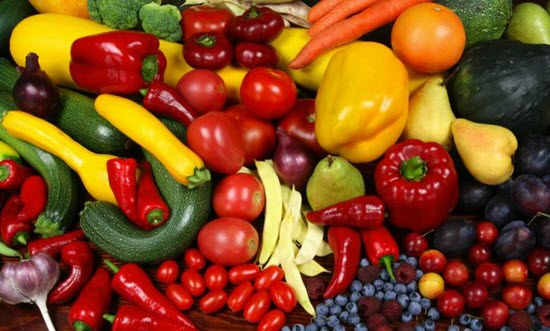
Plenty of things about nutrition are important but, to me, kinda boring. This is one of those things. But the topic is health-related, so it seems like a viable one.
What’s great is many foods are said to be powerful disease fighters, and this post will cover several of them. Those who plan to object that I’ve left out a bunch will be right. This is not meant to be the definitive, exhaustive list of such foods.
As you probably already know, colorful pigments in foods often indicate the presence of phytonutrients that can fight cancer, heart disease, and other diseases associated with oxidative damage. Oxidative damage is caused by free radicals, molecules that have lost an electron. Free radicals can scavenge electrons from healthy molecules, which may then develop diseases, including cancer.
Free radicals occur during normal metabolic functions but can also be created by toxins, processed foods or pollution. Potential sources of free radical production are everywhere. Antioxidants in foods help guard us against the damage they cause.
Red/blue foods contain anthocyanins. Examples are cherries, blueberries, plums and strawberries. In addition to anti-inflammatory benefits, they can protect against memory loss and declining motor skills.
Yellow/orange foods contain carotenoids, which can fight lung cancer. Examples of these foods are sweet potatoes (a wonder food in themselves), pumpkin, carrots, winter squash, cantaloupe, and broccoli. The chlorophyll in broccoli masks the yellow/orange pigment.
Orange foods, such as mangoes, oranges and papayas, contain cryptoxanthin, which is said to reduce cervical cancer risk.
Lycopene is well known for its ability to fight prostate cancer and heart disease. Since cooked tomatoes contain lycopene, they sparked, as you may recall, an odd controversy on whether or not pizza is a health food. No comment needed.
The yellow pigments — lutein and xeaxanthin — can protect the eye from blue-spectrum light and guard against macular degeneration. Corn and spinach are foods that contain them. Again, the chlorophyll in spinach masks the yellow pigment.
Astaxanthin is an important antioxidant found in pink foods — wild salmon, shrimp, lobster and crab.
An often-overlooked produce color is white. White produce is said to protect against stroke. White produce includes cauliflower, parsnips, Daikon radish, cucumbers, apples, pears, and bananas. Apples and pears are also anti-inflammatory and may help reduce blood pressure.
Looking beyond colors, some high-ranking antioxidant foods are dried beans, blueberries, cranberries (not dried — those are sweetened), berries, artichokes, prunes, apples, pecans, cherries, black plums, and Russet potatoes.
Cancer-fighting foods include almonds (10 per day), apples, blueberries, cherries, Brazil nuts, chickpeas, lentils, red beans, oranges, green leafy vegetables, dark green vegetables, tomatoes, wheat grass juice, and cruciferous vegetables.
Those much-touted and healthful cruciferous vegetables include broccoli, cauliflower, Brussels sprouts, cabbage, spinach, arugula, bok choy, collard greens, Daikon radish and other varieties, horseradish, kale, kohlrabi, mustard greens, rutabaga, turnips, and watercress.
As you can see, several foods show up on more than one of the above lists. Those are nutrition powerhouses.
Despite the appearance of various fruits on all of the lists, my general recommendations are 6 to 13 servings of vegetables per day (a serving is ½ cup), plus 1 to 2 servings of fruit per day (a serving is ½ cup or 1 medium-size fruit). Choose your fruits and vegetables from the lists above, and above all, stay away from the 5-a-day approach. That can too easily turn into 5 servings of fruit with no vegetables.
Don’t forget to include nuts and beans. And, of course, avoid junky, processed foods to limit free radical formation in the first place.
