
by Joan Kent | Dec 2, 2013 | Health and Wellness, Master Instructor Blog
Here we are again, in the midst of holiday season. Tempting treats are everywhere, of course. As indoor cycling instructors, you’re all probably excellent at maintaining self-control.
But have your students ever asked you what you eat when you’re indulging? Maybe they’re looking for ideas — for “better” ways to indulge. I take that last part to mean less harmful to their health, diets, and weight.
One way is to tell them to avoid sugar and indulge in healthful fats.
Okay, stop yawning. Good fats can taste great and be just as indulgent and satisfying as sugar — without most of the side effects — so hang with me for a moment. Don’t worry; I won’t take this occasion to repeat all of the terrible things I’ve recounted in previous posts about sugar’s negative health effects 🙂 Healthful fats are a smart way to indulge without incurring those effects. AND they won’t trigger the addictive reaction that sugar infamously does.
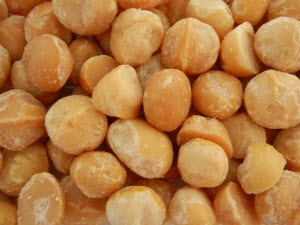
An excellent suggestion would be raw nuts. A couple of months ago, I read a book called It Starts with Food. It turns out, according to authors D. and M. Hartwig, that the two most healthful nuts are cashews and macadamias. Many years before I read that, I used to make a cashew/macadamia nut butter that everyone described as “to die for.” It does have a rather festive taste and mouth-feel, and you can use it as a spread on some wholegrain crackers, to stuff celery or Medjool dates, or as a dip for carrots and more.
Here’s the recipe — if you can call anything this easy a recipe. You’ll need 1 pound of raw cashews, 6 ounces of raw macadamia nuts, 1 food processor, and about 6 to 8 minutes.
Place all of the nuts in the food processor, start it, and let it keep running until the butter has a smooth texture. It will go through a variety of stages in the 6 minutes, but don’t be deterred. Stop and scrape the sides of the container, if absolutely necessary, but it usually works through the stages itself. The butter is perfect if you can hear a slight sloshing sound as the blades turn.
Don’t add anything — no salt, no oil, no water. Everything will blend perfectly. If you’re adamant about keeping the nuts raw, you’ll need to stay close by and turn off the food processor whenever it gets warm. Let things cool, then resume. If not, just let it run.
And there it is: quick, easy, delicious, and sugar-free. If you stick to a once-a-year strategy, it could become a tasty, new (and not too indulgent) holiday tradition.
If you try it, let me know what you think.
by Joan Kent | Nov 25, 2013 | Best Practices, Health and Wellness, Instructor Training

If you run high-intensity trainings in your classes — and I’m guessing most of us do — you may have had a participant experience extreme difficulty during or just after a hard bout of work. In such cases, I’ve seen the skin turn absolutely white or ashen — or, alternatively, bright red and tinged with blue around the cheeks. Either way, the student doesn’t feel well and may be lightheaded, nauseated, shaky, and extremely fatigued.
It’s likely you’ve seen these signs, along with a variety of treatments offered: walking slowly around the room, sitting with the head between the knees, or just lying flat on the floor. These methods often don’t seem to help and may even make things worse.
Keeping in mind something I learned from my major professor in grad school, I developed a “trick” that has proven helpful in such circumstances. It can bring someone back to feeling better quickly and can frequently eliminate the need for stronger emergency measures.
As soon as possible, get the person off the bike and onto the floor. For the sake of comfort, an exercise mat is ideal. If no mat is available, fold a towel to cushion the head. DO NOT elevate the head — we all know from CPR classes that will close off the airway. Speed is more important than comfort, though, so if a towel or a mat isn’t available, just get your student on the floor.
Start the student on his back, with knees bent and feet on the floor. Instruct the student to keep the legs relaxed as she gently lifts one knee toward the chest for a moment and returns the leg to the starting position. Do the same on the other side. If the student is too confused to understand and follow your instructions, just ask him to relax and tell him that you’ll be lifting his legs.
This process typically needs to continue for several minutes. Keep watching the student and giving instructions. Most of them will stop after only one or two repetitions. Be prepared to move the legs manually if the student stops due to fatigue.
A few things not to let the student do:
– Don’t let her grab the knee and hold the leg up. What makes this procedure work is the rhythmic up-and-down action.
– Don’t let him do this quickly and turn it into a forceful exercise. Again, the gentle, rhythmic action of the leg moving up and down is the key.
– Don’t let her lift the second leg while the first one is still in the air. At least one foot should be flat on the floor during the entire procedure.
Like the rest of you, I’ve taken many CPR re-certs. They don’t cover anything like this, but it’s highly effective. The color of the face returns to normal fairly quickly, and the nausea tends to go away quickly, as well.
For better or worse, I’ve had many occasions to use this. When Jim Karanas was teaching his Performance Max program, more than a few participants experienced severe symptoms after max efforts (especially when rowing). Fortunately, the procedure was quite effective, as mentioned above.
Yet long before PMax existed, the “seal of approval” came from Dr. Campbell, my major professor, himself. In our exercise physiology lab one day, a student experienced exactly the symptoms described above — she was sick to her stomach, shaky and white as a sheet. I immediately asked if she’d be willing to do something that I thought would help her. From the floor, her color came back after several knee “pumps” and she was fine.
Tough as he was to impress, Dr. Campbell said nothing, watched closely, and finally made eye contact with me and nodded his approval. This expert in cardiovascular dynamics apparently saw it as an appropriate treatment method.
You might want to practice the technique so you’ll remember it. Then let’s hope we never have to use it.
by Joan Kent | Nov 18, 2013 | Health and Wellness, Master Instructor Blog
By Joan S. Kent
Diet isn’t the only reason your students may suffer from PMS symptoms. But it could be a big one. If the women in your classes approach you for help with PMS (or even complain about it), you’re in a great position to offer good advice.
Premenstrual syndrome includes a long list of symptoms and signs: anxiety, depression, irritability, mood swings, nervousness, angry outbursts, fatigue, fluid retention, bloating, weight gain, backache, cramps, headaches, joint pain, breast pain, insomnia, acne, and cravings. Whew.
Factors that contribute to PMS include hormone or neurochemical shifts, diet deficiencies, stress, and lack of exercise. (That last one certainly won’t apply to indoor cycling students.)
Two important brain chemicals associated with PMS are serotonin and beta-endorphin. Both chemicals drop pre-menstrually — with interesting effects.
The first, serotonin, promotes relaxation, calm and satiety, the feeling that we’ve had enough food. It can reduce depression, stress, anxiety, and pain. During PMS, the drop in serotonin can lead to irritability, pain, depression, mood swings, impulsivity, increased appetite, and cravings, especially for carbs.
Second, beta-endorphin reduces pain and emotional distress, while it promotes wellbeing, euphoria, and brain “reward”. When beta-endorphin drops during PMS, we feel more pain and have “low” moods and cravings, especially for sugars and fats.
Serotonin and beta-endorphin are strongly influenced by diet and exercise. How does repeated sugar consumption affect this?
Women with PMS tend to have higher intakes of sugar, alcohol, white flour, salt, saturated fat, caffeine, and dairy products. From the other side, PMS is linked with low levels of B vitamins, protein, essential fatty acids, and fiber. These dietary habits tend to be either/or. One cancels out the other.
Let’s focus on high sugar intake. Sugar increases the intensity of PMS symptoms. It increases breast tenderness, congestion and pain; abdominal bloating; and swelling of the face and extremities. Sugar increases magnesium excretion, which in turn results in irritability, anxiety, depression, low brain reward, and insomnia.
Sugar triggers high insulin secretion. Insulin affects hormones known as prostaglandins (as explained in a previous post), and increases the ones that cause pain and inflammation. Sugar increases appetite for junk food, cravings, and hypoglycemia in people who are susceptible. Alcohol does these things, too, and can decrease serotonin besides. Not a good mix of effects from either of these substances.
The best plan is for your students to get off sugar (and alcohol, which is essentially the same thing health-wise). Recommend that they eat protein throughout the day, preferably with each meal and/or snack. They can replace sugar and white flour with complex carbs — sweet potato, quinoa, turnips, lentils, pumpkin and other squash, and vegetables — and eat unsaturated fats (avocado, olive oil, nuts, seeds) with each meal.
Supplements can help your students feel better. Flaxseed oil and fish oil capsules are good to take every day. Magnesium improves mood. B-complex can help restore healthful hormone and neurochemical levels. Vitamin D3 is needed for uptake of magnesium, as well as for calcium.
Make sure they keep coming to your classes. Working out at least 3-4 times a week relieves many symptoms, and is as important as all of the other suggestions combined.
Many other nutrition and supplement suggestions exist for dealing with PMS — not to mention making it through menopause without discomfort. I’ll be back to cover these topics in future posts. Meanwhile, if your students could use help in ending sugar addiction, they can contact me at www.foodaddictionsolutions.com.
by Joan Kent | Sep 5, 2013 | Latest News
By Team ICG® Master Trainer Joan Kent
To live in hearts we leave behind is not to die. — Thomas Campbell
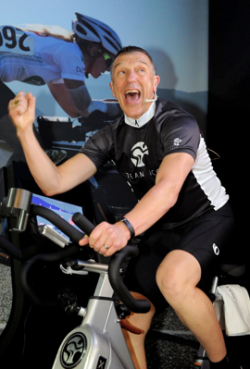
Write a piece on Jim Karanas. How could a simple request be so daunting? Write about what — Jim the man, Jim the instructor, Jim the athlete? How he changed people’s lives? What he meant to ICG®? Since Jim’s untimely death on August 25, all of these have swirled relentlessly through my mind.
ICG Marketing Director Gary Warren describes Jim as “the ultimate selfless man in a selfish world. Jim offered his directors, co-workers, partners and customers 100% every day, with nothing held back. If ever there was a man who showed how to focus on doing great things for the greater good, rather than for profit, Jim was that man.”
Jim started small in the fitness industry in the 1980s, teaching classes in a local fitness club and turned himself into the quintessential fitness instructor. He had every quality a great instructor needs. He connected with people and always remembered their names. He gave crystal clear training instructions. He offered more than a workout in his classes, incorporating physiology, philosophy, and inspiration. People left his classes feeling wonderful. (In fact, people left every conversation with Jim feeling just a little bit better.) Jim’s love for training and athletics was unparalleled, and he shared it with the greatest enthusiasm. Jim even taught a fitness class for kids, and 30 or 40 adult club members would typically gather around to watch. It was amazing.
Jim considered his primary gift in fitness his ability to create programs.
– The original CEO of Club One credits him with developing the philosophy behind Club One.
– When aerobics competition was at its peak, Jim created Competitive Aerobics Training Camp. No other coach was so successful. Jim’s athletes won a total of 78 medals, including national and world championships.
– He created Spin Camp, a six-week, periodized indoor-cycling program, the first of its kind.
– He created Performance Max, a progressive, periodized program that incorporated both indoor cycling and rowing.
– In creating PMax, Jim actually brought Active-Isolation Stretching to California. It had been used only on the US east coast until then.
– Jim shaped the philosophy behind the Kranking program, calling for “inclusive fitness” and emphasizing the benefits of the Krankcycle for challenged athletes.
Jim took his profound love of cycling and applied it to his work for ICG, creating a team of Master Trainers nationally and internationally. A ride led by Jim Karanas to Myride®+ was the ultimate indoor cycling experience. It put together everything he knew and loved about cycling. He brought that love to the workshops he taught for the Team ICG Master Trainers.
Jim loved to coach people to ‘go beyond self-imposed limitations,’ a phrase he used time and time again in his classes. He encouraged hundreds of his students to begin riding outdoors, or to try distances and challenges they might never have tackled. Over decades — and especially in the past weeks — countless “Jim disciples” have told me that they never ride without hearing his voice, his words in their minds. Many of them have gone further to say he changed their lives.
Jim turned numerous indoor cycling students into instructors through inspiration. He would teach, and his students wanted to do the same — and make people feel what Jim had made them feel.
Back in 1975, Jim said what he liked best about fitness was the fact that “you can’t fake it.” Jim’s teaching was never gimmicky; industry fads were of no interest to him. The classes he taught came from his experience and his heart. They were authentic and so was he.
Gary Warren describes Jim as “technically brilliant. But his ultimate skill was being an amazing human being. Jim had something that cannot be quantified, an ability to get people to where they wanted to be — in sport, in fitness, in life. He will always be part of ICG and has shaped where we are heading. On a personal level, Jim shaped my ability to lead with greater compassion for those around me. I'm a better person and business director having had him on my staff and as my friend.”
Since Jim’s death, the phrase “bigger than life” keeps running through my head. He was everyone’s most unforgettable character. His influence was worldwide. His compassion and ability to give and forgive were unending. He taught by example. The sheer number of people Jim helped and touched is shown in how many love him and will always remember him. To pay forward even a small fraction of what Jim lived daily would be a most fitting tribute and a beautiful legacy.
by Joan Kent | Aug 25, 2013 | Latest News, Master Instructor Blog
By Team ICG® Master Trainer Joan Kent

We're all going to miss you Jim.
I can’t find even the slightest bit of humor in the irony. This weekend, I finished editing Jim’s post on Jeff Wimmer’s passing. Jim’s tribute was moving, as I would have expected.
A few minutes later, I got a call that Jim, who was at a show in Brazil presenting Myride+ demo rides as only he could, had died of a heart attack.
I had to deliver the news to a number of people close to Jim, first and foremost his wife Angela. The calls couldn’t have been comforting because I couldn’t stop crying.
I’ve known Jim since my early college days. He was a diamond in the rough back then, but turned himself into the most impressive figure in the fitness industry. Many who read this will know I’m not exaggerating, that everything that’s been said about Jim is 100% accurate. Many fitness pros are more famous, but none is better than he was. When Jim talked about training, everyone listened.
Jim was my mentor. Among numerous other things, I learned from him how to teach Performance Max, one of the outstanding and unique programs Jim created, in the way he originally envisioned it. It meant so much when he said I was the best student he’d ever had.
Jim recently left PMax because his schedule got too full. The program is still in existence, but its soul has been replaced by statistics. Jim had that mind/body thing down and brought it to training as no one else ever could. I worked hard to stay true to it, but Jim was an impossible act to follow. The owner of PMax said about my attempts, “Jim does it better.” Of course, I knew that, but I never stopped using Jim’s classes as my blueprint. Why not emulate the very best?
Jim was my best friend, as well as my ex-husband. We remained so close over the years that it actually popped into my mind for a moment to call him when I needed to share this terrible news. Yikes.
The reactions of the people I’ve told have been as grief-stricken as my own. Jim touched many, many lives and in a profound way.
My entire family died within the space of a couple of years, and without Jim’s support I’d never have gotten through it. His departure leaves an alone-ness that might be difficult for most to comprehend.
I’ll dare to say that Jim was in many ways the best thing that ever happened to the fitness industry. In some ways, he was the best thing that ever happened to me.
