
by Joan Kent | Mar 1, 2017 | Engage Your Students, Health and Wellness

Do you have a persistent health issue that hasn’t responded to your nutrition efforts? More and more people are using nutrition and fitness to help them overcome problems that used to send them to doctors and pharmacies.
If you’ve been working on the problem for a while — weight loss, high glucose, headaches — you probably have tried many strategies. But others may exist. Don’t assume you’ve tried everything.
Here are 3 tips to help you get the most from your nutrition appointments — and your nutritionist’s suggestions.
– Don’t improvise.
Instead: Follow instructions to the extent you can.
A recent client had been to doctors, but now wanted to treat her diabetes without meds. She was taking 31 (really!) different supplements, and some of the supplements were for health issues she didn’t even have, like liver and thyroid.
She had poor results — her fasting glucose was not dropping any lower — but she kept taking every supplement.
Among other things, I suggested she lighten the stress on her liver and kidneys by eliminating any supplements that were not designed to lower glucose. We met a week later, and she told me her glucose had gone up, not down.
It turned out she had eliminated ALL the supplements, including the glucose-lowering ones.
– Don’t reject an idea for a ridiculous reason.
Instead: Be willing to try something new. Your health comes first.
The same client above was in terrible shape physically. Her workouts were barely getting her heart rate to 95 — and she was exercising only 3 times a week. She needed to work out with some serious intent.
She couldn’t exercise more frequently because it caused pain in her legs. I suggested she buy a Krankcycle — an absolutely brilliant piece of exercise equipment. I even found a certified, refurbished one for her at a terrific price. It would have enabled her to work out additional days each week by using her upper body instead of her legs.
Alternating the 2 types of cardio could (and would) have sensitized both upper- and lower-body muscle to insulin and produced solid results.
Why did she reject it? She said they didn’t have room. Her beautiful home is huge, so that made no sense. She wouldn’t consider putting the Krankcycle in any room but one — and wouldn’t consider putting it in the large garage. Who knows? Maybe 8 cars lived in it — or perhaps a family of 6.
Either way, the answer was “NO,” and the reason seemed ridiculous. The result? Again, her glucose didn’t move.
– Get out of your comfort zone.
Self-honesty is key here. Discomfort can be part of one’s comfort zone. Some people even cling to it, possibly thinking that the devil they know is better than the devil they don’t know.
Instead: Decide to do what it takes to move forward. And do that.
A former client had a sleep issue that was medically diagnosed as a deficit of serotonin, a brain chemical that can promote relaxation and is the direct precursor of melatonin, the sleep hormone.
This client rejected every suggestion I made to increase her bedtime serotonin levels — and, by the way, that’s an easy thing to do. My suggestions even made her angry, and they simply involved food.
The behavioral psychologist on our team informed me that this client seemed to feel “special” because of her sleep problem.
A comfort zone isn’t always the best place to be. For your health, do what it takes to move forward, even if it causes temporary discomfort.
Think of starting to exercise — it’s uncomfortable at first because it’s new. As we continue, we adapt to it, and that’s when the magic happens. Food is the same way.
If you’d like help with nutrition to improve your health and energy, perfect. That’s what I do. Just visit www.FoodAddictionSolutions.com/Coaching and request your FREE Eating Empowerment Consult. Find out how easy it can be to move forward and enjoy great health.

by Joan Kent | Feb 22, 2017 | Health and Wellness

Obviously, it’s not necessary to know how caffeine works to be able to use it. It can be helpful in boosting pain relief from other pain-relievers or by itself. It’s especially good for muscle pain relief — great news if you work out hard.
Scientists speculate that caffeine’s pain-relieving power comes from 3 mechanisms:
– It blocks release of adenosine.
Adenosine is a brain chemical that carries pain signals to the brain.
– It activates adrenalin pathways in the brain.
Those pathways include the body’s own pain-killing mechanism.
– It stimulates the central nervous system in a way that changes the processing of pain signals.
Of the 3, I like the first one best. The second 2 don’t actually explain clearly (at least to me), but the first does. Here’s why.
Adenosine prevents the release of 2 brain chemicals — norepinephrine and dopamine — presumably so the amounts available at a given time are kept within control.
When we consume caffeine, the caffeine blocks adenosine. It occupies the adenosine receptors and prevents adenosine from “getting in.” As a result, dopamine and norepinephrine are released in larger amounts. That’s why coffee makes us feel alert.
But norepinephrine also has analgesic power, so it offers a bonus — it wakes us up and helps to relieve pain.
Norepinephrine is made when we eat protein foods: fish, eggs, chicken, beef, lamb, pork, turkey, shrimp, crab, yogurt (with 18-22 g of protein per serving). For non-animal protein, use high-quality vegan protein powders from peas, hemp and other vegetable sources. (Kale, for example, doesn’t have enough.)
The take-away? Be sure to eat protein foods regularly, so your norepinephrine stores are adequate when you need to release them by consuming caffeine.
For additional tips like these — or for more serious health issues — visit www.FoodAddictionSolutions.com/Coaching and request your free Eating Empowerment Consult. Find out how easy it can be to get your nutrition and your health back on track.
by Joan Kent | Feb 14, 2017 | Health and Wellness
On a few separate occasions, I’ve heard people from various health occupations declare that protein is “overrated.” It seemed to me those folks were thinking of “body” protein — for muscle building and the like — rather than brain protein. This brief post covers the top 3 reasons to take a different view of protein.
1. Protein provides amino acids.
Amino acids are the precursors of several key brain chemicals — dopamine, norepinephrine, and serotonin. Those neurochemicals affect the brain in a number of ways.
Dopamine and norepinephrine boost alertness and brain reward. Norepinephrine and serotonin improve mood and help fight depression and other “off” moods. All of them are brain feel-goods.
2. The female brain turns over serotonin at a faster rate than the male brain.
As a result, women need protein throughout the day. That provides the amino acid tryptophan in sufficient quantities to help the brain make enough serotonin and prevent various mood issues.
In addition, protein foods provide B vitamins. Vitamin B-6 helps to make serotonin synthesis (or re-synthesis) possible.
3. Protein is the macronutrient that offers the highest satiety.
Satiety is the feeling that we’ve had enough food and don’t need to go back for more. One underlying reason for this is that protein triggers production of cholecystokinin (CCK). It’s the most powerful satiety hormone the human body produces.
Yes, there are other reasons to eat protein, but let’s stick with these 3 for this post.
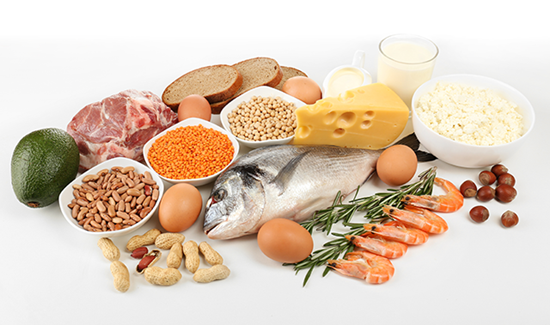
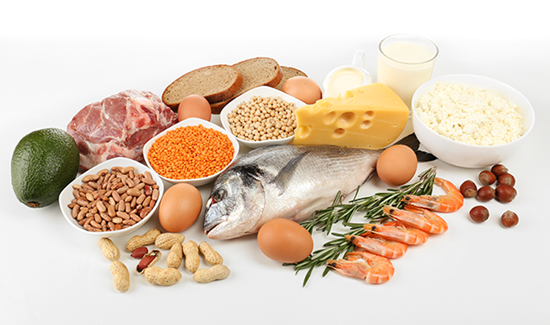
The above reasons are compelling ones to keep eating true protein foods — fish, chicken, grass-fed beef, eggs, shellfish, and more — throughout the day. If you’re against eating animal products, by all means substitute high-quality protein powders.
Vegetable proteins are having their moment right now. But for some people, the amount of protein available in kale, for example, won’t provide enough protein to make big changes in the brain. Vegetable protein powders, though, offer more.
Whatever form of protein you decide to use is up to you, of course. Just don’t skimp on protein if you’re seriously interested in alertness, better moods, and greater satiety.

by Joan Kent | Jan 16, 2017 | Engage Your Students

These days, everyone seems to know that sugar is bad news and should be avoided.
Sometimes I feel as if I’ve heard every possible question about it, but a few sugar questions pop up over and over again. Here are 3 of them.
– If I quit sugar, will I have to do it forever?
No nutrition question is ever wrong or out of bounds. But this one is asked from the person’s current sugar mindset.
For someone who’s hooked on sugar, just thinking about giving it up is scary. That’s probably because any sugar addict knows that cravings and symptoms are likely to occur if and when they try to do without it.
The idea of going without sugar forever seems even worse — not only scary, but also impossible and dismal. How can life be worth living without sugar?
Here’s the good news. What’s true about giving up sugar is things change. Often a lot.
Once you’re past the addiction, for example, other foods start to taste different — better. Really. It is possible to enjoy the delicious flavors of foods that aren’t sweet when you’re no longer hooked on wanting everything to taste sweet.
Here’s another change. After going without sugar for a while (think several months, rather than just a few days) you may be able to taste a little bit without experiencing any relapse.
The bad news might be that it won’t be possible to go back to eating the “bad old way” without rekindling the sugar addiction. But since that ‘bad old way’ may have caused the health, mood or focus problems that made you decide to quit sugar, how bad is it really to let it go?
– Aren’t all foods okay in moderation?
Not everyone can achieve moderation around certain foods.
In the same way that some people can drink alcohol in moderation while others can’t, some people can open a candy bar, take a bite, and leave the rest on the desk for days — till they decide to take a second bite. Obviously, that’s moderation.
Not everyone can do that. For a sugar addict, a bite of a candy bar is all too likely to lead to repetition — another bite, then another, then another. It’s also likely to lead to another candy bar — or some other sugary food, such as the cookies in the office break room that day.
– Can I still have agave, maple syrup, honey, or dark chocolate?
I call this the “loophole” question.
It takes other forms, too. Some clients have asked me if it’s okay to take weekends off from their food program.
Clever (sneakier?) clients have asked if it’s okay to take weekends off from logging their food intake. I guess they think I won’t realize they’re trying to give themselves room to eat whatever junk strikes their fancy, while keeping no record of any of it for me to review.
If you’re looking for loopholes, you’re probably still in the powerful grip of sugar.
I recommend making a commitment to yourself — dull, unsexy and arduous as that may sound — to quit and stick with it.
What’s great is how you’ll feel once you’ve taken the plunge. Once your health improves — along with your medical tests, your skin, your mental clarity, and your moods — the junk will seem less important.
In fact, you may wonder how you ever let sugar take control of your appetite, your moods and your life in the first place.
Or why you ever resisted getting rid of it!
Are you thinking about quitting sugar but feeling a bit scared? Do you think you might need help? Perfect, because that’s what I do. Just visit www.FoodAddictionSolutions.com/Coaching and request your free Food Breakthrough session. Find out how easy it can be to make a few changes that get you on the right path — and how easy it is to stay on it!

by Joan Kent | Nov 30, 2016 | Health and Wellness

Nutrition coaching can be a gratifying business when clients get results. But it can be rather frustrating when clients fail to follow instructions — particularly for reasons that seem illogical, arbitrary, or even a little self-destructive.
Looking at weight-loss timing, for example. Much damage can occur from the time we first go off-course with our eating to the day we decide — somewhat arbitrarily — it’s the “right” day to begin anew.
Take the “Diets Start on Monday” Thing
Who was the first person to decide that Monday is the right day for healthful eating to begin? A heck of a lot of off-track eating can happen between the decision that you need to change your diet and that new-leaf Monday.
Or maybe the time span is only the weekend. Plenty of junk-outs can still crop up in anticipation of the deprivation that will come with Monday.
And if you catch yourself falling off your new food plan on Tuesday or Wednesday, what will the rest of the week look like if you wait till the following Monday? Imagine how many extra desserts or drinks you might squeeze in, how many extra pounds you might gain.
Don’t Wait Till New Year’s Day
For that matter, who decided that January 1 is the day to re-set after holiday chaos? The holiday season lasts at least 5 weeks. Why go through the same behaviors, and then set the same goals every year?
Two clients — married to each other — used to drink their way heavily through the year and “dry out” (their words) in January. I discovered their January dry-out didn’t last the full month of January. It barely covered the first 3 weeks of the year.
We needed to make changes
A few other clients of mine have difficulties with sugar, alcohol, and weight gain. They’ve told me (separately) that they intend to keep eating and drinking through the holidays and start following a healthful plan in January.
Again, changes seem to be in order.
Food, Alcohol, and Highway Lane Dividers
What if we delayed fixing things in other areas of our lives? Like driving, for example.
No doubt you’ve momentarily driven over the raised lane dividers on the road — the ones that make the tires bump when you move into the next lane. What did you do?
It’s not a trick question. You probably course-corrected immediately and centered yourself back in your lane. It’s the only safe and sane thing to do.
The crazy, self-destructive decision would be to let the car keep moving into the wrong lane until it crashed.
Course Correction Is Everywhere
In other examples, we notice when we’re off course and adjust our steering instantly, literally or figuratively.
All travel involves course correction — spacecraft, airplanes, sail boats — without delay. Entrepreneurs risk failure if they don’t plot a new direction when a business drifts off-course.
Hopefully, healthful eating is a plan you’ll follow for the rest of your life. Forget starting on a Monday, or New Year’s Day, or first thing in the morning. We’re in the middle of the holiday season now. Sugar and alcohol are virtually everywhere.
My only recommendation is to view your health as a lifetime project. Whatever harm you may have done thus far this season, simply stop and course correct. Anytime, and sooner is better. Imagine the wreckage you can prevent if you course correct right now, instead of waiting another month or so.
All-or-nothing thinking is a rigid perspective that can get us in trouble if we let it. True flexibility can encompass a few indulgences — as well as getting back on target right away, at the very next meal.
Just do what you’d do if you crossed over a lane divider. Steer back and re-center immediately. It may be just that important for your health.
Looking for help with your holiday or post-holiday food plan? Perfect, because I make it easy. Just visit www.LastResortNutrition.com and request your free Eating Empowerment consult. Find out how small tweaks can make a big difference and help you feel great.
