A craving is an intense urge or desire to eat a specific type of food.
One of the most common cravings is for sugary foods. Some people have occasional sugar cravings and can indulge them without repercussions.
Others have cravings frequently. Giving in to the cravings repeatedly can undermine workout results. It can also lead to health issues: weight gain, diabetes, hypertension, high cholesterol, mood swings, and more.
Let’s start with 2 explanations for cravings that we usually hear. I simply disagree that they’re the real causes of cravings.
Low Glucose
Dietitians often say sugar cravings are caused by low blood glucose. That occurs if someone hasn’t eaten in a long time, or skips breakfast for an early workout.
It’s true. But it’s not the whole story.
Sugar cravings occur when glucose drops too fast, rather than too low. That can happen if we eat junky carbs — sugar, white flour, instant mashed potatoes, and so on. Because they trigger lots of insulin, they’re fast “glucose-droppers.”
Biological Need
Some sources say cravings express a biological need and should be answered with the craved food. Salt cravings are the example they use to support this viewpoint.
Many people do crave salty foods after hard workouts, for example, and salt cravings may indicate a biological need for salt.
But that doesn’t apply to sugar cravings. We need some salt in our diets, but we don’t need sugar.
Besides, sugar’s an addictive drug. A drug addict gets cravings for his/her drug, but the drug isn’t a biological need. The cravings indicate withdrawal (more on that below).
Here are the cravings explanations I’d submit as the real ones.
Too Little Fat
Sugar cravings result from a diet that’s too low in fats. Research documents a sugar/fat seesaw — one decreases in the diet, the other increases. Hormones and brain chemicals are involved — namely, CCK (cholecystokinin) and beta-endorphin (endorphins).
Eating healthful fats can help stop sugar cravings.
Withdrawal
Withdrawal can occur when someone quits drugs, quits drinking, or quits eating sugar.
Alcohol, for example, stimulates 3 brain chemicals that are also stimulated by sugar. People in recovery often crave sugar and eat it frequently, possibly in large quantities. Sugary back-of-room treats at AA meetings illustrate this perfectly.
The problem is sugar can bring on a relapse.
Triggers
One type of trigger is external — seeing or smelling appealing foods.
Internal triggering is called priming: eating a small amount makes us want more. It’s the result of a specific brain receptor for the chemical dopamine. Some people are more susceptible to priming than others.
Chronic stress
Short-term stress tends to decrease appetite. Chronic stress stimulates appetite, alters brain chemistry, and results in mood changes and cravings for sugar.
Rotten Moods
Any bad mood can trigger a sugar craving. Sugar alters brain chemistry and changes mood temporarily. But it can make things worse in the long run.
Serotonin Disturbances
Low serotonin in the brain may be linked with depression, seasonal affective disorder, or PMS. Chronic alcohol use and menopause both lower serotonin. Low serotonin can bring on sugar cravings.
Serotonin is made from tryptophan, an amino acid, one of the “building blocks” of protein. Eating too little protein can decrease serotonin and lead to cravings.
Insulin resistance (pre-diabetes) can reduce serotonin production — it prevents tryptophan from reaching the brain. Insulin resistance may be caused by genetics, obesity, chronic stress, or a diet that’s too high in fats, junky carbs, or fructose.
Fortunately, insulin resistance is reversible through diet.
Other Causes of Cravings
Eating sugar can — and will — prime cravings. Cravings can also result from a low-protein diet or B-vitamin deficiencies.
So What Can You Do?
The fastest way to eliminate any craving is to take 1 teaspoon of TwinLab Super-B Complex. B vitamins are co-factors in the formation of key brain chemicals that stop cravings.
[Please check with your doctor. Certain medical conditions are contraindications for this strategy. Also beware of overdoing it — high doses can cause side effects.]
And One More Tip
You don’t have to deal with cravings at all. Eliminating them altogether is possible with changes in your diet. Yes, that’s easier said than done, but help is available. It’s what I do. Why not visit www.FoodAddictionSolutions.com/Coaching and request a Food Freedom Session, absolutely free? Find out how a few tweaks can end your cravings and make you feel fantastic.
Only a few days ago, I learned that July 21 is National Junk Food Day. Really. Did you even know there was one?
Research revealed a disappointing body of information. Neither the creator nor the origin of National Junk Food Day is known. The day is “dedicated” to the snacks “everyone loves.” Those foods are, by definition, high in fats, sugars, salt and calories, with little or no nutritional value.
Celebrating National Junk Food Day involves consuming your favorite guilty pleasures. And, of course, posting on social media using #NationalJunkFoodDay. (Yawn.) Yes, I’m old, but really?
Believe it or not, several Junk Food Day websites exist. One explained the day as a reaction to the unappealing routine of “being healthy, preparing a balanced meal, and snacking on carrot sticks.” The Junk Food celebration satisfies cravings for something “naughtier, greasier” and more fattening than the unexciting meal you know you should eat instead.
How To Minimize the Damage
Another website suggested taking a walk or doing yard work to burn off the extra calories. As if it’s only about calories.
My field is psychoactive nutrition, so I think about what a day of junk food can do to the brain: the food hangover that gives you brain fog and makes you feel as if you’ve been run over by a truck, for instance.
Or the cravings that will occur for up to a week and make it difficult to get back on track.
Or the results that never happen. I’m currently working with a client who, per her doctor’s instructions, is on a food plan that doesn’t permit starches. But she takes 2 days off every week and isn’t losing weight. Yard work won’t change that; she’s a runner. My theory is her 5 “on” days are probably just detoxing her from the 2 days of damage.
Why Must Days Off Be an Accident?
A woman in the weight-loss program I ran for many years actually complained that I never got sick.
She wasn’t envious of my good health. She told me how nice it would be to come in for the day’s training — and find I wasn’t there because I was out sick.
Okay, first: Why not work out on your own if the instructor’s sick, instead of leaving the gym? The gym equipment still functions when the instructor’s out. So … really?
Second: Gee, thanks for wishing sickness upon me. What unpleasantries may I wish upon you? Yikes.
Days Off can take place anytime and for any reason. If you want one, don’t go to the gym. Ah, but that means taking responsibility.
Apparently, It’s About Lack Of Guilt
It seems the idea of Nat’l Junk Food Day is to eat those favorite junk foods — just that day — without guilt.
Many years ago, I was a fitness instructor for a one-week, residential seminar on weight loss. The other fitness instructor and I had no control over the nutrition guidelines, the seminar format — or the announcement of a Day Off at the mid-week mark.
I objected. Why did we need a day off in a one-week program? Why were we teaching people who were just getting started to take a day off every week? Did anyone besides me see the self-sabotage flaw in that plan? Had anyone besides me ever dealt with nutrition clients who couldn’t lose weight due to a weekly day off that turned into a free-for-all?
The answers were unsatisfactory, but it wasn’t my call. It was about lack of guilt.
If you eat healthfully the other 364 days a year, then by all means celebrate National Junk Food Day and enjoy it.
If you eat well 95% of the time and have a solid plan for dealing with life’s inevitable nutrition interruptions — parties, weddings, and so on — you don’t need a guilt-free Junk Food Day. You’re already taking responsibility — even for your off-days.
Much brilliant work has been written about responsibility, so it would be foolish to discuss the topic here. But maybe the conversation comes down to a difference between external and internal motivation.
Once we’ve decided how we want to eat, why surrender motivation and responsibility for our food choices to a holiday — any holiday? Why not stay internally motivated and take responsibility for both on-days and off-days?
My advice is to stick with your healthful food plan no matter what. Find other ways to enjoy holidays and parties — the company, the conversation, the laughter.
Find the food plan that makes you feel great throughout the day, and eat that way throughout the year.
Why give it up for an anonymously invented occasion that provides a trivial external excuse to avoid responsibility?
Maybe I’m just a party-pooper, but I’ll toss in a quote on responsibility that made me grin when I read it the very first time. It’s by Theodore Roosevelt:
“If you could kick in the pants the person responsible for most of your trouble, you wouldn't sit for a month.”
Let’s end with the reaction of the strength-training coach in my long-running (13 years!) weight-loss program. When participants complained about not having days off, his very annoyed reply was, “There are no days off! This is it — the way you eat, the way you train — all the time.”
Good point, and I second the motion, National Junk Food Day or not.
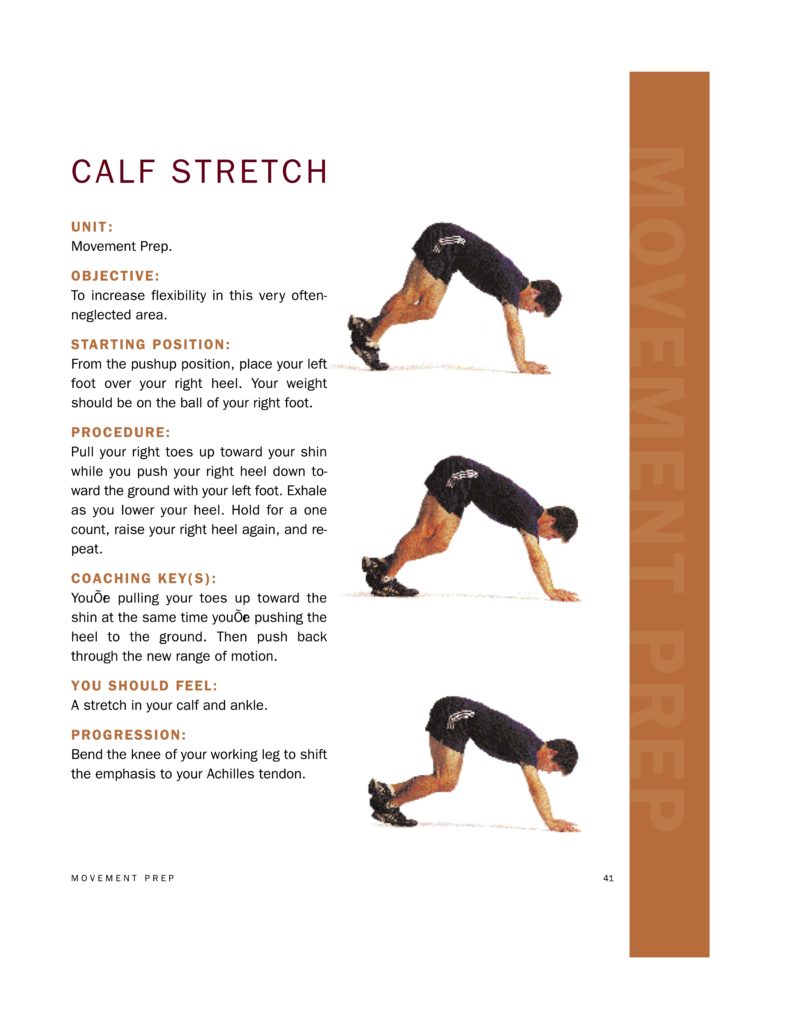
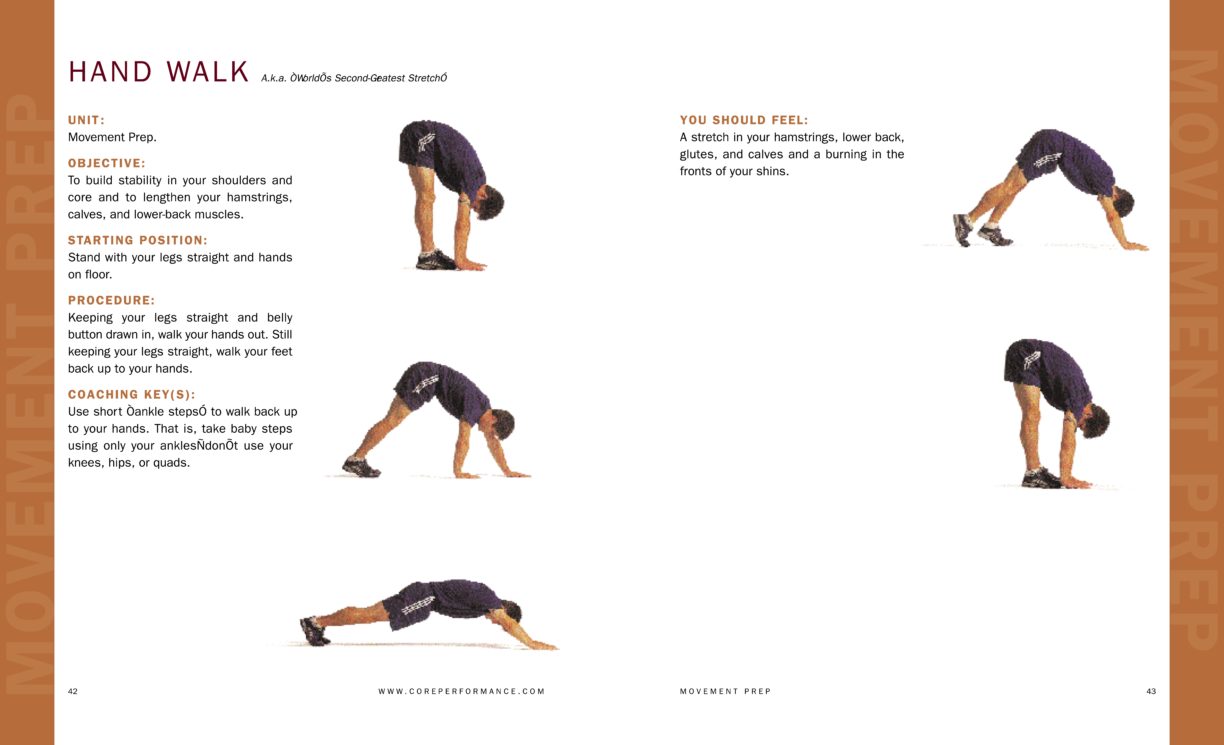
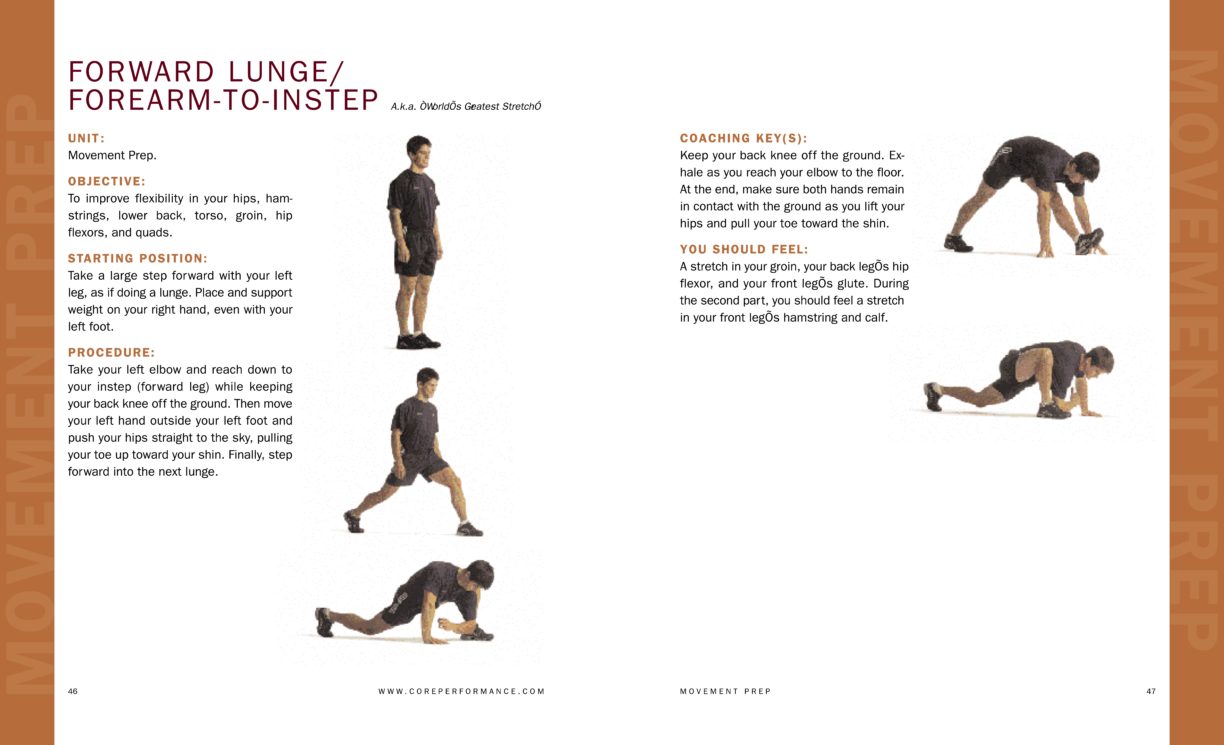
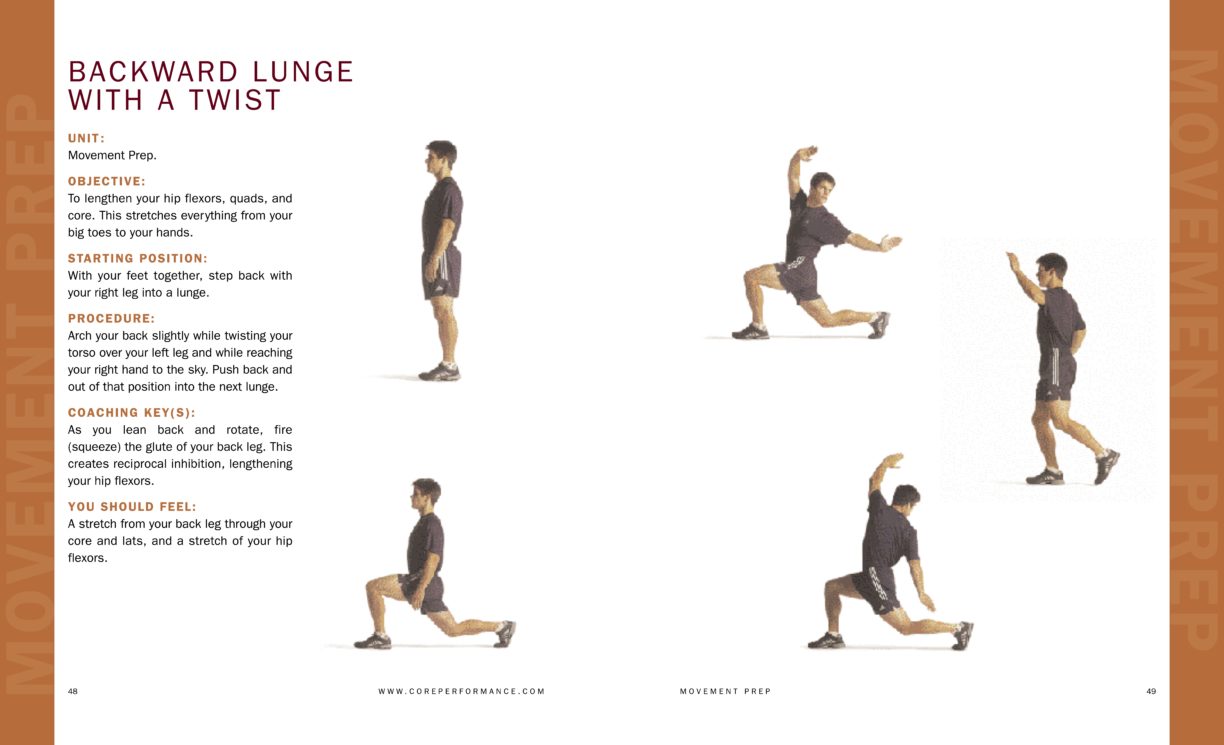
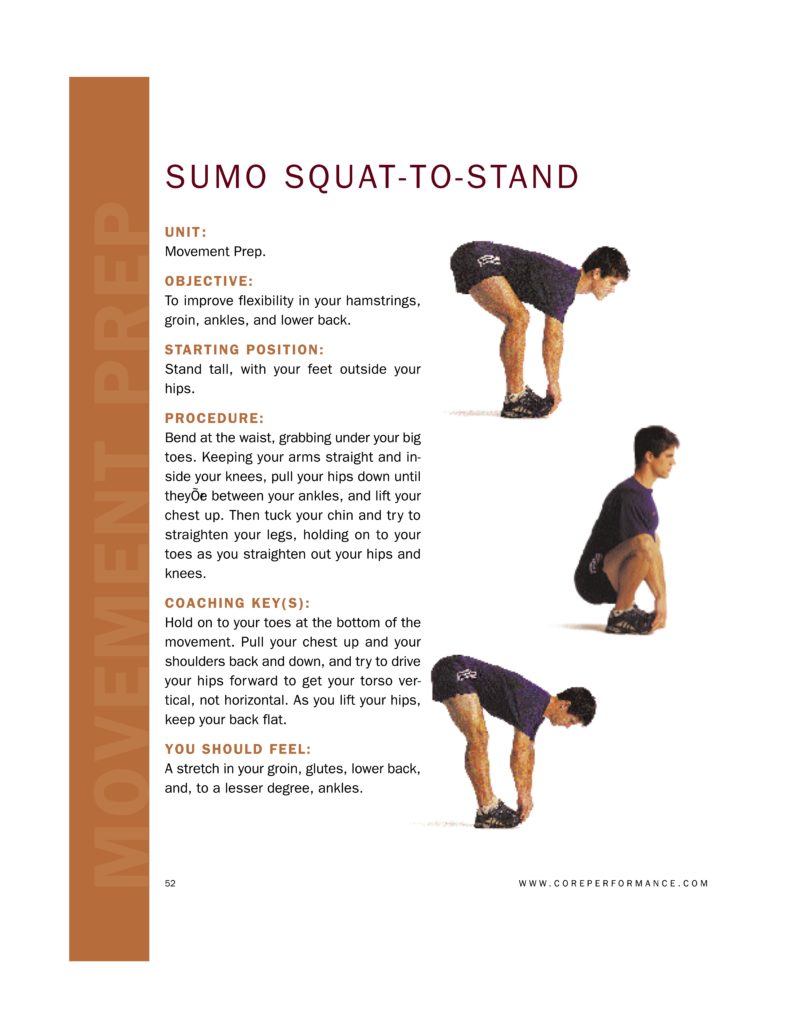
Many of my riders know that I'm also a Personal Trainer, so I often get asked questions about all aspects of fitness. Warm-Up is a subject that comes up again and again. I've been using the Movement Prep Warm-up featured below for nearly 15 years.
Cycle training is an exclusively linear exercise and I believe it's important to activate the lateral movers as well as muscle groups that are not emphasized while riding. Keeping all muscle groups active will assist in continued powerful pain-free riding.
These exercises, videos and .pdfs come from the book Core Performance by Mark Verstegen & Pete Williams which should be part of any fitness professional's library.
The last post offered real-life examples that suggest the way you do anything is apparently not the way you do everything — in contrast to the common saying to the contrary.
I’ve saved the worst for last.
When I ran a weight-loss program in Silicon Valley, many of the participants were engineers, all very smart. Over the years, we had some excellent groups who followed instructions and achieved their goals, and also clueless groups.
The clueless groups couldn’t seem to manage anything pertaining to the training program.
They never showed up on time and were often up to 45 minutes late in a 90-minute program. They would forget to bring their workout equipment with them — heart rate monitors, cycling shoes, water bottles, towels, and more. They were undisciplined about making time for training on their own, between the scheduled studio sessions. They frequently failed to log their food as required. Some even had difficulty focusing on the training.
I asked one particularly scattered group to please start showing up as if they were doing it on purpose.
Clearly, people who performed their jobs with the same haphazard incompetence would be promptly fired. But these guys all had jobs and seemed to be good at them.
So the way you do anything is not necessarily the way you do everything.
How Can This Help Your Participants?
What have they done with great success? It may be any victory, small or large.
Are they great at planning the day? At making the most of in-between moments — spare blocks of 5 to 15 minutes, for example? They can find some stretching or strength exercises to do standing or seated, in office attire. (They do exist!) They an find a short but intense cardio workout to fit in first thing in the morning, or in the evening on days they can’t make it to your classes.
Are they good “just in case” people? Suggest that they pre-pack a gym bag and leave it in the car, even on days that seem too crowded for a trip to the gym. You never know. And if it’s packed and ready, they’ll never forget a key item.
Are they disciplined enough to get up an extra 15 minutes early? Suggest they wake up and immediately head to the kitchen and eat real food. It’s far better than waiting and grabbing something convenient but junky, like a granola bar, as you run out the door.
Bonus tip: Tell them to stop buying granola bars.
Are they adventurous enough to get away from standard breakfast meals? They can try healthful dinner leftovers for breakfast (something other than pizza and beer, right?). Seriously, if they start the day with protein and vegetables, they will probably notice a big difference in energy and mental focus.
Are they good at planning and pre-planning meals? Why not suggest they prepare lunches and snacks on the weekend, enough for a couple of days? Repeat midweek.
Many examples can be found in virtually anything they’ve done well. The obvious, but overlooked, trick is simply to assess their wins for the skills that made them possible. Apply those skills to fitness and wholesome food.
Then it’s easy to make them part of their lives — in a way that’s already comfortable for them. Maybe the way they do anything will, in fact, become the way they do everything.
I see it more and more often: people who know they eat too much sugar but just don’t want to quit.
Here are 3 reasons people seem afraid to banish desserts or other sugary foods from their diets. Please inform your clients and class participants.
Fear #1: Not having a “sugar crutch” when you need it
When the going gets tough, the stressed grab cookies. If you haven’t figured out a different — and more healthful — stress management strategy, sugar may seem like the only way you can relieve the stress you’re facing.
What To Do Instead
Several options come to mind for stress relief. Here’s a simple one.
Breathe. Most people recommend slow, deep breathing, which can be very helpful. But from my own experience, as well as from accounts by others, I know that deep breathing won’t always work. In fact, when we’re super-stressed, it can be difficult to take slow, deep breaths.
I suggest short, sharp exhalations. Breathe out forcefully enough to make noise — similar to the sound a tennis player might make when hitting a serve. (If you’re in a location where you can’t make noise, just breathe out quickly and with power.)
Do a set of 3 sharp exhalations. Stop for a moment and feel the tingling in your body. Do another set of 3. Stop again and feel your body. Do a third set of 3.
By the time you’ve done that, there should be lots of tingling and a significant change in the way you feel. It should then be possible to slow down your breathing to a deeper, more relaxed rate. If you want to follow with a short meditation, it will work better once you’ve brought your breathing under control.
Fear #2: Going a little nuts without sugar
Some people are quite aware of what happens to them when they don’t eat their usual sugary treats. That’s what they worry about when someone suggests that they get rid of sugar in their diets.
You may have experienced some of these withdrawal symptoms. They can take different, yet predictable, forms. You might feel edgy and restless. You might be irritable, impatient, or unable to concentrate. You may have serious cravings for the foods you’re trying to eliminate. You might get headaches. You might start thinking about sugary foods — and nothing but them. You might keep walking back and forth to the break room or the kitchen.
What To Do Instead
Short-term relief can be made simple with a teaspoon of liquid B-complex (the entire B-complex, not just one or two B vitamins). Check with your doctor before trying this to be sure it’s okay for you to have these water-soluble vitamins.
B-complex is highly effective. It will eliminate cravings and other withdrawal symptoms within minutes and typically prevent their return for up to 24 hours.
The vitamins are water-soluble, so you’ll excrete any excess in urine. This is a short-term strategy only. Long-term craving elimination may require nutrition changes.
Fear #3: Never being able to enjoy eating again
It’s rough to give up foods we love. It can seem as if nothing will ever take their place. And the foods we use to handle stress, to celebrate, or for comfort and relaxation usually change brain chemistry in a big way.
Anything that changes brain chem can promote a strong reaction when we think about getting rid of it. Let’s call that reaction “emotional attachment.” Anyone who knows the power those foods can have over them — especially at certain times — is aware that the attachment can be quite emotional.
A client once stomped her food and said (more accurately, whined), “Joan, do you ever enjoy eating?!”
My answer to her applies to anyone else: “Of course!”
What To Do Instead
Eat healthful fats. Or choose savory seasonings. Or use more salt for a while. If you’re concerned about hypertension, be aware that sugar (and the insulin it triggers) can raise blood pressure even more than salt. And you don’t have to use extra salt forever, just till you get past sugar’s grip.
We don’t need sugar to enjoy eating. Many, many non-sugary foods taste absolutely wonderful. Great news: As you get away from sugar, foods you didn’t like before may actually taste good!
Vegetables are a perfect example. Every client of mine who hated vegetables was hooked on sugar big-time. And every one of them changed his/her opinion after ditching sugar.
Getting past withdrawal, cravings, and unhealthful “stress junk” is the freedom I wish for your participants. If they haven’t quit sugar because they don’t think they can — or fear they’ll fail — let them know it’s easy, it really works, and they can do it. And help is available. They’ll feel great, and great about themselves for quitting.
Do you get cravings at night? Are they often for alcohol, or for sugar? Do you have trouble getting to sleep without at least one of them? This post covers a simple plan for handling night cravings.
Foods change brain chemistry (and more, but let’s stick with brain chemistry for now).
Both alcohol and sugar can change brain chem in a big way — and in almost the same way.
Serotonin is a brain chemical that makes us feel relaxed. It can reduce rotten moods (dysphoria) from depression, SAD (seasonal affective disorder), PMS, anxiety, and more.
At night, we tend naturally to want to increase our serotonin so we can relax.
Serotonin is also the precursor of melatonin, sometimes called the sleep hormone. (Melatonin is important for many reasons, including its anti-inflammatory benefits, but that’s a separate topic.)
Bottom line, serotonin can help us wind down and get to sleep. It seems logical that, before bed, we’d want something serotonin-boosting to help us do that.
Alcohol and sugar are frequent options.
Will Alcohol Put You To Sleep?
Alcohol can help you fall asleep. In fact, you might even have started using alcohol as a late-night relaxant because it put you to sleep a few times before. The brain remembers that and will prompt a craving for something that worked in the past when it wants to fall asleep. (It’s about brain chem, but let’s keep things simple.)
But if it’s good sleep you’re after, alcohol isn’t the best choice. It will change the quality of your sleep — and not for the better.
Until your body has processed the alcohol completely, you’ll stay in lighter sleep stages. The full sleep cycle includes light and deep stages. Deeper sleep (theta and delta waves) is the most restorative, so sleep brought on by alcohol might leave you feeling less refreshed than more natural sleep.
Is Sugar Any Better For Sleep?
Late-night cravings for sugar might be prompted for a similar reason to alcohol cravings. Maybe eating something sugary helped you get to sleep on several occasions, so the brain sends signals asking for that same sleep “cure.”
Sugar and alcohol can wake us after a few hours and make it difficult to get back to sleep. This has more to do with low glucose levels than with brain chemistry, but the impact on your night’s sleep can be severe. In both cases, the effect in the morning may be dramatic and unpleasant.
It’s easy to be casual about sugar consumption, thinking sugar’s “just” food. Actually, it’s a drug with strong effects on brain chemistry and more.
Don’t underestimate the impact of sugar on your morning-after. One of my clients said that, after eating a lot of sugar at night, she used to wake up feeling “like I’ve been run over by a truck.” Another client described it as a “sugar hangover.” Both are accurate!
Mixed drinks include alcohol and a mixer that typically contains sugar, so you’re likely to get all of the above effects — less restful sleep, middle-of-the-night awakenings, and AM hangovers. If so, you may need a better alternative.
What Works Better Than Alcohol or Sugar?
Please keep in mind that the end game is to increase serotonin. Starches will do that, and usually without side effects.
Starches are the foods that most people call “carbs” — even though plenty of other foods are carbs, too. (Vegetables, fruits, and roots, for example, are carbs. Yes.)
Starches include lentils, quinoa, sweet potatoes, rice, potatoes, pumpkin and other squash, beans, bread, and more. And it doesn’t take a lot to trigger sleep.
A small serving of one of the above starches will help you get to sleep. Just eat it about 60 to 90 minutes before your desired bedtime and let it work for you.
If you feel you need a slightly bigger serotonin boost, try adding a bit of saturated fat to the starch, such as coconut oil or butter. The combination will increase your insulin release and your serotonin production.
If you try this a couple of times and find that it doesn’t work, haul out the big guns. Have a little turkey with one of the combinations above, making a powerful sleep-inducing trifecta.
Keep your portions small to avoid feeling stuffed or ill as you lie in bed. The goal is just to change brain chem, not to eat an extra meal.
Much more can be said about cravings, and will be in a future post.