by John | Apr 22, 2014 | Instructor Training, Leading Group Rides, Learn Leadership Skills, Master Instructor Blog
Happy Earth Day!
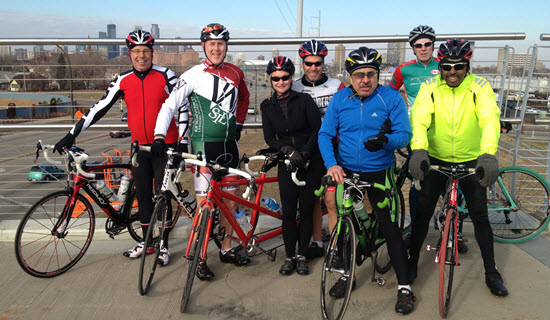
Spring in Minnesota is finally here and that means we can ride outside! I'm so excited to test my fitness against the hills, wind and other cyclists I ride with again!
This week begins our organized rides with the Life Time Fitness Cycle groups. I'm leading two rides this summer, both leaving from the Minnetonka Life Time Athletic Club. These rides are open to non-members, so please feel free to join us here or at any Life Time location near you.
Saturday 7:30 am is a strong “B” level, 40 mile ride. NOTE: we're still working out the parking problem and this location may change.
Sunday 8:00 am is our 30 mile coffee ride into Minneapolis. Amy and I lead this on The Bus (our tandem) and we control the pace, so it's a safe ride to learn group skills.
That group on Saturday has a lot of “A” type people with strong personalities. They really need a strong Leader or chaos and broken bikes/bodies can result. I've been leading group rides for close to 20 years and I feel I learned from the very best. You can read about being the “Big Dog” outdoors ICI/PRO members only – where I discussed the need for a true leader in an outdoor group ride and how to be the Big Dog.
Man or women, it doesn't matter – only that you act as the Leader. If you have the opportunity to lead a group this summer, and you want everyone to have a safe and enjoyable experience, you may find that post helpful.
With Saturday only 4 days away, I've been polishing up my “Big Dog” talk I give at the beginning of the season. The purpose is to convey the behaviors and attitudes I expect from the riders in my group so we all get home safely. I decided to give it a catchy title:
The 10 Commandments* of Outdoor Group Cycling
Commandment #1 – Thou shall honor thy Leader.
A safe, enjoyable group ride needs one Leader. It maybe me, or someone else who's been assigned to lead that day. As group Leader we are responsible for everyone on the ride and intend to bring them all safely home.
Now I understand that you may have come from a place (your work or business) where you're the Leader, but you aren't there now – you're here, riding with us today.
We enjoy having you on this ride with us. Please be OK with the fact that there's a Leader on this ride… and it isn't you.
Commandment #2 – Thou shall not ride as an individual.
Please leave your ego and sense of self-importance in your car… this is a group ride, not a bunch of individuals who happen to be riding together. We work collectively as a well organised group* to ensure the safety and success of everyone.
What are examples of riding as an individual? Great question! Finding yourself alone/away/separated from the group is a good indication you're riding as an individual.
Here are a few more that come to mind; hammering off the front, chasing a rider who hammered off the front, not staying in your place in the paceline, riding off to the side, charging up from the back, sprinting to make a yellow traffic light, hammering away from a stop sign, not willing to work at the front**, not willing to help pull others back on and of course riding like an idiot. If you do any of these expect to receive a gentle warning reminder of the importance of riding as a group – keeping in mind commandment #1.
*There are multiple places (climbs and town sign sprints) during this ride where you can demonstrate your fitness to the rest of us – wait for them please.
** We completely understand if you need to sit-in and ride in the back today.
Commandment #3 -Thou shall be ready to ride on time.
The ride leaves on time. Please be ready. Don't expect the twenty other people, who were ready on time, to circle the parking lot while we all wait for you to pump up your tires. You may have gotten there 15 minutes early, which is great, but it doesn't count because you chatting with your friends, only to realize your tires were flat as we all started to leave.
Commandment #4 – Thou shall come prepared.
Did you bring everything you'll need for this ride? Do you have; spare tubes* (or sealant if you ride tubeless), tools, CO2, proper clothing, food, water, money? Did you eat before the ride? Pee?
*Many of us are happy to help you change your flat tire… just don't expect my tube 🙂
Commandment #5 – Thou shall not talk excessively – but shall communicate.
Talking excessively leads to heads turning and looking at the person, which leads to not watching where you're going, which leads to crashing. I've seen it happen multiple times and it always ends badly. There is a slight exception to this during two-up riding during a relaxed coffee ride – just resist the temptation to make eye contact with the rider you're riding next to and watch where you are going.
Please communicate with others: point out holes/sticks/dead animals in our path or when your time at the front has ended. Call out; danger, changes in speed & direction, slowing/stopping/turning/on-your-left, flat, etc…
Commandment #6 – Thou shall not join a group beyond your level of fitness, comfort or skill level.
This is a no drop ride… which means if you are suffering to keep up, all of us have to slow down – or at the very least, one of us will be forced to drop back and ride slowly home with you. We really don't want to have to do that.
We ride in a paceline = wheel to wheel with a very small distance in between. If you aren't comfortable riding closely with others you won't experience the benefit of the draft = you'll suffer and we'll have to slow down for you.
If you find yourself in this situation, or are unsure what group level you belong, please ask. I'm happy to help.
Commandment #7 – Thou shall be willing to be the leader – small “L”.
There will be times you will find yourself riding in front of everyone else – it's very important to the order of the group that you stay relaxed and calmly assume your role up front.
A typical situation were we see riders unwilling to be the leader: You are moving up as riders rotate off the front of our paceline. With just a few riders left ahead you panic and pull left to fall back. This creates a gap in our paceline, splitting it in two. The (very surprised) riders behind you are then forced to fight to close the gap – we don't like to have to do that. When you are given the lead position, take it – even if it's only for a short time.
Commandment #8 – Thou shall not pass the leader.
The leader (again small “L”) in this instance is whomever is ahead of you. It doesn't matter if the rider you are following is first, 10th or 21st, only on rare occasions is it proper to pass them. This is a huge safety issue. We all need the freedom to maneuver quickly to the right or left. Passing begins with over-lapping wheels. If you decide to pass me, at the same time I have to veer left – someone is getting hurt. And trust me when I say, I will do everything I can to prevent that “someone” from being me.
Commandment #9 – Thou shall not focus on your technology.
Riding with your head down, watching your power meter, may work in an indoor class – but it can be deadly on a group ride. Beyond an occasional, quick check of your speed, a group ride is not the place to monitor your heart rate, current/average wattage or check the temperature on your Garmin. You need to keep your head up and continuously watch that wheel ahead of yours + what's happening around you. And no, you can't talk/text on your iPhone during the ride.
Commandment #10 – Thou shall not ride junk.
You may own an expensive road bicycle. But if it has an issue during the ride, that's related to a lack of maintenance or inappropriate equipment, it's junk and we'll be really unhappy with you. Example: sew-ups/tubulars make great racing tires, but you can't fix a flat on the side of the road, so they don't belong on our ride.
Your fancy Triathlon bike is welcome – just don't let me see you riding down in the aerobars… not even when you're up front… not ever during our ride.
Mountain bikes don't belong in a paceline with road bikes – period. I don't care if you can keep up, they're disruptive to the order of our group and remembering commandment #2, you will leave yours at home.
* To be clear, this isn't my 10 suggestions of outdoor group riding. As the ride leader I'm ultimately responsible for the safety of everyone on the ride. I try to give everyone warnings/reminders during the first few rides. After that I'm not at all afraid to ask someone to leave if I feel they are jeopardizing the safety of others – or recommend they find a different ride if they don't appear to have the necessary fitness/skill level.
by Joan Kent | Apr 14, 2014 | Health and Wellness, Master Instructor Blog
By Joan Kent
ICI/PRO readers know that exercise can reduce the risk of heart disease, type 2 diabetes, hypertension, cholesterol problems, cancer, and more. Underlying those diseases is insulin resistance. Exercise reduces health risks by making skeletal muscle more sensitive to insulin, effectively reducing the resistance.
Insulin is a hormone that’s produced by the pancreas and allows glucose to enter cells for metabolism. It has several other functions, as well.
Under certain circumstances, someone might become insulin resistant, and the cells no longer respond to insulin’s cues. To get the job done, the body’s first line of defense is to produce more insulin. This may work, and can continue to work until the production of insulin no longer outpaces the degree of resistance. (That’s an extremely oversimplified description of the onset of type 2 diabetes.)
Along the way, the high levels of insulin are likely to cause a variety of health issues. So it’s not insulin resistance per se that causes disease, but the extra insulin that’s released to compensate. This is associated with Series 2 prostaglandins and inflammation, a topic covered in a previous post (An Important Key to Health).
What we typically learn about insulin resistance (IR) is that it’s a result of overweight. That’s a true enough statement, but not the whole picture. For example, IR can be caused by genetic factors. Over 40 genetic mutations can result in someone’s being born with insulin resistance or with a predisposition to it.
IR can also be the result of lifestyle factors. Lack of exercise is one obvious cause, along with diet. A high-fat diet can cause resistance to insulin through a specific mechanism, a high-carb diet through a different mechanism, and a high-fructose diet through yet another.
Insulin resistance isn’t always a result of overweight/obesity. It can also be a cause. Cells differ in their sensitivity to insulin. The primary site of IR is skeletal muscle. How does insulin-resistant skeletal muscle behave? It doesn’t allow glucose to enter the cell. The glucose ends up being transported to fat cells.
Another important site is the liver. How does an insulin-resistant liver behave? It doesn’t respond to the feedback loop that tells it to stop releasing glucose, so glucose levels remain high.
An interesting connection with depression exists, as well.
You recall from 7th grade biology that amino acids are “the building blocks of protein.” One of insulin’s functions is to transport amino acids to skeletal muscle, where they can be used for a variety of functions. Those functions include immune support, formation of hormones and enzymes, insulin receptor site turnover, pH and fluid balances, wound healing, tissue growth and repair, blood protein formation, energy use, and more.
The most important function is the formation of specific brain chemicals from specific amino acids. One amino acid, tryptophan, is the precursor of serotonin. The brain chemical serotonin has become commonly known, due to the anti-depressant medications that have been on the market for years.
Insulin resistance interferes with the transport of tryptophan to the brain and can therefore contribute to depression.
To the degree that indoor cycling can help reduce the incidence of insulin resistance, it can therefore help reduce the incidence of depression. This isn’t as far-fetched as it sounds. In the research for my dissertation, participants completed tests for depression and anxiety, both before and after they had gone through the 8-week study. Consistently, the participants who were exercising regularly had lower scores for depression and anxiety.
It’s kinda cool to realize that what we love to do helps our riders reduce their risk for health problems — along with their risk for mood issues.
by Joan Kent | Apr 7, 2014 | Health and Wellness, Master Instructor Blog

By Joan Kent
The good news is things have moved forward with respect to food addictions. For one thing, food addictions are now acknowledged as real. (When I started doing this work, they were not — I remember how people would argue against the idea.) Now we know that food addictions are based in neurochemistry, making them physiologically real.
Those who claim they’re something else tend to be unaware, either of the neurochemistry and physiology of addiction OR of the neurochemical effects of foods.
Sugar addiction is still the most common food addiction I see in my practice.
But other common addictive foods, such as saturated fats and processed white flour, are not always recognized as such.
Genetic factors may predispose someone to a given food addiction. These can include a family history of alcoholism, diabetes, hypoglycemia, hypertension, depression, and more. There are also non-genetic predisposing factors, including, but not limited to, post-traumatic stress disorder (which alters neurochemistry) and body type.
The brain response to sugar, saturated fats or other foods is often as genetic as eye color. We each got what we got. What’s great is we can do something about it. Changes in diet can alter neurochemical levels and modify cravings, appetite, mood and food preferences in a beneficial way. My dissertation was on the treatment of women with binge-eating disorder. Eliminating sugar was found to bring a significant decrease in bingeing and craving.
It helps no one to ignore an addictive response to certain foods and treat it as if it were not an addiction. Treating an addictive response as an emotional problem misses the point. (Amazingly, there are still people in the weight-loss field who do that.) And it never gets to the underlying issue. Worst of all, it could very likely make the addicted individual feel like a failure if she or he couldn’t control the addictive response to sugar emotionally. How unnerving, when the response is physiological.
In some ways, food addictions may actually be more difficult to conquer than other addictions. Obviously, abstinence is not an option. We can decide to give up alcohol or any other drug and only be the better for it, even if going through the rehabilitation is tough. But food is something we have to deal with several times a day, every day, for the rest of our lives, so the problem is insidious.
Virtually any food can result in addiction for people who are susceptible. That can occur due to various food sensitivities (sometimes called “allergies”, a controversial term with respect to foods). The sensitivity may result in a neurochemical cascade that can trigger an addictive response. So, interestingly, some people with food sensitivities end up addicted to the very foods that make them feel worst.
Elimination diets are sometimes used in such cases. I have used that approach at times for suspected food sensitivities. Most food addictions, though, seem to hinge on general neurochemical responses (by all) that are problematic for some due to predisposing factors, based on family history. That can often be determined via questionnaire. If more specific information is necessary (by blood test, for example), I refer to an M.D.
The bad news in this situation is that food addictions, especially sugar addiction, are disturbingly common and are contributing profoundly to obesity, diabetes, heart disease, and several types of cancer. But that’s a post for another week.
by Joan Kent | Mar 24, 2014 | Health and Wellness, Leading Group Rides, Master Instructor Blog

Image from http://www.sustainablemontreal.ca/2010/07/13/7-milespotato-the-beauty-of-the-bicycle/
By Joan Kent, Ph.D.
“Sugar is bad stuff, but what should I eat on a long ride?” Over the years, many cyclists have asked me that question. In reply, I came up with the idea for Dr. Joan’s Potato Goo. (No, that’s not a brand name, just my private joke.)
I’ve used Potato Goo successfully on many long rides, including indoor centuries. The late, very great Jim Karanas made it the staple of his diet on long rides (he also ate other foods on ultra rides). I’ve often made extra for group rides, and it has developed quite a following. It even brought a skilled rider back from a complete bonk after he’d been eating bars and gels all ride long.
Never one for complicated recipes, I make this the easy way. You’ll need:
– raw potatoes of any kind (red potatoes have a really terrific, smooth texture, and I use organic)
– salt (sea salt is nice for the minerals, but not essential)
– a little water (I used distilled)
– snack-size zipper bags
– a food processor.
Select about 3 or 4 potatoes and cook them, with skins, any way you like. I microwave because I’m the laziest cook in the known universe, but choose your favorite method. They should be soft when done.
Let the potatoes cool. Slice them and place them in a food processor with some sea salt. How much salt depends on the number and size of the potatoes, but you’ll need to taste the mixture once you’ve started mixing. IMPORTANT — It should taste salty, but not overly salty.
Add water, a little at a time, to make a paste. You’ll be squeezing the Goo out of the corner of the zipper bag, so adjust the consistency. Too thick will obviously not squeeze out easily; too watery will make a runny mess.
Once everything’s in the food processor, just start it and let it run until the Goo has a uniform texture. Taste for the salt, add more if necessary, add water if necessary, and done!
Spoon the Goo into snack-size zipper bags, filling each bag with only the amount you’d want to consume at a rest stop. I actually carry a few zipper bags of Goo in my back jersey pocket, inside a light-weight plastic bag from the grocery store, and keep the empty zipper bags in the plastic bag until I find a place to dispose of them.
So what do you get with Potato Goo that you don’t get with bars, gels, shots, or other sugars? You get the recommended electrolytes — potassium from the potatoes, sodium from the salt — along with the fastest carbs going. Much faster than sugar. Glycemic index (GI) is hardly the be-all/end-all, but here’s one instance in which it’s quite helpful. The GI of potatoes is far higher (faster) than that of sugar, so the potatoes start working almost immediately. You can really feel them. There’s no sugar crash. And potatoes don’t cause the gastro-intestinal upsets commonly associated with fructose — a common ingredient in many bars and sports drinks.
For anyone who’s sensitive to sugar, this is a better way to fuel because you won’t find yourself dealing with sugar cravings, withdrawal, malaise, or other after-effects of sugar consumption.
Caution: No nutrition surprises on Performance Day! If you have a major ride coming up, try this on a training ride first. Know how your body responds before you invest 100% in Potato Goo. Please always eat a solid pre-training meal before your ride.
Dr. Joan’s Potato Goo has worked for indoor and outdoor cyclists, runners, and indoor rowers. If you try it, please let me know how it works for you.
by Joan Kent | Mar 17, 2014 | Health and Wellness, Master Instructor Blog
 By Joan Kent, Ph.D.
A looong time ago (1998), I wrote a doctoral dissertation that started with several observations about women with binge-eating disorder. One was their relationship with sugar. As I examined the DSM-IV criteria for substance dependence against the DSM-IV criteria for binge-eating disorder, it became obvious that addiction to sugar was very likely driving the binge eating. ‘No kidding,' you say, but this was radical thinking in 1998.
My research divided the participants, all screened for binge-eating disorder, into three groups. The low-sugar group was given low-sugar nutrition guidelines to follow. They logged their food intake, including any binge episodes and/or cravings, and came to weekly support meetings.
The low-fat group followed low-fat guidelines, logged their food, binges and cravings, and attended weekly meetings. The control group had no nutrition guidelines or support meetings and simply logged their food, binges and cravings.
All groups reported periodically for weigh-ins and measurements.
Bingeing and craving decreased most in the low-sugar group. Weight loss was greatest in that group, although the weight loss couldn’t be fully explained by comparing calorie intake among the groups.
What I find funny (okay, maybe a little irritating) is that people are now — in 2014 — finally — at long last — finding a connection between sugar addiction and the obesity epidemic. I guess the 1985-1999 low-fat craze — and a “craze” is what it was — had to die before people could see what was going on. (What can I say? My mother always told me I saw connections others didn’t.)
So how does sugar contribute to the obesity epidemic? Let’s take a look at what sugar does:
- Sugar triggers a “priming” reaction — even a little makes us want more. This is due to a specific dopamine receptor in the brain. Some people experience this more acutely than others. I consider this effect of sugar the main argument against eating “a small amount” of what we crave. Priming can turn that into a very large amount.
- It’s addictive, so it definitely makes us want lots of sugary food and encourages over-consumption.
- Sugar addiction is physiologically real. It may cause withdrawal symptoms (cravings, agitation, restlessness, inability to focus, and more) when it’s not available. Seeking and eating sugar frequently to end the discomfort of withdrawal can lead to overeating and weight gain.
- Sugar may be responsible for what I named “secondary fat consumption”. None of the study participants got cravings for fats. Almost all got cravings for sugar. But! In response to the sugar cravings, they’d often eat foods that contained lots of fat. For example, a craving for sweet was likely to be answered with a bowl of ice cream — high in both sugar and fat. Why? Research shows that fat makes sugar taste sweeter. The added calories and fat were significant in all groups.
- It triggers the release of beta-endorphin in the brain. Beta-endorphin inhibits the brain’s primary satiety center (the VMH). That may increase appetite, increase food consumption at a given meal — and lead to more frequent meals.
- Beta-endorphin changes food preferences toward other beta-endorphin triggers: fats or more sugar. The preference for healthful fare, such as vegetables, shrinks in comparison to those foods. Calorie intake can easily rise. Also, meals that are high in fat can trigger ghrelin, a hormone that tends to increase appetite as it slows metabolism — a potentially dangerous combination for weight and health.
It’s clear from this list that sugar makes it all too easy to over-consume food and calories, especially empty calories. We can see the role it plays in binge eating and overweight. I stress that this connection was crystal clear to me in 1998 when I wrote my dissertation, and still in 1999 when it was completed.
So thanks for indulging me. I just needed to take credit for this, since credit is now being claimed by others some 15-plus years later.
by John | Mar 16, 2014 | Best Practices, Big Box Instructor, Master Instructor Blog
I enjoy poking around the RateYourBurn Instructor review site to get an understanding of what participants are looking for in our class. Sure some of the comments can be a bit harsh, but many of the actual reviews are well written and offer very specific “If you would do ___________________ I would enjoy your class more” advice.
Case in point – this RateYourBurn Review on a new SoulCycle Instructor named Chris The Curious Case of the Missing Countdowns
So yeah, I liked a lot of things about Chris, but the ride was… improvable. Luckily for Chris, these nits are absolutely fixable.
-
A little head's up, please? Countdowns: We really, really need them. Without countdowns, I start to wonder if you're just making up moves on the spot; I don't know when to exert the most effort, and I start worrying whether we'll be in a second-position jog FOR ETERNITY.
-
Choreography was not really timed with the music. Chris could work on ending the choreography segments to time up with each song. There were three different songs where we ran out of music while continuing choreography. Again, this feels like the class is a little bit tossed together in the moment rather than planned out. According to his bio, Chris has been a dance educator for more than a decade: timing choreography to the music (and giving countdowns to help with that) is likely second nature for a dancer. Just bring it to the bike!
-
Timing of pushes. These felt a little awkward and were usually too short. One thing that would help would be for Chris to cue us ahead of time when we were going into a push, but the pushes always came with the command “pick up your legs now!” and ended with “slow down” – no warning, and no countdown to the end. Help me gear myself up for a 30-second push, and then let me know when I'm just a few seconds from the finish line – I'll work much harder when I'm not ambushed by a sprint!
There's an old adage about giving effective presentations that goes something like this;
- Explain to everyone what you're going to say or expect them to do.
- Say or do it.
- Remind them what it was you said or what they just did.
In the first and third comments above, the reviewer is frustrated because Chris is skipping #1 – and not giving advanced notice to what's coming next. I can't speak for the women in your class, but many of the the men who ride with you are sequential thinkers like me. We like to start with A, move on to B, C, and then D. It drives us crazy when you skip one or more steps and completely throws us off our game.
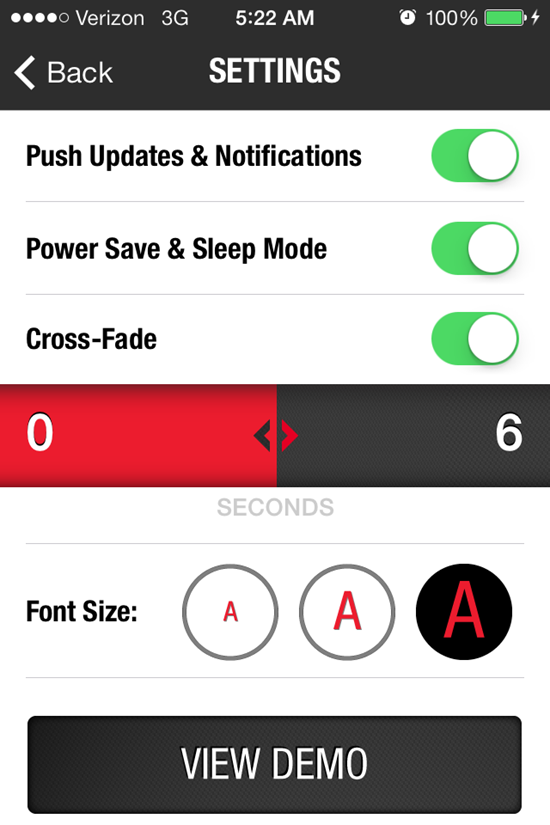
I'm completely guilty of point #2 – not getting my choreography matched to the length of the music at times. I'll blame the combination of my slowly failing eyesight and those tiny little numbers on the Spotify App for not understanding the time remaining for a specific track. My classes are very cycling specific and feel I do a good job prepping everyone for the upcoming efforts. Where I feel I get into trouble is I take too much time leading up to the start of say a 4 minute Best Effort, using a 5:00 minute song. I can't see the time remaining and the music ends before the interval – not very professional 🙁
I'm very tempted to move back to iTunes music and use the new Schwinn Class Tamer App simply for the option in the settings to really embiggen the font size so I can see it.
Question for you [wlm_firstname]…
If you had access to this type of constructive criticism, would you accept and use it?
If so how?