
by Joan Kent | Dec 16, 2013 | Big Box Instructor, Health and Wellness, Master Instructor Blog

By Joan Kent.
Several months ago, John interviewed Micah Zuhl, doctoral candidate at UNM, for an ICI/PRO Podcast. Among the questions John asked was which Zuhl considered better — high-intensity interval training (HIIT) or endurance training.
Zuhl’s answer wasn’t entirely clear to me; he sounded somewhat back-and-forth. But he did emphasize the need to give cycling students some intensity, along with some variety. He used the well-known phrase “change it up.”
Let me make it clear that I have absolutely nothing against HIIT. I use it frequently in my own training and have used it when teaching, as well.
Virtually any vigorous exercise, including indoor cycling, will trigger the release of beta-endorphin. That’s neither good nor bad, just what is. The more intense the exercise, the greater the beta-endorphin release will be. No doubt that’s one reason cycling students enjoy — or even prefer — harder workouts.
When it comes to comparing HIIT to endurance training, though, I’ve noticed something interesting, and I’m definitely not including Micah Zuhl in this statement, because he was asked the question by John and didn’t bring it up himself.
Diehard HIIT advocates always seem to measure the benefits of HIIT against the lamest cardio they can find, then proudly proclaim that HIIT provides superior results. Have you noticed?
In reality, we don’t have to choose between long, slow nothing and HIIT. If you train right, and train hard, you can go hard AND long. HIIT alone won’t necessarily provide that training adaptation.
My background has taught me that progressive, periodized training can develop a power/endurance dyad, along with a mental discipline that short-duration bursts typically don’t. Jim Karanas posted much on this website on the mental, emotional, even spiritual, benefits of endurance training. I frequently use HIIT as part of a long, structured, “authentic” training.
Having said all of that, I’d like to switch directions. I also use HIIT when my day is slammed and I need to resort to my BTN Workout. (BTN means “better than nothing.”)
One of the convenient features of HIIT is how little time it takes. At this time of year, being able to fit in a short workout is very helpful.
Here’s an 11-minute format that I devised for the Stairmaster (I’m lucky enough to have one at home), but it can be done on any piece of cardio equipment. Set the timer, if you have one, for 11 minutes. On the Stairmaster, every workout is divided into 30 vertical rows of a duration that depends on the programmed time. An 11-minute workout yields 30 rows of 22 seconds each.
I warm up for 9 rows. That takes 3 minutes, 18 seconds. Every 3 rows, I increase the intensity by 1 MET. (Each vertical dot is another MET.) Then I begin my intervals.
The remaining time allows for 7 intervals total. The work segment is 2 rows (44 seconds), followed by a recovery of 1 row (22 seconds). The first work interval is moderately hard, a transition between the warm-up and the hard work to come. The other 6 intervals are done as high as the Stairmaster can go. I drop down in the recovery period to the level-3 warm-up intensity, but no lower.
If I find myself leaning on the Stairmaster during the work segment, I back off one vertical dot (1 MET) until I get back to good, disciplined form. It’s rare that I need to back off more than one, but I’ve dropped 2 METS once or twice. The goal is not to take extra recovery, just to regain good form and make it harder.
If you’re at all like me, you prefer a serious cycling training to something like this. Still, the BTN approach can be used so easily, and on anything. It’s gotten me through insane scheduling more than once. I’ve done it on my indoor cycle, too, and it works. This approach could help students who are over-scheduled and missing classes this season.
Sure, it’s just BTN for enthusiastic indoor cycling fans, but it’s HIIT, which we know is authentic training. Better than nothing when there’s no time for more, yes?
by Joan Kent | Dec 2, 2013 | Health and Wellness, Master Instructor Blog
Here we are again, in the midst of holiday season. Tempting treats are everywhere, of course. As indoor cycling instructors, you’re all probably excellent at maintaining self-control.
But have your students ever asked you what you eat when you’re indulging? Maybe they’re looking for ideas — for “better” ways to indulge. I take that last part to mean less harmful to their health, diets, and weight.
One way is to tell them to avoid sugar and indulge in healthful fats.
Okay, stop yawning. Good fats can taste great and be just as indulgent and satisfying as sugar — without most of the side effects — so hang with me for a moment. Don’t worry; I won’t take this occasion to repeat all of the terrible things I’ve recounted in previous posts about sugar’s negative health effects 🙂 Healthful fats are a smart way to indulge without incurring those effects. AND they won’t trigger the addictive reaction that sugar infamously does.
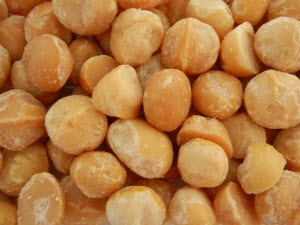
An excellent suggestion would be raw nuts. A couple of months ago, I read a book called It Starts with Food. It turns out, according to authors D. and M. Hartwig, that the two most healthful nuts are cashews and macadamias. Many years before I read that, I used to make a cashew/macadamia nut butter that everyone described as “to die for.” It does have a rather festive taste and mouth-feel, and you can use it as a spread on some wholegrain crackers, to stuff celery or Medjool dates, or as a dip for carrots and more.
Here’s the recipe — if you can call anything this easy a recipe. You’ll need 1 pound of raw cashews, 6 ounces of raw macadamia nuts, 1 food processor, and about 6 to 8 minutes.
Place all of the nuts in the food processor, start it, and let it keep running until the butter has a smooth texture. It will go through a variety of stages in the 6 minutes, but don’t be deterred. Stop and scrape the sides of the container, if absolutely necessary, but it usually works through the stages itself. The butter is perfect if you can hear a slight sloshing sound as the blades turn.
Don’t add anything — no salt, no oil, no water. Everything will blend perfectly. If you’re adamant about keeping the nuts raw, you’ll need to stay close by and turn off the food processor whenever it gets warm. Let things cool, then resume. If not, just let it run.
And there it is: quick, easy, delicious, and sugar-free. If you stick to a once-a-year strategy, it could become a tasty, new (and not too indulgent) holiday tradition.
If you try it, let me know what you think.
by John | Dec 1, 2013 | Big Box Instructor, Engage Your Students, Master Instructor Blog
 I just got back from teaching (subbing) my very first Cycle – Sculpt class. Yep, I taught a class that included weights… which we used… while on the bike. And guess what?
No one got hurt and it appeared that many in the class enjoyed our hour together.
Oh, and from the looks of them, they all worked really hard.
UPDATE: This class generated 50 comments at Facebook.
So why did I do this? A lot of reasons actually. Here are a few…
I try to support our team of Instructors, whenever possible.
When I see a sub request, and I'm available, I try as often as possible to say Yes! So when I saw this request, I automatically replied that I would cover the class. I honestly didn't even realize what I was agreeing to teach.
This brings me to last Sunday. I had incorrectly entered the date into my calendar. When I pulled into the parking lot last week I saw another Instructor park right next to me. “Are we both here to teach the same class?” she asked. It quickly became obvious that we were. When I offered for her to go back home, she replied; “You know this is a Cycle-Sculpt class, John?” So I agreed that it would probably be better if she taught the class. And since I was already there, I decided to take it 🙂
Which turned out to be a good thing, once I figured out (yesterday) that I was scheduled to teach it this morning. More on the format to follow.
I try to place the desires of the club's members ahead of my own, whenever possible.
Understanding when and what I was expected to teach. I had a decision to make. Would I teach the class that the participants were expecting / what they choose to get up for this morning? Or would I waltz in with a big chip on my shoulder and declare something to the affect of;
“These classes are nonsense.”
“You're all wasting your time with those weights.”
“We'll be doing a real cycling class today.”
“If you don't like it, tough, you can leave.”
I could have taught my normal cycling specific class very easily. But out of respect for the 30 people in the room, that were expecting a Cycle-Sculpt class, I gave them one.
Side Note: Lots of strange faces in that class.
And I don't mean a few new faces. I counted, and ~20 of the 30 in class were unknown to me. Our's isn't a big club. Amy and I have been members for 20 years and I've taught for the last ten. I've subbed every class multiple times. These people (they were all women) don't appear to frequent any of the conventional cycling classes.
My guess is that the original Instructor for that class had recruited many to join her in (what was then) a brand new class format. Incorporating the familiar strength elements of a sculpt group fitness class, with the cardio of cycling they felt comfortable joining her. And there they've stayed.
IMO – there's been way too much speculation, and not enough observation, about these classes.
I watched a semi-pro cyclist pound out a 5 minute interval @ 350 watts*, a few months ago at Full Psycle Studio. He then scooped up his two 12lb weights for a set of over-head presses, soft pedaling while focusing on his exercise. I talked to him afterward and asked him his thoughts about using weights on the bike. His response was; “I like this. I couldn't do that on my road bike.” As a cyclist, he's not interested in gaining muscle mass – which requires heavy weights/low number of reps – but he did appear to enjoy the opportunity to do more than just sit there and pedal.
That's not supposed to happen – but I saw it with my own eyes. And it's not just me who sees this. Jim Karanas (I just can't bring myself to preface that with “the late”) wrote an interesting article this past summer about the appeal of these types of classes.
Non-Authentic Indoor Cycling
What about non-authentic indoor cycling? How about SoulCycle? It hurts; it really does. But if you believe that SoulCycle is going to fade away because it’s not authentic, then I believe you’re misguided. The SoulCycle brand is strong, their marketing is incredibly strong, AND they now have strong financial support after having been purchased by Equinox.
Something else: they’re building one hell of a culture. Friends of mine who have never taken my class come up and say with wide-eyed enthusiasm, “Do you know that SoulCycle is coming to San Francisco?” I ask, “Why would you take a class there when you haven’t yet come to mine?” No response.
I believe that non-authentic indoor cycling will become a significant trend in the Fitness Industry. ICG® is an authentic indoor cycling company. We believe in proper training principles and we all ride bikes, yet we’re not blind.
If non-authentic IC is going to make a mark, why not embrace it for what it is — a way to train on the bike that makes (some) people fit and happy? Assuming it’s validated as safe and effective (ICG has already contacted the American Council on Exercise and proposed a study), then shouldn’t every indoor cycling education body offer a program on how to teach non-authentic indoor cycling? Why shouldn’t any and every indoor cycling program be taught by those who are truly qualified to teach indoor cycling? That would be the likes of us. We know indoor cycling best. We could create a program — inauthentic fluff, if you will — that’s still authentic in its safety, structure and cardiovascular benefit. Why not?
Master Trainer Dunte Hector commented on Jim's article
This post gives me the same impression — someone out there is taking their first step toward better health and better fitness because of “non-authentic” classes; why should my personal philosophy stand in the way of that? Sure, I would love to see every single indoor cycling participant coming to class to be physically prepared to ride better outdoors, but that’s just not the case. Even if they were, no matter the size of my facility or number of people on staff, I couldn't possibly help everyone all at once.
I've observed these classes, I've taken these classes… all I had left was to teach one of these classes.
To save you the suspense, no I didn't do any of the goofy stuff. No push-ups on the bike (although I'm not aware of a more benign movement) or figure 8s or tap-backs. We did do a lot of cadence based jumps – which isn't different than what I'll throw in a typical class.
After the class last Sunday, the Instructor helped me prepare for my class. It's actually very simple; 5 minutes riding, followed by 5 minutes of strength. Here's my Spotify playlist. Cycle Sculpt Class
Warm-up 9:30min
Heart Upon My Sleeve
Pitbull — Feel This Moment – 30 second accelerations with Christina from tempo (68 rpm) to 90 rpm
Floor work 5:00 mins
Crypton — 2 x Floor pushups (hands using weights = straight wrists) and planks until the Instructor was fatigued 🙁
Ride set 5 mins
Kill Me Every Time — 63 rpm, build load until it brings you out of the saddle 3 minutes, seated until end.
Back set 5 mins
Thievery Corporation — pedals horizontal and locked with load. Standing back rows, alternating sides, then reverse flys with a two count at full extension, alternating sides.
Ride set 5 mins
Living Colour — Cult Of Personality – Speed work. 92 rpm near AT, then surges over 100 rpm.
Bies / Tries & Shoulders set 5 mins
Euphoria 5 Mins – compound movement: curl > rotate to shoulder press > squeeze triceps a full extension, alternate arms
Ride set 5 minutes
Tegan And Sara — Back In Your Head – Tiesto Remix Edit – cadence jumps at 68 rpm with lots of load.
Band set 5 mins
Denmark – short band around your back. Duel and alternating arm triceps presses.
Final Ride set 10 minutes
Sunday On Weed — You Can't Hide (Cet Merlin Mix) – Cet Merlin Mix 5 min climb seated
Muse — Supremacy – continue climb > chase back on accelerations @ 2:00 & 3:48 – recovery in between. Listen to it and you'll hear exactly what to do.
Floor Set 5 Mins
Moby — Alone – 2 x 4 count Crunches alternated 60 sec planks.
Passenger — Let Her Go – stretching off the bike
Now is this something I would introduce into my class?
No. My class expects my very cycling specific class.
My interest here was seeing if it would be possible for me to teach this class safely and with the participants accepting my version as a reasonable substitute for their normal Instructor.
by John | Nov 20, 2013 | Instructor Training, Master Instructor Blog, Training With Power

You never know when something you say, will resonate with your class.
I subbed yesterday morning – a climbing day. I'm not sure where it came from*, but as I was encouraging everyone to recruit their hamstrings during one of a series of intervals above PTP** (Personal Threshold Power) I mentioned that our hamstrings are a bit like slacker teenagers – they'll do just about anything to avoid work. Then I started in with the excuses, using my best Spicoli voice :
WHAT! – why doesn't Carly have to do it?
Can't you see I'm sleeping?
Leave me alone!
I don't see you doing it!
What, exactly, is preventing you from changing the laundry?
That's crap, I always help out… I just don't want to right now.
Big smiles from many in the room.
Then a few started yelling out their own:
It's fine like it is Mom.
Why are you so mean to me?
I'll do it latter
Why is it only YOU notice?
Going with it I offered that as the ADULTS in the room, it's our responsibility to demand encourage our teenagers/hamstrings to pull their weight, especially when there's a big job/effort in front of us. We need to focus on the bottom of our pedal stroke. As we crosses it we need to reach down, grab the blanket, pull it off and feel the slacker becoming productive.
You'll know if you're doing it right… if you start hearing/feeling the slacker complaining – which you of course, ignore.
If you're teaching to a group with nearly grown kids, this maybe fun for you to play with. Let us know if it does.
*If I were to guess, it would have come from the frustration I felt coming home the previous night. Older daughter had stopped by to get her snowboard – they're already making snow here in MN. In order to retrieve her board from the garage rafters, she needed to move a bunch of summer stuff that I had neatly placed in a corner. Which was fine, except she didn't bother to put any of it back 🙁
** I incorporate a 3-5 minute Best Effort in each class, at around the 15 minute mark. Using the stage button to set the average, we use that wattage as each rider's PTP for the class. Not a true FTP, but a personal number everyone can work from when I cue them to be Below, @ or Above PTP.
by Joan Kent | Nov 18, 2013 | Health and Wellness, Master Instructor Blog

By Joan S. Kent
Diet isn’t the only reason your students may suffer from PMS symptoms. But it could be a big one. If the women in your classes approach you for help with PMS (or even complain about it), you’re in a great position to offer good advice.
Premenstrual syndrome includes a long list of symptoms and signs: anxiety, depression, irritability, mood swings, nervousness, angry outbursts, fatigue, fluid retention, bloating, weight gain, backache, cramps, headaches, joint pain, breast pain, insomnia, acne, and cravings. Whew.
Factors that contribute to PMS include hormone or neurochemical shifts, diet deficiencies, stress, and lack of exercise. (That last one certainly won’t apply to indoor cycling students.)
Two important brain chemicals associated with PMS are serotonin and beta-endorphin. Both chemicals drop pre-menstrually — with interesting effects.
The first, serotonin, promotes relaxation, calm and satiety, the feeling that we’ve had enough food. It can reduce depression, stress, anxiety, and pain. During PMS, the drop in serotonin can lead to irritability, pain, depression, mood swings, impulsivity, increased appetite, and cravings, especially for carbs.
Second, beta-endorphin reduces pain and emotional distress, while it promotes wellbeing, euphoria, and brain “reward”. When beta-endorphin drops during PMS, we feel more pain and have “low” moods and cravings, especially for sugars and fats.
Serotonin and beta-endorphin are strongly influenced by diet and exercise. How does repeated sugar consumption affect this?
Women with PMS tend to have higher intakes of sugar, alcohol, white flour, salt, saturated fat, caffeine, and dairy products. From the other side, PMS is linked with low levels of B vitamins, protein, essential fatty acids, and fiber. These dietary habits tend to be either/or. One cancels out the other.
Let’s focus on high sugar intake. Sugar increases the intensity of PMS symptoms. It increases breast tenderness, congestion and pain; abdominal bloating; and swelling of the face and extremities. Sugar increases magnesium excretion, which in turn results in irritability, anxiety, depression, low brain reward, and insomnia.
Sugar triggers high insulin secretion. Insulin affects hormones known as prostaglandins (as explained in a previous post), and increases the ones that cause pain and inflammation. Sugar increases appetite for junk food, cravings, and hypoglycemia in people who are susceptible. Alcohol does these things, too, and can decrease serotonin besides. Not a good mix of effects from either of these substances.
The best plan is for your students to get off sugar (and alcohol, which is essentially the same thing health-wise). Recommend that they eat protein throughout the day, preferably with each meal and/or snack. They can replace sugar and white flour with complex carbs — sweet potato, quinoa, turnips, lentils, pumpkin and other squash, and vegetables — and eat unsaturated fats (avocado, olive oil, nuts, seeds) with each meal.
Supplements can help your students feel better. Flaxseed oil and fish oil capsules are good to take every day. Magnesium improves mood. B-complex can help restore healthful hormone and neurochemical levels. Vitamin D3 is needed for uptake of magnesium, as well as for calcium.
Make sure they keep coming to your classes. Working out at least 3-4 times a week relieves many symptoms, and is as important as all of the other suggestions combined.
Many other nutrition and supplement suggestions exist for dealing with PMS — not to mention making it through menopause without discomfort. I’ll be back to cover these topics in future posts. Meanwhile, if your students could use help in ending sugar addiction, they can contact me at www.foodaddictionsolutions.com.
by John | Oct 7, 2013 | Instructor Training, Master Instructor Blog, Training With Power
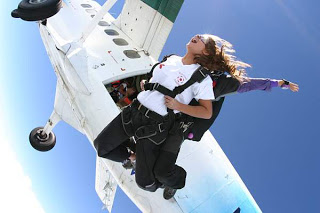
I had cooked up something special to celebrate our 25th wedding anniversary. My “plan” (which I kept a secret until yesterday morning) was to drive Amy to a rural town in Southern Minnesota where there's a company who offers Tandem Skydiving 🙂 That's right, I had planned for both Amy and myself to jump out of an airplane at 10,000 ft as a way to punctuate the start of our next 25 years together.
Unfortunately the clouds didn't cooperate and we have rescheduled this little adventure for next Sunday.
“Are you sure Amy's going to be OK doing that?” was the response I got from a few of the people I had confided in about my plans. Actually I was pretty sure she'd go along with the jump – Amy had mentioned to me last summer that she thought skydiving would be exciting and she's always talking about how much fun she had zip-lining in Mexico. To their credit, both kids felt Mom wouldn't be afraid to follow me out of a perfectly good airplane, so yes I was feeling pretty confident yesterday morning as we drove out of our neighborhood… up until the time I disclosed our destination.
I watched her face carefully for some indication of what she was thinking (she wasn't taking, just staring ahead with her lower jaw slightly moving in and out) and it must of taken 5 seconds or more before her lips slowly began to form a smile – indicating I wouldn't need to make a “U” turn back for home – and she sat up straight and asked how long it would be before we'd get there 🙂
Now I'll admit, expecting Amy to go along all of this only worked because I know her so well. I'm not sure I would have sprung this on her 27 years ago as my “plan” for one of our first dates… but what if I had?
What would I have had to do, to sell her on an activity many would consider completely crazy and all of us would feel is scary?
I'd need to sell her on the benefits of Skydiving!
There are a lot of benefits Amy (or me or you for that matter) could experience by jumping out an airplane and parachuting safely back to earth; cross it off her bucket list, over come a fear of heights, demonstrate to your date you're not afraid of a new challenge, impress friends & family members, etc…
Training with Power can be scary.
While not as scary as skydiving, I have been cooking up an exciting experience for my Thursday night classes starting in November. FTP assessments to help everyone learn their numbers and power training zones, as they come in from outdoors. Obviously I don't want to just spring this on them and I'm concerned that the 20 minute all-out-effort needed for an accurate FTP assessment, is potentially frightening to students. Not all, but there is a number of participants who continuously struggle through a 5 minute effort. They'd freak if I surprised them with an all out, 20 minute effort at threshold.
I'll need to be clever and and start the selling process early = starting this Thursday night. But what will I say?
Well that part's easy. I just printed out a couple of past articles we've published here.
This post by Gene Nacey seems very timely – follow the link for the full article.
1. Power Training will increase muscular strength.
With no gear indicators on most indoor bikes, you do not have assurance that you are stressing your leg muscles. I often call my strength classes “leg day in the gym”, this time though, we are using an indoor bike instead of leg machines. Would you go to your leg press machine and close your eyes and pick a weight stack? Would you ask someone to hand you a long bar with “surprise” weights for squats? Sounds silly, but with no gear or consistent resistance indicator, and the variability from one bike to the next, that is basically what you are doing.
2. Power Training will improve the toning of your leg muscles.
If you want better looking legs — and what guy doesn’t  — you want to tone those muscles, not bulk them up. Strengthening them while in motion will deliver those results, not leg presses and squats. That type of weight training will produce bulk; not the smooth, longer toning effect most of the ladies like (and men who watch the ladies, like).
3. Power Training will improve your cardiovascular fitness as a natural by-product of focused training at higher intensities.
We often speak of Power Training and Heart Rate Training as if they are completely separate. In many ways they are, but the body remains an integrated unit; an organic “machine” where the systems commingle and complement, not compete. Generally if you train one, you improve the other, just not as specifically or as dramatically.
4. Power Training will help prevent “plateaus” in fitness development or weight loss.
This probably should have been listed #1. But if I did that, you might not have read the rest of these reasons. Just because you sweat and get tired after a workout, does not mean you are getting fitter or losing weight. Is it a waste? No, I’m not saying that. However, your body is incredibly smart. It will not work harder than it needs to. It is possible to workout the same way, every day, and feel good while you are doing it, but the results end up in the realm of maintaining, not gaining. Without an indication of resistance, even though you think you are “turning it up”, in many instances you are not, especially since most bikes that are chain driven will vary in the resistance they apply with the same degree of turn. Without a progressive increase of resistance or “gearing”, your body will soon get accustomed to the resistance you apply, and once again, no adaptation will occur. No stress, no adaptation. No adaptation, no change.
