
by Joan Kent | Oct 6, 2017 | Health and Wellness, Master Instructor Blog

Image from http://postercabaret.com
By Team ICG® Master Trainer Joan Kent
As many of you know, cholesterol is absolutely vital to our lives and our health. It’s a waxy, pearl-colored, solid alcohol that’s produced primarily in the liver, but is so important every cell in the body can make its own.
Cholesterol has widely varied and important functions. It’s the precursor of all steroids: adrenal hormones, sex hormones, vitamin D and bile acids. It helps to structure cell membranes and modifies their fluidity to compensate for diet-induced changes. It helps to transmit neural impulses. It makes skin “waterproof.” It helps to transport triglycerides. It can function as an antioxidant.
Classifying cholesterol as good or bad hinges on whether it’s linked with cardiovascular disease or protects from it. A recent article states that high HDL (“good”) cholesterol doesn’t make up for high LDL (“bad”) cholesterol. This post is about the real cause of high LDL.
Many people think that eating fats raises serum cholesterol. When they try to lower their cholesterol, they reduce dietary fats. But dietary fat doesn’t necessarily raise serum cholesterol.
Cholesterol synthesis is controlled by an enzyme (HMG-coA-reductase) that’s triggered by insulin secretion. So foods that raise insulin secretion will increase serum cholesterol. Saturated fat raises cholesterol, but not because it’s fat. It raises cholesterol because it stimulates insulin secretion. Unsaturated fats don’t.
Insulin-triggering foods are more likely to increase our cholesterol than healthful fats. It’s just another way that sugars and processed carbs — and the high insulin secretion they promote — turn out to be bad for us. Good fats help us train well and stay healthy, so the distinction is important.
It works like this. Say you’ve just treated yourself to a lobster — cholesterol and all — with nothing else. As you digest, the cholesterol is released into your bloodstream. Special receptors, found in each cell, surface and pull cholesterol into the cells to be used in the ways listed above. As cholesterol is pulled into the cell, two things happen: 1) cholesterol production inside the cell stops, and 2) serum cholesterol drops because the cholesterol has been transported into cells.
What if you’ve had more than lobster? Say you’ve also consumed some serious insulin triggers: a drink, melted butter, bread and more butter, dessert. The insulin those foods stimulate starts cholesterol production within your cells. As a result, the special receptors don’t need to pull cholesterol from the bloodstream into the cell because the cell is making its own. Serum cholesterol remains high.
So why is LDL bad and HDL good? Because of their functions.
HDL is a scavenger. It gathers excess LDL and takes it to the liver to be broken down, and to the intestine to be excreted.
LDL transports vital cholesterol through the bloodstream to all of the cells that send up receptors to pull it inside. Along the way, though, cholesterol can stick to arterial linings and create plaque formations. That negative process is known as atherosclerosis. The plaque itself is a combination of LDL and sticky platelets.
If you’re wondering what makes the platelets sticky, sugar does a spectacular job. And the combination of higher LDL/lower HDL is written up in science journals as the expected result of a low-fat, high-carb diet.
Knowing this is important, so we don’t eliminate the wrong stuff. A previous post (Controlling the Sugar/Fat Seesaw) listed several benefits of eating healthful (unsaturated) fats, including enhanced endurance. Whether your students ride outdoors or stick to indoor cycling, cutting way back on good fats won’t help them lower LDL-cholesterol. And it may hurt their endurance. The best thing for them to do is keep the good fats, limit saturated and trans-fats, and cut down on junky carbs.
A few years ago in California, a U.S. national cycling champion taught a workshop on racing and recommended a high-sugar diet: “All the things you think you can’t eat, ladies!” She listed cookies, cupcakes, pastries, donuts, chocolate milk and more. I would disagree with her approach, which is probably all too common.
But here I’m simply presenting a way your students can lower “bad” cholesterol without decreasing endurance. Good fats can stay; bad fats and carbs should go. And sugar is ugly.
Save
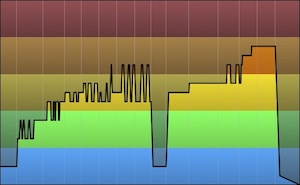
by Joey Stabile | Oct 5, 2017 | Best Practices, Creativity Indoor Classes, Instructor Training, Music
Welcome to the The Weekly Ride by Cycling Fusion:
No more hunting for new music or counting out cues. Here is your ready to ride document, that can be displayed from your phone, or printed out onto cue cards. This ride is timed out, down to the second, to make your life as easy as possible!
(more…)
by Joan Kent | Oct 4, 2017 | Best Practices, Health and Wellness, Master Instructor Blog

Early cycling classes. Late nights. Approaching holidays. Fall quarter can be a busy time, and it might be difficult to get enough sleep each night. But it's important to do so because sleep deprivation affects several factors related to health and weight management.
For one thing, sleep deprivation, even short-term, can lower leptin levels. Leptin is a powerful satiety hormone that tells the brain/body it’s had enough food and doesn’t need more. (Leptin’s functions are far more complex and diverse than these, but for the purposes of a short post on sleep, health and weight, this will serve.) The name leptin means “thin”, so if it’s not working properly or is in short supply, it can create the opposite effect.
Another thing inadequate sleep can do is raise levels of ghrelin. The hormone ghrelin works in opposition to leptin and stimulates the part of the brain that promotes eating. This “monster” hormone increases appetite, decreases metabolic rate, and even promotes a preference for fats.
Because ghrelin has such a negative influence on appetite and weight, it pays to know what else triggers it. A high-fat diet (even a high-fat meal) can do that, so keep your fat intake moderate. The type of fat — saturated or unsaturated — doesn’t seem to affect ghrelin levels but, for health reasons, unsaturated fats — omega-3s and omega-9s — are recommended. One obvious exception is raw, organic coconut oil: it’s saturated but extremely healthful. Still, use it moderately.
Sleep deprivation can also reduce melatonin. When we sleep, the brain releases melatonin, an anti-inflammatory hormone that can help heal any number of things in the body. Since inflammation is the source of most (some sources say ALL) disease, getting enough sleep is a key to staying healthy.
Getting too little sleep can trigger pro-inflammatory chemicals that make us less responsive to insulin, and that's never a good thing – either for health or for weight. Insulin resistance underlies many metabolic disorders. Those disorders include diabetes, hypertension, high triglycerides, high cholesterol, heart disease, breast cancer, colorectal cancer, polycystic ovary syndrome and polycystic kidney disease. Because these disorders tend to occur in clusters, someone with one is likely to have several.
Insulin resistance can contribute to weight gain, as well. If you have students who struggle with their weight, this is worth passing along to them. We typically hear that insulin resistance is the result of obesity/overweight. That’s true, but insulin resistance can actually cause overweight, too. I’ve mentioned this in previous posts, but here’s a brief summary. Body tissues differ in their sensitivity to insulin. The primary site of insulin resistance is skeletal muscle. Insulin resistant muscle doesn’t respond to insulin, so glucose isn’t transported to muscle tissue and is instead transported to fat deposits. In short, anything that decreases insulin sensitivity is bad news for health and for weight. (Diet can be a significant cause of insulin resistance, but we’ll limit this article to the effects of sleep deprivation.)
So the bottom line is pretty straightforward. Be sure to make sleep a priority, even when — or especially when — you're busy.
Save
by Jennifer Lintz | Oct 2, 2017 | Engage Your Students, Instructor Training
By Jennifer Lintz, Registered Dietitian and ICI/PRO Member Soigneur

One of my colleagues recently asked me if I ever feel like a broken record on the instructor bike. Of course! I have definitely fallen into ruts where I find myself using the same cues over and over. In a class where variety of all kinds is important, it can be challenging to be clear and motivating without relying on the same words and phrases class after class. I do think it is possible to keep our word choices fresh and new, but it requires effort. Here are a few of my thoughts on how to give your cues a makeover if you ever feel like you're in repeat mode.
1. Become self-aware. If you don't realize that you say the same cue 12 times in an hour-long class, you probably won't see the need to do anything about it. The next time you teach, pay attention to your word choices. Make a mental note of anything you catch yourself saying multiple times. You might even record yourself to get a more complete picture of your teaching lingo and speaking habits.
2. Ask: “Is there another way?” Once you identify your go-to phrases, start brainstorming other ways to communicate a similar message. If you catch yourself saying “Push it!” multiple times in a class, jot down other ways you could ask participants to give a little more effort. Here are a few examples that might get your wheels turning:
“Show me what you have left.”
“Can you add more resistance?”
“For the next 30 seconds, I am giving you permission to get uncomfortable.”
3. Ride on your own. Cycling for personal enjoyment — and not on the clock — gives us a chance to see and feel things from our students' perspectives. When we go breathless at the end of a time trial or struggle up a seemingly unending hill, we become better able to coach those same scenarios to our students. If you ride up a hill so steep that makes you want to get off your bike and walk – but you don't – use that same language when talking your students up a long climb.
4. Share personal stories. Real-life examples are a great way to break up the monotony of the same old cues. I remember riding with my husband this summer and thinking “Man, he is way ahead of me. But, then again, he is usually ahead of me.” And then I realized “This isn't very difficult. I could probably get closer to him if I work harder.” Sure enough, I was able to catch up to him; I just needed a little kick in the pants. A few days later, I shared that story with my class as a reminder that, while our comfort zone is usually pretty cozy, we may be impressed with our abilities if we are willing to step out of it.
Making friends with a thesaurus is also never a bad idea :-). What techniques do you use to spice up your coaching?
Save
Save

by Joey Stabile | Sep 29, 2017 | Best Practices, Instructor Training, Music
Welcome to week five of Music to Mention. This week's music to mention is a strenght song that makes groove as I sit here and write this: Treble To The Bass by Swanky Tunes. I use this song for strength work, characterized by a lower cadence (the beat is 128 or 64 rpm) and a heart rate in Mid to High Zone 4 area. This should be hard and questionably sustainable. I usually cue this at 1.0 – 1.5 watts per pound for the riders (on a Keiser bike). Have fun with this and use the longer sections to connect with your class and educate them on training.
Get the PDF for timing here:
Treble To The Bass
Treble To The Bass by Swanky Tunes:

Apple Music

Spotify
Have fun with this song and enjoy your ride.
Ride Hard, Ride Well and Ride Often……Joey
Save
Save
Save
Save
Save
Save
Save
Save
Save
Save
Save
Save
Save
Save
Save
Save
Save
Save
Save
Save
by Joey Stabile | Sep 28, 2017 | Best Practices, Creativity Indoor Classes, Instructor Training, Music
Welcome to the The Weekly Ride by Cycling Fusion:
No more hunting for new music or counting out cues. Here is your ready to ride document, that can be displayed from your phone, or printed out onto cue cards. This ride is timed out, down to the second, to make your life as easy as possible!
(more…)
