
by Dr. Haley | Dec 15, 2009 | Mental Toughness
 Athletes know all too well the benefits of using imagery before competition.
A tennis player will imagine his powerful topspin-slice first serve. A golfer will rely on imagery to review her plan of action for her next swing. A baseball player will use imagery to get motivated for when it’s his turn at bat.
With proper execution, imagery can also be used during your indoor cycle classes to correct and improve the technique and intensity of your participants. With your guidance, they can mentally perform specific skills and have those skills transfer to the body.
For example, you can introduce an exercise where your participants image a cheetah running through the wild. When your participants image a cheetah, they will stop bouncing up and down start powering through by focusing on moving forward.
To help your participants create a fluid pedal stroke, you can ask them to image the wheels of an old fashioned train where they can understand the meaning of a circular and fluid motion.
Imagery should also be used to help your participants correct their mistakes and improve. For best results, group fitness instructors should implement the following practice during class: (1) identify the mistake, (2) and providing feedback about how to correct it, and (3) suggest an image they can use to help them focus on the specific skill.
Call to Action: Take some time before your next class to identify the top three most common mistakes or improvements that your participants need to focus on. Then, identify an image that will help your participants understand your instruction. The next time you teach a fitness class, challenge yourself to introduce one image to your participants.
Believe and Achieve,
Haley Perlus, Ph.D.
Visit http://DrHaleyPerlus.com and register to receive Dr. Haley’s FREE Mental Toughness Articles for sport and fitness.
Visit http://TheUltimateAchievementJournal.com to learn how Dr. Haley makes it easier to achieve your fitness goals.

by Dr. Haley | Dec 1, 2009 | Mental Toughness

Do you have expectations about the ability of your individual participants?
Ever notice how many of your expectations become a reality?
In many cases, this is due to your intelligence of your sport and fitness knowledge. However, research continues to demonstrate that a leader’s (i.e. coach or instructor) expectation of his/her followers (i.e. athlete or fitness participant) influence performance.
The phenomena is called the self-fulfilling prophecy. For indoor cycle classes, the premise is that an instructor initiates the following series of events that ultimately cause his/her expectations to be fulfilled: (more…)
by Dr. Haley | Oct 20, 2009 | Mental Toughness
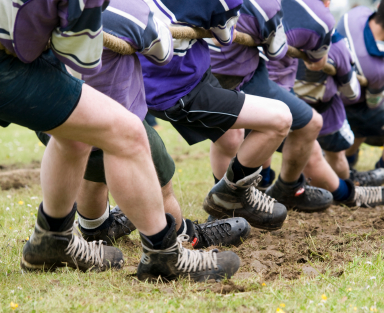 Does your class believe and act like they are one unit? Do you treat them like a team? Creating a team spirit among your participants can have tremendous effects on their commitment, effort, and desire to return to your class. Read on to learn how you can take advantage of your indoor cycle class so that they exert more effort and everyone has more fun.
Social Support: Often the most meaningful praise and encouragements comes from people who are in similar situations working towards similar goals. Encourage your participants to offer one another reassurance and companionship.
(more…)
by Dr. Haley | Sep 24, 2009 | Mental Toughness

[firstname], how many athletes, in any sport, have you witnessed having a perfect performance in competition? We all know the answer ….perfect performances are extremely rare. How many golfers can maintain a perfect swing throughout an entire tournament? How many baseball pitchers have thrown a no-hitter? How many soccer players can kick every ball on net?
Olympic and professional athletes have high personal standards of performance and continue to push the boundaries in their sport. They consistently strive to be stronger physically, technically, strategically, and mentally. The difference between these top athletes and perfectionist athletes is the understanding that mistakes are a natural part of sport participation. In fact, many athletes, coaches, and sport psychologists look at sport as a constant recovery from error. Examples include the turnover in hockey, football or basketball or the unforced error in tennis. The winner of any competition is rarely the athlete with a perfect performance, but rather the athlete who continues to move forward and commits to personal excellence instead of perfection.
(more…)
