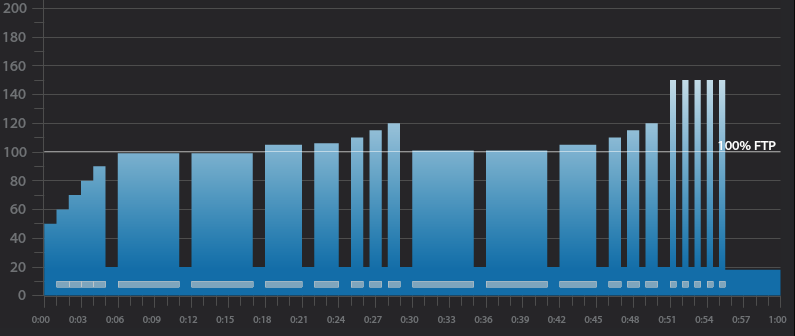
That would be your FTP looking back at you… catch him if you can.
Now that I'm an official Stages Indoor Cycling Master Educator, I figured I needed to create an Audio Profile so you can hear how I teach one of my Power classes. My profile is “Racing Your FTP”.
The goal is very simple; beat your FTP or “Threshold Check” numbers on every set. The ride will consist of two warm up songs, a “Threshold Check”, and three efforts of around 12, 18 and 9 minutes with a 1 minute recoveries after each interval.
I love mixing my class music and I've provide you with the MP3 below. I have also included an actual recording of me coaching this complete class. I suggest riding to this class by yourself, to experience exactly how I present this profile and you'll have a better idea of where & what I'm cuing during the class.
[wlm_private ‘PRO-Platinum|PRO-Monthly|PRO-Gratis|PRO-Seasonal|Platinum-trial|Monthly-trial|PRO-Military|30-Days-of-PRO|90 Day PRO|Stages-Instructor|Schwinn-Instructor|Instructor-Bonus|28 Day Challenge']
Enjoy and please let me know how it works for you as a comment below.
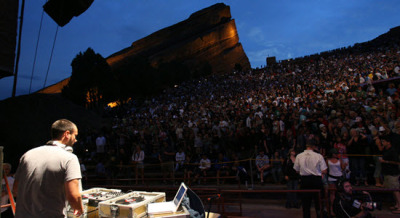
DJ Scott Melker playing the Red Rocks Amphitheatre in Golden, CO
As many of you know I've worn many hats in the fitness industry, I've been an Assistant General Manager, Operations Manager, Fitness Director, Triathlon Coach, Master Swim Team Coach, Master Educator, Personal Trainer, Group Exercise and Indoor Cycling Instructor. Throughout my almost 25 years in this customer service industry I have heard many member comments, complaints and compliments. Through these years I have grown a thick skin but the one comment that still cuts the deepest is when I hear that someone complains about my music. Being an indoor cycling instructor has, forever, changed the way I listen to all music. Music is now put into two categories; will this song work in class or not. I'm on a never ending search for the perfect indoor cycling song. This search reminds me of the story of Sisyphus from Greek mythology. He was punished for chronic deceitfulness by being compelled to roll an immense boulder up a hill, only to watch it roll back down, and to repeat this action forever. After I find the “perfect” indoor cycling song I feel I'm on the same journey at Sisyphus. I find the song, listen to it, probably 20 times, find all the beat and energy changes, figure out a profile for it, listen to it another 20 times imagining my profile being used with the song, use it in a class, make changes, use it again in a class, perfect it, then when I finally push this boulder to the top of the hill and have produced the perfect mix of music, movement, rhythm and riding it's time to start this process all over again because riders are getting tired of this “perfect” song.
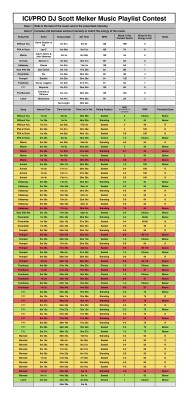
Around the same time John and Scott announced their “ICI/Pro DJ Scott Melker Music Playlist Contest” I was in a state of the dreaded “profile writers block” and I was told that a club member had commented about the lack of variety in my music. Yes, at first I was offended, but then I thought maybe the announcement of this contest and these negative comments were a sign. I decided to take on the challenge of using Scott's playlist and building the best profile I could. This project was extremely challenging for me, I'm usually a profile first music second type of class builder, this forced me to swap my way of thinking. Scott's playlist included some songs that I never imagined playing in an indoor cycling class, when I first heard them I immediately put them in the song category of “will not work in a class”, but I was being forced to use them so I had to figure out how to make them work. After countless hours of listening to Scott's playlist and tweaking my profile, I believe I have come up with a class that uses the artistry and energy of a playlist put together by one of the world's top DJs, while staying true to my scientifically proven teaching methods.
I hope you find this class profile both fun and effective, my class sure did.
I challenge you to step out of your comfort zone and create your own profile for this contest.
Scott Melker's Playlist, to download Right Click > Save As / Save Target As to download. Open in iTunes and then you'll see this in your Spotify Local File folder.
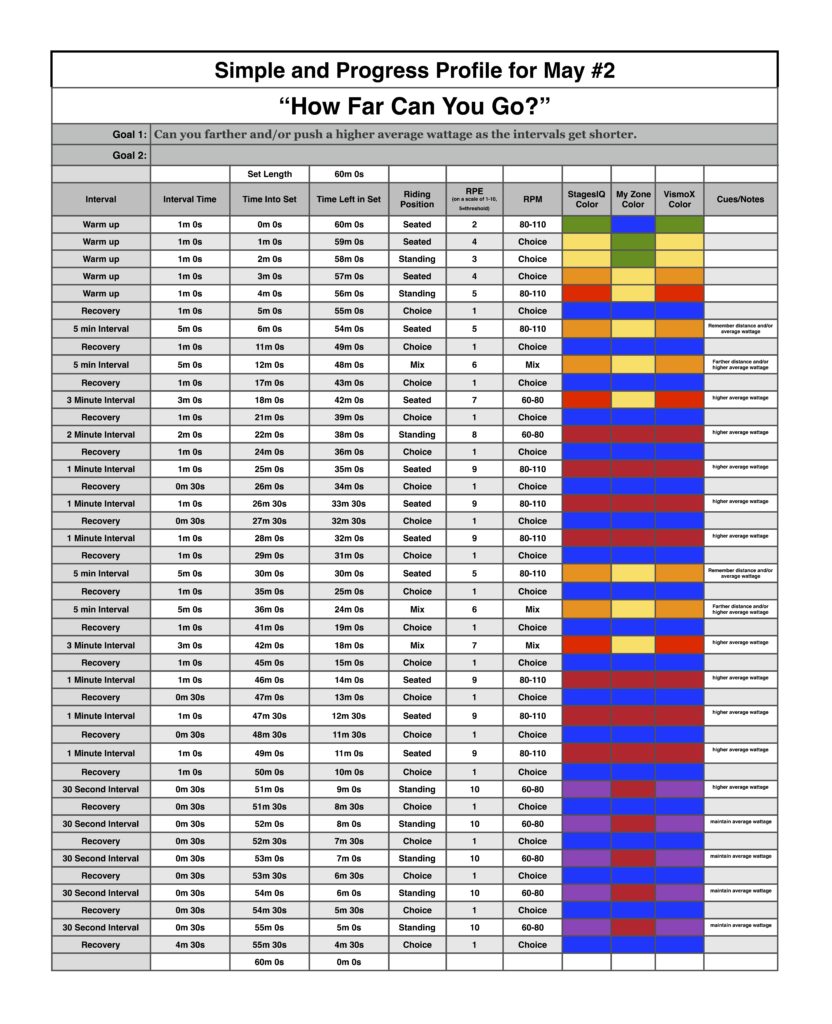
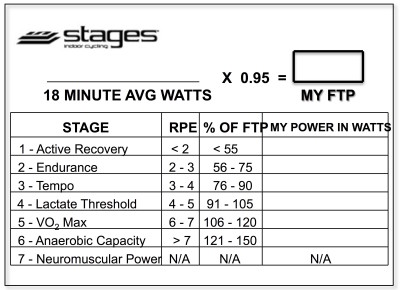
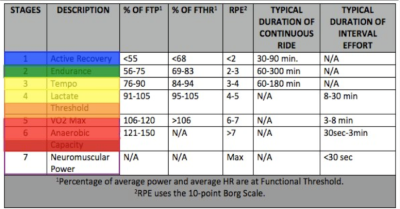
Below, Premium Members can view and download a printable Class Profile that can be used in class, read a detailed description of the Power Based Training Zones and download a printable Power Postcard.
Share this information with your athletes the next time they show up for a class and let you know that they are not going to follow along because they are “Base Training”.
For triathletes in the Northern Hemisphere, the season is almost over. Days are getting shorter, the weather is getting worse, and so for a lot of people training time is becoming limited and requiring that extra bit of motivation.
At this time of year you should be planning for next season and starting to think about winter training, which usually means a greater focus on indoor training. As such, a lot of athletes find themselves asking the question of how to make the most of their winter training. With time at a premium, and training over winter naturally becoming more about an hour here and an hour there, it’s important that you make every session count. My approach is to use winter training to ensure you see the biggest overall improvement in your performance come race season.
For the majority of triathletes, the area where most gains (in terms of time improvements) are to be had is on the bike. This means you must also alter your swimming and running in a way that will allow you to focus on your bike training while not completely losing your fitness in the other two sports.
Winter Bike Training
The ‘traditional’ approach to winter training is that of building your base fitness through riding long, slow miles. If you have the time (and weather) to do that, it’s still a great focus for your bike training over winter. However, most age-group triathletes and cyclists are busy balancing work life, family life, and training. The shorter, colder days naturally mean less time realistically available to train in any given session.
The winter focus that more often than not reaps the biggest rewards come race season is increasing your Functional Threshold Power (FTP) on the bike. By increasing your FTP over winter, when you transition to more outdoor riding in the spring, you’ll be able to ride faster for the same effort. And this will translate into material improvements over all race distances.
The good news is that it’s relatively simple to increase your FTP. The bad news is that it’s not easy. You have to be prepared to spend your winter doing some hard work. But as long as you’re prepared to work hard and commit to some intense indoor sessions you’ll reap the rewards and can start seeing a noticeable difference in as little as four weeks.
Winter Swim Training
This is the area that a lot of triathletes feel they need to focus on most because it’s their weakest discipline. If you’re a “middle of the pack” swimmer or better it’s tempting to aim to become a “front of the pack” swimmer by swimming three to four times per week and knocking a few minutes off your swim time.
However, let’s view the question through the lens of ‘how do I best make use of my winter training time?’ Is spending six to eight hours per week on swimming during the winter (once you’ve factored in travel and changing time) for a two minute time gain really time well spent?
For most triathletes, I believe you’re better off reducing the swim training to once per week, or even less. This is just enough pool time to maintain your stroke mechanics and then to build up again in the spring, when there is more daylight and hence more available training time.
For weaker swimmers, or beginners, your pool time in the winter is best spent practicing the correct technique, with appropriate drills, rather than training hard with poor technique and further embedding your stroke flaws.
Winter Run Training
It’s tempting to assume that in order to improve your running over winter, you need to be going hard and doing lots of tempo and interval sets. However, if your winter bike training is effectively focussed on building power, then that will take care of improving cardiovascular fitness. You can only train hard so many times in a week, and with that happening on the bike, it frees you up to concentrate on a winter of enjoyable steady running.
This will help develop your running mechanics and strengthen your ligaments, tendons and run-specific muscles. Then, as winter turns to spring and your biking focus moves towards endurance and away from top-end power, you’ll have the strength, fitness, and run durability to start to increase your running intensity without risking injury. Since the majority of triathletes are injured by running, this is an important consideration!
Below is an example of what an Annual Training Plan (ATP) using custom names may look like using reverse periodization. You can see that the volume stays low through the winter while focusing on specific aspects of each sport. As the weather warms up in March and April, the volume increases to build endurance for race day in June.
Especially for athletes racing long distance next year, the reverse periodization approach also means that you will reach the spring season feeling powerful, fast, and strong on the bike. This means that as you naturally increase the length of your long rides, you’ll be riding faster for the same effort level.
I'm not embarrassed to say that I like country music. Country is a genre that many indoor cycling instructor avoid, but I embrace it. I get more complements about playing country music than any other genre. Country music IS popular and has a HUGE following. I live in Denver and a few weeks ago U2 was playing the Pepsi Center, a 20,000 seat venue and Luke Bryan was playing Mile High Stadium, a 75,000 seat venue, on the same night. Luke Bryan sold out U2 did not!
This week I mixed together 3 new country songs:
Homegrown by Zac Brown Band
Play It Again by Luke Bryan
John Cougar, John Deere, John 3:16 by Keith Urban
All 3 songs are about 3 minutes and 30 seconds long. I like to use this music mix for three 3 minute intervals with 30-40 seconds recovery after each. Since the energy and tempo “feel” lower and slower I like to ride at a cadence of 60-80 rpm for this set. Listen below to how I used this set in class.
[wlm_private ‘PRO-Platinum|PRO-Monthly|PRO-Gratis|PRO-Seasonal|Platinum-trial|Monthly-trial|PRO-Military|30-Days-of-PRO|90 Day PRO|Stages-Instructor|Schwinn-Instructor|Instructor-Bonus|28 Day Challenge']If you use video I also mixed together the videos of these three songs.
3 song harmonically mixed track, to download Right Click > Save As / Save Target As to download. Open in iTunes and then you'll see this in your Spotify Local File folder.