
by Joan Kent | Mar 15, 2018 | Engage Your Students, Health and Wellness, Instructor Training
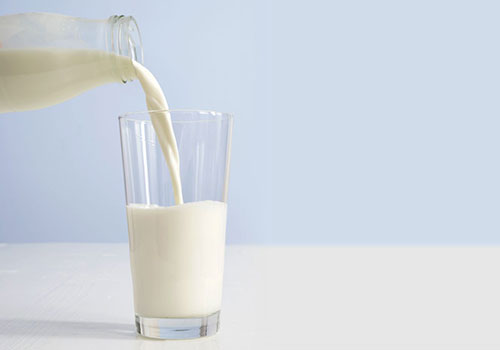
Clients ask me about lactose all the time. A brief survey of facts about lactose had to begin with milk.
Many books and articles exist on the health problems associated with milk. They include breast, prostate and ovarian cancers; allergic reactions in infants; and increased risk of bone fractures, type 1 diabetes, multiple sclerosis, acne, ear infections, and constipation.
Obviously, the health hazards of milk deserve a full discussion of their own.
Monsanto has had a hand in this, but for brevity, this post will address lactose only.
Lactose Intolerance
Lactose intolerance is an inability to digest lactose, the sugar in milk and other dairy products. It’s caused by a deficiency of lactase, the enzyme necessary for breaking down lactose.
The result will typically be gastrointestinal symptoms and signs, such as bloating, flatulence, diarrhea, nausea and even vomiting.
Lactose intolerance may be genetic, cultural (occurring more frequently in cultures that don’t rely on dairy products as a food source), and even exposure-related. Those accustomed to consuming dairy products frequently, especially as children, may experience higher tolerance overall.
Age can be a factor, as well. Some clients have noticed GI distresses due to dairy products as they get older.
Rates of lactose intolerance may range from 5% in northern European countries to as much as 90% in African and Asian countries, where milk and other dairy products are not consumed.
Some anti-dairy articles recommend milk products for Scandinavians only — and not even all Scandinavians, just blond-haired ones.
Is Lactose Hiding In Your Food?
Unexpected foods may contain lactose. A client who was working hard to get away from sugar had planned to try stevia, but reported to me that she couldn’t use it because she was lactose intolerant.
That made no sense until the next time I visited Trader Joe’s, which is where the client had gone for her groceries. Trader Joe’s carries 2 types of stevia. One is in a small plastic bottle that contains 100% pure stevia. The other is in a much larger bottle and contains stevia plus lactose as a sweetener.
Now, I just don’t get adding sweeteners to sweeteners, but I’m the die-hard Sugar Patrol, so don’t ask me. People even add sweeteners to fruit — frozen, canned, dried, baked — another thing I don’t get. But I digress.
At any rate, there’s more to be said about stevia, since some people may have a sugar reaction to it. That can include, but is not limited to, later cravings for sugary foods. But let’s save the stevia discussion for yet another post.
Bottom line, lactose is an added sweetener used in certain foods. Read all labels.
When Clients Quit Sugar, What Happens?
This brings us to Lactose as Sugar.
As a sugar addiction expert, I’ve seen a common pattern in client food logs. Someone who’s in the process of kicking sugar might start eating more milk products — cheese, yogurt, cottage cheese, and so on.
It’s worth noting and stopping if you’re serious about quitting sugar.
As mentioned above, the negative heath consequences of dairy products are many. Whether you’re lactose intolerant or not, subbing lactose for the sugars you’re trying to quit can and will be counterproductive. Lactose can have the same effect as any other sugar on someone who is sugar-sensitive.
If you’re quitting sugar, quit lactose, too. Your vigilance will reward you.
by Joan Kent | Dec 6, 2017 | Health and Wellness, Master Instructor Blog

By Joan Kent
One significant reason for sugar cravings is withdrawal. Withdrawal can promote cravings under various circumstances.
If someone has recently stopped drinking alcohol, cravings for sugar can be strong and frequent. This involves the brain chemicals stimulated by alcohol. The same three chemicals (dopamine, beta-endorphin, and serotonin) are also stimulated by sugar.
The similarity makes sugar a short-term substitute for alcohol when cravings occur. It also explains why people in recovery from alcohol (or drugs) may crave sugar and may eat it often or in large quantities. Or both.
The phenomenon is so common that AA meetings typically feature back-of-room treats that are laden with sugar: cookies, brownies, cakes, pastries. That approach can backfire, but we’ll get to that in a moment.
If someone is addicted to sugar, quitting sugar can lead to cravings. The effect may sometimes be similar to the symptoms of alcohol withdrawal or opiate withdrawal — and also similar to the symptoms of hypoglycemia (low blood glucose).
(As a side note, I postulated years ago that hypoglycemia — especially reactive hypoglycemia, the rapid glucose drop following sugar ingestion in susceptible people — was a specific case of sugar withdrawal. Reviewing the lists below makes it seem there’s a case to be made for that.)
Research shows that cravings are highest when withdrawal is most severe. The higher the level of intake prior to abstinence, the greater the withdrawal and subsequent craving.
Anyway, let’s look at the symptoms in the different cases.
Alcohol withdrawal symptoms include anxiety, nervousness, depression, fatigue, irritability, shakiness, mood swings, nightmares, pupil dilation, clammy skin, headaches, insomnia, nausea, vomiting, sweating, muscle tremor, confusion, rapid heart beat.
Symptoms of hypoglycemia include shakiness, nervousness, anxiety, sweating, chills, irritability, confusion, rapid heartbeat, lightheadedness, dizziness, hunger, nausea, sleepiness, blurred vision, tingling or numbness in the lips or tongue, headaches, weakness, fatigue, anger, sadness, lack of coordination, nightmares, seizures, unconsciousness, confusion, difficulty speaking, night sweats, waking up tired, irritable or confused.
Opiate withdrawal symptoms include agitation, anxiety, muscle aches, eye tearing, insomnia, runny nose, sweating, yawning, abdominal cramping, diarrhea, dilated pupils, goose bumps, nausea, vomiting, fever.
Research on lab animals that have been made addicted to sugar lists withdrawal symptoms that resemble those of opiate withdrawal.
An internet search on symptoms of sugar withdrawal offers lists that include hunger and the desire for sugary foods; headaches; low energy, fatigue; mood swings, crankiness; muscle aches and pains; nausea and other gastric upsets; chills or sweating, especially at night; runny nose; yawning; insomnia.
As you can see, there is quite a bit of overlap in these various symptom lists.
So is sugar withdrawal just like withdrawal from opiates or alcohol? Some would say yes. Some would say that’s too big a stretch. After all, the body has only so many ways of expressing itself, so a similarity in symptoms doesn’t necessarily link them.
But we do know that sugar affects, either directly or indirectly, the same brain chemicals that are affected by alcohol and opiate drugs. As mentioned above, the similarity makes sugar a short-term substitute for alcohol.
However! Eating sugar when you crave either alcohol or sugar can backfire, due to a phenomenon known as priming (i.e., a little makes us want more).
Some people insist priming doesn’t apply to food, just to alcohol or drugs. Clinical experience shows that it does apply, and that avoiding possible priming cues goes a long way toward ending cravings. My advice would be to take priming seriously if you want to end sugar cravings.
[If you have students who need help dealing with sugar cravings and sugar addiction, please let me help. My new program, Last Resort Nutrition® with Joan Kent, starts soon. I also offer individual coaching.]
by Joan Kent | Nov 6, 2017 | Engage Your Students, Health and Wellness

“I don’t understand. She trains well.”
The program manager made that comment when a participant in our weight loss program didn’t get results. I was both an athletic coach and the lead nutritionist.
His comment exasperated me. Of course she trained well. She was an expert at that because of her food issues. She’d junk out, then “train well” to burn off the unwanted calories.
It wasn’t always the same ‘she’ — but she was typically a sugar addict. Sugar addicts don’t necessarily have difficulty training.
Training is the easy part. Early classes at the gym, hitting the weight room, weekend runs, core strength, scheduling with a trainer. No problem.
They don’t refuse to cooperate with the instructor. Workouts don’t threaten their addictive behavior.
The sugar addict wants to eat junk, work out to compensate for it, and keep the addiction going.
Nutrition Rules Push Sugar Addicts’ Buttons
Food guidelines, on the other hand, meet with stonewalling. My nutrition program — highly successful with most participants — annoyed the “resisters.”
I’ve posted about resisting weight loss, but one client kept demanding more and more specific instruction. Our guidelines were never good enough.
First, she claimed not to know what to eat. She wanted menus. When we provided those, she wanted more: exactly which foods to eat, exactly when to eat them, and precise quantities for her calorie and weight-loss needs.
The program manager saw this as our problem. I immediately recognized it as a smokescreen. “Until we provide those things,” he said, “she feels as if her program hasn’t begun.”
His comment was profound — but not in the way he thought.
Registering for a robust weight-loss program looks like a sincere desire to lose weight. Asking for more specifics seems like part of that sincere desire to lose — if you don’t know the games people will play to avoid doing the necessary work.
I’ve been around the defiance of resistant weight-loss clients a long time and see it differently: As long as we didn’t supply what she requested, that was her excuse not to change her eating. Not to give up pizza, margaritas, wine, or nachos. (All of these were in her seldom-kept food log.) Not to move forward — to any degree — until things suited her to a T.
If we had done everything she wanted, she would have had more complaints and more demands.
Bottom line? She saw the lack of personalized info as the chink in the armor, the point of attack. A good friend of mine who works as a life coach said, “It’s better for her if the program fails than if she does. Again.”
This life coach friend disliked many of her weight loss clients because of the games they played. Guess I’m not the only one who has noticed this nonsense.
Not all of you are coaching weight-loss clients, but if you are, here are a few suggestions.
– Encourage them to be honest.
What do they want? Whether their weakness is sugar, alcohol, butter, or something else, their goals should be what they really want.
It’s no crime for them to decide they don’t want to lose weight or end their food addiction.
– See the finish line with no time element.
I learned that from my ultra-endurance athletic coach. Don’t worry about fast results. These days, some people push rapid weight loss. That’s fine if the clients prefer, but there’s no race.
If it’s more comfortable to “set it and forget it”, they can decrease their calories by, say, only 200 to 300 per day. It will take longer to reach the goal, but that’s the only drawback. So what?
They do it daily, forget about it, and let the pounds melt slowly while they go about their business.
– If your client is addicted to sugar or other food, concentrate on the addiction first.
If the client takes on too much at once, it could sabotage the effort. Dealing with addiction first is a strong, solid step toward weight loss. Once eating is under control, the other goals will fall in place.
– Recommend qualified help and a proven system.
Everyone seems to have ideas on how to get rid of sugar cravings, and some of them are almost ridiculous. With the right help, it’s a straightforward process. The wrong advice can make it agonizingly difficult.
Suggest that your clients find a solid system and stick with it.
Save
by Joan Kent | Oct 16, 2017 | Health and Wellness, Master Instructor Blog

By Joan Kent
My last few posts have dealt with aspects of sugar addiction, including sugar’s effect on health. It’s important — you want to be healthy, right?
Still, I’ve avoided one topic because it’s almost guaranteed to alienate people — fructose. The sugar found in fruit. It’s nasty. We’ll get to the details on that soon enough.
Some people are surprised that fruit could be bad. After all, it’s natural. And whenever people talk about healthful eating habits, it’s one of the first things mentioned. “Eat lots of fruits and vegetables!” As if they’re equal. Fruits even come first in that recommendation.
I might agree with the recommendation in part, but would suggest limiting fruit servings to 1 or 2 per day. A serving is half a cup, or a medium-size fruit. Not much fruit, compared with vegetables. (You can go crazy with those veggies.)
I’ve always balked at “Five a day.” Once upon a time (pre-1991), the Basic Four Food Groups consisted of Meats, Milk Products, Grains, and FruitsandVegetables. The original 1991 Food Guide Pyramid was developed to give us a better idea of the relative proportions to eat. The second tier from the bottom was divided unevenly, into 2-4 fruit servings and 3-5 vegetable servings. Apparently, that was too nuanced, too specific. And so the slogan “Five a day” was coined, referring to the minimum number of servings of each and blending them back together, as in the Basic Four.
(I can’t even count the clients I’ve had who were more than happy to get their 5 a day from fruit and skip those pesky vegetables altogether. But I digress.)
The fructose takeover in beverages and prepared foods was designed to cash in on the lower cost of fructose, and the image it had as a “healthy sugar”. Sucrose (granulated table sugar) was seen as unhealthful. Yet fructose has negative health implications, some more serious than others. All of them contribute to a negative picture overall.
What does fructose do that’s bad for our health?
It’s cariogenic, so it causes cavities. It triggers sugar cravings in susceptible people.
It’s frequently malabsorbed, leading to abdominal complaints (bloating, flatulence, diarrhea). Many people are unable to completely absorb fructose in the amounts commonly found in high-fructose corn syrup products.
Due to rapid utilization by the liver, fructose has multiple metabolic effects. Long-term fructose use can lead to high triglycerides, an independent risk factor for heart disease.
Fructose can also decrease glucose tolerance and raise insulin levels. (If that sounds as if it could lead to insulin resistance and diabetes, you’re right.)
Whether people start with triglyceride issues or not, these changes are the expected results of increased fructose. People who respond to fructose normally show these changes at intakes of around 20% of total calories. Carbohydrate-sensitive people can show these negative responses to as little fructose as 7% of total calories.
Carbohydrate sensitivity is defined as exaggerated insulin secretion to sucrose, but fructose and other carbs can trigger the high insulin, as well.
Sucrose can cause many of these same effects. Sucrose is a disaccharide, half glucose and half fructose. ALL of these sucrose problems are attributed to the fructose in it, not the glucose. And no debate on this exists in the science journals.
So everyone agrees that fructose is what makes sucrose the junk that it is.
Fructose is ineffective as a pre- or post-workout fuel, and it actually does even more health damage than the stuff I’ve listed above. For example, both fructose and the sweetener sorbitol (converted to fructose in the liver) accumulate in the lens of the eye in diabetics, causing osmotic damage.
Let’s end instead by pointing out that even trending sugars can be junk. That includes agave, maple syrup, dates, and acai berries.
Getting away from fructose is a wise and healthful course of action. Because it may be difficult, though, cutting back on fructose could be seen as the final frontier in conquering sugar addiction.
Save
by Joan Kent | Oct 6, 2017 | Health and Wellness, Master Instructor Blog

Image from http://postercabaret.com
By Team ICG® Master Trainer Joan Kent
As many of you know, cholesterol is absolutely vital to our lives and our health. It’s a waxy, pearl-colored, solid alcohol that’s produced primarily in the liver, but is so important every cell in the body can make its own.
Cholesterol has widely varied and important functions. It’s the precursor of all steroids: adrenal hormones, sex hormones, vitamin D and bile acids. It helps to structure cell membranes and modifies their fluidity to compensate for diet-induced changes. It helps to transmit neural impulses. It makes skin “waterproof.” It helps to transport triglycerides. It can function as an antioxidant.
Classifying cholesterol as good or bad hinges on whether it’s linked with cardiovascular disease or protects from it. A recent article states that high HDL (“good”) cholesterol doesn’t make up for high LDL (“bad”) cholesterol. This post is about the real cause of high LDL.
Many people think that eating fats raises serum cholesterol. When they try to lower their cholesterol, they reduce dietary fats. But dietary fat doesn’t necessarily raise serum cholesterol.
Cholesterol synthesis is controlled by an enzyme (HMG-coA-reductase) that’s triggered by insulin secretion. So foods that raise insulin secretion will increase serum cholesterol. Saturated fat raises cholesterol, but not because it’s fat. It raises cholesterol because it stimulates insulin secretion. Unsaturated fats don’t.
Insulin-triggering foods are more likely to increase our cholesterol than healthful fats. It’s just another way that sugars and processed carbs — and the high insulin secretion they promote — turn out to be bad for us. Good fats help us train well and stay healthy, so the distinction is important.
It works like this. Say you’ve just treated yourself to a lobster — cholesterol and all — with nothing else. As you digest, the cholesterol is released into your bloodstream. Special receptors, found in each cell, surface and pull cholesterol into the cells to be used in the ways listed above. As cholesterol is pulled into the cell, two things happen: 1) cholesterol production inside the cell stops, and 2) serum cholesterol drops because the cholesterol has been transported into cells.
What if you’ve had more than lobster? Say you’ve also consumed some serious insulin triggers: a drink, melted butter, bread and more butter, dessert. The insulin those foods stimulate starts cholesterol production within your cells. As a result, the special receptors don’t need to pull cholesterol from the bloodstream into the cell because the cell is making its own. Serum cholesterol remains high.
So why is LDL bad and HDL good? Because of their functions.
HDL is a scavenger. It gathers excess LDL and takes it to the liver to be broken down, and to the intestine to be excreted.
LDL transports vital cholesterol through the bloodstream to all of the cells that send up receptors to pull it inside. Along the way, though, cholesterol can stick to arterial linings and create plaque formations. That negative process is known as atherosclerosis. The plaque itself is a combination of LDL and sticky platelets.
If you’re wondering what makes the platelets sticky, sugar does a spectacular job. And the combination of higher LDL/lower HDL is written up in science journals as the expected result of a low-fat, high-carb diet.
Knowing this is important, so we don’t eliminate the wrong stuff. A previous post (Controlling the Sugar/Fat Seesaw) listed several benefits of eating healthful (unsaturated) fats, including enhanced endurance. Whether your students ride outdoors or stick to indoor cycling, cutting way back on good fats won’t help them lower LDL-cholesterol. And it may hurt their endurance. The best thing for them to do is keep the good fats, limit saturated and trans-fats, and cut down on junky carbs.
A few years ago in California, a U.S. national cycling champion taught a workshop on racing and recommended a high-sugar diet: “All the things you think you can’t eat, ladies!” She listed cookies, cupcakes, pastries, donuts, chocolate milk and more. I would disagree with her approach, which is probably all too common.
But here I’m simply presenting a way your students can lower “bad” cholesterol without decreasing endurance. Good fats can stay; bad fats and carbs should go. And sugar is ugly.
Save
