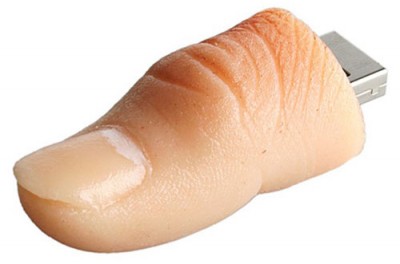
Both the FreeMotion S 11 series and Schwinn AC Indoor Cycles have the ability to record your ride data using a USB Thumb Drive.
This past Sunday I asked Alan ******, one of my regular students, if he would be willing to have his class performance data recorded so I could share it with you. Al is a long time cyclist and we first met back in 1998 while I was leading group rides for a local bike shop. He agreed and the process for collecting his information was a simple as plugging a Thumb Drive into the USB port before turning on the FreeMotion computer.
The data that’s collected is:
Time – it takes a snapshot every second.
Miles traveled*
MPH*
Watts
Heart Rate BPM
Cadence RPM
My understanding is that Miles traveled and MPH are estimates based on research done by FreeMotion’s engineers that measured the amount of power needed to sustain a given speed. As I type this I realize that I need a more comprehensive understanding so I can explain this better. You can download the .xlsx spreadsheet here.
Here’s why both FreeMotion and Schwinn use a “Stage” button during class.
There is an enormous amount of data collected during a 90 minute class… Four Thousand, Eight Hundred and Thirty Nine lines of data to be exact.
The reason for only 116 minutes of total time is that we had a 14 minute warm-up, where no data is collected. More on this as I learn and experiment in the future.
Will you be in or around Dallas TX on March 17th? If so, I suggest you make plans to be part of this huge class Life Time Fitness is planning with the intent of breaking their own World Record Indoor Cycling class.
From a Club Industry email:
Life Time Fitness Chanhassen, MN, will attempt to break its Guinness World Record for the largest static cycling class with a Ride of a Lifetime event on March 17 at AT&T Plaza at American Airlines Center in Dallas. The two-hour cycle studio class will be led by Life Time CEO Bahram Akradi and top Life Time cycle instructors, with music spun by Roberto Costa, an internationally renowned DJ. The current record of 1,052 riders was set on March 7, 2010, in Minneapolis.
I recorded this video of the 2010 World Record event where they had 1052 participants.
At the end of our first class on the new FreeMotion Indoor Cycles last Sunday, I spent close to 30 minutes answering questions from participants about the cycles and the Power meters:
How many Watts should I be making?
Why did I have to turn it up so high before I saw any real increase in watts… didn’t you say power had a lot to do with cadence?
It said I was riding at 23 mph… was I really?
Why doesn’t the calorie totals match up between my Garmin Heart Rate monitor and the console?
Why could I create more power, at a lower heart rate, sitting instead of standing?
I felt like I needed to work so much harder on this bike… why is that?
I’m going to be soliciting answers from our Master Instructor PRO Team for their responses to many of these questions. But I wanted to address the specific question/comment mentioned by multiple riders; these bikes make you work a lot harder – they’re more like riding outdoors… why is that?
For those of you who have ridden (or teach on) a FreeMotion S11 series, Keiser M3 or Schwinn AC Indoor Cycle you probably already know the answer: Magnetic Resistance 🙂
And no, it isn’t because they are watching their watts readings.
Magnetic Resistance more closely resembles the effect Air Resistance has on an outdoor cyclist, which if you’ve ridden outside, or simply stuck your hand out the window of a moving car, realize is substantial. On a flat road above 20 miles per hour >95% of your energy is being used to overcome wind resistance.
I found this graph (and added some additional details) to help you understand the differences.
For the sake of simplicity I have taken some liberties with the graph, but here’s what I feel you should know:
The Horsepower graph is based on: 0.2hp = Strong Cyclist, 0.4hp = Competitive Cyclist, > 0.6hp is Tour de France caliber Pro Cyclist.
The thin purple and blue lines represent the amount of Power needed to overcome wind resistance and ride at the listed speeds. Notice how sharply the line curves upwards and more than twice the Power is needed to ride at 30 mph vs. 20 mph.
The dashed blue and red lines are the effective resistance created by Magnetic and Friction based Indoor Cycles respectively.
In my Epic Wine Country Audio PROfile I offered these suggestions for cueing load/resistance dependent on the type of friction system your cycles use:
How you cue the addition of intensity is very important in an Indoor Cycling class of any format and its different dependent on the type of Indoor Cycle you’re riding.
– With any Indoor Cycle that uses friction to create the resistance I suggest adding resistance to cadence. Class is pedaling ~ 90 RPM and then add load to reach intended intensity. This has the effect of preventing “runaway pedals” when your students start with a small amount of load and then accelerate. The momentum in the spinning flywheel negates what little load there was.
– If you are riding a FreeMotion S11, Keiser M3 or Schwinn AC with magnetic resistance you can add resistance to cadence or you can do the exact opposite, adding cadence to resistance.
You’ve never heard that before, have you? It’s why I see magnetic resistance as being superior.
Here’s why:
My biggest struggle (besides getting people to be quiet) is how to best communicate load in class. If you have been paying attention in class you have noticed that when you slow your pedals (on a conventional friction IC – any Spinner, etc… ) they get heavier. We have all seen the person who was supposed to be accelerating out of a climb start bouncing like they have no resistance at all. This happens because as your student pedals faster, the added centrifugal force overcomes the fixed amount of friction, making it easier and easier to pedal, until it’s like they have no load at all. Not Good! Cycling is all about endurance. We want them to endure it! The solution is to establish leg speed and then adjust load to regulate the work they are doing.
Indoor cycles with magnetic resistance (S11, M3 and AC) work very differently. As the speed of the flywheel increases the Eddy Currents that create the load increase as well. So these Indoor Cycles actually get harder to pedal as cadence increases, just like a real bicycle. So with these types of cycles cue your students to set their load at a slower RPM and then simply increase cadence to add intensity.
Give this a try in you next class and let me know the results.
You only get one chance to make a first impression!
While I’ve taught a lot of classes on Indoor Cycles that display Power/Watts, this morning was the very first Power based class I’ve ever taught. So what’s the difference?
65 new FreeMotion Indoor Cycles with Power meters that replaced conventional Spinner NXTs and very willing participants interested in the value training with power will bring to their fitness.
Sunday mornings are my 90 minute endurance class. I have a very devoted following of endurance athletes in attendance. They are all focused on maintaining and/or building their aerobic endurance in preparation for Spring – in other words, the perfect group to introduce power to. In other classes I’ve taught where we had Power meters, there is too much variation between students… who we have described in earlier posts as Susan and Bob.
OK, now I have the perfect class to begin teaching with Power, new bikes with Power meters, but no idea what I should do for my first class 🙁
So I called the best person I could think of and begged asked her to tell me what I should do for my very first Power based class.
Subscribe to our free Podcast feed in iTunes and get about half of what we publish or become an ICI/PRO member and get everything 🙂
What follows is Cameron Chinatti’s suggestion for your intro class as an Audio PROfile.
Objective: Orientation & Observation
Our ride will consist of two primary objectives: the 1st– to orient ourselves to the console and learn it’s basic functions. Then we’ll observe the cause-and-effect relationship that your actions have on the information you see in front of you. Once we make it through 10 min. of orientation and warm-up, we’ll begin to dive into today’s goal the two components that drive Power: Force and Velocity!
Goal: Beginning in STAGE 2, you are going to get 3 opportunities to best yourself against four-minute efforts. Can you cover more distance with each repetition? This might seem easy on paper, but putting it into practice is very challenging!
After discussing this with Cameron, we decided that we would make the Audio PROfile recording available to everyone. PRO members can click here for the PDF to print out and Cameron’s suggested playlist.
Here’s the FastFit Guide Cameron uses for bike setup.
I’ve been approached by a Talk Radio Syndication company to create a LIVE version of the Indoor Cycle Instructor Podcast . Their representative asked if you would be interested in a weekly one hour live show, following the traditional Talk Radio format. The show would be streamed live over the Internet, at the same time every week. It would also be available in a Podcast version for those of you who can’t listen live.
OK. So this is exciting and flattering, but the thought of doing a live program scares the s**t out of me 🙁
But the more I thought about it and talked it over with Amy, the more it makes sense… after 197 episodes why not try something different?
Like giving you the chance to ask questions and converse with the guests?
Would you listen?
Would you call in and participate in the conversation?

 Both the FreeMotion S 11 series and Schwinn AC Indoor Cycles have the ability to record your ride data using a USB Thumb Drive.