by John | Dec 6, 2020 | Best Practices, Indoor Cycling Bikes
By John Macgowan
The FreeMotion S11.9 – Keiser M3 and Schwinn AC Performance Indoor Cycles all require calibration at some point. Ensuring that all of the bikes in your studio are calibrated to factory specs will keep them reading consistently from bike to bike and your participants happy 🙂
Regardless of what you may have been told, my suggestion for a Best Practice is to spend the time to go through all of your cycles monthly. None of these procedures take more than a minute of so to complete after you've done a few.
I felt it would be helpful to have links to all the Indoor Cycle calibration procedures in one place, so here they are:
Free Registration Required — Click Here. Opens in a new tab. [wlm_ismember]

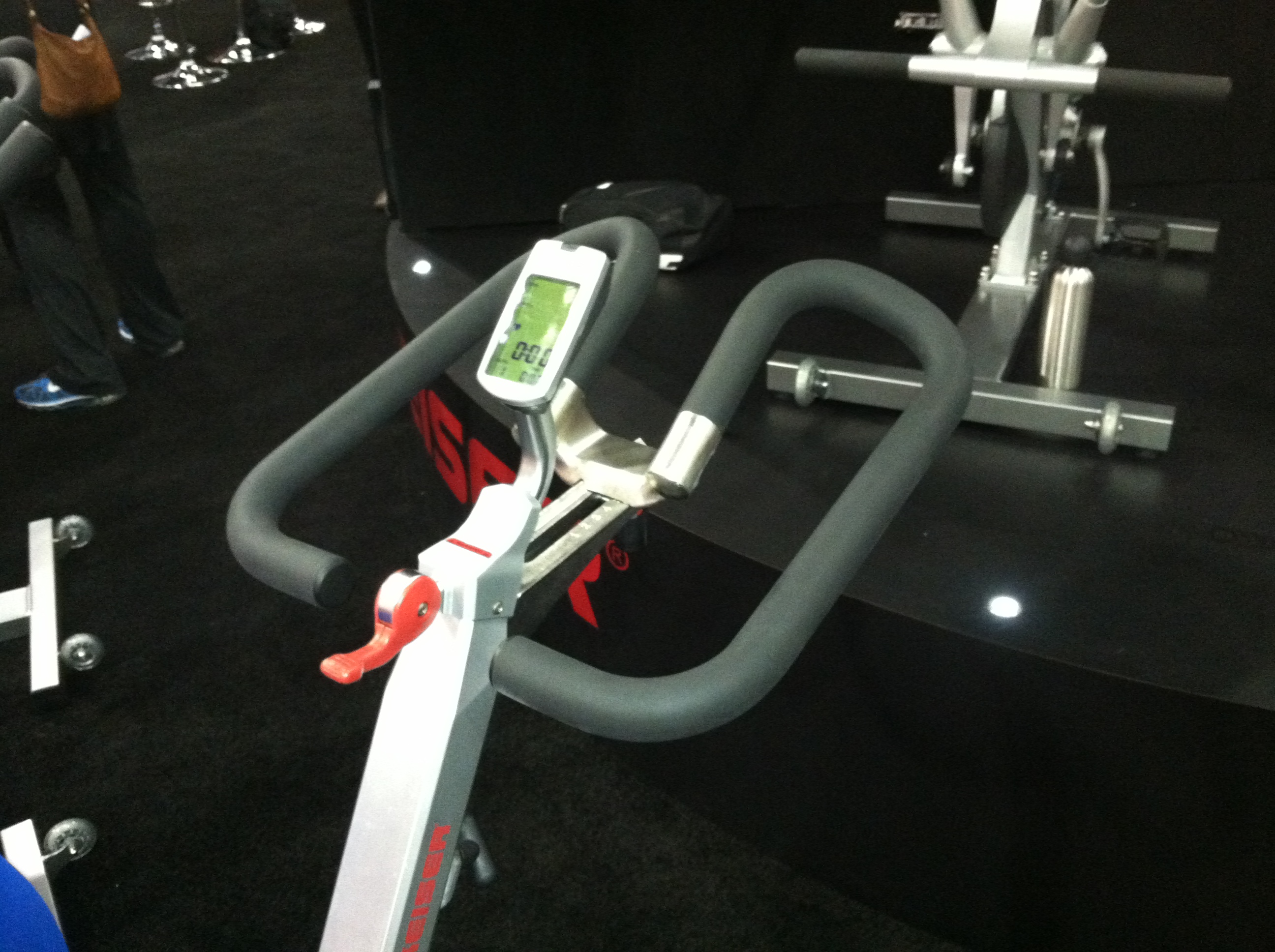
FreeMotion S11 series console calibration: including the S11.9 and S11.0 (home version)
Calibration may not be the correct word to use here as FreeMotion prefers to describe their procedure as Zero Reset – bringing the power meter back to the factory settings after replacing the batteries, making a repair or when something just doesn't seem right.
Download the Zero Reset procedures here.
Here is a video that shows you the Zero Reset procedure.
Download the FreeMotion Console User's Guide
Purchase a FreeMotion S11.0 with power meter at amazon.com
Keiser M3 calibration:
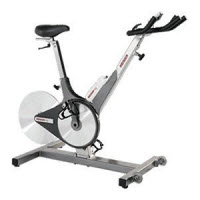
Keiser's console requires calibration between the gear selection lever and the magnet assembly to accurately display in what gear you are riding.
Terry at PowerBikeTrain.com has an easy to follow explanation here.
Watch a video of the new calibration procedure.
Download the M3 manual here. and M3 calibration here.
Dennis Keiser discusses the reasons for M3 calibration in this interview.
Order a new Keiser M3 with Power meter from amazon.com
Schwinn AC Performance calibration:
Schwinn uses what they call “Tilt Calibration” to teach the cycle where the magnet is positioned = it will give you a proper readout of power and distance.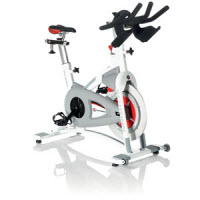
Watch a video on performing a tilt calibration of the MPower Console
Download the MPower Console Manual – Old Version 1
Download the new MPower Console Version 2 paring procedure.
Read reviews of the Schwinn AC Performance.
I'll be updating this post as new information becomes available.
[/wlm_ismember]
Originally posted 2012-12-04 11:22:29.
by John | Jul 27, 2020 | Indoor Cycling Bikes
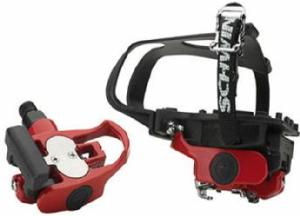
Schwinn Triple Link Pedals are a common upgrade for any brand of Indoor Cycling bikes. As a new Indoor Cycling Studio will need to purchase 20 – 50 of these pedals, a small savings can really add up! I did some research for our new CyclingStudio.Org community site and found that Sportsmith.net appears to currently offer the best pricing on Schwinn Triple Link Pedals.
If you are using these pedals you may want to check out the Red Pedal Tool (my very own invention) that solves the problem of safely removing the shoe basket without hurting yourself 🙂
Originally posted 2011-01-28 08:17:56.
by John | Feb 7, 2020 | Indoor Cycling Bikes, Instructor Training, Product Reviews, Training With Power
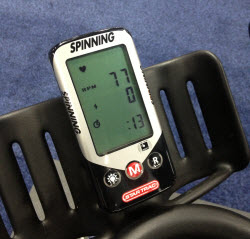
Spinning joins the Training With Power Wars
Star Trac had the new Spinner® Blade Ion on display at IHRSA. I rode one during Josh Taylor's 6:30 am demonstration ride this past Thursday. After the class I discussed the Ion's new features with Josh. I then got an overview of Spinning's new Spinpower™ education from Program Director Angie Sturtevant, which I'll share as a separate article.
Basics
The “Ion” differentiates this bike with Power from the conventional Spinner Blade. It uses the same chain drive and friction resistance system, found on all Spinner® Indoor Cycles.
Console / Monitor
Very simple… and I'm a huge fan of simple, so right away I appreciated how easy it was to use the Ion's console. I was told they are making a few minor changes so the final version may look different. Working down from the top, the display shows:
- Heart Rate
- Cadence
- Power
- Elapsed Time
Just three buttons
- Left button turns the back-light on/off. It doesn't time out because it doesn't need to preserve battery life. It will stay on until you want it dark or you stop pedaling. I might not have this completely right – but you get the point – the light will shine all class 🙂
- Center button scrolls through screens displaying; real time and averages + calories
- Hold down the Right button for 2 seconds resets the Elapsed Time – Josh explained that this button will also add a “digital marker” to any Ant+ enabled devise, identifying the beginning or end of an interval, similar to the “Stage” button found on other consoles.
Josh made the point during his demo ride that their console will show ZERO watts when there's no resistance, regardless of the cadence = this will show all of our “spinners” that they aren't doing any real work until they've added some load.
Free Registration Required to read the rest — Click Here. Opens in a new tab.
[wlm_ismember]
Measured Power

Strain gauge measures the amount of pull on the brake pad.
The Blade Ion measures power with a strain gauge connected to the brake pad – again more simplicity. This technique is actually over 100 years old and how the horsepower of early engines was measured; by measuring the force acting on the brake, as the flywheel tries to drag the brake around it's circumference.
If you have an NXT available you can see exactly what they are doing. Remove any resistance and start the pedals turning slowly. Now carefully touch the slowly turning flywheel with one finger. Feel how it wants to drag your finger along? Can you see how the harder you press against the flywheel, the more effort it takes to hold your finger in place? By measuring that force, the speed of the rotating flywheel and then doing a bit of math, we could calculate Power.
That Black Box contains the strain gauge and replaces the normal brake pad holder on the standard Blade or NXT – which begs the question; will they ever offer a retrofit power meter for older NXT's?
What about Calibration?
I was told that the Ion will be factory calibrated and that no other calibration will be necessary – which I find very hard to believe.
This isn't the right time to get into a lengthy discussion over what I see as fundamental differences between; how the Ion measures the amount of Power coming out vs. how FreeMotion (and also any bicycle crank arm/spider or pedal based power meter) is measuring the amount of Power the rider is putting into the cycle. Or if it's really of any value…
So I don't leave you hanging here, the factory calibration may indeed accurately display the amount of coming out of the Ion forever… but does that precisely reflect the amount of power the rider is putting into the cycle?
What I'm questioning is there's a lot of drive train (multiple bearings and the chain) between the pedals (work in) and the brake mechanism (work out). This engineering article describes the efficiency of bicycle chain drive system and how losses can vary between 2% and 20%. I'm sure Star Trac's engineers have a very sophisticated algorithm to work all this out on a new Ion – but what happens over time? Worn chains and bearings, sprocket alignment and chain tension will all have an effect. Potentially some of the Ion's in your studio could become favorites because they display a higher wattage, relativity to the amount of work introduced by the rider, simply because its chain is in better alignment. Does that make sense?
No Batteries Required

Angie said she likes this because it's “green” (no batteries to throw out) – this blue light is a very cool touch.
Hands down my favorite feature of the Ion is how it charges itself. Josh told me that it incorporates a smart charging system that will allow the batteries to discharge before recharging. That wire runs from the hub charging unit & cadence counter up to the handle bars.

Phone cord allows adjustment.
How it felt to ride & my overall reaction.

Adding a cool blue Instructor platform will be de rigueur for any studio with Blade Ions
Let me start by saying Star Trac makes a phenomenal Indoor Cycle. Solid and smooth – I'm sure Jeff Wimmer had his hands on these. They fit me perfectly – or after riding & teaching on them for all these years do I fit them perfectly? Either way they're very nice to ride… and you hear the yeah-but coming… but I've really become a fan of magnetic resistance over the past 4 years. I understand how Spinning's® brand goes to the “feel” of a Spinner® and that “feel” comes in part from a friction based resistance system. I prefer riding magnetic and was disappointed that the Ion still uses a friction brake.
I also felt weak/less powerful on the Spinner Blade Ion. Or said differently, for a given amount of effort, I was seeing a lower wattage number than I'm used to seeing from a recently calibrated FreeMotion or a Schwinn AC. You could add embarrassed to my list of feelings. I actually felt compelled to cover my readings while Josh was off the bike checking in with his class 🙁
Thinking it may just be me, I went directly to FreeMotion's area and jumped into a class with Cameron Chinatti. Nope, it wasn't me. There on a familiar cycle, I was seeing/feeling my normal ~250 FTP. So back to the Ion (different bike this time) but the same results. A similar effort/HR and only saw ~180 watts.
I talked to Angie about this and she suggested that you just can't compare the two, they're different. I've asked Angie to join me on the Podcast to discuss this in detail and will let you know if/when she'll come on as a guest.
Later that morning I also tried a little experiment that I've wanted to do for years…
What happens to your Power / Wattage when you accelerate from a set point, say; 100 watts @ 60 rpm to 90 rpm on friction based system, as compared to a magnetic system? Do they react the same way?
You can read my follow up article to learn more: Comparing Spinning’s® Friction to FreeMotion’s® Magnetic Resistance
Stay tuned for the results + some thoughts on Spinpower™ later this week.
[/wlm_ismember]
Originally posted 2013-03-24 11:20:19.
by Bill Pryor | Dec 2, 2019 | Indoor Cycling Bikes
 Bill Pryor from Spynergy Consulting visited the annual IHRSA Show last week to learn what’s new for cycling studio owners and entrepreneurs. Here are some highlights and photos from his report.
“……once I got over the sensory overload, I made a point of visiting all the bike manufacturers to ride the bikes and hear about new trends. I also tried to see what kinds of metrics, programming and video content are out there. I even spent some time with the flooring, lighting, sound system and insurance folks to see if there's anything new studio owners might want to hear about……”
UPDATE: listen to Bill's review of all the indoor cycles at IHRSA.
StarTrac. The market leader in bike sales, they were of course showing the NXT and the Blade which have been recently re-designed (very cool styling.) One of their engineers also walked me through a demo of a new console (measuring power) that will be built into the Blade within the next year. You'll be able to get the Blade with or without a power console.
Schwinn. I also rode the magnetic resistance Schwinn AC and got a close look at their console. Power is measured as well as heartrate, cadence and more. Data from the console can be downloaded to a USB pen drive, or wirelessly transmitted via ANT transmission to a garmin or other device.

New Keiser handlebar
Keiser. A new handlebar design for the Keiser M3 should silence complaints from some smaller riders who had troubles with bike fit. They have an established power console and also numbered resistance which lots of people really like. Performance IQ was co-exhibiting with Keiser…they have a system for projecting on-bike data to a screen so instructors and students can view their data.
RealRyder. This uniquely designed bike with the swaying motion is becoming a favorite with some studio-starter who want to have something to clearly delineate them from the large gyms and health clubs. Optimizing the experience does require some special training for instructors and students, but they make a compelling case about the differences and benefits once folks learn.
Freemotion. These guys are the newest player but have created good buzz as they have made the power console and related programming an integral part of what they provide. The design of their console is well organized and highly readable. At this show, they also introduced a quieter “carbon drive” to make for a more smoother, quieter ride, with good durability
Livestrong. I had not ridden their bike before and found it really comfortable. Outside riders will love the fact that there are a wide range of hand position options including actual “drops”. The bike was cool, but to be honest it was hard to focus on the bike because they were showing it in conjunction with the MyRide virtual ride video system with was absolutely astounding….more on that below.

MyRide video management
Non-Bike Highlight: No matter what bike you have or choose….the good news is that if you want to use a video system, there's an amazing one out there. I have seen a lot of video for indoor cycling classes, but the MyRide systems from Matrix/Livestrong was absolutely stunning. The video itself (multiple terrains and imagery), but also the control system interface. There are systems deployed in Europe, but this is brand, brand new in the U.S. A pilot studio is up in San Francisco.
More on the show and the independent cycling studio phenomenon at the Spynergy Consulting Blog.
Bill Pryor owns a 48 bike studio in the Boston area and is also founder of Spynergy Consulting, helping entrepreneurs launch and develop their businesses.
Originally posted 2012-03-20 12:29:26.
by John | Sep 25, 2019 | Indoor Cycling Bikes, Keiser Cycling
Hello, I really enjoy your podcast, thank you for the production. I listen to them on my way to teach. It makes me feel motivated and often gives me items to share and use with my participants.
I wanted to follow up to this one podcast in particular. Our club got these bikes in the spring this year. The members are saying the gear tension varies among the bikes. I was pleased to hear Dennis talk of this issue and he suggested a way to remedy it by moving the gear handle up and down five times etc. Upon arriving at the club, I tried it and was disappointed it did not work. The numbers flashed zero and not the number “five “ I believe he suggested. Maybe he is talking about another version of the M3 Computer? Just an FYI. Maybe he could follow up again with additional information.
Dennis Keiser offered this response:
Hi Tara,
John forwarded me your email so that I could hopefully help you with your concern.
(more…)
Originally posted 2009-08-20 14:54:08.
by John | Aug 25, 2019 | Indoor Cycling Bikes, Instructor Training
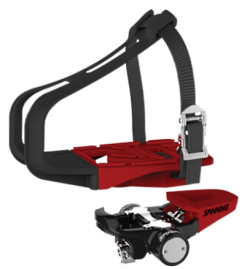
Josh Taylor had told me last year about a new pedal Spinning® was designing that would have the same versatility as the Schwinn Triple Link pedal; accepts LOOK, SPD and fitness shoes + they include the new Morse Taper pedal spindle (vs. a conventional threaded spindle) they're using on the new Spinner® NXT and Blade Indoor Cycles.
I see now that they've introduced the new pedal in two versions; the TRIO™ and TRIO QR™ – QR refer's to Quick Release.
My understanding is that even with dozens of different competing pedal types available, LOOK (who was the first mass-marketed clip-less pedal) is still the market leader in road bike pedals. So it makes good sense to offer these types of pedals to keep many of your cyclists participants happy 🙂
The two pedals appear identical except for:
Patented “Quick Release” lever allows for simple one-handed platform removal.
They may want to reword this as the owner's manual clearly shows you need two hands to remove the cage.

One hand or two, my hat's off to whomever designed the nifty Quick Release feature on the TRIO QR!
Fun Fact
You may or may not be aware that indoorcycleinstructor.com, the Podcast, ICI/PRO… everything began with my desire to market my Red Pedal Tool. After years of fighting with the shoe baskets on these pedals I created this tool which is designed to safely and easily remove the shoe basket from Schwinn Triple Link pedals.
I'll need to talk with Josh about why they have also chosen to manufacture a version without the quick release… The diagram below illustrates the very same removal issue Schwinn has with their Triple Link.
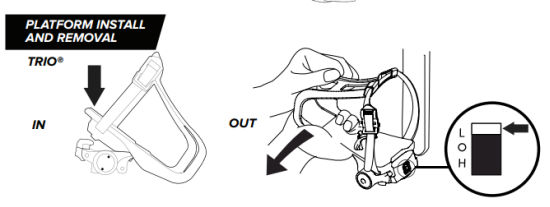
Instead of “OUT” it should say “OUCH”
Originally posted 2012-12-26 18:10:58.