There's maybe a new App on your iPhone when you update to OS 6.0
Wasn't I just saying; if it wasn't for Podcasts, I would rarely (if ever) use iTunes?
Well I now iPhone/iPad users can access The Indoor Cycle Instructor Podcast through a new Podcast App, completely bypassing iTunes.
IMPORTANT NOTE!
This new Podcast App changes how ICI/PRO members will subscribe to the premium RSS feed (Super Secret iTunes Feed) that allows you to download Member's Only Audio PROfiles and PRO/Podcasts.
For ICI/PRO members who were already subscribing – no worries. Your settings will automatically move everything to the new Podcast App.
Any ICI/PRO members wanting to use their iPhone to download and listen to our Member's only content please visit this page for simple instructions to adding your premium feed to the new Podcast App.
Some of you may have noticed the new Podcast App – it installed automatically for me – but not everyone I've talked to – when you upgraded to OS 6.0. You do upgrade your iPhone or Android device when prompted, don't you? Sounds like another Best Practices.
I'm seeing the new Podcast App as a big improvement, actually the whole OS 6.0 update as a big improvement, because now many common tasks can be done wirelessly. In other words; YOU ARE NO LONGER A SLAVE TO CONNECTING YOUR iPHONE TO A COMPUTER WITH THE CORD! Which of course is one of the benefits to Spotify – everything is done using a wireless connection 🙂
If you turn on the free iCloud storage and enable the iCloud Backup there may not be any reason to connect your iPhone to your computer at all.
This new App completely bi-passes iTunes. Once you've added the App here's a few tips and suggestions:
In the main Settings area (where you turn on Airplane mode) scroll down to Podcasts and be sure that Use Cellular Data is off so you don't burn through your Data plan 🙁
Open the Podcast App and select a Podcast. Clicking the arrow as shown takes you to the setting screen…
… can set the subscription to update and download new episodes whenever you have wireless service.
Want to use your iPhone or Android based device to schedule your next Indoor Cycling class?
There's an App for that® 🙂
I added the ® because Apple has trademarked that phrase.
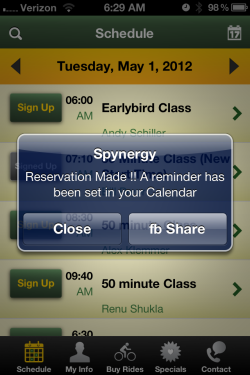
Studio owner Bill Pryor has created an App for his customers at Spynergy Wellesley, Bill's Indoor Cycling Studio outside of Boston Mass. Spynergy customers can download the App for free, quickly review the class schedule and easily signup for a future class. The part I love most is how it adds the event your calendar, so there's no excuse for missing the class.
The App is made by TempoXSports and they can build a custom App for your Club or Studio if you're using MINDBODY Online to manage registrations – which is about everyone as far as I can tell.
Here's more about it:
The app your clients see will be similar in feel to what they are used to from booking through their browser-based systems. Your app will let clients easily perform the following critical tasks from their phones
Sign-in to their MINDBODY existing account
Set up an account if they are new
View your schedule
Sign-up / reserve spots (reservations auto-posted to calendar / ical)
Read teacher and class descriptions
Check their account (visits, schedule, attendance, purchases)
Purchase any packages you are selling through MINDBODY
I love getting emails like this and wanted to share it with you!
Hi John,
I just wanted to say “hi” and also a big “thank you”. I teach cycle classes in Melbourne, Australia. I was looking at some inspiration for my Cycle classes and found myself totally hooked to your podcasts, which opened a whole new world to me. I've been teaching cycle classes as a part time job. I also teach other classes (Les Mills Bodypump/Combat and boxing). I lost my full time job a few weeks ago and group fitness classes have been my daily job since. I have to say it's been quite a challenge to keep all the workout fresh but most of all to keep up the passion, enthusiasm and fun about teaching classes. I had moments of self doubt whereby I thought I wasn't made for this industry.
I find it very inspiring to listen to all your high profile athletes/master instructor guests talking about their experience and passion about indoor cycling, how they got to indoor cycling and what make them so unique. I have to say having knowledge of this could be intimidating for someone like me who's just a part-time cycle instructor teaching 2 hrs cycling classes a week but at the same time, everyone comes from different backgrounds and that's what make a class experience unique at the end of the day. I guess that's what I'm taking with me before teaching a class.
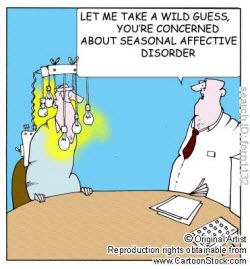
Seasonal affective disorder (also called SAD) is a type of depression that occurs at the same time every year. If you're like most people with seasonal affective disorder, your symptoms start in the fall and may continue into the winter months, sapping your energy and making you feel moody. Less often, seasonal affective disorder causes depression in the spring or early summer.
Treatment for seasonal affective disorder includes light therapy (phototherapy), psychotherapy and medications. Don't brush off that yearly feeling as simply a case of the “winter blues” or a seasonal funk that you have to tough out on your own. Take steps to keep your mood and motivation steady throughout the year.
I don't mean to make light of depression – my mother struggled with it for much of her life. But this morning a number of us decided that even jokes about how bad the weather is here, are depressing. Worst one I've heard was this morning; “John, I'm not sure I'm ready for winter to start again…” Not sure if it was intended as a joke, but it got a few chuckles from the other's who heard it.
There is treatment available.Bright light therapy is supposed to be effective. I'm all about finding solutions to problems. This morning I may have come up with a way we could introduce this much needed therapy, as part of a special class we could offer.
An Indoor Tanning Triathlon!
We could run it just like a regular indoor Tri, except participants would recover between each leg with a few minutes enjoying some rays in a tanning bed. Our club is always forming marketing partnerships with local business. Why not have the local tanning salon roll a bunch of beds in for an afternoon?
You'd come out of the pool, dry off and then spend 5 minutes in a turbo tan – we could even have special UV protective swim goggles made so you wouldn't need to change them. Then into the cycling class, which ends with another blast of vitamin D, before a short run on the treadmill.
Our Cycling Studio Owners will want to check this out ASAP…
For years we've promoted Working Fitness Vacations – where you, the Instructor, teache a few fitness classes in exchange for a very low cost, Caribbean vacation. Hundreds of Instructors have followed our recommendations and have really enjoyed their all inclusive vacations.
Now there's TripTribe.com. They specialize in assisting fitness professionals who want to take a group of clients (your tribe) on a fitness retreat. For leading these trips you, the Instructor, will be paid as the Trip Tribe Ambassador!
To learn the actual scoop on these trips, I asked the marketing representative at Trip Tribe if she'd connect me with an Ambassador that I could interview…
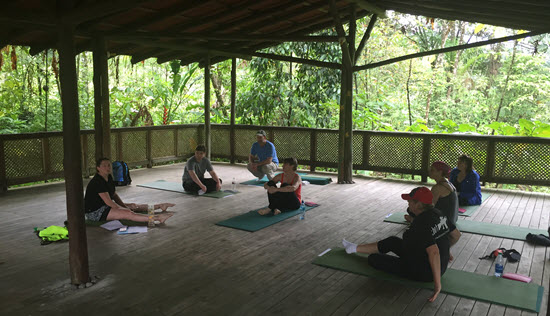
Coach Kelly McCormack owns Club Inhale Exhale in Billerica, Massachusetts. This past May she traveled with a group of her clients to a ranch in the mountains of Costa Rica. It sounds like everyone had a great time and best of all, the check TripTribe.com sent her at the conclusion of the trip paid all of her expenses🙂
Listen to my interview with Kelly to learn if this would be something you could do with your tribe.
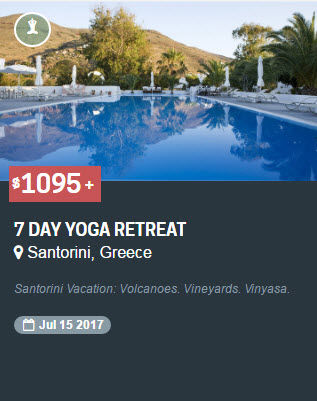
TripTribe.com offers dozens of exotic locations across the world, in a wide range of pricing, including;
Go here and create a free profile. Spend some time working with their retreat planning wizard to get an understanding of the possibilities. Then I'd encourage you to call and discuss your ideas for a group trip with one of their advisors.