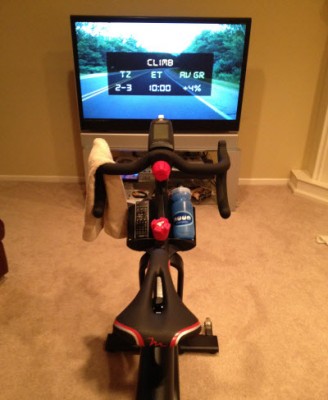
The crew at epicplanet.tv have produced a new DVD you can show in your Indoor Cycling classes. The Virtual Race Across America is a 60 minute (there's also a 45 minute option) DVD or Video that was created using footage shot during the 2013 RAAM Race Across America.
Ride the entire length of the U.S. in one training ride with the Virtual Race Across America (RAAM)!
Based on the actual RAAM race route, The Virtual Race Across America gives you a broad sample of this amazing race with 7 selected segments of the course including:
– Start and San Diego Mountains
– The “Glass Elevator” mammoth descent
– The hot, low desert of Southern California
– The climb into Sedona, Arizona
– Monument Valley in Utah
– Wolf Creek Pass, Colorado – the race's highest point!
– The plains of Kansas
– The killer hills of West Virginia
Both DVD and now Download customers will have three versions of the ride to use: A full version, and Just the Ride 60 minute and 45 minute versions.
PLUS BONUS CONTENT! – This purchase includes our 30 minute documentary “EPIC – One Team's Story of the Race Across America,” A $9.95!
Judging from the ride profile shown above, this video appears to be my kind of class – close to 30 minutes of climbing in the red zone!
I've watched the bonus video you get for free – the cyclists in your class will appreciate seeing how much effort goes into participating in the most grueling bike race in North America.
I'm going to need a pair of these so I can see when Amy is slacking off on the Tandem.
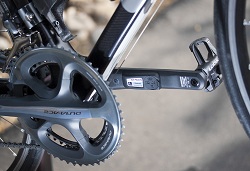
Stages Cycling has taken the technology they developed for the FreeMotion S11 series Indoor Cycles and is now offering the StageONE Power Meter to outdoor cyclists.
I don't have any direct experience other than a heads-up email announcing the launch of this , but there are two very informative posts from bloggers who are at Eurobike earlier this summer.
Stages Cycling readily admits that it's not necessarily trying to go head-to-head with established players such as SRM, Powertap, and Quarq in terms of outright technology, instead preferring to go after so-called ‘blue collar' riders who merely want a consistent means of tracking progress for training purposes.
Using a Bluetooth enabled device (the StageONE doesn't come with any display) you can add power and cadence for $699.00 which is less than half that of other systems = outdoor power gets a bit closer to being real for many of us 🙂
Will Grossman from Stages Cycling has promised me more information soon. Right now they are swamped with their launch and Interbike which starts tomorrow. Their website is supposed to go live today. http://www.stagescycling.com/
But the class loved it and you will too, especially at a 50% discount if you purchase it today.
You can use coupon code DEAL at checkout today and receive a 50% off the DVD, digital download or both.
But this isn't just for Black Friday – we are planning to feature a special PRO/Deal of the Week every Friday! Much like Groupon for Indoor Cycling Instructor's, our PRO/Deal of the Week will feature a different product or service, at a substantial discount, every Friday!
Look for more later this weekend…
Epic Red Wing
The Twin Cities area of Minneapolis and Saint Paul, Minnesota, and the neighboring Wisconsin countryside is nationally known for its cycling-friendliness. Now, you can take a virtual tandem training ride in this beautiful area with John and Amy Macgowan and friends, of the internationally renowned Indoor Cycle Instructor Podcast and Indoor Cycle Instructor Pro Website.
Take a 50-mile ride along the scenic banks of the Mississippi River and Lake Pepin, separating Minnesota and Wisconsin, on a warm July morning. What better remedy for those cold-weather blues!
This ride has it all–two climbing segments, one endurance segment and one rolling country segment–and offers a balanced workout for indoor cycling classes and home trainers.
Includes our new “Just the Ride” menu option which gives indoor trainers, coaches and instructors a choice of 60 minute and 45 minute versions of the ride to fit their training or class requirements.
Details: Can not be combined with other coupons, discounts or offers. Hurry, there's only 50 copies available at this price.
By Team ICG® Master Trainer Jim Karanas and ICG® Marketing & Product Director Gary Warren
Forward Motion Video was first produced for, and used in, Indoor Cycling classes in the form of DVDs. DVDs paved the way for production companies like Virtual Active to bring Hollywood-level filming to the fitness industry.
We would never detract from the contribution these DVDs and their producers made to the indoor-cycling industry. Going forward, however, there’s a point of contention that we consider critical: continuing to use DVD as the medium for providing forward motion video.
In response to Jim’s last post, “Video Done Right”, Gino Nacey, one of the pioneers of Forward Motion Video, offered his “1% disagreement” and commented, “as long as the DVD is played on a big screen, I don’t really see why we should knock it — if all a site can afford is a projector, screen and some DVDs then if the video is well done, they should have a great experience.” We appreciate Gino’s feedback.
DVDs are seen by some in the industry as a good option for clubs, a way to provide a quality visual experience in an indoor cycling class. ICG® believes that, at this time, DVDs will do more to inhibit the development of both indoor-cycling programs that offer video and the instructors who teach with it.
DVD is being superseded as technology progresses. Despite DVD’s low initial purchase cost for club owners, is it really forward-thinking and fit-for-purpose with respect to the skills instructors need to develop to enhance their classes with video, as they do with music? We believe DVD limitations are one reason more instructors don’t teach with forward motion video.
What can an instructor truly do with a DVD? The instructor can’t alter the programming or investigate the synergies that exist between music and video. The profile is unchangeable. DVD length can’t be altered to fit the music. That limits the music that can be used with the DVD. The instructor can’t swap out portions of the DVDs, which makes it impossible to alter the profiles to create endless class variations.
DVDs lack the essential tools the instructor needs, such as selecting and changing footage at any given point in a profile, repeating parts of a video, skipping parts of a video, or switching to panoramic footage for water breaks or to shift the experience. Even more importantly, DVDs don’t permit the instructor to keep the footage running to match the music track length, or vice versa. Any of the above can be done — with one touch — with a system like Myride®+.
DVD offers the same ride time and again, and the ability to use different music is limited.
The use of DVDs for virtual classes may seem to make sense initially, particularly if the voiceover coaching and the music are good. Again, the number of different rides is limited because DVD footage is fixed and can’t be reprogrammed. Also, quality of filming comes into play because Standard Definition on a large screen looks unrealistic.
But it’s more than that. Virtual classes have to be highly advanced in coaching, graphics, filming techniques, post-production techniques, and exhibit extremely compelling locations because they now do what instructors do — lead the class. We also have to push the limits of technology to enable consoles to provide “virtual class” schedules, where console and projector turn on and off at selected times to enable the club owner to offer classes without an instructor present.
It takes a platform of technology that can continue to grow to make the experience (and the buyer’s investment) stronger over the years without fading. Sustainability is key, and DVDs can’t make the cut.
Are DVDs passable? For the retail market, yes. But for sustainable commercial operations where the consumer is savvier and more demanding as competition rises, perhaps not.
Finally, our tree-hugging moment. DVDs are not green and create an enormous amount of waste product that is eliminated with the use of advanced digital technology. CDs and DVDs don’t decompose. Their composition is too complex to make large-scale recycling possible, unlike aluminum, glass or paper. So old CDs and DVDs must be shipped to a special center for recycling.
Then there’s packaging. 85% of under-24s believe that downloading music can help save the planet by reducing the packaging, waste, and carbon emissions involved in producing and transporting CDs and DVDs to shops.
Here’s what video in indoor cycling needs:
1. Improved content-delivery tools for video that offer increased programming features, designed to enable instructors to utilize this new asset fully and owners to embrace the ROI they can get from video done right.
2. Increased availability of high-quality video through network delivery that will enable us to bring new video to our customers as easily as we bring new songs.
3. Improved filming and post-production techniques to enhance immersion and raise the member experience and the demand for video.
4. A shift away from a retail product that’s not green and that experts say won’t be around much longer.
We believe Myride®+ fulfills these needs, except item 2, which it will in the immediate future.
As always with new technology, there’s a higher initial cost — in this case, for the digital media console and the HD projector. But let’s not confuse initial cost with “total cost of ownership” (TCO). The cost of a DVD media system may be low, but it wastes money if it’s not sustainable and/or doesn’t fully meet the market’s needs. As demand increases and more companies play a role in development, digital video costs will decrease. Continuing to advocate DVDs, which give the club owner a cheaper option without a complete understanding of its limitations, will hinder forward progress.
The end result seems inevitable, and DVD may delay the transition but won’t prevent it.
ICG® respects Gino and his organizations for all they’ve done to pave the way. But ICG® can’t recommend adherence to an outdated form of presenting video to the Indoor Cycling industry.
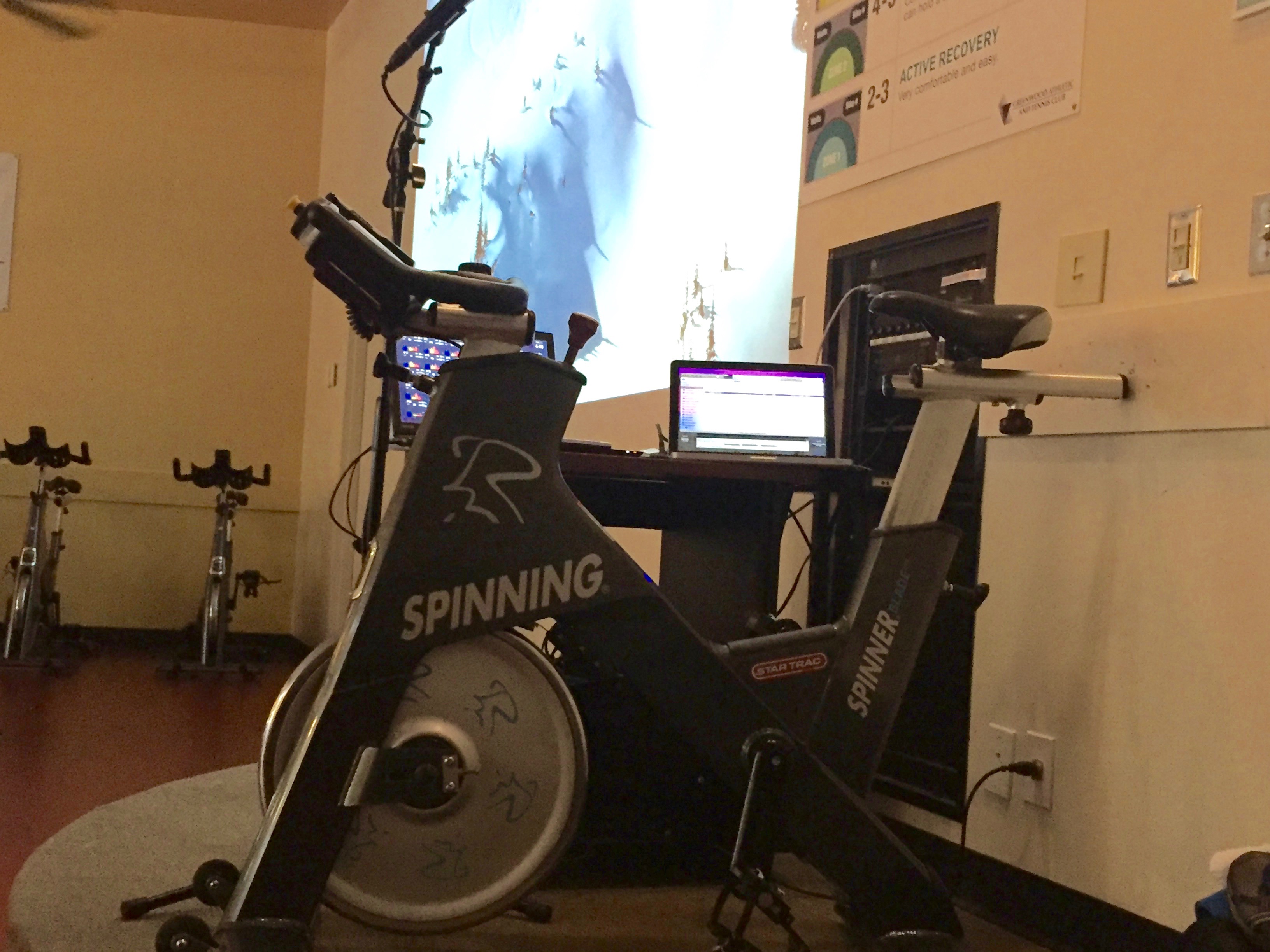
Today I ended a turbulent 3 year relationship with the Spinner Blade Ion. A courtship that began with high aspirations for a long, happy and powerful future has deteriorated into one complication after another and I no longer have the energy to keep the blue light burning.
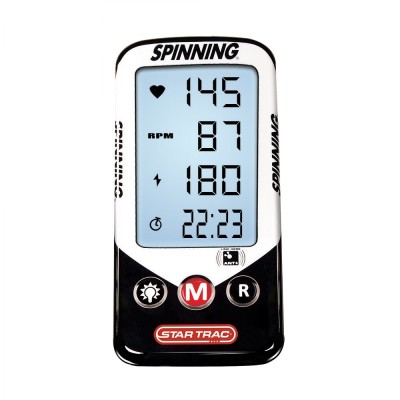
About 3 years ago management announce that we were going to be the first club in the United States to receive the brand new Spinner Blade Ions, this was Spinning's first foray in the new world of power. Though I personally was hoping for a different choice I was excited to finally be teaching on a bike that would express work output in watts. Now instead of spending so much time cuing how each interval should feel I was going be able to use each rider's personalized power zones. The idea of personalized training zones is not new, the fitness industry has been trying to use them with heart rate for nearly 25 years. The problem with heart rate training is that all participants need to be using heart rate monitors for it to be effective and as any experienced fitness professional knows we are lucky to have 20% of our participants wearing monitors in any class. The beauty of leading a power based indoor cycling class is that ALL participants have a power meter on their bike!
A few weeks before delivery the instructors started receiving various training manuals and information about the features of this new bike. This is when I started getting worried. The first problem I saw was the continued use of a chain. Why would any new bike continue to use a chain when belts, both Poly V and Carbon Drive, have proven to be a much better option. Belts don't stretch or break, they are so strong that many motor cycle manufactures use them. The second flaw I noticed was the continued use of a friction breaking or resistance system. Friction resistance has been the bane of instructors and bike techs since the inception of indoor cycling. I still remember the days of walking around the cycling room with a bottle of silicon lubricant spraying the squeaky brake pads then having to endure the smell of the same burning silicon. There were also the times I would sweat or spill water, from my water bottle, on the flywheel and lose most of my resistance. Why would anyone want to build a new bike with old friction resistance technology when magnetic resistance has been proven to be so much better. I'm not an engineer but the only time I can think that excessive friction is a good thing is when trying to build a fire. The third and final concern I had when looking through these training manuals was the console. The layout was, to be honest, stupid!
First, why would you not put wattage on the top? The new and special aspect of these bikes was power, why would you hide it in the middle? Why give heart rate the most prominent line on the console when so few people actually wear heart rate monitors? Also, any instructor with 1 month's experience teaching with power understands the importance of seeing real time AND average wattage when performing intervals. Why are they not available on the same screen? The only way to see average wattage on this console is to push the “M” button and scroll through the four different screens, something everyone wants to do when they are working hard. The word “Simple” kept coming up in the literature. Well when it comes to console design, I think Simple=Stupid. After the initial learning period of how to use power, participants and instructors want a console that gives them all the metrics they need to take and teach an effective class not a simple one. Finally, this bike was being released at the beginning of the wearables craze. Everyone wanted to track and log every aspect of their workout. With the Spinner Ion Blade there was no way, beyond taking a picture of the console, to track your workout, no USB port, no phone app, no open protocol that would let the console communicate with the many fitness apps that were available. I teach in Denver Colorado, the riders here are some of the most sophisticated indoor and outdoor riders in the world, they know power and want a way to use it to it's fullest potential. If there isn't a way to track real time wattage throughout a ride there is no way to determine Normalized Power, Intensity Factor or Training Stress Score. Again, Simple=Stupid.
So, the bikes finally arrive and EVERYONE was so excited! We had been riding Spinner NXT bikes and these new Ions felt very familiar but what everyone was psyched about was the power. I had been lucky enough to be teaching with power for a few months on the Keiser M3 and the Freemotion bike. I've also been coaching some athletes who use power meters and I've read Hunter Allen and Andy Coggan's Training and Racing with a Power Meter. So I felt like I had a pretty good understanding of how power works. On my very first ride I noticed something very disturbing, my wattage was 20-40 watts lower on these bikes then the M3 and Freemotion bikes and people who were riding with power on their outdoor bike were noticing the same thing. Then, as I rode different bikes I found huge wattage variations from bike to bike. Understanding that this was a very subjective test a few instructors decided to ride ALL 56 bikes while wearing heart rate monitors. We would work up to a specific heart rate that was in our Aerobic Zone then take note of the wattage. This wasn't the most scientific test, but it was the best we could do without being able to hook the bikes up to a dynamometer. The results were SHOCKING! More than half the bikes weren't even close to each other, they varied by as much as 100 watts. We explained this issue to the bike manufacture and asked if there was a way to recalibrate the bikes in order to assure consistency from bike to bike. The answer we received was even MORE shocking then the amount of bike to bike variation. THERE WAS NO WAY TO RECALIBRATE THE POWER. Are you kidding me? Every indoor cycling bike whether direct power or measured and every outdoor power meter has a way to recalibrate! This was our “Oh Shit” moment and when I started thinking of “work arounds” to this fatal flaw.
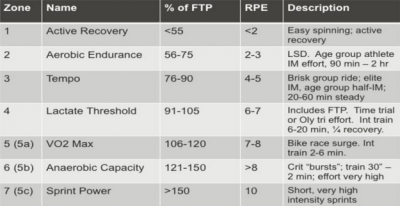
The foundation of training and coaching with power is finding one's FTP, Functional Threshold Power. This is simply the maximum power a rider can average for 1 hour. Since a one hour test would not be practical in most indoor cycling settings the next best test is a 20 minute “best effort” ride where 95% of the 20 minute average wattage is calculated as the FTP. We then use the FTP to determine power training zones.
Since the variation from bike to bike could be as much as 100 watts, unless I could guarantee that every rider would be able to ride the same bike in ever class the FTP test results were useless. So my workaround was to perform a modified FTP test at the beginning of every class. This way we could find an estimated FTP for each rider on each bike for each class. I would cue what threshold was supposed to feel like, have my class ride at that “feeling” and take note of the wattage their bike read when they “felt” like they were at threshold. Unfortunately this was not very scientific but it was the best I could do in the situation we were in. At least this let me speak the language of power and riders could be accountable from interval to interval even if the numbers weren't exactly correct.
As I gained more and more experience teaching with power I realized the importance of Average Wattage when coaching interval based profiles. If riders are told to focus on average wattage for each interval, they are forced to work for the full length of each interval. Riders learn very quickly if they “sandbag” the beginning of an interval they need to work extremely hard at the end of it to reach their goal average wattage. Many of the top indoor cycling bikes with power show real time and average wattage on the same screen, not the Ion. Riders have to cycle through the four available screens to see real time and/or average watts.
The power meter and the console were by far the two biggest mistakes made with the Ion, but there were more. The friction resistance was a problem that was made obvious when combined with the use of a power meter. Friction causes heat and heat causes the brake pad to work less efficiently, so if I asked my riders to find specific wattage and rpm and to hold it for a few minutes over time the brake pad would heat up, work less efficiently and wattage would drop. Riders were constantly forced to adjust their resistance throughout each interval to maintain current or goal power output. Threadless (Morse Taper) pedals became a problem since they were virtually impossible to remove. Chain instead of belt also added to maintenance requirements and the inability to capture workout metrics through a usb storage device or app became very frustrating to our riders who wanted to track their progress.
The breaking point came when we added a group display system, Performance IQ. These systems display metrics on a TV or are projected onto a screen. Now every rider's metrics were visible for the world to see. It quickly became obvious that we had to do something about the incredible variation in wattage numbers from bike to bike. Now that we were focused exclusively on wattage we needed to find a bike that was much more accurate and consistent so our leader board, races and zones displayed correct metrics.
I'm happy to report that on March 30th we are receiving a shipment of 46 Stages SC3 indoor cycling bikes and these problems should be a thing of the past.
So, as I bid farewell to my Spinner Blade Ion, a bike that I have sat on for nearly 1000 hours over the past 3 years, I am a bit sad. It's not the Ion's fault that this relationship didn't work out. Maybe it was a rush to market, lack of foresight, not realizing that Simple = Stupid, or just plain ego that let it arrive in my club with all these fatal flaws. I'm thankful that it challenged me to become a better instructor by working through all it's various issues, but eventually it became exhausting and I just don't have the will to keep the blue light burning anymore.