Have you ever noticed that some of your students react more strongly to sugar than others? That they seem to want it more often, crave it frequently, and want more even after they’ve eaten some? The reasons are genetic. I love that because it takes all the “blame” off the person and de-personalizes the reaction by making it chemical. We can’t be blamed for something we can’t control, right?
As an indoor cycling instructor, you may hear all about students’ problems with sugar. You’re also in a unique position to help them. Your students know you, trust you, and follow your recommendations.
So what is this genetic, chemical thing that goes on in people who are susceptible to sugar addiction? It’s in two parts — carbohydrate sensitivity and sugar sensitivity.
Carb sensitivity simply means exaggerated insulin secretion to sugar and some other carbs. The extra insulin can cause glucose to drop, causing cravings. The cravings are typically for foods that will raise glucose quickly. Sugar is an obvious culprit in that regard. The glucose drop can also trigger hunger, so it’s likely that the carb-sensitive person will crave sugar, eat it, and eat quite a bit of it.
Who’s likely to be carb sensitive? Typically people with a family history of one or more of these: alcoholism, diabetes (including mature-onset), hypoglycemia, hypertension, or obesity. Another factor is central adiposity (apple-shaped body). That apple shape is the typical characteristic of men, but women with that body type are more likely to be carb-sensitive.
The other aspect — sugar sensitivity — is about neurochemistry. People who are sugar-sensitive seem to have low baseline levels of several brain chemicals — beta-endorphin (or endorphins), dopamine, and serotonin. To simplify (oversimplify!), the fact that those 3 chemicals are lower than normal makes these people feel crummier than normal.
Who is likely to be sugar-sensitive? People with a family history of alcoholism, other addictions, depression or other mood disorders, or a personal history of PTSD (post-traumatic stress disorder).
Let’s return to sugar. When we eat sugar, we get a brain release of beta-endorphin. That triggers a dopamine response because the two tend to go together. But when a sugar-sensitive person eats sugar, the beta-endorphin response is greater than normal — and so is the dopamine release.
Their serotonin will be exaggerated, too — because of carb sensitivity and the high insulin release. The more insulin we secrete, the more tryptophan (the amino acid used to make serotonin) travels to the brain, and the more serotonin we produce. It’s pretty linear. So carb-sensitives — who release extra insulin when they eat sugar — end up making a lot more serotonin.
And what does all of this have to do with addiction?
Dopamine and beta-endorphin are involved in the good-feeling, reward part of addiction (including sugar addiction). That means people who are sugar-sensitive may feel rotten without sugar, but hugely better than normal when they eat it. Obviously, that’s pretty reinforcing. It encourages repeat behavior, both in animals and in humans.
Then there’s serotonin. Serotonin is involved in seeking behavior — how much trouble we’re willing to go through to get the addictive substance we want. Once again, the exaggerated response comes in here. Extra insulin leads to extra serotonin, and that leads to stronger seeking.
To recap, it kinda works like this for a carb-sensitive, sugar-sensitive person: She/he may feel crummy without sugar. The giant-sized reward caused by extra-high dopamine and beta-endorphin makes Ben & Jerry’s seem pretty appealing in the middle of the night. Reinforcement from eating it may provoke that desire on many nights, while the extra serotonin is what makes someone drive to the store in a bathrobe at 2:00 am to get it.
What I love about this hormonal and neurochemical viewpoint is that it takes all judgment off the person, who can’t fight those genetics any more than we can fight our eye color. There’s nothing wrong with feeling compassion, rather than judgment, for someone’s compulsions. Judgment never helps anyone, although compassion certainly can.
What besides compassion can help your students? Changes in nutrition are most important, but if you’re not comfortable tackling addiction, you can still help. Don’t underestimate the organized, structured workouts you offer in your classes.
You may already know that workouts increase brain levels of beta-endorphin, dopamine and serotonin. (More on serotonin and training in a future post.) Encourage consistent participation from your sugar-addicted students, especially any who are in recovery from alcohol or other substances.
Even if they don’t want to work out some days, your class will help them that day AND in the long run — and make you feel great that what you do so well can be so beneficial for them.
By Jennifer Lintz, Registered Dietitian and ICI/PRO Contributor
If you strive to bring variety to your classes, consider using your personal workouts for inspiration. Certainly, going to other instructors' classes and perusing the web can be a great way to pick up new ideas, but so can your own workouts. I run quite a bit when I'm not on the bike and have found it to be a gold mine for fresh routines, coaching cues, and new music.
Fresh Routines
Whether you swim, bike, run, row, do the elliptical or something else on your own for cardio, you can likely pull bits and pieces into your classes. Here are some examples.
Speed Workouts: These provide plenty of options for a ride. Whether I am doing 200s, 400s, or mile repeats, I can apply some of the same time frames and techniques to cycle. For instance, if I was doing timed miles, that might look like 3 long (6-10 minutes) efforts spaced throughout a cycle class. For shorter bursts of hard effort, I might take a sandwich approach and squeeze in 8-10 minutes of high intensity intervals at the beginning and end of the ride, or perhaps just the middle. There are many ways to create an interval-based ride.
Hills: After doing a hilly run or ride, I'm instantly armed with great content for my next class. Here are some ideas:
– Pyramid of Hills: Start and finish with short hills and build a longer hill in between.
– Progressive Hills: Make each hill either progressively longer at the same intensity or progressively harder for the same amount of time.
– Hill Sandwich: Do flat roads at the beginning and end of class with a long hill in the middle.
– Flat Sandwich: Do hills at the beginning and end of the ride and a flat road in between.
Other Ideas:
– Tempo Ride: Begin at a very comfortable intensity, progress to more challenging work in the middle and end of the ride, and finish with 5-10 minutes of moderate work before cool down.
– Out and Back: Do the same drills on the way out that you do on the way back.
– Loop: Terrain here should vary. If there is a big hill at the beginning of your ride or run, a couple of short ones in the middle, and a flat finish, create something similar for class.
Coaching Cues
Just as yoga instructors are encouraged to have a solid personal practice, I think we could argue that cycle instructors would also benefit fromba dedicated personal workout once or twice a week. If our goal is to challenge participants and help them sustain an uncomfortable effort for a set period of time, it is important that we know what that feels like. As instructors, we can view the challenging parts of our own exercise sessions as opportunities to become a better coach.
Let me give you an example.
My husband and I essentially live on a plateau in Rochester, MN. The only way out of our neighborhood is down. That means – whether we are on the bike or on our feet – the start of the workout is a cinch, but the end is always another story; that's where my coaching nuggets come from. One route has a gradual 2 mile hill at the finish, and the other is very steep but only 3/4 of a mile. Yesterday, I ran the 3/4 of a mile hill four times as part of a workout. Guess what we are doing in cycle this week? Hill repeats 🙂 They will thank me later!
In all seriousness, I walked away from my run with a handful of coaching strategies that I will sprinkle into the classes I teach in the coming days. Instead of becoming overwhelmed with the incline and the number of times I commited to running up it, I took a step-wise approach. First, I focused on making it to the sign; then, to the tree; next, to the stick lying on the ground; and finally, to the top. It helped me to break each of the hills up into segments, so it's likely I will apply that same strategy to my coaching in class.
New Music
Finally, consider using your workout time to snag some new songs. Regardless of your stance on multitasking, Pandora, Spotify, and iTunes Radio make it possible to find new, motivating tunes while you exercise. If you have a smart phone or access to any of these apps, pay attention to the music that comes on as you move. If something pumps you up, chances are it might have a similar impact on your riders.
2013 Tour de France champion Chris Froome became the first person to ride a bicycle under the English channel! Froome started at the entrance of the Eurotunnel's service tunnel in Folkestone, England and emerges in Calais, France to the cheers of his team. How cool is that?
As fitness professionals, many of us find it is exciting when a member asks us for fitness related advice… but are you making the proper recommendations?
Do you really understand what she/he is asking?
Do you have enough information to respond in a way that will be motivating?
Or do you have the tendency to just launch into a long response, hoping that some of it sticks?
As a long-time sales guy, I've tried to learn the importance of asking the right questions, before offering a solution. Actually it's often a series of questions, before I'll consider responding. Last fall I talked about a total fail I had early in my career, when I tried to empress a potential customer with all my product knowledge, in this post.
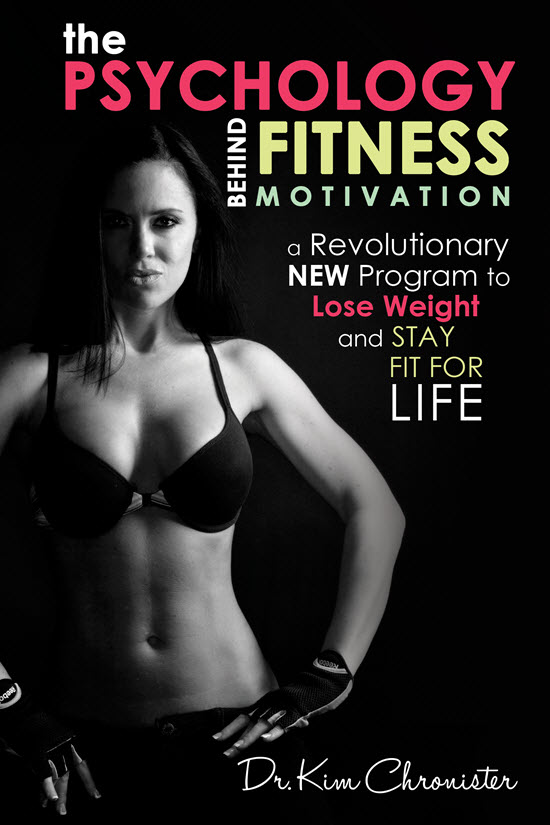
Now that I finally have a device (my new iPad) to download ebooks, I'm putting it to good use. My latest read is The Psychology Behind Fitness Motivation: A Revolutionary New Program to Lose Weight and Stay Fit for Life by Health Psychologist Dr. Kim Chronister. In the book Dr. Kim describes the concept of a Motivational Interview – which sounds exactly like what I suggest you use, whenever you've been asked for help or advice from a member.
Motivational Interviewing for Exercise Motivation
An optimal technique that is supported by the research for exercise motivation is motivational interviewing (MI). When you are seeking the motivation to gain results (for a better body, sharper mind, etc. from regular exercise) motivational interviewing falls into the “what you need” category to get you “what you want”…results.
MI has been shown to be enhanced when MI is combined with other effective treatment methods such as cognitive behavioral therapy (which was discussed in the previous chapter). The technique of motivational interviewing can be used to improve a person’s motivation to change and it can be effective in facilitating behavioral change.
In a clinical setting, motivational interviewing is used by a therapist or other mental health or medical professional to help promote positive change in a client’s behavior. MI exercises are designed to help people recognize the need for changes in their behavior. As a first exercise, let’s say a motivational interviewer (i.e. psychologists, nurses, social workers, medical practitioners, physiotherapists, and dietitians) is meeting with a client trying to lose weight to alleviate chronic health problems. The motivational interviewer would emphasize the importance of the change, current information about why the client should make the alteration in his/her lifestyle, including many benefits. The motivational interviewer would then provide the steps and action plan to make these lifestyle changes. At the end of this chapter, you will be given tools based on the technique of motivational interviewing to help you in your personal fitness goals.
Near the end of the interview, Dr. Kim and I discuss her thoughts about a question I had; should Instructors take an active role in sales and marketing, especially Instructors who teach at a small studio?
What do you think? Should (or would) you be willing to sell/market/promote your studio's services to your participants? I'm not referring to you simply reading a few announcements before the start of class here. I mean communicating with members with the purpose of building rapport, suggesting upgrades, encouraging purchases, recruiting new participants… you know, selling what your studio has to offer.
Would you do that if you were rewarded financially?
Have any of your students ever told you they want to lose weight, even though you (and everyone else) think they “look fine”? What advice have you given them? This post is about the unconventional advice I gave a nutrition client when everyone was telling her the opposite.
The client, “Susan”, came to me and complained about being a size 6. She didn’t like being that size and insisted that she had to be a 4. Susan had been to several other nutritionists and fitness instructors, and had also talked to her friends about this problem. Everyone, professionals and friends alike, had drawn the same conclusion. They told her she looked great the way she was (which was true; she did) and just needed to develop a more realistic view of her body.
Some people, they told her, aren’t meant to be size 4, and you need to accept that.
Before I make any recommendations for a client, I always begin by asking lots of questions. So that’s what I did with Susan.
I took her unhappiness with her weight seriously, rather than dismissing it as some sort of character flaw. I’m convinced that someone who feels uncomfortable at a given weight may actually be tuning in to what her body’s telling her, not pining to look like her favorite fashion model.
It turned out that Susan’s eating was under control portion-wise for most of the day, although, in the evenings, she often binged.
But what made the strongest impression on me was the way Susan conducted the food journal review. When she showed me the log, she went through every single entry with me. She read the foods aloud and told me the story behind everything she’d had at each meal. I heard about cravings, the reasons for each selection, and more.
Obviously, Susan liked being in control. I decided that was the clue to this whole thing. No one likes feeling out of control when it comes to food and eating. That has been the source of self-esteem issues in many of the clients I’ve worked with over the years. The main difference for Susan between sizes 4 and 6 was not her appearance, but what it took to be a 4. As a 4, she had felt in control. Now she was bingeing.
So we addressed the bingeing and what Susan ate during the day that caused her to binge at night. If you’ve read other posts I’ve written, it won’t surprise you that the culprit seemed to be sugar. Susan’s night binges always occurred after she’d eaten sugar during the day. It felt intuitively clear that getting sugar out of Susan’s diet would give her back the control she really wanted, regardless of her weight.
Well, the results showed that my hunch had been correct. Susan’s cleaned-up diet didn’t trigger binges, and that was a relief for her. Yes, she did lose a few pounds, but she stopped obsessing about getting back to a size 4 and finally did what everyone had wanted her to do all along. She accepted her body.
As an indoor cycling instructor, you may be a logical starting point for a student who wants to lose weight. If she needs more help than you’re comfortable giving, you can always refer. But my hope is that, if she looks pretty good, you’ll consider her discomfort something more than an unrealistic expectation.
As you’ve no doubt heard, saturated fats are no longer considered the health problem they once were. It turns out that the connection between saturated fats and heart disease, cholesterol, and atherosclerosis is far weaker than we thought.
These days, everyone is pointing to sugar, and blaming sugar for the very health issues that used to be blamed on fats — the diseases above, as well as hypertension and more. Those health conditions have more to do with inflammation. And sugar and other highly insulin-triggering carbs promote greater inflammation than sat fat.
No argument from me, of course. I’ve been blaming sugar for those conditions for over 20 years and have written a number of posts on those very subjects.
The main difference lies in the huge number of arguments I used to get, compared with how few I hear now. In 1996, for example, I recall participating in what I was told would be a “panel discussion.” (I was lied to about the format. It turned out to be a debate, and I was up first so the other speaker could have the last word. Ah, memories!) Anyway, the other speaker stood up at one point, held out his arms like an orator and intoned in his deepest horror-movie voice, “FATS ARE BAD!”
In the years since, I’ve sometimes wondered if taking such a hard line on a now-disproven point ever made him feel as ridiculous as he looked and sounded with his arms waving as he channeled Vincent Price. But I digress.
Currently, we know that unsaturated fats are associated with numerous health benefits. Omega-3s (polyunsaturates) are known for their anti-inflammatory properties. They’re cited for their ability to reduce the risk of cancer, the complications of diabetes, and the incidence of depression, bipolar disorder, dementia, and more. Omega-9s (monounsaturates) have long been credited with the ability to prevent and even reverse various heart disease risk factors.
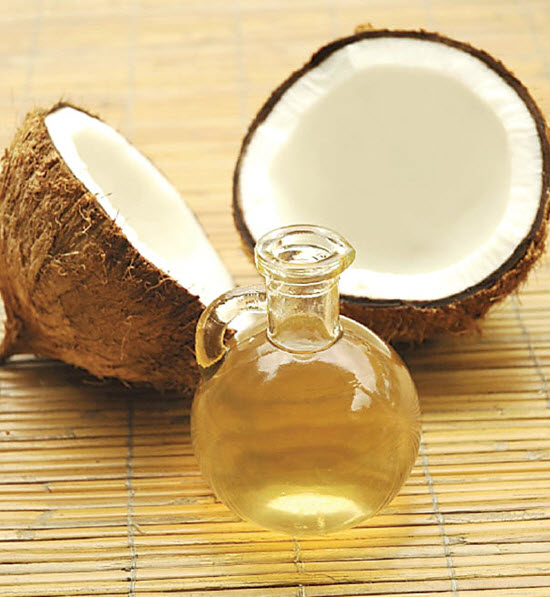
Even saturated fats have their benefits. Butter and raw, organic coconut oil both contain lauric acid. Lauric acid has been shown to benefit hair and skin, and to have antiviral, antifungal and antibacterial effects. When it turns to ketone bodies, lauric acid can reduce epileptic seizures in children and improve brain function in Alzheimer’s patients.
There’s an interesting health point, though, that’s less widely known and differentiates saturated and unsaturated fats. Saturated fats have been shown to contribute to weight gain to a greater degree than unsaturated fats.
If weight management were always “calories in / calories out,” that couldn’t be so. All fats provide 9 calories per gram. But this has to do with hormones. Sat fats trigger insulin secretion, and unsaturated fats do not. Insulin is a fat storage hormone. Also, a combination of saturated fat and insulin-triggering carbs will promote a synergistic boost in insulin that neither would generate alone.
Yet to further complicate the issue, coconut oil appears to be associated with weight loss.
So what recommendations can we take from all of this? Well, nothing earth-shattering. If you eat saturated fats, eat the better kinds — organic coconut oil and butter, rather than bacon or battered, deep-fried foods. Let’s continue to go easy on the traditionally bad sat fats and the foods that contain them.
When I was a kid, every baked potato I ate was as bright yellow as a rain slicker because of all the butter I insisted on glopping on it. Sure, it might be less likely to give me heart disease than we used to be told, but it’s obvious that restraint and moderation might still be a good idea. And I don’t know about you, but the older I get, the more my hips and thighs demand that….