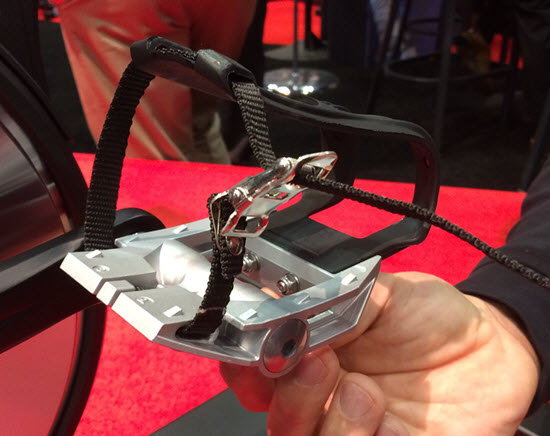
When I'm at IHRSA (which I was last week) I spend a bunch of time searching for the next “Big Thing” that I can share with you. What I found is a rather small and yet indispensable component of the bikes we ride – Keiser has developed a new Indoor Cycling pedal that looks awesome!
As the major point of contact, Indoor Cycle pedals take a lot of abuse in our classes. They're kicked, torqued, sweated on, rotated millions of times and rarely maintained. I can't say for certain if this is universally true, but I've gotten the impression that the OEM pedals shipped with many bikes are a bit of an afterthought = manufactures don't invest much development into the two sided (SPD/Basket) pedals they supply. They end up failing after a year or two and need to be replace, requiring a reasonably large investment – 50 bikes x ~$80.00 = $4000.00 – way too much and too soon IMO 🙁
Feel free to correct me if there are specific instances where you feel I'm wrong about this.
Clubs and studios in the past would often replace the OEM pedals with the Schwinn Triple Link – I call them Red Pedals – that offered two sided cleat engagement for riders with either SPD or LOOK Delta equipped cycling shoes + the option for plain old tennis shoes. If you are currently using these pedals and don't have one of my Red Pedal Tools to safely and easily remove those $%^& shoe baskets, you can order one from my distributor Sportsmith.
Later Spinning® began manufacturing & selling their version of the Triple Link – the TRIO. FYI: The TRIO is an enormous improvement over the Schwinn pedal. The primary reason being the TRIO has much larger bearings and should offer much longer service life. Unfortunately my Red Pedal tool doesn't work with these, so I recommend purchasing the TRIO QR which includes a clever little red lever to simplify removing the shoe basket.
NOTE #2: The LOOK Delta cycling shoe cleats found on both the Schwinn Red Pedal and Spinning TRIO pedals are pretty much obsolete – very few cyclists continue to use them. LOOK no longer manufactures pedals using the the Delta cleat – the new version is the KEO. KEO's look similar to Delta's and appear to work, however they do not interchange and attempting to use KEO cleats with either the Schwinn or Spinning pedals creates a real safety issue.
NOTE #3: Hard-soled cycling shoes with exposed cleats of any type are dangerously slippery on smooth/polished floors. I've personally gone down a few times at Life Time on their bamboo floors = they really don't belong in many cycling studios. For that reason I always encourage studios to only offer two sided pedals – SPD on one side and shoe basket/toeclip on the other.
Has Keiser re-invented the Indoor Cycling pedal?
I've gotten to know Keiser's founder Dennis Keiser over the 7 years since I first interviewed him about the then new Keiser M3. Being a real gadget guy, I have have been continuously impressed by his commitment to manufacturing very high quality fitness equipment – the M3 has to be the one of the most reliable Indoor cycles ever built.
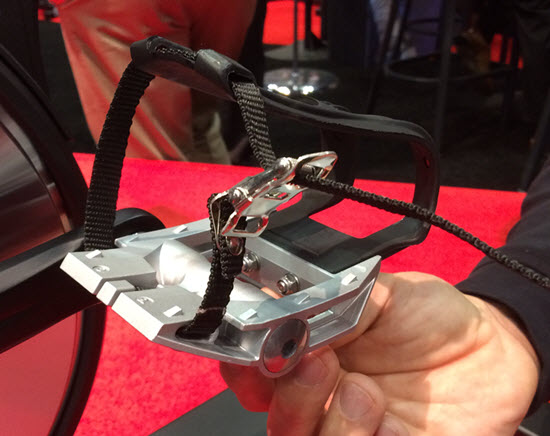
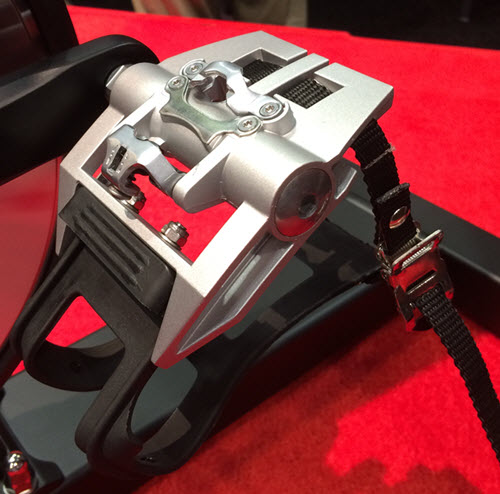
It was explained to me that this new double sided pedal was designed from scratch to be the most durable pedal ever made:
Completely rebuildable – notice the replaceable SPD parts held together with screws, not rivets
Corrosion resistant cast aluminum body
Stainless steel axle is specially heat treated
Quote from Dennis; “the best bearings we could find”
The small angled tabs on the platform make it easy to slide your show in, but not out = improved safety.
They even designed the pedal so replacing the strap is easy 🙂
If I had to bet, I'd wager that these replacement pedals will outlast the bike they're installed on. No pricing information yet – I'll be sure to pass it on once a hear.
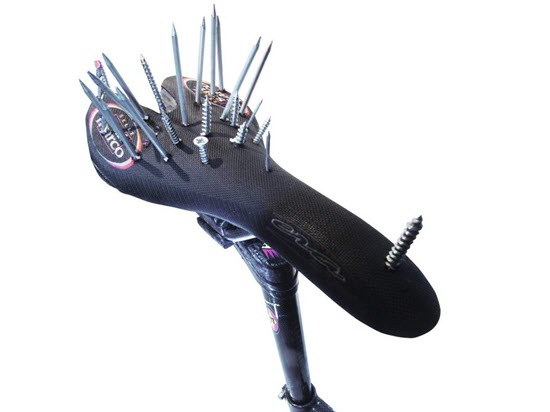
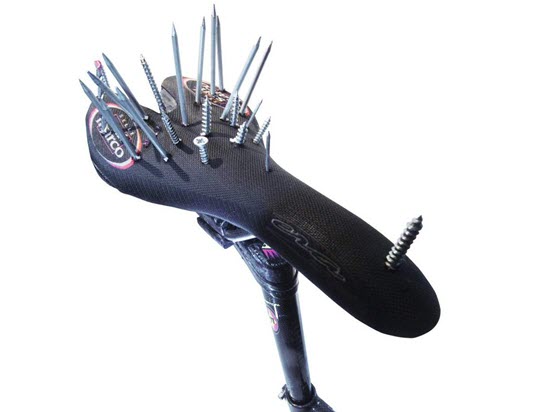
Sadly this is what some people see when they look at your Indoor Cycles. Image from www.bikeradar.com
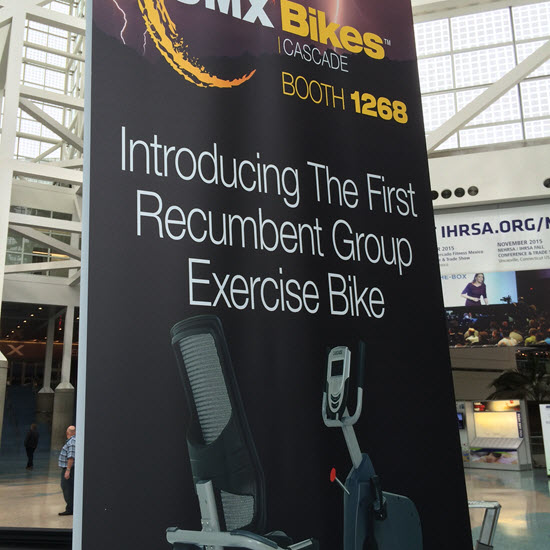
The big IHRSA convention starts tomorrow (can't wait) and as a follow up to my visit last year I wrote this article. If you visit that link and scroll down a bit, you'll see this image of a banner displayed at the entrance of the convention.
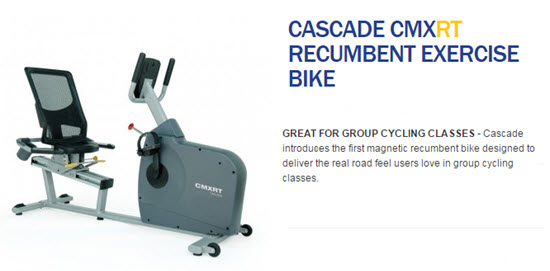
Recumbents in a Group Cycling class?
At the time I wrote:
This banner was the very first thing you saw walking into the LA convention center. My first impression was; “that’s dumb… who would ever want to ride a recumbent bicycle in an Indoor Cycling class?”
As I walked past this display I did a double take and then it hit me > there’s a huge population of people who are intimidated by the skinny, little seats on Indoor Cycles.
Obese/overweight people for starters and you can’t forget Seniors. Together they make up a sizable demographic that we are completely missing. They’re two groups who would really benefit from the comfort of riding on a recumbent, with its large seat and easy to step through design.
Despite all of the technological changes we've witnessed (Power Meters, Virtual Ride Videos & Display Training systems) + the massive increases in popularity (Thank You SoulCycle), Indoor Cycling is still failing to attract large segments of society who would really benefit from our classes.
I'll bet you can quickly describe the profiles of the typical people you do not see in your classes. They include:
Obese people of either gender.
Pregnant women.
People with a physical impairment or limitation – I group all the folks with back injuries here.
Seniors / Elderly living with everything negative that comes from aging.
People recovering from an injury.
Why is that? What's preventing (or discouraging) all the people in these groups from experiencing your awesome class? That skinny saddle for one thing. In the mind of someone 100lbs over weight, it may as well have sharp spikes sticking out… what about the person with a bad back? No way they'll even consider bending forward to reach those handlebars, no matter how high you adjust them. A common scourge of aging is limited mobility; “there's no way I could ever climb on that bicycle. My hips and knees just don't flex like they used to.”
It's the design, stupid.
The riding position of Indoor and outdoor cycles, while perfect for you and me, just doesn't appeal to the populations listed above. In fact there are many who would be terrified at the thought of mounting and riding the Indoor Cycles in your studio.
However they might be willing to join your class, if you offered them a recumbent to ride…
Again from last year's article I added;
I talked at length with the representative from Cascade Health & Fitness about helping them establish a few beta recumbent cycling locations. They are very motivated to meet with anyone who’s interested.
As it turned out there were some Instructors who were interested to experiment with adding a few recumbent Indoor Cycles to their classes. John Kennedy with Cascade Health and Fitness provided three studios each with a pair of recumbents and now, after about six months of use, we're hearing some favorable responses 🙂
Marietta Colberg Roberts is the Fitness Director at Old Town Hot Springs in Steamboat Springs CO. Listen as she describes her experiences bringing people into her classes, who otherwise wouldn't attend.
It's that time of year again – IHRSA, the big fitness equipment show starts on Tuesday next week March 22nd and 23rd. This year the expo is in Orlando at the Orange County Convention Center. Sweet for me as it's an easy 90 minute drive from my new home in Tampa 🙂
Last year all the buzz was centered on the new Stages SC3 – which was a total surprise to me when I saw it. The buzz IMO was well deserved after I had the chance to ride it multiple times during the show. You can read my review here.
Monday afternoon I'm meeting with Josh Leve with AFS (Association of Fitness Studios) along with the other advisory board members. AFS is really catching on with studio owners and I'm looking forward to helping them become more beneficial to all of the new studios popping up across the USA.
Not having a crystal ball to peer into, I reached out to my friends at the various brands, asking for a heads-up on what I can look forward to seeing this year. Here's their responses:
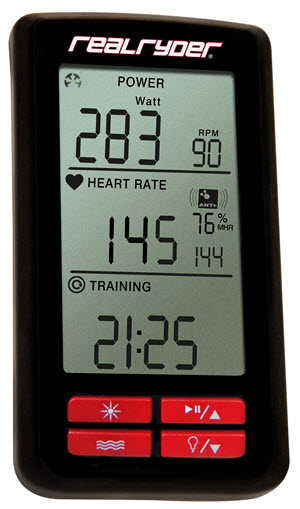
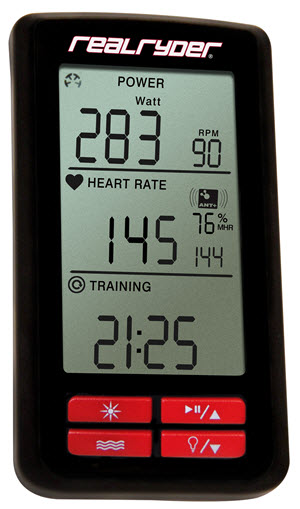
RealRyder has added POWER!
Last year Adam Reid hinted that they were working at adding POWER indication to their Indoor Cycle. What they're calling WATTPRO1 is a pedal crank arm power meter – I can't tell if it's just one, or both arms… I'll let you know next week. Jackie Mendes who's a Director at RealRyder® International LLC added the following:
The same company that evolved the traditional stationary indoor cycle design by introducing the first and only multi-planar indoor riding experience now offers a new standard in indoor cycle power measurement–introducing the RealRyder® WattPRO1. This revolutionary direct power measurement technology provides our customers with the most accurate and reliable power data available on the market. The RealRyder WattPro1 is now available to elite athletes training indoors, or anyone seeking to gain a training advantage in their group cycling classes.
I can't wait to ride it + learn from Adam and Douglas Brooks what education they have planned. I'm also curious to find out if existing RealRyder cycles can be retrofitted with power?
Free Epic Planet Virtual Ride DVDs!
Be sure to stop by the Stages Booth when you're there at IHRSA. Allen Jones from Epic Planet supplied me with a few hundred DVDs that Dennis Mellon will be giving away during the show.
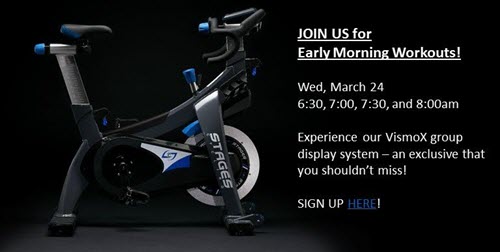
Join me Wednesday morning for a Stages early workout. You can reserve a bike here – I'm slotted for the 7:00 class. Stages will be demonstrating a display training system called VISMOX. I don't know anything more it, but plan to 🙂
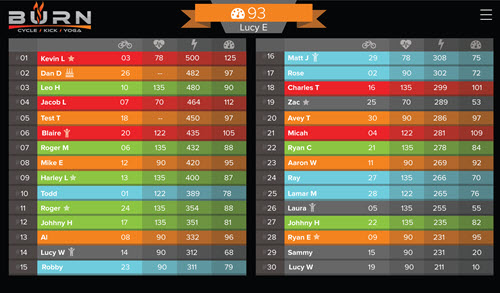
I'm hearing more about Fitmetrix – the display training system that's also a complete backend solution for managing an Indoor Cycling Studio. Is it a worthy competitor to Mindbody? I plan to find out.
Core Health and Fitness AKA Star Trac and Schwinn Indoor Cycles
Core Health and Fitness will be featuring our Schwinn line up of bikes and the Echelon2 consoles. We will have Performance IQ in our booth demonstrating the connectivity with the Schwinn Echelon2. We're also excited to have Schwinn Master trainers Jeffrey Scott and Markus Mengert in our booth doing demo classes during the early morning workout and during the show.
Core Health and Fitness will also be showing our new line of Star Trac Studio bikes. The Studio Series bikes–built upon Star Trac’s heritage as one of the first and best manufacturers of indoor group cycling bikes–consists of three new models of bikes with improved looks, improved features, and a lower price point than our previous offerings in this space.
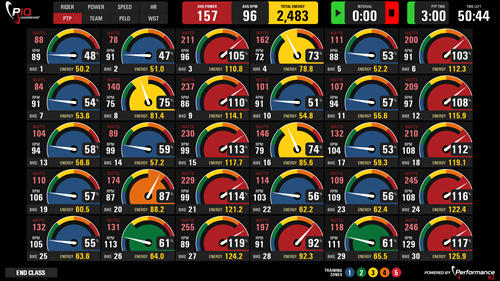
Performance IQ says:
At IHRSA, we’re introducing a new version of the PIQ software which is has additional modes, new functionalities and include different display theme options. We’ll also showcase our integration with different apps. You can find one of us in the Stages and Schwinn booth.
Not to forget my friends at Keiser – Darrin Pelkey supplied the following.
John
We are introducing some new accessories to our bikes. A new pedal, New Tablet holder and new stretch pads. I asked marketing and they would rather give detailed information and images after the show. I hope that works and I hope things are going well!!
My guess is that there will be other surprises and I'll be reporting on what I see/find/experience later next week.
There's a new option for prospective Indoor Cycling Studio Owners to consider – purchasing a franchise license from a proven & profitable studio vs. creating a new business from scratch.
Studio owner Paul Harmeling with Full Psycle Indoor Cycling joins me to discuss the details of their new cycling studio franchise offering. I've really enjoyed the classes I've taken at his studios in Los Angles and Chicago – primarily because of how effectively those classes combined a non-traditional format, with solid performance based metrics.
Listen as Paul explains both the costs and benefits of starting and owning a Full Psycle Indoor Cycling Studio franchise – or the option for you to possibly re-brand an underperforming studio.
Paul is hosting a “discovery day” on March 23rd and 24th at his studios in LA for prospective Full Psycle franchisees. They'll be presenting the business opportunity, touring two of their studios and answering all of your questions. Please use the form below to pre-register.
We've got another election year here in the USA. Based on what I see on my Facebook feed, I get the sense that there's a few Instructors* out there that might be thinking, OH GOODY! I've got a captive group of people riding in front of me. My “peeps” see me as a leader. It's my job to “educate” them so they vote properly!
It's my belief that there's nothing better at destroying your class' sense of unity, than injecting politics.
So if you're tempted to sit there front/center and extol the virtues of some candidate (or criticise another) during a recovery, might I suggest that you consider these five reasons why you shouldn't?
#5 It's unprofessional behavior.
You're paid as an Instructor to conduct a cycling or fitness class – not to convert people politically as a political pundit. A true Fitness Professional would never discuss politics during the course of conducting their class. They understand exactly their role in the studio and understand politics isn't in their job description.
How would you feel if your doctor, accountant, mechanic, hair stylist, or other Professional (whom you're paying for a service) began to lecture you about the evils of a particular politician? One you happen to admire and plan to vote for this fall?
Fitness Professionals also understand that they represent the club or studio where they teach. As a representative, anything you say or do could reflect poorly on the business. So just don't go there.
As the owner or manager of an Indoor Cycling Studio, do you think that a friendly preemptive reminder to all of your employees might be helpful?
#4 It's disrespectful to your riders.
People are inundated by politics near constantly during election season. Unless you go completely off-grid, you really can't avoid the constant poll results, he said/she said breathlessly reported ad nauseam on TV, radio and the Internet.
At some level, most (if not all) of your riders participate in your class as an escape from the real world. Don't ruin their hour of aerobic bliss, by mouthing off about income inequality, social security, pipelines or other non-sense. Your class has no interest in hearing it and you'll only wreck their workout… and probably not see them again 🙁
#3 You'll instantly alienate half your class when you open your mouth.
The US is politically split approximately 50/50 between Republicans and Democrats. So it defies explanation why any rational* person would purposely choose to insult the political beliefs of 50% of their class, by publicly taking one political position over another. Seriously, why would you ever do that?
OK, I realise that there are some who couldn't care less who they alienate by mindlessly parroting what they've heard or read – please show your Professional independence by not being one of them 🙂
#2 They'll “unfriend” you.
I'm not specifically referring to unfriending someone on Facebook, although I guess I could be. I'm certainly not against dumping a FB “friend” who's frequently posting stupid stuff about politics. What I'm referring to is the damage you can do to a relationship by needlessly introducing conflict .
Think about the last you were lectured by a friend or acquaintance about something you disagreed with. How did it make you feel? Did you leave feeling like you'd be excited to talk with him or her again?
#1 I'm not stupid, nor am I uninformed or uneducated, so don't treat me like I am.
My number one reason why you should leave politics out of your class; it's insulting and demeaning to lecture other adults about pretty much anything, especially things political. There a very good reason that you, yourself, have felt insulted when this happens. You're being told (no matter how nicely) that if you disagree, you're simply wrong … and they're right.
But it isn't just that you are mistaken, like you turned left, when you should have veered right. No, you feel insulted because the act of lecturing is about power. The lecturer has asserted a position of dominance over you, attempting to make you feel small. How do you respond in a situation like this? Does it make you feel valued and/or respected?
But what if a participant brings up politics first?
Refer to #1, regardless of you're in agreement or not.
I have to compliment the personal trainer of the boot camp I was at this past Saturday. One participant made a number of political comments, that he initially ignored. Sensing the guy wasn't getting the hint, he said very politely; “this is a politics free zone” – smiled and disengaged from the conversation. That was all it took.
*This might not describe you… however you probably know a few Instructors who it does. Please feel free to share this article with them, before they irreparably damage their relationship with their participants.
Some years ago (1997 to be exact), the American Journal of Clinical Nutrition featured an article stating that women’s protein needs had been underestimated up until then.
In the same issue, a different article discussed the higher rate of serotonin turnover in women’s brains versus that of men. (Serotonin is made from the amino acid tryptophan. Amino acids are the building blocks of protein.) So women need protein for that reason.
The same year, Smith et al. published a study in the Lancet describing the relapse of depression in susceptible women after rapid depletion of tryptophan.
It’s a long-held theory of mine that people who minimize the importance of dietary protein don’t recognize the need for what I call “brain protein.” And it turns out that protein is now being evaluated and declared important for several other reasons, some of them of specific concern to women — weight loss, satiety, lean body mass, athletic performance, and more.
– In 2012, adult protein requirements were assessed as 10% higher than previously assessed, for both men and women and all age groups (Millward, 2012).
– A 12-week weight loss study in overweight adults showed that higher protein intake promoted better retention of lean body mass in both trunk and legs (Tang et al., 2013).
– Maintaining adequate protein intake with aging may help preserve muscle mass and strength in adult men and women. Type of dietary protein may affect muscle mass and strength differently. Animal protein promoted higher lean leg mass with higher intake, while plant protein did not (Sahni et al., 2015).
– Older women in the higher protein group (1.1g/kg/day vs. 0.8g/kg/day) had lower body mass index and lower fat-to-lean ratio than those in the lower protein group. The lower protein diet also resulted in impaired strength in both upper and lower extremities (Gregorio et al., 2014).
– Even distribution of protein intake — approximately 30g of protein per meal — stimulated muscle protein synthesis more effectively than the typical pattern of skewing protein toward the evening meal, with a breakfast higher in carbs and lower in protein (Mamerow et al., 2014).
– A recent seminar on protein’s role in weight loss and satiety, offered by the American Council on Exercise, also recommended a protein pattern of 30 grams per meal, 3 times a day.
– Two studies indicated a need for increased dietary protein intake so that the so-called “nutritionally non-essential amino acids” would be adequate for animals and humans to achieve optimal growth, reproduction and resistance to metabolic and infectious diseases (Hou et al, 2015; Wu et al, 2013). Essential amino acids are ones that are not synthesized by the body and must be consumed in food. Non-essential amino acids were traditionally assumed to be adequately synthesized by the body for maximal growth and health. These 2 studies counter that assumption.
– Female football players have protein needs similar to those of male players (Maughan and Shirreff, 2007).
– Women strength athletes may require more protein than either endurance-trained or sedentary women. The recommendations are for less emphasis on high-carb intake and more emphasis on quality protein and fat consumption to enhance training adaptations and general health (Volek et al, 2006). Compared to men, women seem to be less reliant on glycogen during exercise and less responsive to carb-mediated glycogen synthesis during recovery.
– Minimum protein intakes should be approximately 25% of total calorie intake (Fulgoni 2008). Many adults, men and women, get only 15% of their energy intake from protein.
– In a 12-week study, a daily high-protein (35g)breakfast prevented gains in body fat. A “normal” protein breakfast did not. The high-protein breakfast reduced hunger and led to voluntary reductions of about 400 calories per day (Leidy, et al 2015).
Regarding the long-touted RDA of 0.8g protein/kg/day, Stewart Phillips, PhD, FACSM, FACN, and professor at McMaster University states, “nothing about that level should be recommended, and you’re allowed to eat much more. In fact, for older persons and athletes, there are benefits to consuming protein at levels above the RDA.”
Indoor cycling instructors are athletes, and regular participants may be, as well.