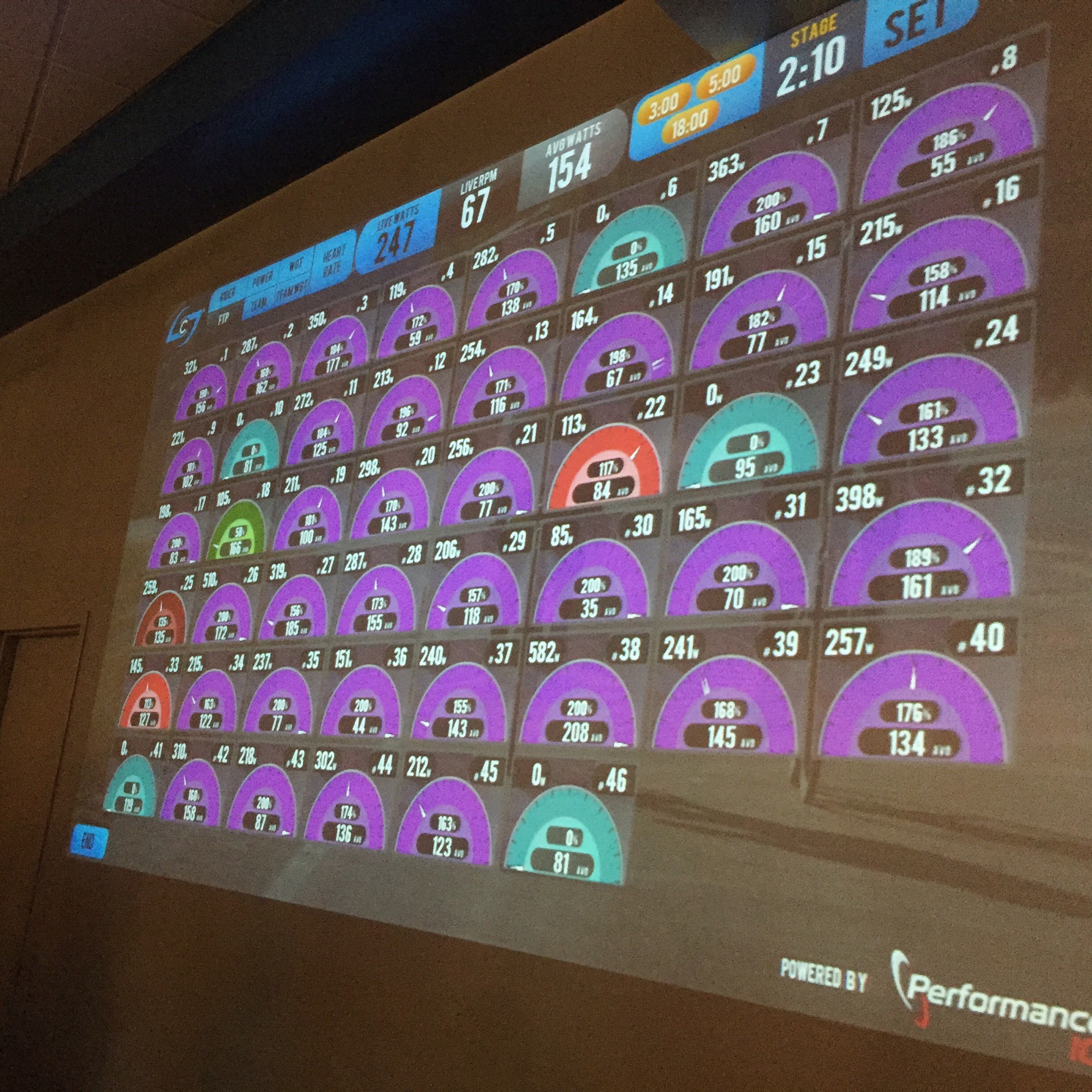
We're looking for a Performance IQ Rockstar that we can develop into a Master Instructor – joining me to conduct PIQ Instructor trainings.
Master Instructor Qualifications
Are you super experienced at teaching Indoor Cycling classes where Performance IQ Display Training is a focus of the class?
Do you feel you have the passion and personality to enthusiastically transfer your knowledge and experience to other Instructors?
ICI/PRO is planning to develop, and then contract with, a Master Instructor to conduct workshops at North American (and potentially international) club and studio locations, beginning this fall 2016. The successful candidate will partner with me – Master Instructor Dennis Mellon.
If you've wanted to become a Master Instructor, this could be an awesome opportunity for you. My initial exposure here at ICI/PRO really advanced my career and lead to my current Master Instructor position!
Qualifications:
You’re recognised as a ROCKSTAR instructor, consistently filling your Indoor Cycling classes
You hold a current ACE/AFAA Group Fitness or Personal Training certification
You have a current Indoor Cycling certification from one of the established brands
You teach regularly scheduled Indoor Cycling classes at a club/studio that uses Performance IQ — and this is important — your supervisor is willing to be a reference
You have a thorough knowledge of zone based Heart Rate and Power training principles + you apply these consistently in your display training classes
Your classes are an effective mix of conventional and rhythm & movement formats; i.e. cycling specific training meets SoulCycle
Excellent computer skills — you’re the go-to person whenever there's an issue and who’s helping others learn to use PIQ at your studio
Written communication comes naturally to you
You have weekend (Friday — Sunday) travel flexibility
We're tentatively planning our first Performance IQ Display Training workshop for the middle of September at the Greenwood Athletic club in Greenwood Village, Colorado.
This is a contract position and the successful applicant will be compensated per training + travel expenses.
Please email me directly with your resume and a cover page to Dennis Mellon at dennismellon@me.com
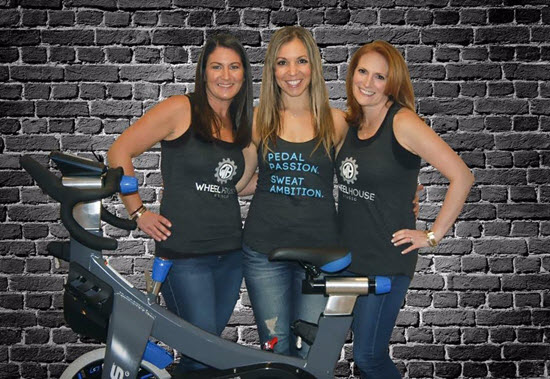
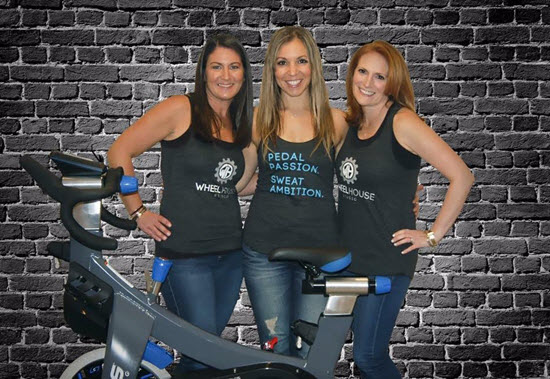
The three Moms who run Wheel Power Studio; Stephanie Rubinstein, Tracy Chutnow and Donnie Stutland
Here's a fun studio pre-launch story you'll enjoy hearing – especially if you're planning a new studio yourself.
Former Flywheel Sports Instructor Tracy Chutnow partnered with former participants Donnie Stutland and Stephanie Rubinstein to launch Wheel Power Studio in Deerfield, IL.
During our interview, Tracy and Donnie explain how exciting it was to pre-sell class packages – generating profits long before their Zingfit website was completed or studio was open. These early purchases helped to reinforce their commitment to opening an Indoor Cycling studio + resulted in full classes from day one!
They both credited Charlie Green website design for creating an effective website landing page, that they promoted on social media. You can click the image below to request information.
You can hear their story below – or – you'll find this Podcast in our iTunes feed. You can subscribe for free .
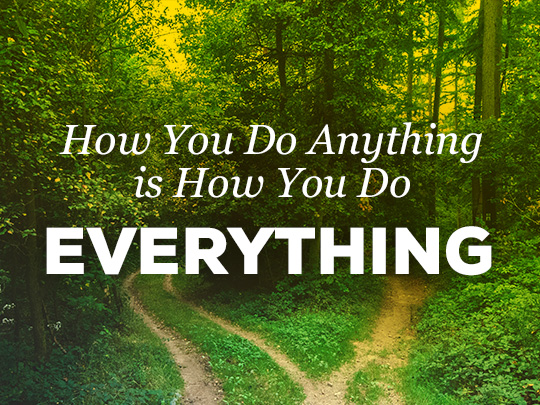
Have you heard it? It’s been around a long time: “How you do anything is how you do everything.”
I feel sure whoever came up with that statement — bad grammar and all — never worked in the fitness industry, or as a nutritionist.
How many times have I run into training clients like Kathy the stockbroker? She was a fearless cyclist but, by all accounts, a rather cowardly stock broker.
Or Debra, a sugar addict whose lack of progress in our weight-loss program made the supervisor say, “I don’t understand. She trains well.” For this client, training was the easy part. Not only was she accustomed to working out regularly, she was down for the intense workouts, too. Nutrition, on the other hand, was her challenge.
Debra was conscientious about her workouts because she’d been using them for years to compensate for bad food habits and her sugar addiction. She was trying to burn all those excess sugar calories in tough fitness classes.
Where There’s No Law, There’s No Freedom
(Apologies to John Locke)
Rachel was a successful attorney and a partner in a thriving law firm. She was less successful at creating healthful meals, at least at first. She did get on the right nutrition track pretty easily, but exercise was the tougher obstacle.
You might wonder how someone who could get into a good law school, make it all the way through, pass the notoriously difficult California bar exam, and become a successful lawyer could possibly have difficulty fitting exercise into her life.
But it had never been part of her life before, so it was completely new. The idea of making time for it was new. Prioritizing it, working her appointments around her exercise session, even waking up a few minutes earlier to squeeze a modified workout into her busy day — were all new.
Rachel didn’t seem to see that she could use the same skills she’d used her entire professional life to launch her fitness “career.”
In fact, when she started working on a new case and knew her schedule would be hectic for at least 6 weeks, her plan was … to skip her workouts till that hectic time was over.
Rachel had no clear picture of the impact those 6 sedentary weeks would have had on her fitness. You can’t take 6 weeks off and expect to pick up where you left off when you quit. You’ll end up starting from square one, especially in the early stages of a fitness program.
We did finally get Rachel’s fitness program solidly entrenched in her schedule, but it was slow going. She started with one day a week, and occasionally a second. Moving to 3 days a week — the minimum for fitness maintenance — took a long time. But she did it and got results.
Perhaps you have participants who are doing similar things. Part 2 will cover a final extreme example and some suggestions for how to use this info to advantage.
My last post covered food intolerances and the changes that occur over time, from the acute reaction to a more chronic one.
The immune response to a triggering food involves a release of stress hormones, opioids, such as endorphins (beta-endorphin), and chemical mediators like serotonin. The combination can produce temporary symptom relief through the analgesic action of endorphin and serotonin, plus mood elevation and a feeling of relaxation.
In that way, eating the triggering food may make someone feel better almost immediately and even think the food is beneficial.
Endorphin release typically involves a concomitant release of dopamine. The combination of those two brain chemicals and serotonin forms what I’ve always called the “addictive package.” Avoiding the addictive food could lead to withdrawal.
After long-term use, someone may eat the triggering food not to experience the pleasure of the chemical “high,” but to relieve the distress and withdrawal without it. It’s almost textbook addiction.
How Does Intolerance/Addiction Affect Health?
As someone addicted to a triggering food continues to eat more of it, the immune system must keep adapting, and may become hyper-sensitized, reacting to more and more foods — especially those eaten together with reaction-triggering foods, or with sugar.
The constant demand on the immune system can lead to immune exhaustion and degenerative reactions, depending on genetic weaknesses. The signs and symptoms listed above are just a start.
Sugar can be a major player in this because it causes inflammation in the body and makes it more susceptible to food reactions. Eating triggering foods plus sugar can make it even more likely that new reactions will occur.
I recall an old book by Nancy Appleton (Lick the Sugar Habit) who suggested that eggs might trigger reactions in many people because they’re so frequently eaten at breakfast with orange juice. Cake is another example: sugar plus wheat, eggs, milk.
As the addictions continue, cravings occur, probably leading to increased consumption. As more and more foods trigger an immune response, the result may be malnutrition, as explained in the last post.
Stats say that rates of food intolerances are rising. My theory is that it’s at least partly due to sugar in our diets — including sneaky sugars that are often viewed as healthful, such as agave, fruit, fruit juice, and sweeteners.
Stopping the Cycle
Definitely give up any foods you suspect may be causing any reactions — even if you love them. Think about foods you eat with those triggering foods on a regular basis, and consider eliminating those, as well.
Above all, avoid sugar. Follow this plan for 3 weeks, something J.J. Virgin also recommends.
In the meantime, you may have cravings. If so, use my proven, time-tested recommendation of a teaspoon of liquid B-complex (complete B-complex) to kill the craving within minutes.
At the end of the 3-week elimination, you should be feeling — and looking — much better.
Here's an excellent chance for you to help shape the future of Indoor Cycling – as a member of the new Studio Owner's Advisory Group we're forming as a part of AFS – the Association of Fitness Studios.
After receiving some favorable responses from our Studio Owner's Facebook Group to this question, Josh Leve (founder of AFS) and I came up with a basic criteria for inclusion to this advisory group:
You have over two years experience in the business of fitness – as an owner or manager of a studio.
You own a cycling studio that has solid, demonstrable growth
You excel in a variety of areas including: business ethics, community involvement, and making an impact on your members/clients
You will commit to participating in the group for one year.
You're an AFS member – advisory group members will receive a free one year premium subscription.
You may have business related education and/or experience in; accounting, legal, HR, finance, real estate, construction, etc… any would be helpful, but not mandatory.
I feel it's important for you to understand that this will be a group made up exclusively of 6 – 10 Cycling Studio Owners – we're not including anyone else.
My role will be to act as the liaison between the group's leadership and AFS, where I have an advisory position.
What are you committing to?
We're anticipating that group members will meet via Skype or Google Hangouts 3-4 times a year and communicate via Facebook and email as needed. The group might decide to form a private group on Facebook… or possibly hold meetup at a fitness conference like IDEA 🙂
Group Leadership
Every group needs a leader, in this case we feel there should be two to share the load + someone who can act as Secretary to take minutes of the meetings.
For the first year we're looking for volunteers for these three roles. Once the group is firmly established, it would probably make sense for there to be elections to select the leaders.
You're a bunch of really smart, passionate people. AFS would like to tap your collective knowledge on important issues and solicit your help and direction; in the types of educational content they (AFS) develop and distribute to benefit others, forms of advocacy they should pursue and other ideas/needs as they arise.
Beyond that we're thinking it's your group and hopefully the group's mission/scope will develop organically over time.
Question asked by a member of our Studio Owner's Facebook Group; “Where should I post listings to find quality Instructors for my new studio?
Which is a great question… where will prospective Instructors know where to look for job listings in their area?
Why here of course – check out our new website where Instructors will know where to look for studios who need help, because we are promoting these job listings everywhere that matters.