As most of us have discovered, mistakes can be valuable if we learn from them. Here are a few mistakes a recent client made that may help you.
Getting Back On Track vs. Cutting Calories
What do you do after a ‘lapse’ in eating one day (or night)? The best thing is to go right back to your healthful eating program – but that’s not always what happens.
Recently, I worked with a client who would skip eating the next day to make up for the previous day’s binge. No matter how many times I told her not to, she kept doing it.
Of course, we should back up a little to look at what was happening. Her binges typically started with eating sugar because she “wanted it.” That statement was always made with a smile on her face, as if wanting sugar was an automatic reason to eat it.
She would eat some sugar 2 days in a row, then binge the next night. Because her binge often included non-sugary items too, she didn’t think it was related to wanting sugar.
Then she’d skip eating to make up for the binge. Obviously, she was thinking about calories – but brain chemicals, glucose and hormones actually figured into the situation strongly.
By fasting the next day, she was essentially letting her now “unstable” brain and glucose run the next day’s meals and food preferences.
Instead
She could (and should) have started the day early with a solid, stabilizing meal – or, at the very least, some protein. The rest of the day should have looked just like her “good” days, with no compensation for the lapse.
How Do I Know It’s a Craving?
The same client used to tell me she didn’t have cravings. But she didn’t recognize “wanting sugar” as a craving.
I did ask her to explain what a craving felt like or looked like in her mind. She described thinking about the food over and over, and even feeling as if she could already taste it in her mouth.
Yes, that seems like a craving, and a strong one. But wanting a food that’s not on your food plan and eating it just because you want it, regardless of consequences? That also sounds like a craving.
Instead
This client needed to expand her definition of “craving” so she’d be more aware of the next one.
FWIW, she had already purchased liquid B-complex to handle cravings, but never used it. Why not? She didn’t think she had cravings.
[For those not aware of the nutritional magic of liquid B-complex, it can take away a craving within a few minutes. It gives the brain the B vitamins it needs. Those vitamins serve as co-factors (catalysts) in the formation of the brain chemicals that will stop the craving and prevent its return, usually for quite some time.]
Instead
If she had used liquid B when she wanted sugar instead of eating some, that would probably have prevented the binges.
There’s Junk, and Then There’s … Junk?
Finally, this client used to worry about what she called “things” in her food. She avoided foods with guar gum and other additives. No criticism there – staying away from junk is always a smart idea.
But I had to wonder why she didn’t apply that strict standard to sugar. Eating sugar is trouble on many levels.
It’s linked with diseases and directly compromises the immune system.
It can trigger cravings – for more sugar or for other kinds of junk food.
And it can shift our food preferences away from healthful foods – like vegetables! – and toward foods loaded with sugar or not-so-good fats. That’s all because of the brain chemicals triggered by sugar – and the junk they makes us want.
Instead
She could and should have avoided all junk on food labels – guar gum, MSG, high-fructose corn syrup, and of course, sugar.
This client’s mistakes were persistent and sabotaged her progress for a long time. The good news: with my coaching, she learned from the mistakes and changed her behaviors. She did make excellent progress, but could have made it sooner without the mistakes.
Please benefit from these mistakes. And if I can help you with these or other food issues, I’d love to help. Just visit www.FoodAddictionSolutions.com/Coaching for your free Eating Empowerment Consult. Find out how easy it can be to make simple tweaks that solve big problems.
This brief post offers one possible reason you may have difficulty sticking with your food plan.
Let’s start here: Do you have food cravings? And are the cravings specifically for sugary foods and other junk?
Next: Do you give in to the cravings by eating some of the foods you crave, especially sugar?
If the answer is yes, it’s possible that your way of handling the cravings is actually creating more cravings.
It’s all too easy to blame premenstrual hormone fluctuations, for example, but eating sugar when you crave it is a virtual guarantee that you’ll crave it again – later in the day, the next morning or other times of the day, and possibly for two or more days after you’ve had it.
No, this isn’t the case for everyone. Some people really do have a take-it-or-leave-it reaction to sugary foods.
Still, food cravings are common. And it seems to be common “wisdom” that the way to deal with those cravings is to eat a little bit of whatever you crave.
I absolutely must question the wisdom of that perspective. Of course, eating what you crave will take away a craving temporarily – after all, you just ate what you craved.
But the cravings will return – often stronger than before. You may be setting yourself up for these future cravings, and almost guaranteeing that they become too strong to resist.
What To Do Instead
Admittedly, this approach takes self-discipline when you have a craving, but here it is.
For short-term craving relief, here’s a solution I’ve proposed before, but I stand by it.
– Reach for 1 teaspoon of liquid B-complex when you have a craving. (Please first check with your doctor to find out if this solution is appropriate for you.)
– Make sure you’re using B-complex, rather than any individual B vitamin.
– Give the B-complex a few minutes – really! – to do its work.
– Get on with your life, craving-free.
Now let’s say your doctor has told you not to use B-complex, or you don’t have any available when a craving strikes. What’s an alternative?
One way to go is to have a little high-fat food – even one that you might not consider particularly healthful. Examples might include nuts (yes, roasted and salted are fine), cheese, guacamole, or other high-fat fare.
Combining those fats with a small amount of starch (most people say “carbs”) is a good choice. If you feel it won’t be enough, add something hot and spicy. This is one reason guacamole will work well.
In any case, the combination will modify your brain chemistry so it resembles the neurochem you’d create by eating sugar – only you’ll simply bypass the addictive response you might have to sugar.
It’s a surprisingly good deal.
If I could do one and only one thing for my clients (and my non-clients), I would love to communicate the foolishness of eating what you crave – especially if the food is addictive.
A self-perpetuating cycle is characteristic of food addictions – and absolutely not worth the taste of sugar or the follow-up taste of more of the same.
If you’d like help eliminating cravings or even quitting sugar for good, that’s what I do. Just visit www.FoodAddictionSolutions.com/Coaching and grab your free Eating Empowerment Consult. Find out how easy it is to regain control, increase your energy, and feel fantastic.
Does your eating ever go off-track? Do you sometimes eat more than you “should” or foods that you “shouldn’t”?
This post poses 3 questions on eating behaviors.
Who (Whom!) Do You Blame When Your Eating Goes Off the Mark?
I always blamed my mother. She pushed food on me relentlessly, whether I wanted it or not. When I didn’t want it, she told everyone I was a picky eater.
But I wasn’t a picky eater. I was just constantly pushed — even forced — to eat food I didn’t want. It never gave me a chance to be hungry.
So eating food I didn’t need originated with my mother.
BUT!
My mom tried to sway me in other ridiculous ways — like making me afraid of dogs — and those didn’t work. Why did I let this food thing in?
Taking 100% responsibility means not blaming my mother for any mindless or unnecessary eating. I made the behavior mine, for better or worse.
Let’s explore 2 other eating behavior questions.
WHAT Do You Blame?
When it’s difficult to resist desserts or other junk you know isn’t good for you, WHAT do you blame?
I always blamed my sugar addiction.
Over 25 years ago, I was writing, reading (in varied science journals), and teaching my clients about sugar addiction.
That was way before everyone started comparing sugar to cocaine or heroin, or saying sugar was the most addictive of all.
And my sugar addiction was obvious (to me) many years before that – before anyone even acknowledged that sugar is addictive. Many people smirked when I mentioned it.
Sugar addiction was my go-to scapegoat — the reason for any struggle I had with food.
But taking 100% responsibility means I can’t do that anymore. As the world’s foremost(!) Recovered Sugar Addict, I know my recovery is the point.
It eliminates my old excuse completely.
So when my eating goes off the mark – for me that’s usually more about quantity when I’m stressed, not junk I shouldn’t have – I don’t have my sugar addiction to blame anymore.
It’s all about me.
I have to deal with stress in other ways.
What have you been blaming for any bad – or odd – food habits you may have?
Finally, WHEN Do You Blame?
Once you’ve identified WHO and WHAT you blame for your eating “excursions,” the next step is to identify WHEN you resort to blaming those people and things.
This can go a bit further than simply recognizing your triggers for out-of-control eating.
It’s helpful to know that you binge eat – or eat the wrong foods – under stress, for example. But does stress instantly trigger blame, a finger-pointing response?
In this example, stress may not always push you to get into blame, even if it does push you (maybe consistently) into out-of-control eating.
I’ve noticed that I get into blaming when I feel somehow victimized – say, when one thing after another is going wrong, and it feels as if that will never end.
And that’s when my other blame patterns come up – blaming my mother for pushing food on me, or blaming my sugar addiction for making me so sensitive to certain foods that it’s necessary for me to be overly rigorous about controlling what I eat. Yeah, poor me.
You know your Who and your What. Can you identify your When?
How will you take responsibility for your eating behaviors? More importantly, how may I help you?
If you’d like help with any aspect of your eating, including exploring or ending food habits that have been standing in the way of your good health and good moods, perfect. That’s what I do. Just visit www.FoodAddictionSolutions.com/Coaching and grab your free Eating Empowerment intro. Find out how easy and painless it can be to get foods working for you, not against you. Small changes can yield big results!
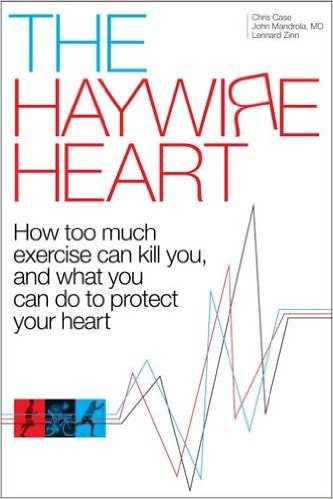
Beyond listening to our discussion below, you can get a Cliffsnotes understanding by reading Chris' original article, Cycling To Extremes, that was developed into his book.
Are endurance athletes hurting their hearts by repeatedly pushing beyond what is normal?
The sun was bright upon the upturned redrock Flatirons above Boulder, Colorado. It was a beautiful July morning in 2013. Lennard Zinn, a world-renowned technical cycling guru, founder of Zinn Cycles, longtime member of the VeloNews staff, lover of long rides, and a former member of the U.S. national cycling team, was riding hard up his beloved Flagstaff Mountain, a ride he had done a thousand times before. But this time, it was different.
His life was about to change forever.
When his heart began to flop like a fish in his chest, and his heart rate jumped from 155 to 218 beats per minute and stayed pegged there, his first reaction was simple: “I went into denial.”
He arrived to the ER that afternoon and was later brought via ambulance to the main cardiac unit for an overnight stay. Though he trusted the cardiologists and the ER doctor, he doubted their warnings. His denial was strong.
After following their recommendations for rest, he returned to training; the electrodes glued to his chest and the telemetric EKG unit dangling around his neck didn’t disrupt his routine. But the annoying episodes happening with increasing frequency during his more intense rides did. The flopping fish would return as his heart rate spiked. More upsetting was the phone call in the middle of the night from a faraway nurse who had been watching his EKG readings and had some shocking news: His heart had stopped for a few seconds.
Listen to the Podcast here – and then be sure to order and read this book. Then share what you've learned with your classes. You just might save someone's life!
Many myths about food and nutrition exist, but the 3 below keep coming up among prospective clients over and over. Let’s take a look.
1. Nutrition is only important for weight loss.
Yes, weight loss is the main reason people modify their nutrition. And yes, tons of weight-loss information is available online — and much of it contradicts other info you’ll find.
But good nutrition can help with many issues. For example:
– Do you have trouble recovering quickly after workouts?
The right food plan can reverse that completely.
– Do you have high blood pressure, diabetes, pre-diabetes, or other health problem? The right food plan can reverse those problems completely, as well.
– Do you experience mood swings? Do you feel as if you need more energy?
Once again, the right food plan can help you manage and reverse either (or both) of those issues.
2. Weight loss is just calories in/calories out. I can do it on my own.
You can do many things on your own, including decreasing calories. But be aware that foods are much more than the calories they contain. The hormones they trigger may be much more significant.
It’s not true that all calories are equal. Often, changing what you eat can make a bigger difference than decreasing how much.
3. Uh-oh: Major changes required. It’s too complicated and too hard.
It really doesn’t have to be hard. It’s absolutely possible to make small — and easy — changes that produce big results. But there’s a catch — you have to do it. And sometimes a good coach can help you make those small changes and get the results you want.
If you’d like help with your food in a way that’s easy, just click here and request your free Eating Empowerment Consult. Find out just how easy it can be to make small changes, step by step, that help you feel fantastic.
Do you have a persistent health issue that hasn’t responded to your nutrition efforts? More and more people are using nutrition and fitness to help them overcome problems that used to send them to doctors and pharmacies.
If you’ve been working on the problem for a while — weight loss, high glucose, headaches — you probably have tried many strategies. But others may exist. Don’t assume you’ve tried everything.
Here are 3 tips to help you get the most from your nutrition appointments — and your nutritionist’s suggestions.
– Don’t improvise.
Instead: Follow instructions to the extent you can.
A recent client had been to doctors, but now wanted to treat her diabetes without meds. She was taking 31 (really!) different supplements, and some of the supplements were for health issues she didn’t even have, like liver and thyroid.
She had poor results — her fasting glucose was not dropping any lower — but she kept taking every supplement.
Among other things, I suggested she lighten the stress on her liver and kidneys by eliminating any supplements that were not designed to lower glucose. We met a week later, and she told me her glucose had gone up, not down.
It turned out she had eliminated ALL the supplements, including the glucose-lowering ones.
– Don’t reject an idea for a ridiculous reason.
Instead: Be willing to try something new. Your health comes first.
The same client above was in terrible shape physically. Her workouts were barely getting her heart rate to 95 — and she was exercising only 3 times a week. She needed to work out with some serious intent.
She couldn’t exercise more frequently because it caused pain in her legs. I suggested she buy a Krankcycle — an absolutely brilliant piece of exercise equipment. I even found a certified, refurbished one for her at a terrific price. It would have enabled her to work out additional days each week by using her upper body instead of her legs.
Alternating the 2 types of cardio could (and would) have sensitized both upper- and lower-body muscle to insulin and produced solid results.
Why did she reject it? She said they didn’t have room. Her beautiful home is huge, so that made no sense. She wouldn’t consider putting the Krankcycle in any room but one — and wouldn’t consider putting it in the large garage. Who knows? Maybe 8 cars lived in it — or perhaps a family of 6.
Either way, the answer was “NO,” and the reason seemed ridiculous. The result? Again, her glucose didn’t move.
– Get out of your comfort zone.
Self-honesty is key here. Discomfort can be part of one’s comfort zone. Some people even cling to it, possibly thinking that the devil they know is better than the devil they don’t know.
Instead: Decide to do what it takes to move forward. And do that.
A former client had a sleep issue that was medically diagnosed as a deficit of serotonin, a brain chemical that can promote relaxation and is the direct precursor of melatonin, the sleep hormone.
This client rejected every suggestion I made to increase her bedtime serotonin levels — and, by the way, that’s an easy thing to do. My suggestions even made her angry, and they simply involved food.
The behavioral psychologist on our team informed me that this client seemed to feel “special” because of her sleep problem.
A comfort zone isn’t always the best place to be. For your health, do what it takes to move forward, even if it causes temporary discomfort.
Think of starting to exercise — it’s uncomfortable at first because it’s new. As we continue, we adapt to it, and that’s when the magic happens. Food is the same way.
If you’d like help with nutrition to improve your health and energy, perfect. That’s what I do. Just visit www.FoodAddictionSolutions.com/Coaching and request your FREE Eating Empowerment Consult. Find out how easy it can be to move forward and enjoy great health.