The more I teach the more I find that the simplest profiles are the most popular. I often put together simple profiles and I'm always worried that my participants are going to be bored, but the longer the intervals and the more I repeat each set the more they love it. This gives participants more and more opportunities to understand the set and perfect how they perform it. When you combine a simple set with the science of anchoring time and effort, the shorter the interval the higher the output or the longer the interval the lower the output, it makes for a challenging and very personalized workout. I have also found the if I'm not taking the class on a “journey”, but just doing an interval based class my playlist only needs to be a mix of high energy songs, there is no need to try to match riding position or RPM with the music, just rock it!
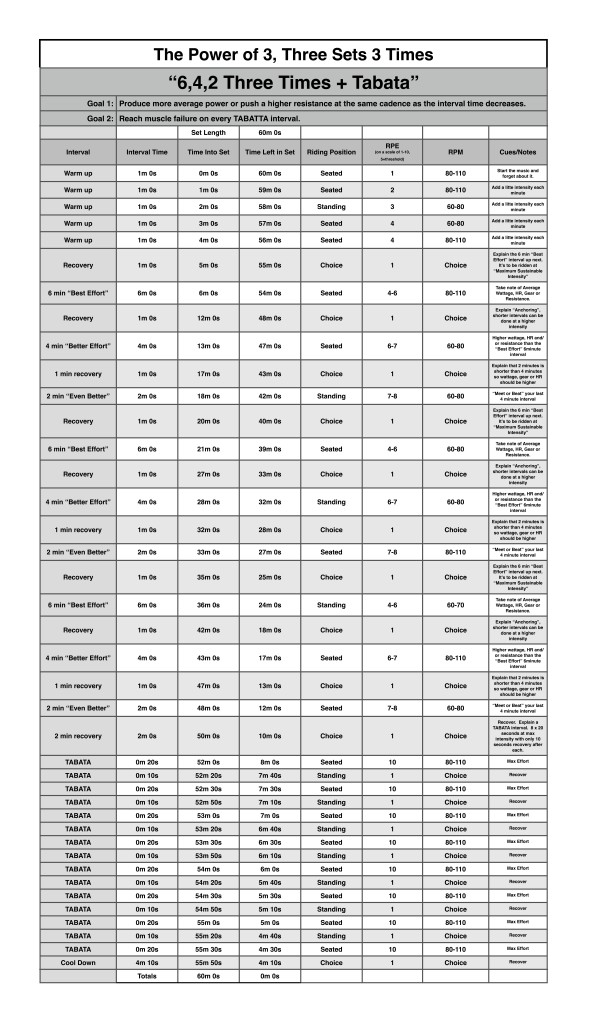
This week I'm sharing with you a profile I used this week in most of my classes. It starts with a 5 minute warmup where I increased the intensity, wattage or HR ever minute. After a minute of recovery we did a 6 minute interval where we rode seated with a RPM of 80-110. If we were riding on bikes with wattage we remembered our average wattage at the end of the interval. If wattage wasn't available but participants had HR monitors I had them take note of either their average HR for the interval. If average HR wasn't available I asked them to take their best guess at their average HR. If the only option was perceived exertion I had riders remember the gear or resistance they were were working with and the feelings in their body like their breathing and burning sensation in their legs. After a minute recovery we rode for 4 minutes but this time we rode with an RPM of 60-80 and at a higher wattage, gear, HR and/or perceived exertion. After a 1 minute recovery we rode for 2 minutes while standing at an rpm of 60-80 and an even higher wattage, gear, HR and/or perceived exertion. After a 1 minute recovery we repeated the 6,4,2 minute set again, taking a 1 minute recovery after each interval, but this time we rode the 6 minute interval in a seated position with a RPM of 60-80, the 4 minute interval standing at 60-80rpm and for the 2 minute interval we sat between 80-110prm. After another 1 minute recovery we we rode for 6,4,2 minute interval for a final time. This time the 6 minute interval was ridden in a standing position at 60-80rpm, the 4 minute interval was ridden seated between 80-110prm and the 2 minute interval was ridden seated between 60-80rpm, taking 1 minute off between each interval and trying to increase the wattage, gear, HR and/or perceived exertion with each interval.
Finally I finished with a tabata interval of 8 X 20 seconds at max effort and 10 seconds recovery. If done properly output, wattage, gear and/or rpm will drop throughout the interval. I tell my class the output will drop but effort should not.
New Power of 3 Mix, Right Click > Save As / Save Target As to download on PC or Download Linked File As on Mac. Open in iTunes and then you'll see this in your Spotify Local File folder.
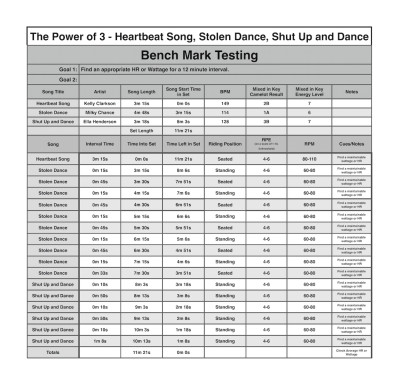
The gold standard of benchmark testing in indoor cycling is the FTP (Functional Threshold Power) test. I'm a huge fan of this test and perform it with my classes on a monthly basis. In a perfect world every rider would know their power and/or heart rate thresholds and have personalized training zones that are percentages of these values. We don't live in this perfect world and in any given class there will be many participants who have never performed a FTP test and have no idea how to determine their threshold metrics. I deal with this dilemma by beginning every class with a proper warmup followed by a benchmark interval or set of intervals.
My benchmark interval or set can last anywhere from 5-12 minutes depending on the type of class and length of intervals being performed that day. For example if I'm teaching an “@” threshold class with longer intervals I'll do a longer benchmark interval set but if I'm teaching an Above Threshold class I'll do a shorter benchmark interval. These sets or intervals should be be performed at the same intensity that is expected for the main sets of the class and an average HR or wattage should be determined and used as a guide for future intervals in that day’s workout. It is important to cue how the benchmark interval should “feel” especially for new riders who may not have previous rides to base their HR or wattage numbers on.
[wlm_private ‘PRO-Platinum|PRO-Monthly|PRO-Gratis|PRO-Seasonal|Platinum-trial|Monthly-trial|PRO-Military|30-Days-of-PRO|90 Day PRO|Stages-Instructor|Schwinn-Instructor|Instructor-Bonus|28 Day Challenge']
Now that each rider has a metric to aim for during each interval or set the instructor can set realistic and attainable goals.
3 song harmonically mixed track, to download Right Click > Save As / Save Target As to download. Open in iTunes and then you'll see this in your Spotify Local File folder.
In many of my “The Power of 3” posts I have written about the importance of “anchoring” time and effort. In it's most basic terms this means that the shorter the interval the higher the effort. If you instruct on bikes with power, then a higher effort should also translate to a higher wattage. This “anchoring” concept holds true as long as riders are given appropriate rest or recovery after each interval or hard effort. If riders are not given enough recovery between intervals their effort may still be high but their output or wattage will start to drop as fatigue increases. The ability to see this phenomenon is one of the most “powerful” features of a bike with a wattage meter.
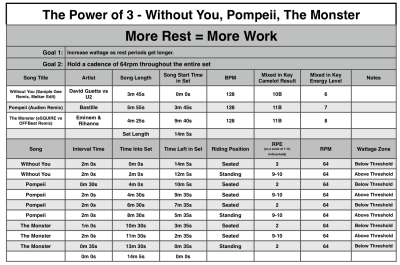
The theme for my Above Threshold classes this month is to show my participants the importance of recovery. Over the last few months I've been using a lot of interval sets where I decrease the interval time from interval to interval and I expect to see a higher average wattage for each interval. For example I may have my participants perform intervals of 5, 4, 3, 2, and 1 minutes, each interval is followed by a 2 minute recovery, with the goal of increasing average wattage for each interval. This month I'll have my riders perform the same intervals, but I plan on reducing the recovery time to as low as 30 seconds between each interval. At the beginning of the month I expect to see wattage drop from interval to interval, as the body fatigues from lack of recovery. In the middle of the month I expect the see wattage held steady from interval to interval and by the end of the month, as the body adapts, I hope to see wattage again increase as the interval time decreases.
The body is truly an amazing organisms and it adapts to the stresses it faces, be patient and enjoy the process.
[wlm_private ‘PRO-Platinum|PRO-Monthly|PRO-Gratis|PRO-Seasonal|Platinum-trial|Monthly-trial|PRO-Military|30-Days-of-PRO|90 Day PRO|Stages-Instructor|Schwinn-Instructor|Instructor-Bonus|28 Day Challenge']
The Power of 3 – “More Rest = More Work”
“Without You (Sample Gee Remix, Melker Edit)” by David Guetta vs U2
“Pompeii (Audien Remix)” by Bastille
“The Monster (eSQUIRE vs OFFBeat Remix)” by Eminem & Rihanna
3 song harmonically mixed track, to download Right Click > Save As / Save Target As to download. Open in iTunes and then you'll see this in your Spotify Local File folder.
Before I was an ICI/Pro Contributor, or Master Educator, before I spent every weekend coaching whatever sport my kids were playing at the time, back in what feels like a different life I was and Ironman triathlete. I spent close to 10 years in pursuit of that coveted Hawaiian Ironman spot, only to see my competition get faster and that spot get farther and farther away. I may not have made it to the finish line in Kona, but the journey I took in pursuit of that dream has made me the person I am today.
People often ask me if I miss Ironman training and racing and I can honestly say I don’t. At that time in my life it was my identity, it was what I lived for. Today I have a wonderful wife and two great 15 year old boys. I would much rather be riding the lifts of Vail, with them, then base training for next year’s races. I may race again some day, but for the next few years I would rather focus on raising my boys, they are my identity, they are what I live for now.
The one thing I miss most about Ironman training are the long training workouts. I loved to train alone. There is no better place to find the answer to any of life’s questions than on a 4000m swim, 5 hour ride or 3 hour run. The rhythm and length of these workouts gave me a chance to quiet my mind and listen. I don’t know where the answers or ideas came from but they just came. Many people call this Flow or being In The Zone.
Flow is a mental state in which a person is fully immersed in a feeling of energized focus, wellbeing and enjoyment in the activity being performed. The hallmark of flow is a feeling of spontaneous joy while.
Many people find the flow accidentally, without thinking about it or trying, all the conditions of a workout magically come together and work feels effortless, time flies by and your body feels like it is working perfectly. This flow state is like a drug, once you have had it once you want more of it. Luckily, finding The Flow can be practiced and perfected.
[wlm_private ‘PRO-Platinum|PRO-Monthly|PRO-Gratis|PRO-Seasonal|Platinum-trial|Monthly-trial|PRO-Military|30-Days-of-PRO|90 Day PRO|Stages-Instructor|Schwinn-Instructor|Instructor-Bonus|28 Day Challenge']
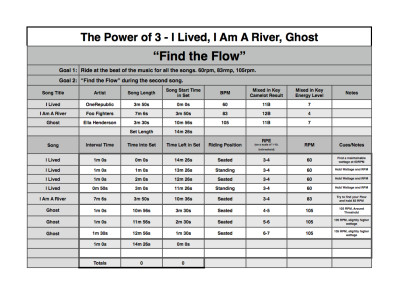
The controlled environment of an indoor cycling studio is the perfect place to practice and perfect finding the flow state. I’ve been incorporating one flow state song per class for the past few months and my riders love it. When cueing a flow state song I ask my riders to focus on the beat of the music, or their cadence or the rhythm of their breathing. They need to focus on something rhythmic and hypnotic. The intensity needs to be below threshold, burning legs and lungs will pull them out of the flow. The most important and probably hardest thing for an instructor to do during a flow state song is to BE QUIET. Your riders need to focus on the rhythm of THIER bodies, the sound of your voice will pull them out of this flow state every time.
I have gotten more positive comments about this addition to my profiles then anything I have ever done. I would recommend you add it in during one of your recovery songs, this way the volume or intensity junkies in your class don’t feel like they are missing out on any of the “quality” of the workout.
If you listen to my recorded classes below, see if you can find any “Soul Cycle” influence, no I have not added weights.
3 song harmonically mixed track, , to download Right Click > Save As / Save Target As to download. Open in iTunes and then you'll see this in your Spotify Local File folder.
“Bone Thugs-N-Chili Peppers” by The Melker Project
“Vertigo (Redanka Power Mix” by Peter G ReWerk
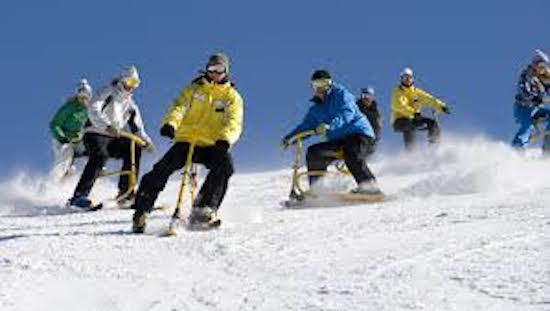
As many of you know, I live in Colorado and skiing is one of my family's favorite winter activities. Every year we used to look forward to the release of the latest Warren Miller ski movie as the unofficial start of ski season. It became a family tradition to get tickets to the Friday or Saturday night showing at the Paramount Theater in downtown Denver. The later the show the rowdier the crowd, everyone was so amped to get the ski season started. I also knew that the new release meant fresh ski footage and music for my video cycling class. Over the years the footage has remained top notch, but the music has gotten worse and worse, it has gotten so bad that we stopped attending the show two years ago. That year the music was so bad that I wished I had brought my ear buds so I could have put together my own playlist, on my phone, while watching the movie.
[wlm_private ‘PRO-Platinum|PRO-Monthly|PRO-Gratis|PRO-Seasonal|Platinum-trial|Monthly-trial|PRO-Military|30-Days-of-PRO|90 Day PRO|Stages-Instructor|Schwinn-Instructor|Instructor-Bonus|28 Day Challenge']
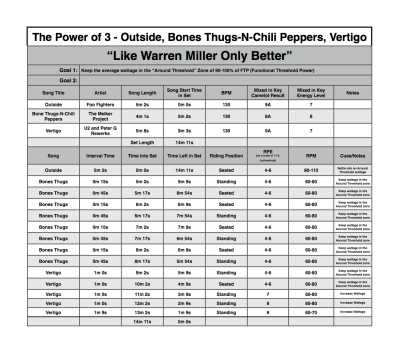
This got my sons, Seth and Christian, and I thinking that we should start using the awesome ski footage that is available on the internet and put it together with music that people actually listen too. Over the years we have created quite a library of ski videos, many that I use in my indoor cycling classes, that we believe is like Warren Miller, only better. I hope you enjoy the work we have done and let me know what you think.
3 song harmonically mixed track, to download Right Click > Save As / Save Target As to download. Open in iTunes and then you'll see this in your Spotify Local File folder.
“Danny, Dakota and the Wishing Well” by A Silent Film
“Can't Hold Us” by Macklemore & Ryan Lewis
“Vertigo” by U2
Last week I wrote about the “Threshold Check” or “Mini-Threshold Test” that I perform at the beginning of every class. This week I want to share how I teach the full 20 minute FTP (Functional Threshold Power) Test. With this post I have also included the playlist and video I use as well as a recording of me teaching an entire FTP class.
[wlm_private ‘PRO-Platinum|PRO-Monthly|PRO-Gratis|PRO-Seasonal|Platinum-trial|Monthly-trial|PRO-Military|30-Days-of-PRO|90 Day PRO|Stages-Instructor|Schwinn-Instructor|Instructor-Bonus|28 Day Challenge']If you are lucky enough to be teaching on bikes with power I believe it's important to use this technology and all the available metrics to their fullest capacity. I find the most powerful use of a power meter is in finding one's maximum sustainable wattage or threshold. Threshold is that state of equilibrium between high intensity exercise and the body's ability to buffer and filter the waste products produced by this intensity. With a power meter we can find a wattage number that correlates with this state of equilibrium or your FTP (Functional Threshold Power).
Exercise physiologists have devised many different ways to find one's threshold, but I have found the simplest and cheapest technique is to perform a 20 minute effort at maximum sustainable intensity. At the end of this 20 minute effort take note of the average wattage and multiply it by 95% and this number is your FTP. I'll go into greater detail on how to use this number in later posts, but now let's go over how to perform the FTP Test.
I like to have my riders warm up for a minimum of 15 minutes. I'll have them slowly increase their intensity for 10 minutes then I like to have them perform 3-4 one minute “pickups” increasing their intensity each interval while recovering for one minute after each. After a short, 3-5 minute, active recovery from the pickups I have the class perform a maximum effort 5 minute interval. This effort ensures that the lactate buffering and clearance systems are turned on and ready for the 20 minutes test that follows. I also have class participants remember their average wattage for this 5 minutes, it's a good number to refer back to when doing above threshold intervals. After another recovery, about 10 minutes long, we are ready for the 20 minute FTP test. Make sure all your participants know how to reset the bike console so they can get a new average for the 20 minute interval to come. Tell them that this is a very simple test, you want them to ride at the highest possible wattage for 20 minutes. Your job as the instructor is to motivate, but not to talk too much. Let your riders “settle in” to their maximum sustainable wattage and their most efficient cadence and just let them ride. At the end of the 20 minutes make sure they remember their average wattage, multiply it by 95% and they have their Functional Threshold Power. This “Benchmark” test is also great to see improvement over time, with proper training FTP should continue to improve.
Let me know how it goes, my classes love FTP days! They work so hard every day and once a month they get to see the payoff for all sweat and suffering.
6 song harmonically mixed FTP track , to download Right Click > Save As / Save Target As to download. Open in iTunes and then you'll see this in your Spotify Local File folder.