Now that you have a good idea of how to teach your indoor cycling class about the basics of carbohydrates and performance, let’s move into the next logical macronutrient: protein.
You’d be surprised at the number of people in your class who have only a very basic understand of protein, and often simply think that it is derived from meat and should be eaten with dinner.
Begin your discussion of protein with an explanation of what proteins actually are: vital components of every organ and action within the human body, without which we would simply cease to function. In the absence of proper nutritional building blocks for protein, the human body will cannibalize it’s own lean muscle mass and organs, and experience a weakened immune system, poor performance, and inadequate recovery and fitness response. Proteins are comprised of amino acids — many of which the body cannot make on it’s own unless complete proteins are present in the diet.
But it’s a myth that you need to get your complete protein from meat.
Whether a student’s goal is fat-burning or human performance, if the proper fuel isn’t there, the goal won’t be achieved.
The problem is that it can be too easy to feed your students through the firehose on Day 1, scaring them away with big words like “glycemic index” and “periodization”. Instead, why not include a series of mini-lectures in your class, during which you teach your students with a brief 5-10 minute anecdote during warm-up or cool-down?
You can literally take each manageable section of this ten week series on Indoor Cycling Nutrition, and turn it into a ten week nutrition mini-class for your students. This will give you a value-added service that you can feature in your marketing, and give your students both a physical and mental benefit during your classes. I’ll write each article in a manner that allows you to easily a) break information into small chunks so you don’t have to be reading this article off a piece of paper while you’re sitting on your bike and b) easily explain it to your students, most of which will not have backgrounds in nutrition science and physiology.
Without further ado, let’s hop into Part I of Teaching Your Indoor Cycling Class About Nutrition: Carbohydrates.
If you live in a state that is relatively flat (3% grade or less on most roads), then generating power will be more for generating speed, overcoming wind resistance, toning leg muscles, and in general getting fitter. However, if you live in one of our hilly states, you know well that it’s all about the climbing.
In fact, unless you are a time trial specialist, the main determining factor for whether you can be competitive in racing, or successful at that century ride you’ve always dreamed of doing, will be how you ride in the hills. As a spectator of professional cycling, you may have also noticed that it is the mountain stages that typically determine who will make the podium, and who waits till the next race to make their mark. At the end of the day, climbing is just about the most important discipline to conquer in outdoor riding. To that end, the Cycling Fusion Speed & Power Climbing chart can help you train in the hills.
Across the top of the chart are the grades of a given climb. The left side represents the speed you will travel up the hill if you can generate the Watts/Lb that is reflected in the intersection of the two. For example, if you want to climb a 7% hill at 10 mph, you will need to generate 1.5 Watts/Lb. How do you know what grade a given hill is? There are numerous mapping programs that can tell you the average grade of a given section of road, you can get a reading from certain bike computers or GPS devices, or finally, you could calculate it if you know the elevation gain, distance and a little algebra.
Notice on the sample chart below, that the cells representing 1.0 or 1 Watt/lb are highlighted in red or pink. This is because the power created at this level permits the rider to climb most hills at a reasonable speed.
During the development of the Cycling Fusion Power Training System, we did numerous indoor and outdoor comparisons of power numbers, which included different victims (er volunteers) riding specific hills with specific grades and observing their average speed and power that was recorded from top to bottom. These field tests, as well as the general riding principles of the road provide the basis for 1 Watt/lb as the gateway to outdoor climbing. Consider also these facts:
Below 5 mph, it is extremely difficult to keep a bike on line, rolling straight, safe and steady.
Below 5% grade it’s not much of a hill. As a point of reference, rail trails are typically 3% grade at their highest, and on occasions 4% because trains could not generally negotiate grades steeper than that.
In looking at the top end of the applicable grades, research on road construction guidelines has shown us what we as avid cyclists already knew from experience, that double digit grades are rare, and construction crews avoid building roads that steep when possible, but there are times when that is not possible. There are a number of references on the internet that corroborate this fact; a couple appear below. Maine and New Hampshire each show guidelines that range from 5% to 12%:
Consequently, the facts above permit us to construct a sort of minimum set of hill grades and speeds that should be manageable if one wants to ride outside, unimpeded. That is, the desire is to ride up each hill, not needing to get off and push the bike. This range is a speed starting at 5 mph, and a grade that can be negotiated up to 10% grade. The configuration below represents the minimum output required to keep riding within these guidelines. In general, it is 1 Watt/lb or less:
Notice that 10% does not quite make the 1.0 Watt/Lb guideline. Since we know that double digit grades are more rare, and often of shorter length, we can assume that the rider can use power in their Climbing or Explosive zones to conquer these sections.
Long time Master Instructor Dixie Douville is our special guest! Dixie explains her 2 x 2 x 2 Audio PROfile.
This is one of my rider’s favorites because it constantly changes up and challenges them to respond. I find that they consistently perform in a focused more dedicated manner when I coach them in this one. Just when they get comfortable with one stage, they are asked to push a bit harder, concentrate a bit more and dig a little deeper. I love it when my students can really grab on to a ride like this, the intensity in the room is palpable and the relief when it is over is always something we can laugh about.
[private_PRO-Seasonal][private_PRO-Platinum]Here's your Spotify PRO/Playlist! We have made every attempt to replicate the original playlist. In some instances the tracks specified were unavailable in Spotify. Here it is in Deezer
Where necessary we have substituted individual songs of similar length and tried to maintain the Instructor's intent. [/private_PRO-Seasonal] [/private_PRO-Platinum]
Don't ask why, but I was over at the Life Time Fitness Triathlon Site this morning. Thankfully you can't sign up yet they have this great song available as a free download.
Minneapolis music icon Tim Mahoney completed his first Triathlon — the Life Time Fitness Triathlon — in 2008. With his new single You're Not Alone, he hopes to motivate people to make things happen in their lives.
“It's about trying to get deep inside yourself to find that inner strength that we all have but sometimes can't find,” says Mahoney about his latest single. “I'm just a regular voice out there that says if you stick to it, you can accomplish your goals. When the chips are down, there is reason to believe.”
I though this tied in well with Jennifer's earlier post about legal free music sites.
“A student approached me after one of my indoor cycling classes, complaining of an intense headache and asking me what I thought. I didn’t know what to say, so I just told her to see her doctor! Any thoughts?”
– S.H., Darien, NY
Melissa writes:
First off, kudos to you for having the courage to acknowledge the limits of your expertise. You did exactly the right thing to refer your student to see her physician.
Exercise-induced, or exertion headaches are yet another incompletely understood phenomenon (that tends to be what I end up writing about on ICI/PRO, after all!). Headaches that occur during or immediately after exercise are well-described in the literature and are thought to be quite common: it is estimated that 1 out of 100 people experience at least one exertion headache at some point in their lives1. However, large prospective studies are lacking to identify exactly what causes them2.
We can think about exertion headaches as one of two flavors: primary, which are not connected to any underlying problems, and thus not serious, and secondary, attributable to some other, potentially serious medical problem but triggered by exertion. Most exertion headaches are primary. Exertion headaches are often described as “throbbing” bilateral (both sides) pain, lasting anywhere from 5 minutes to 48 hours. Secondary exertion headaches can also include vomiting, visual changes, and neck stiffness, and can last for several days3.
We know that exertion headaches occur under conditions of “strenuous” activity. But why?
The leading theory on headache, migraine or otherwise, is that it is related to changes in blood flow to the brain (both increased and decreased flow — all that counts is that there is a change). Revving up one’s system, perhaps due to inadequate warm-up, or starting an intense training program without appropriate build-up, indeed causes changes in blood flow all over, which influences blood flow to the brain4. Even during responsible exercise, there is increased oxygen demand not only in skeletal and cardiac muscle but also to the brain. To increase blood flow to the brain to enhance oxygen delivery, the vessels of the brain dilate. It is this exercise-induced vasodilation which can cause headache5.
Moreover, exercising in warm conditions (i.e., outside on a hot summer day, improperly ventilated Spinning studio) can independently lead to vasodilation (think: heat dilates vessels; cold constricts vessels — we’ll revisit this later).
Hypoglycemia, or low blood sugar, can also cause headache6. Reminding students to make sure that they eat something (check out ICI Podcast #3 with dietitian Tyler Young on tips for pre- and post-exercise fuel) before and after they train, and during exercise for a training session lasting longer than 60 minutes, is an important responsibility we as instructors should take seriously. Our nutritional fuel has major ramifications for our metabolic adaptations during and after exercise, which I will describe in an upcoming ICI column.
So what to do about exertion headaches?
Anyone who experiences an exercise-induced headache (intense pain during or after strenuous exercise) for the first time should see their physician for evaluation, as well as anyone who experiences changes in their exercise-induced headaches. After determining that these headaches are not the result of an underlying problem, the physician will often prescribe an anti-inflammatory drug (like indomethacin, which constricts blood vessels) for the athlete to take immediately when he or she feels a headache coming on7.
But the mainstay of exertion headache treatment is prevention, through the reduction of risk factors. Proper warm-up before exercise, proper cooling and ventilation of exercise settings, as well as adequate sleep, nutrition and hydration can reduce the occurrences of exertion headaches8.
In addition, research supports the use of head-cooling for the treatment of headaches. Just as heat causes the blood vessels in the brain to dilate, cold causes the same vessels to contract. By applying ice packs around the head or submersing large portions of the head in ice water (i.e., under a faucet or a locker room shower immediately after indoor cycling class), this can reverse the vasodilation process and stop the headache9. Neat, huh? (And while anecdotes don’t mean much, this is how I treat my own exercise-induced vasodilation headaches. Works every time.)
TAKE-HOME POINTS
Exertional or exercise-induced headaches are a common but incompletely understood phenomenon. Most exertional headaches do not reflect any serious medical problem. However, if someone experiences a headache during or after exercise for the first time, or a headache more severe than usual, he or she should see their doctor for evaluation.
Like all other recommendations to prevent, well, anything: Warm-up. Exercise in ventilated areas. Sleep enough, eat enough, drink enough. Once option maybe to use a Chill-Its Cooling Towel. And if all else fails, stick your head under the sink under the most frigid water you can bear.
Melissa Marotta is a Family Medicine Resident Physician at Middlesex Hospital. She is also a STAR 3 Spinning Instructor, Certified Personal Trainer (ACE), and author.


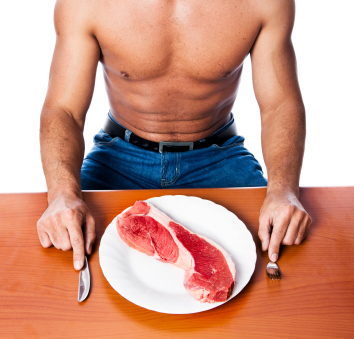 Now that you have a good idea of how to teach your indoor cycling class about the basics of carbohydrates and performance, let’s move into the next logical macronutrient: protein.
 Everybody knows that nutrition is important.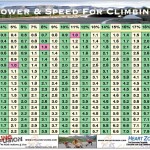



 for the treatment of headaches. Just as heat causes the blood vessels in the brain to dilate, cold causes the same vessels to contract. By applying ice packs around the head or submersing large portions of the head in ice water (i.e., under a faucet or a locker room shower immediately after indoor cycling class), this can reverse the vasodilation process and stop the headache9. Neat, huh? (And while anecdotes don’t mean much, this is how I treat my own exercise-induced vasodilation headaches. Works every time.)