This Podcast is was originally published on October 24, 2008, I have updated it with our new Podcast host information and I am representing it now. I hope you enjoy it, Joey
Fraser Quelch and I discuss his Storm Training System approach to structuring an Indoor Cycling Class and the importance of getting your class participants connected to each other. Are you ready for this?
Have your participants introduce themselves to the people around them.
What a concept. Are you doing this in your class?
Fraser Quelch is the founder of the successful personal training and coaching business, Storm Training Systems, where he focuses on using a cutting-edge approach to guide his clients and athletes to their goals. Besides competing in marathons and ironman distance triathlons, Fraser is a sought-after endurance coach. His athletes consistently post personal best results with many of them qualifying for World Championship events.
As the Director of Programming and Education for Fitness Anywhere Inc., Fraser has brought a whole new category of functional training to the industry. His suspension training techniques are being used by professional sports teams and renowned trainers worldwide to produce peak results in their clients and athletes.
Listen to the show below or subscribe with iTunes with the link on the right.
[UPDATE] A few days after this interview was recorded, Fraser's wife Laura gave birth to Tristen James – 7lbs11oz and 21 inches long.
This Podcast is was originally published on October 10, 2008, I have updated it with our new Podcast host information and I am representing it now. I hope you enjoy it, Joey
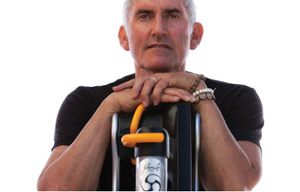
What a treat to be able to interview Johnny G along with Jennifer Sage as my co-host for this special Podcast. When you listen to him speak, it’s easy to understand why Spinning has become a household word.
Johnny G and Jennifer talk about their involvement with the Challenged Athletes Foundation at the Tour de Cove in San Diego CA. Jennifer is presenting and Johnny G is speaking during the 4 ½ hour Spinning Tour to raise money for the Challenged Athletes Foundation. Here’s the link to Jennifer’s Donation Page.
Next Johnny explains how his new Johnny G Krankcycle “competes with nothing, yet compliments everything.” Listen as he describes; his initial inspiration, what makes it special, group class formats and it’s use for physically challenged athletes.
This Podcast is was originally published on October 10, 2008, I have updated it with our new Podcast host information and I am representing it now. I hope you enjoy it, Joey
The first is that I’m going to be doing live Podcast Interviews at the Heart Zones USA – ACTIVE HEALTHY LIVING conference, coming up November 14th – 16th 2008, in Denver Colorado. I will be participating as a student in their – Level 1 (primary) and Level 2 (advanced) Cycling Instructor certification programs. I will be interviewing the presenters, participants and Podcast about my experiences as I go along. Will you be there? If so I would love to meet and possibly interview you. I am especially interested in following someone over the weekend who is getting their initial indoor cycling certification. Leave a comment or send me an email john(at)indoorcycleinstructor.com
Haven’t decided yet? Maybe this will help… Sally Edwards has offered my listeners a special 20% discount off the regular conference registration. Here is the special discount code to get your discount – trainersatconf08 You can register here
I promised two announcements. If you were me, doing a Podcast about indoor cycling, who would you feel would be the ultimate guest? Listen to find out if you were right. Be sure to subscribe to the free Podcast downloads. You won't want to miss what's coming next.
Listen to the show below or subscribe with iTunes with the link on the right.
This Podcast is was originally published on September 29, 2008, I have updated it with our new Podcast host information and I am representing it now. I hope you enjoy it, Joey
Part two of my interview with Sally Edwards. Listen as Sally explains her upcoming Active Healthy Living Conference 2008, November 14th – 16th, in Denver Colorado. If you are looking to become certified as a Indoor Cycling Instructor, with the latest information on Heart Zones Training, this may be something you should check out.
Who Should Attend – If you want to get certified as a
Cycling Instructor – Level 1 (primary) and Level 2 (advanced) or both in one weekend!
Personal Trainer – For certified personal trainers seeking advanced training.
Heart Zones Coach – For those seeking to coach using the Heart Zones Training system.
Triathlon Coach- Level 1. Community Coaching certification in the sport of triathlon.
Metabolic Specialist – weight loss management certification.
Yoga can be a great addition to any endurance athlete’s training plan and overall health. It can improve your strength and balance, as well as give you a heightened sense of how your body moves. But like all aspects of fitness, it’s not without risks.
The Benefits of Yoga for Endurance Sports
Yoga helps develop strength through controlled movements and poses. In any sport, consistent movement is vital for efficiency and injury prevention. Consider running – the connection of your feet to the ground, where you toe-off, your body symmetry in dynamic movement, and your posture are all dependent on good core strength. Boat pose, downward facing dog, locust pose and plank are examples of poses that build strength and stability.
Yoga also develops balance. Cycling (cornering, descending, and out-of-the-saddle climbing), swimming (holding streamlined body alignment during rotation), and running (maintaining a limber, dynamic gait through technical cross-country courses) can all benefit from better balance. Tree pose, warrior, and side plank are good examples of poses that develop balance.
As you move through various poses, remember to breathe into the stretches and be mindful of how your body is feeling as you work through any discomfort. This will give you context in racing and training and help you hone in on imbalances. Simply slowing down your day and moving through a flow session with intent and focus can also be incredibly relaxing.
The Risks of Yoga for Endurance Athletes
If you are in the thick of training for a 100-mile century ride, an hour of strength-intensive vinyasa yoga at the end of the day may take away more than it provides. Even practicing yoga on your recovery day can be too much exercise. To continue yoga without adding fatigue during heavy training blocks, choose a beginner class, or opt for yin yoga, which is more regenerative.
Injury can be a concern in yoga as well. Athletes tend to be physically competitive in nature, which isn’t always ideal for deep stretching. To avoid going down with a yoga injury, try to err on the side of under-doing your poses. Remember, there’s no prize awarded at the end of class to the downward dog champion! Instruction quality is also important. An experienced instructor can help you avoid excessive soreness, a strained muscle, or joint injury.
It’s also a good idea to approach bikram (hot) yoga with caution. It’s a style of yoga enjoyed by many, and can help with heat adaptation for hot climate races. On the flip side though, it can also contribute to fatigue and dehydration. Additionally, the heat opens your joints and muscles for further range of motion, which may increase the risk of a strain or a tear.
Whether you are a yoga novice or a veteran returning after a break, adaptation is key. Yoga should be supplementary to your training, not deleterious. Be consistent and ease into it gradually over a span of three to four weeks. Learning new skills can benefit your main sport as well as overall long-term health and happiness. Be calm, consistent, and patient, and yoga will be a great supplement to your endurance training protocol.
By Lance Watson, LifeSport head coach, has trained a number of Ironman, Olympic and age-group Champions over the past 30 years. He enjoys coaching athletes of all levels. Contact Lance to tackle your first IRONMAN or to perform at a higher level. For more training tips, visit LifeSport Coaching on Facebook or on Twitter at #LifeSportCoach.
In a previous post we talked specifically about the reasons why “non-outdoor riders” would want to train with power. There needs to be incentive for all populations, and thus our focus on those that don’t ride outside was appropriate as a starting point. However, we can’t forget about how powerful (pun intended) this training is for those of us who do ride outside.
Whether it is mountain biking, road cycling, or even touring, power can be the gateway to a new experience on two wheels. You’ll be able to “hang with the faster group”, climb the hills you used to walk, or climb with speed where you used to get dropped, or just feel fresh throughout a touring ride while your companions are “suffering”.
Let’s define power just a little more precisely. It is not simply the amount of “work” you are doing. That is a different measurement. Sure many people say “I worked hard today in class”. You are also admonished by instructors to “Work it!”. In fact, the entire industry uses the term “work out” to refer to exercise. However, when it comes to Power, in terms of work, it is the RATE of performing that work; how fast you do it.
The easiest example is walking up a set of steps. If you walk up the steps, or run up the steps, it’s the same amount of work. However, running will require a different amount of power. To perform the same work faster, requires more Power. Hence, to make a bike go faster, you need more power. The same concept applies to climbing. The same hill will require the same “work” for a given individual, but if they climb it faster, it will require more power.


 This Podcast is was originally published on October 10, 2008, I have updated it with our new Podcast host information and I am representing it now. I hope you enjoy it, Joey
 This Podcast is was originally published on October 10, 2008, I have updated it with our new Podcast host information and I am representing it now. I hope you enjoy it, Joey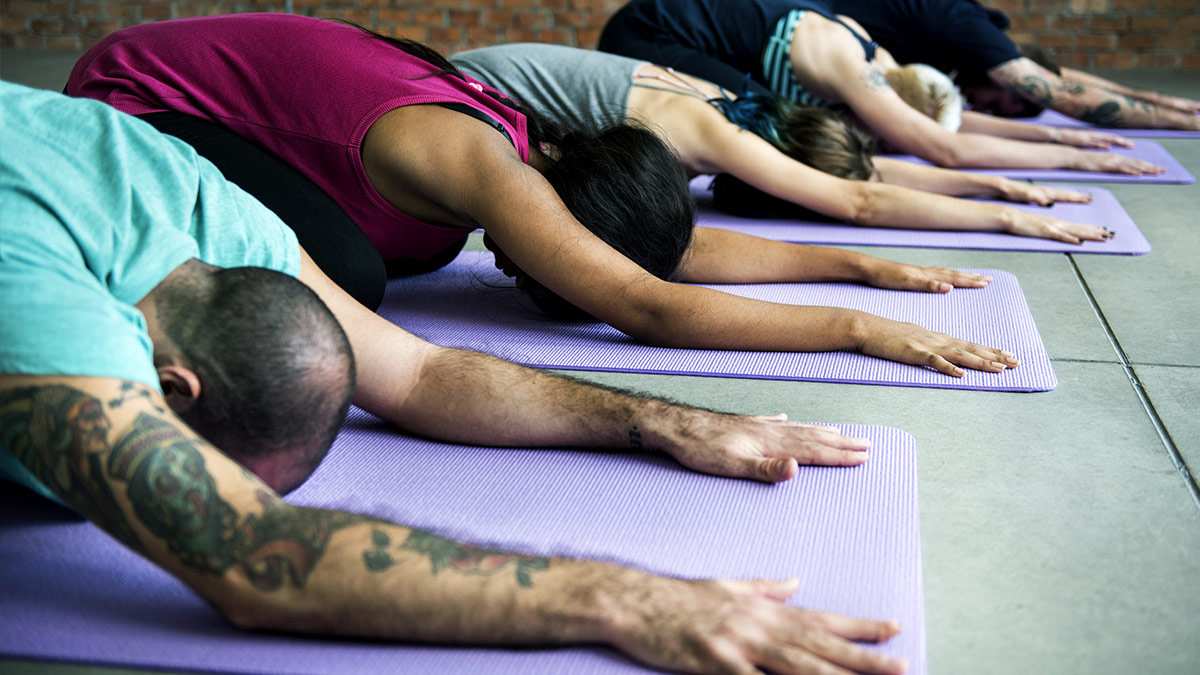
 Yoga can be a great addition to any endurance athlete’s training plan and overall health. It can improve your strength and balance, as well as give you a heightened sense of how your body moves. But like all aspects of fitness, it’s not without risks.