Reaching the end of the MS150 yesterday Amy commented to me that she was still relatively fresh and willing to go longer… which was the exact opposite from last year when we arrived completely trashed at the end of both days. I was in complete agreement and began to wonder why I too felt great at the end of 150 miles in the saddle and didn't feel like I wanted to eat everything I saw for the next 24 hours.
Pulling up front, for 150 miles, riding the bus
The question we both had was WHY? This was the exact same route, distance and trusty Trek Tandem. (We call it the Bus) Our training was about the same both years… so that wasn't it. This year was a little bit cooler and there was a minimum amount of wind… helpful, but we have ridden in the wind before without needing a nap the minute we got home. So what was it?
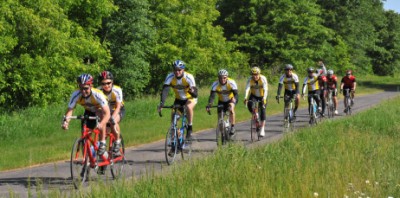
Then we figured it out. This year we managed our intensity while pulling our team for nearly the entire distance; 150 miles over two days. And while averaging ~20MPH for the total distance we found ourselves ready for more. That's right, we pulled the whole thing 🙂
Now if you are confused as to how we were able to ride for hours without a break and still felt fresh at the end, it's really simple. I used my HR monitor as a GPS, instead of a Speedometer. Let me explain…
In years past we had two very strong members on our team: Dana and Jim. They could ride very comfortably at ~ 24 MPH, seemingly forever. Now if you don't ride outside trust me when I tell you that riding a steady 24 MPH pace takes a very fit and strong cyclist. Our strategy for the ride was to use Dana and Jim's strength to pull most of the time and the rest of us would keep up, riding in a nicely disciplined pace-line behind them. Sounds like a good plan except for one thing: with a combined total weight of ~320lbs (Me, Amy and the Bus) riding in a pace-line becomes a bit of a challenge. After years of racing both bicycles and motorcycles, riding very close to others is easy for me. Yes, Amy trusts me. Our problem was in responding to all the small changes in speed that occur in a group. In any pace-line these changes in speed can create a sort of Slinky or accordion effect that has riders in the back constantly slowing and then accelerating to catch back up. What can be easy for a single rider becomes a series of intense intervals on a 320lb tandem. Because the Slinky gets more stretched out, the farther back you are, we found that we needed to sit in the number two or three position.
As the third strongest bike in the group, Amy and I took occasional turns up front. The expectation (maybe peer pressure is a better way to describe it) was to maintain a constant 24 MPH. With one eye on my computer and one on where we were going, our pulls lasted until we could no longer keep our target MPH. I didn't pay any attention to my HR monitor other than a quick look to confirm what I was already feeling; I was way over my T2 – anaerobic threshold. Despite what you may think, both riders tend to work equally hard on a Tandem. Equally hard in relation to their level of fitness that is. If I'm above Threshold, then Amy will be as well. With both pedals solidly connected there is no way for the Stoker in the back to coast.
The end result was a fast, but very exhausting MS 150 that left us completely spent at the end of both days. And did we EAT! We would skip every other rest stop and when we did stop I would be shoving PB&J's down as fast as the volunteers would hand them to me.
This year was very different.
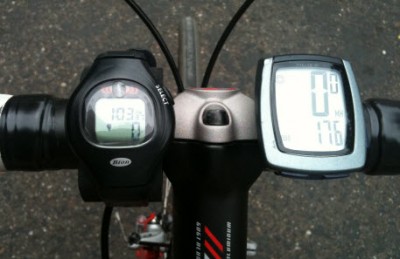
Guided by my Blink - Not my Speedometer
With no Dana or Jim this year we were a bit concerned about setting a respectfully fast pace that would have us showing off our sponsor's jersey, while passing hundreds of other cyclists. Amy and I decided to sit up front for a while and experiment with our speed on the flat sections. While monitoring my HR with my Blink HR monitor this is what we found:
17 MPH = ~140 BPM
19 MPH = ~ 146 BPM which is my T1 (Aerobic Threshold) or what I refer to as JRA (Just Riding Along)
21 MPH = ~ 154 BPM
23 MPH= ~ 162 BMP my T2 (Anaerobic Threshold)
So we settled into a very steady 21 MPH which we were able to maintain for hours at a time. If we encountered a change in grade or headwind I kept my HR right there in between both Thresholds, without concern for our actual speed.
And less becomes a whole lot easier to understand and embrace…
As I continue to collect responses to the Heart Rate Training Survey -513 so far, and I would still love to know your experiences – it's becoming clear that beyond the confusing Heart Rate languages we use, the sheer number of choices we have as Instructors in how we communicate HR, intensities, RPE, etc… maybe part of what's keeping our students from taking the step to training with HR.
In the video below, Psychologist Barry Schwartz argues that a having a large number choices does not make us free. It actually paralyzes us into making no decisions.
Pay close attention to Dr. Schwartz's description of how the medical community has pushed decision-making off to the patient at 3:11. This sounds very similar to the canned phrase, “that depends” that's used by fitness professionals every day in response to questions that should have simple, direct answers.
In the survey I asked; Do you conduct any type of assessment, during your class, to help your students understand or identify some metabolic marker (establish AT or T1/T2)? If so please describe what you do and how you teach it.
Here are a few of the 189 anonymous responses I received (all are unedited) and I'm interested in your responses.
Lactate Threshold test LT segment within periodization annually.
LT field test I teach 4 energy zones. The warm up is Zone 1…Zone 4 is almoxt breathless. For the most part, our students won't get to or even. Flirt with AT.
Threshold Field Tests I ask students to monitor their breathing, using “near breathlessness” to gauge their AT.
No We do a threshold test twice a year. I include the zones when I teach and they follow The other instructors do not use it.
no I use breathing and perceived exertion to try to establish metabolic markers in the absence of knowing LT I am always supporting having my students be aware of their different heart rate training zones..
I spend alot of time on training right below their LT and how that would feel as compared to being a few beats above their LT and the importance of KNOWING the difference thru physical ques they receive from their body as well as the their heart rate numbers.
AT is similar to a five mile jog – you could maintain this exertion level for 45 minutes to an hour with deep, rythmic breathing; able to speak in sentences but probably don't want to. LT is just below where you might begin to feel the burn. If you exerted any more, you couldn't maintain it for more than two to three minutes and then you'd have to back off and recover for a decent amount of time. I brought in extra HR monitors of my own and lent them out. I then set a time to field test once a month. For those that are new or missed that, I teach threshold by breathing cues because they always think they are at Threshold but can easily complete sentences! Once they have trouble lacing a few words together, I ask them to use that number for the workout. Then I ask how many times they perform a cardio activity per week. From there I ask them to consider that # we determined as T1 as 83-85% of their MHR for the day. I talk about and describe Zones 1 – 5 and use them to help participants determine their effort based on perceived exertion, breathing etc.
FTHR testing is done every 6-8 weeks and we throw in LT rides to give them a sense of what this feels like. They are told specifically, “if you haven't done the FTHR ride, please go off of the RPE scale of 1-10.” I qualify LT as a 5-6. Describe what lactate threshold should feel like and to remember that number for future reference
No Maximum Aerobic Function Test (MAFF) percentage of hrmax and feel (i.e., the type of ride we're doing: recovery where you can talk easily while you ride; moderate where you can talk but need to pause for breaths; and hard or race where exertion prohibits any verbal communication for short periods of time. i do a small group class that goes over hr monitoring, but in regular classes not so much.
Yes, special classes using T1 T2 information from Heart Zones. See recent article in Fitness Journal. not currently – have done this in the past. No LT Treshold Assessment Ride based on profile by Jen Sage, maximum HR after 2 min hard effort, and HR recovery.
No but I damn well should!
Yes, compare the percentages to matching zone or rpe I use how your breathing feels Sub-max Lactate threshold class.
Offered but no real interest I use talk test, how each zone should feel by how they are breathing.
T1 and T2 and max testing I coach class so every listener can grasp some type of understanding. ie “Warm up should make your body begin to feel warm but should be easy to talk for at least the first 5 minutes”. Threshold-“You want to quit because it's hard and your legs are burning, but…if you go inside yourself and control your breath you know you can pull of a few more minutes. That's about 85-90% of max”. Etc….
yes, By how they should be feeling at threshold and sub threshold. ie breathing, talk test, how long could they hold the effort etc yes – basically training from Jennifer Sage I no longer teach a class and I didn't conduct any tests for a number of reasons not presently possible
Have taught jennifer's LTFT at one club but management don't want me to do it regularly in case I leave and there'll be no one to continue it. So frustrating because my class loved it. Now I do a 5 min climb at the end of a HR focus class and use pre to estimate LT HR graded submax test per Edwards & Reed HR Monitor Book for Cyclists Threshold tests none.
I'd like to, but need to spend time to learn. n/a no
Yes We do efforts with Heart rate evaluations Every class I try to establish were LT/AT is, how it feels to be at, below, or above it, and how to move around them. Executed through a combination of speaking, cueing, and guiding them through it as the class goes on. Occasionally do LT test In my small group training sessions I perform LT field tests on the bike to establish HR training zones.
every 6-8weeks I bring in what I call ” Puke Test ” – everyone wears their HRM and I put them through their test… 4-6 MAX heart rate tests and we review where they were vs. where they are now. Number of beats per minute recovered in first minute of recovery I usually talk about how you are able to talk or not not at At and when breathing changes from being able to control breathing trough the nose and out trough the mouth to uncontrolled breathing threw the mouth.
I use a hill climb lasting 10 min or so having them add resistance every 2 min. until they can not add any more or until they can not raise there HR any more. I explain to them them the difference between T1/T2. We do AT testing and Benchmark testing Can you breathe in and out of your nose? no I ask them to pay attention to the “output” feeling or effect of their efforts & have them work in that place for a while. I then offer them a “reality check” & change the way they are working to see the effect on that feeling. Ex: asking them to go for a max effort for 15 sec & see what happens, immediately following, after 1 min, etc.. Did they get “breathless”? were they close to it? How long to get back under control…. this is just an example but I use a lot of metaphors, depends on the vibe that day. at least one time per month i run a very specific class using heart rate as a measure during intervals then explain the hrm readings I explain the cadence for the class, do cadence checks and describe the intensity level I want them to be at with breathing descriptions and details about where they should be feeling the intensity in their legs, core, etc. no. BUT, I've got the OK to do a 12 week structured training schedule next fall/winter. Will do talk test and require monitors for these classes. most dont wear HR monitors so i will use breathing as a signifier of what their heart is doing. ie. active recovery on the bike, time how long it takes to get their breath back.
In a standing climb at each block of music ill ask are they breathless, are they working at 8/10 on their scale or 9/10. then get them to test the scale, by adding in a gear and seeing if they can maintain it. I teach them to find their approx AT (somewhere around 85% or in Zone 4 for most conditioned people) by focusing on ‘where the breathing changes', where they pretty much would HAVE to start breathing through the mouth. I tell them it is between Very Strong and Hard, or about 7 and 1/2 on a scale of 1 to 10. Heart Zones No Not during the specific class. I have done LT field tests for our clubs no but I make sure they know I'm available after class to explain these concepts if they need help reaching their goals I don't
No, but I wish I could do an AT assessment. none w/initial use, I use the pre-programmed 220-age; as an intro; I then build on the principles and calculate Karvonen; I use the empirical 85% AT; I constantly promote use of 1 of 3 Human Perf Labs in my area to obtain AT; I hope to start offering Field Tests this Fall; I figure as long as my class numbers are high I can intro more advanced training I used to ,but since only 15-20% of my 56 participants weat monitors, it seem to be a waste of effort on my part to explain AT every class.
We have a large screen that shows zones 1-4. It is an awesome chart, explains numbers, and how you should feel in the zones, I keep the chart up the whole class.
I teach my whole class with RPMs. We have them on all the schwinn bikes. I feel this is the best way to teach a class, when all participants do not have monitors. Race pace HR = Threshold HR no train them to find and explore their sweet spot, where they are working somewhere between not enough and too much so they can accurately determine the difference based on how their body feels at those moments LT, where the legs start to burn, they are going over the LT, work arond that point. I have the class hold a fast flat for 3 min. Then they rest for 30 Sec. add a turn up, fast flat for 3 min. rest 30 sec. add a turn up the hill Standing run 3 min. Back to a flat road for a 1 min. rest and check their numbers. I have them take their heart rate periodically to compare the high and low with effort.
no Heart Zones field testing for threshold heart rate and/or Metabolic Testing (New Leaf) for those who get tested don't understand question sub max test to get a more accurate max, take a resting heart rate, ask questions about what heart rates they see when they feel a certain way, use a Karvonen formula to figure zones, make them a heart rate card. Compare the anaerobic zone in an interval class on hills and on flats and see which needs more training. Cadence check i use zones loosely in that a zone one is nose/nose breathing (in and out) could do for hours vs. zone 4 breath is thru mouth (inhale and exhale) and can't keep up for more than a few minutes depending on fitness levels.
No at field test I've done a threshold test. No We teach as many as 52 cycle classes per week. I educate my students on how to measure their own progress using heart rate, zones, and how they feel. have done a at test with a few interested memebers working towards weightloss breath cues I compare HOW you are breathing with RPE and what type of energy system is mostly being used We spend considerable time educating classes vis-a-vis Lactate Threshold, Lactate, what it is, why it is produced, the benefits of lactate,how it is used by the body, hydrogen ions, etc. we do power zone training Only to a few. Most do not want to get that technical ranges We use Lt test. We follow model tought by Spinning/Spinfitness. Very few of us do it. Some ICI do not know how to do it. plan to use the Foster Talk Test as we learned in Winter Training.. I've not done anything formal since there aren't enough HRMs in the class to even bother. We operate a very periosized schedule, building up every two or three months to a full Race Day. During this time we are consistently monitoring and adjusting cliente HR numberw to become more accurate for them, and occasionally conduct lactate field testw. Lactate Threshold via breathing cues or HRM once threshold has been established.
N/A Not currently We use our periodization classes throughout the week. But we also offer Spinning for Weight Loss which tries to establish AT.
We have offered New Leaf testing twice at our Y. establish MLT as per Jennifer Sage lecture Guidance from the top is “unless they ALL have monitors, don't train to HR” No. I need help here! Use Carmichael method and Jennifer Sage method When a student gets a heart rate monitor I conduct a max heart rate test as described in the Spinning Instructor manual. Threshold test on a special day outside the normal class schedule. Breathing, ability to talk among other things durring class. RPE, descriptive cues on how they should feel in each zone Before class alert them to pay attention to the following, and to monitor these during class, especially when I hone in on these: perceived exertion, breathing, ability to speak, muscular sensations, focus on terrain types. no no establish AT by performing a subjective sub-max test in conjunction with max HR based on age related formula or Karvonen formula sometimes I qualify AT10-12 minutes into class so they know what HR is their threshold for that day I do LT testing quarterly. Daily I describe how their breathing will help them identify where they're working. Ask questions during work sets that are long and intensify over time such how is your breathing, how do your legs feel? can you talk without pause? Describe feeling and approximate Zone. Yes, using PE Feelings/physical sensations associated with threshold (mouth open, deep breaths, uncomfortable sensation of not really wanting to be there but still able to maintain it for a bit – feeling of standing on the edge of the Grand Canyon!) No No offical AT testing, but our riders understand how it feels to work above or below threshold rpe I have had 1 heart zone class where my regional manager brought a set of HR monitors and I did about 4 field tests to locate threshold. none I explain what the AT is and how it should feel. Zone level training with monitoring of exercise HR and recovery (Time-based) Every month I offer an Anaerobic Threshold field test. Then I cue zones during class based on AT RPE, breathing, lactate build up, etc…. no I teach the zones as it reflects heart rate levels, but more importantly, how breathing is affected and how it should feel. I do a threshold test to set AT for each student, then follow up to adjust it as needed.
Yes, we do have Treshhold testing
Also advocate the Suunto ‘Training effect' Threshold Testing Information. no
NO…no desire from students for this information. try to drop about 10% of HR within a minute or so before starting the next interval. check cadence as it relates to resistance.
No, little to no interest we are discussing having classes to test heartrate threshold AT. Ex.: seated climb to seated runs to standing attacks really talk about RPE no basically only use preceived exertion scale 1-10
In this post I mentioned that I was using a Blink Heart Rate monitor because I can't see the numbers any more. It's flashing light shows me when I'm below JRA ( T1 or aerobic threshold), between T1 and T2 (T2 is anaerobic threshold) or above T2. Very simple. I like simple when it comes to trying to communicate with my class.
ICI/PRO member Chuck Cali has a fun video he shot as a way for users to learn a very simple assessment of T1 and T2. Except he doesn't call them T1 and T2… Instead he talks about Blue, Yellow and Red. Very simple 🙂
Please watch this and consider if this would be something you could teach on the bike as an introduction to Heart Rate training.
Ask Amy about her biggest teaching challenge while on a working fitness vacation at a Caribbean resort and she will tell you it's accommodating all the different languages of the guests. Jamaica is very popular among Europeans and Asians, so in one class she may have students that speak German, Spanish, Russian and Japanese. Many know some English, but Amy has learned that sign language works the best because everyone understands it. She gets their attention, demonstrates what she wants and then leads them with nothing more than her smile and hand gestures.
I'm not saying we should adopt a form of sign language to communicate Heart Rate Training Zones. I'm not sure that would work… But the signage in your club or studio should simply and accurately show visually, exactly what you are speaking in your class.
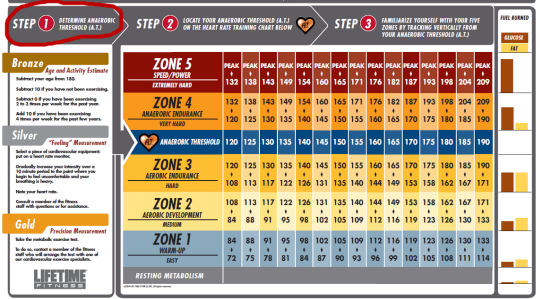
No health club is perfect, but I have to hand it to Life Time Fitness. They have done an exceptional job and educating all of their instructors on the concept of Threshold and the ever present Heart Rate Charts (in every studio) serve as visual reinforcement of the language we all use in class. You can download a pdf of the chart here.
Notice step one
I say exceptional job because it's very rare to find a student in my class that doesn't understand the concept of Threshold Heart Rate and in an average class 60% – 80% of the participants are wearing and using monitors. To put that in perspective, LTF has 90 clubs and in excess of 300,000 members that are being educated about the proper uses of Heart Rate Training .
Am I suggesting we adopt Life Time's chart? Not necessarily. We need a “generic” or “open source” version so everyone will be able to use it without cost or limitation.
How does your club compare?
Do your signage and fellow Instructors all speak the same language?
Are you resistant to establishing a standard? If so, then why?
Tomorrow we officially hit the half way point of our 16 week Winter Training program at the Global Ride Training Center. We’ve employed the Keiser M3 power indoor bikes and Cycling Fusion principals to maximize our use of the indoor environment. However, the foundational basis of all this training is anchored in the most important engine we are tuning – the cardio vascular system. For that, we are major proponents of the Heart Zones Training methods. Twenty four of us are preparing for personal bests and new levels of performance in the great outdoors on two wheels.
Those that have read my Cycling Fusion manifesto know that I’m passionate about pulling the indoor and outdoor world of cycling together. In our 16 week Winter Training program we have a third who have never done any significant rides outside, a third who are on my USA Cycling race team (men and women sanctioned races only), and a third who are just avid cyclists. Most however, have never really trained inside, so this program has been a big experiment for the bulk of the class.
Consequently I felt it important to give them some motivation to fuel the second 8 weeks since we are moving out of a 90% focus on Heart Zones training, and moving into a 75% focus on Power Training. Nothing speaks louder than results, so I retested some of the class to show the real facts of our progress so far. I retested a small sample, since the entire class will be retested at the end of the 16 weeks.
This was very cool. Here is a video of the Heart Zones JumboTRON in use. Sally Edwards demonstrated it at the Heart Zones Indoor Cycling Certification Conference I attended. Heart Rate and training zones for everyone in the class is displayed on the screen. The video playing on the right is the Hawaii Global Ride DVD.




 Tomorrow we officially hit the half way point of our 16 week Winter Training program at the