Do you feel completely in touch with your hunger? Do you know exactly when you’re hungry? Or when you stop being hungry? And what to do with that info?
This short post is about an exercise for getting in touch with your hunger.
Why Is That Important?
Let’s cut to the chase. Every client who has completed this exercise ends up feeling absolutely clear about when she’s hungry and when she’s not, feeling completely in control of her appetite and her eating — and feeling great about herself.
Please don’t think hunger is obvious to everyone. I’ve heard clients say, “Well, I ate breakfast at 7:00 am and now it’s 1:00 pm, so I must be hungry.” Obviously, that’s a thought process, not hunger.
One client began to cry when I suggested the exercise because she thought she’d have to starve all day long.
Another client got angry because she thought she’d have to eat “diet foods” all day. I’m not even sure which foods she meant, or how she got that idea. The subject of diet foods had never come up in our nutrition appointments.
Okay, What’s This Amazing Exercise?
I read about this exercise years ago in a book that I simply can’t remember. As a PhD, I like to cite my sources and would be happy to give credit if I could. If anyone knows who created the exercise, please let me know.
That said, here it is:
– Pick a day when you have a light schedule. Your goal is to get hungry as often as possible during the day.
– As soon as you feel hungry, eat. But eat small amounts of food — just enough to take away the hunger. This will ensure many hunger experiences over the course of the day. If you follow these instructions, you might sometimes feel hungry within, say, 15 to 20 minutes after the last time you ate. (That’s the convenience of a lightly scheduled day.)
– Move away from your usual eating habits. Instead of eating first thing in the morning, for example, check in with your stomach to see if you’re hungry. If you’re not, wait until you are. Then eat.
– Avoid “preventative eating.” Don’t eat extra food now to prevent hunger later. As soon as you’re hungry later, you get to eat again.
– Don’t ignore your hunger signals and try to “tough it out” as long as you can. The idea is to cement the relationship between hunger and eating.
The natural hunger cycle is as primal as it gets: Hunger means eat. When hunger ends, stop eating. When hunger returns, eat. Repeat and repeat.
What This Exercise Is Not
Some mistakenly view this exercise as a weight-loss trick. It’s not meant to be. As explained, it’s designed to put you in touch with your hunger so there’s no question about how hunger feels, how much food is necessary to end the hunger, how it feels when it returns, and so on.
Still, eating in tune with your hunger may, over time, help with weight loss. Of course, you may want to increase the size of your portions to reach a point of “gentle fullness” so you don’t have to experience hunger so often throughout the day.
So What’s the Point?
Without a natural starting point for eating, we have no natural stopping point.
I’m convinced this hunger exercise is the most effective way for clients who lack awareness of their hunger and fullness to discover the wholesome, healthy connection between hunger and eating.
Whenever I’ve used this with a client, the result has always been an increase in the client’s confidence — no more confusion about when to start eating, when to stop, or even how much food to have.
Would you like help with normalizing your appetite and your food preferences? That’s what I help clients do — make painless food changes. Why not visit www.FoodAddictionSolutions.com/Coaching and request a Food Freedom session, absolutely free? Find out just how easy it can be to get your eating patterns on track — effectively and without struggle — so you feel fantastic.
We’ve finally moved past fat-phobia, and it’s now common knowledge that sugar is bad news. Because of that, I’ve noticed people no longer seem interested in sugar as a topic.
But obesity is epidemic, so it is worth looking at eating triggers.
Sugar is definitely an eating trigger — and not just for more sugar, although that does happen. It can make us want to eat more food in general, and that’s obviously not good.
In fact, sugar may trigger full-scale binge eating episodes.
This post is not about binge-eating disorder, detailed in the DSM-5. Instead, it’s about binge eating, which can, and does, occur without the frequency or emotional aspects of the disorder. This post will focus on binges that involve eating large amounts of food, even when not hungry.
How Can Sugar Make Me Binge Eat?
Sugar can make you binge in several ways. This post will cover three of them.
Sugar triggers brain release of endorphins (beta-endorphin). Endorphins affect the part of the brain that signals satiety — the feeling that we’ve had enough food and don’t need to eat more.
Satiety goes beyond just ending a meal at a certain point. After the meal is over, it keeps us from wanting to go back for more food. The part of the brain that houses the satiety center is the VMH (ventromedial hypothalamus, for the curious).
Endorphins stop the VMH from producing the feeling of satiety. So sugar may cause the meal to go on and on — and may also start the next meal much sooner than it otherwise would.
Does Sugar Affect Everyone That Way?
Sugar’s effect on satiety is common to most of us, but some people are more susceptible to the brain effects of sugar. That might include folks with a personal or family history of alcoholism or other addiction, depression or other mood disorders, or a personal history of PTSD (post-traumatic stress disorder).
Someone with one or more of these factors in his/her background may release more endorphins (beta-endorphin) when eating sugar. That could prevent the VMH from performing its satiety function for an extended time.
Then There Are Food Preferences
Endorphins change food preferences, making us want foods that trigger more endorphins. Those would be fats and more sugars.
Some explanations center on the “palatability” of sugars and fats, and that’s logical. Sugars and fats taste great.
But it’s the change in the brain because of the endorphins that makes us want different foods — and those foods further encourage binge eating.
The next post will cover another way sugar might make you binge.
Have you heard it? It’s been around a long time: “How you do anything is how you do everything.”
I feel sure whoever came up with that statement — bad grammar and all — never worked in the fitness industry, or as a nutritionist.
How many times have I run into training clients like Kathy the stockbroker? She was a fearless cyclist but, by all accounts, a rather cowardly stock broker.
Or Debra, a sugar addict whose lack of progress in our weight-loss program made the supervisor say, “I don’t understand. She trains well.” For this client, training was the easy part. Not only was she accustomed to working out regularly, she was down for the intense workouts, too. Nutrition, on the other hand, was her challenge.
Debra was conscientious about her workouts because she’d been using them for years to compensate for bad food habits and her sugar addiction. She was trying to burn all those excess sugar calories in tough fitness classes.
Where There’s No Law, There’s No Freedom
(Apologies to John Locke)
Rachel was a successful attorney and a partner in a thriving law firm. She was less successful at creating healthful meals, at least at first. She did get on the right nutrition track pretty easily, but exercise was the tougher obstacle.
You might wonder how someone who could get into a good law school, make it all the way through, pass the notoriously difficult California bar exam, and become a successful lawyer could possibly have difficulty fitting exercise into her life.
But it had never been part of her life before, so it was completely new. The idea of making time for it was new. Prioritizing it, working her appointments around her exercise session, even waking up a few minutes earlier to squeeze a modified workout into her busy day — were all new.
Rachel didn’t seem to see that she could use the same skills she’d used her entire professional life to launch her fitness “career.”
In fact, when she started working on a new case and knew her schedule would be hectic for at least 6 weeks, her plan was … to skip her workouts till that hectic time was over.
Rachel had no clear picture of the impact those 6 sedentary weeks would have had on her fitness. You can’t take 6 weeks off and expect to pick up where you left off when you quit. You’ll end up starting from square one, especially in the early stages of a fitness program.
We did finally get Rachel’s fitness program solidly entrenched in her schedule, but it was slow going. She started with one day a week, and occasionally a second. Moving to 3 days a week — the minimum for fitness maintenance — took a long time. But she did it and got results.
Perhaps you have participants who are doing similar things. Part 2 will cover a final extreme example and some suggestions for how to use this info to advantage.
My last post covered food intolerances and the changes that occur over time, from the acute reaction to a more chronic one.
The immune response to a triggering food involves a release of stress hormones, opioids, such as endorphins (beta-endorphin), and chemical mediators like serotonin. The combination can produce temporary symptom relief through the analgesic action of endorphin and serotonin, plus mood elevation and a feeling of relaxation.
In that way, eating the triggering food may make someone feel better almost immediately and even think the food is beneficial.
Endorphin release typically involves a concomitant release of dopamine. The combination of those two brain chemicals and serotonin forms what I’ve always called the “addictive package.” Avoiding the addictive food could lead to withdrawal.
After long-term use, someone may eat the triggering food not to experience the pleasure of the chemical “high,” but to relieve the distress and withdrawal without it. It’s almost textbook addiction.
How Does Intolerance/Addiction Affect Health?
As someone addicted to a triggering food continues to eat more of it, the immune system must keep adapting, and may become hyper-sensitized, reacting to more and more foods — especially those eaten together with reaction-triggering foods, or with sugar.
The constant demand on the immune system can lead to immune exhaustion and degenerative reactions, depending on genetic weaknesses. The signs and symptoms listed above are just a start.
Sugar can be a major player in this because it causes inflammation in the body and makes it more susceptible to food reactions. Eating triggering foods plus sugar can make it even more likely that new reactions will occur.
I recall an old book by Nancy Appleton (Lick the Sugar Habit) who suggested that eggs might trigger reactions in many people because they’re so frequently eaten at breakfast with orange juice. Cake is another example: sugar plus wheat, eggs, milk.
As the addictions continue, cravings occur, probably leading to increased consumption. As more and more foods trigger an immune response, the result may be malnutrition, as explained in the last post.
Stats say that rates of food intolerances are rising. My theory is that it’s at least partly due to sugar in our diets — including sneaky sugars that are often viewed as healthful, such as agave, fruit, fruit juice, and sweeteners.
Stopping the Cycle
Definitely give up any foods you suspect may be causing any reactions — even if you love them. Think about foods you eat with those triggering foods on a regular basis, and consider eliminating those, as well.
Above all, avoid sugar. Follow this plan for 3 weeks, something J.J. Virgin also recommends.
In the meantime, you may have cravings. If so, use my proven, time-tested recommendation of a teaspoon of liquid B-complex (complete B-complex) to kill the craving within minutes.
At the end of the 3-week elimination, you should be feeling — and looking — much better.
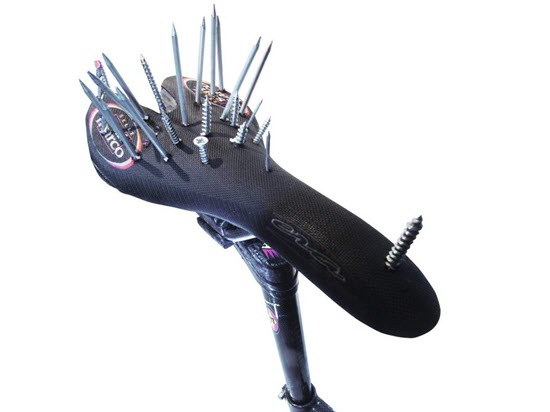
Sadly this is what some people see when they look at your Indoor Cycles. Image from www.bikeradar.com
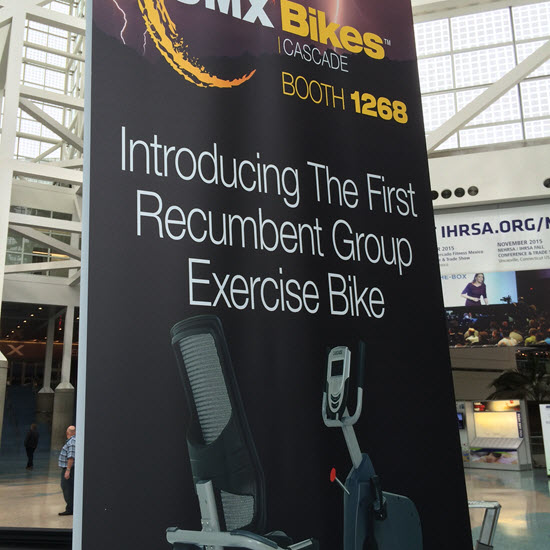
The big IHRSA convention starts tomorrow (can't wait) and as a follow up to my visit last year I wrote this article. If you visit that link and scroll down a bit, you'll see this image of a banner displayed at the entrance of the convention.
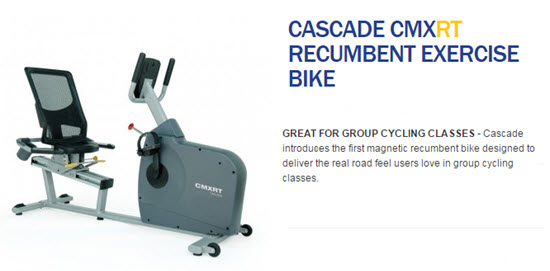
Recumbents in a Group Cycling class?
At the time I wrote:
This banner was the very first thing you saw walking into the LA convention center. My first impression was; “that’s dumb… who would ever want to ride a recumbent bicycle in an Indoor Cycling class?”
As I walked past this display I did a double take and then it hit me > there’s a huge population of people who are intimidated by the skinny, little seats on Indoor Cycles.
Obese/overweight people for starters and you can’t forget Seniors. Together they make up a sizable demographic that we are completely missing. They’re two groups who would really benefit from the comfort of riding on a recumbent, with its large seat and easy to step through design.
Despite all of the technological changes we've witnessed (Power Meters, Virtual Ride Videos & Display Training systems) + the massive increases in popularity (Thank You SoulCycle), Indoor Cycling is still failing to attract large segments of society who would really benefit from our classes.
I'll bet you can quickly describe the profiles of the typical people you do not see in your classes. They include:
Obese people of either gender.
Pregnant women.
People with a physical impairment or limitation – I group all the folks with back injuries here.
Seniors / Elderly living with everything negative that comes from aging.
People recovering from an injury.
Why is that? What's preventing (or discouraging) all the people in these groups from experiencing your awesome class? That skinny saddle for one thing. In the mind of someone 100lbs over weight, it may as well have sharp spikes sticking out… what about the person with a bad back? No way they'll even consider bending forward to reach those handlebars, no matter how high you adjust them. A common scourge of aging is limited mobility; “there's no way I could ever climb on that bicycle. My hips and knees just don't flex like they used to.”
It's the design, stupid.
The riding position of Indoor and outdoor cycles, while perfect for you and me, just doesn't appeal to the populations listed above. In fact there are many who would be terrified at the thought of mounting and riding the Indoor Cycles in your studio.
However they might be willing to join your class, if you offered them a recumbent to ride…
Again from last year's article I added;
I talked at length with the representative from Cascade Health & Fitness about helping them establish a few beta recumbent cycling locations. They are very motivated to meet with anyone who’s interested.
As it turned out there were some Instructors who were interested to experiment with adding a few recumbent Indoor Cycles to their classes. John Kennedy with Cascade Health and Fitness provided three studios each with a pair of recumbents and now, after about six months of use, we're hearing some favorable responses 🙂
Marietta Colberg Roberts is the Fitness Director at Old Town Hot Springs in Steamboat Springs CO. Listen as she describes her experiences bringing people into her classes, who otherwise wouldn't attend.
We've got another election year here in the USA. Based on what I see on my Facebook feed, I get the sense that there's a few Instructors* out there that might be thinking, OH GOODY! I've got a captive group of people riding in front of me. My “peeps” see me as a leader. It's my job to “educate” them so they vote properly!
It's my belief that there's nothing better at destroying your class' sense of unity, than injecting politics.
So if you're tempted to sit there front/center and extol the virtues of some candidate (or criticise another) during a recovery, might I suggest that you consider these five reasons why you shouldn't?
#5 It's unprofessional behavior.
You're paid as an Instructor to conduct a cycling or fitness class – not to convert people politically as a political pundit. A true Fitness Professional would never discuss politics during the course of conducting their class. They understand exactly their role in the studio and understand politics isn't in their job description.
How would you feel if your doctor, accountant, mechanic, hair stylist, or other Professional (whom you're paying for a service) began to lecture you about the evils of a particular politician? One you happen to admire and plan to vote for this fall?
Fitness Professionals also understand that they represent the club or studio where they teach. As a representative, anything you say or do could reflect poorly on the business. So just don't go there.
As the owner or manager of an Indoor Cycling Studio, do you think that a friendly preemptive reminder to all of your employees might be helpful?
#4 It's disrespectful to your riders.
People are inundated by politics near constantly during election season. Unless you go completely off-grid, you really can't avoid the constant poll results, he said/she said breathlessly reported ad nauseam on TV, radio and the Internet.
At some level, most (if not all) of your riders participate in your class as an escape from the real world. Don't ruin their hour of aerobic bliss, by mouthing off about income inequality, social security, pipelines or other non-sense. Your class has no interest in hearing it and you'll only wreck their workout… and probably not see them again 🙁
#3 You'll instantly alienate half your class when you open your mouth.
The US is politically split approximately 50/50 between Republicans and Democrats. So it defies explanation why any rational* person would purposely choose to insult the political beliefs of 50% of their class, by publicly taking one political position over another. Seriously, why would you ever do that?
OK, I realise that there are some who couldn't care less who they alienate by mindlessly parroting what they've heard or read – please show your Professional independence by not being one of them 🙂
#2 They'll “unfriend” you.
I'm not specifically referring to unfriending someone on Facebook, although I guess I could be. I'm certainly not against dumping a FB “friend” who's frequently posting stupid stuff about politics. What I'm referring to is the damage you can do to a relationship by needlessly introducing conflict .
Think about the last you were lectured by a friend or acquaintance about something you disagreed with. How did it make you feel? Did you leave feeling like you'd be excited to talk with him or her again?
#1 I'm not stupid, nor am I uninformed or uneducated, so don't treat me like I am.
My number one reason why you should leave politics out of your class; it's insulting and demeaning to lecture other adults about pretty much anything, especially things political. There a very good reason that you, yourself, have felt insulted when this happens. You're being told (no matter how nicely) that if you disagree, you're simply wrong … and they're right.
But it isn't just that you are mistaken, like you turned left, when you should have veered right. No, you feel insulted because the act of lecturing is about power. The lecturer has asserted a position of dominance over you, attempting to make you feel small. How do you respond in a situation like this? Does it make you feel valued and/or respected?
But what if a participant brings up politics first?
Refer to #1, regardless of you're in agreement or not.
I have to compliment the personal trainer of the boot camp I was at this past Saturday. One participant made a number of political comments, that he initially ignored. Sensing the guy wasn't getting the hint, he said very politely; “this is a politics free zone” – smiled and disengaged from the conversation. That was all it took.
*This might not describe you… however you probably know a few Instructors who it does. Please feel free to share this article with them, before they irreparably damage their relationship with their participants.