Congratulations to ICI/PRO contributor Dennis Mellon who was recently hired by Stages Indoor Cycling as a Master Educator!
I love helping Smart / Talented people become successful and in this episode of the Podcast Cameron Chinatti, Stages Indoor Cycling's Education Director, explains why she choose Dennis to become the latest addition to their Master Educator team.
Interested in Dennis to come to your facility and train you in the effective use of Power in an Indoor Cycle class? You can contact Stages here.
During the introduction, I sheepishly remember that last week marked the 6th anniversary of the Indoor Cycle Instructor Podcast! Just once I'm hoping to realise another year has gone by, in time to make a bigger deal out of it 🙁
I was serious about what I say near the end of our interview. If you feel you have the “Right Stuff” to be a Master Instructor for a major brand or would just like to raise your stature an/or authority in our industry, please contact me. Dennis joins a list of multiple people like; Tom Scotto, Doug Rusho, Chuck Cali and others who have advanced their careers through their involvement here at ICI/PRO.
I find it fascinating to watch all the posturing going on in the digital music delivery business. It all started with iTunes – who ruled the legal, digital download space for years. Multiple services (ZUNE, Rhapsody, Napster, etc…) have tried, and failed to take more than a tiny amount of market share from Apple.
But that's all changing because of Spotify, Deezer and a little company called Google. The article below opened my eyes to why.
In an interesting turn of events, Apple is reportedly considering opening up and launching their own streaming music service to compete with the likes of similar services like Spotify and the newly released Beats music. In addition to this they are apparently considering launching an Android app for the streaming service to go along with the launch of the service itself, all in an effort to attack the declining sales of US iTunes music downloads according to sources that are close to the matter. People still use iTunes? All jokes aside, it has been difficult for apple to compete with services that offer streaming music at a low price, as the music libraries are competitively similar in size, and listening is unlimited, all for a small monthly fee. Downloading the same number of songs through iTunes that you would have at your disposal with a service like Spotify would take massive amounts of money, even with most songs on iTunes being available as singles with most as low as $0.99 a hit.
It’s interesting to hear these possibilities as Apple and iTunes have always been known to be a partnered exclusive company and service. While Google’s popular Google Play Music is available on multiple platforms including Mac, Windows, Android and iOS, Apple’s iTunes is only accessible to those who use iOS devices or Mac computers. They have effectively closed themselves off from other possibilities for quite some time, and it used to work for them when they were the dominating force in digital music. With the iPod reaching its end of life though, and a myriad of subscription based music services available on virtually any platform you can think of, Apple will have to find a way to take the once reigning king of music services and transform it if they want to compete.
So I did some quick research to see how Apple's iOS competes with Google's Android market share for portable device sales.
… If you look at the raw numbers for sales market share between Android and iOS devices, Google seems to be dominating the space. In Q4 2013, Gartner reported that Android had 77.8% worldwide market share while iOS had only 17.8% share. One quarter prior, Android had 81.9% and iOS took second place with 12.1%. It is worth noting that, according to ComScore, iOS market share in the lucrative US market is about 40%, while Android accounts for around 50% of US sales. The problem with these numbers is that the do not take into account the fragmentation that Google has allowed with the Android platform.
What goes around…comes around
One of the legacies of Steve Jobs was his/Apple's decision to keep iTunes exclusive to iDevices (there is no iTunes App for an Android phone). While this worked to Apple's advantage for years, they now find themselves becoming uncompetitive now that Spotify and Deezer have Apps for both iOS and Android phones.
So what does this mean for you?
Choices, lots of choices for digital music coming with fewer restrictions on how you'll be able to build, share and then deliver great music to your classes. Many of us found Spotify to be revolutionary – it completely changed my views about renting vs. buying music. But now Spotify is SOP (standard operating procedure). I'm guessing that a few years from now we'll be using a music service that doesn't even exist today and we will access it using a device none of us has even seen.
And we can't wait to help you understand how you'll use it in your class 🙂
By Jennifer Lintz, Registered Dietitian and ICI/PRO Contributor
If you strive to bring variety to your classes, consider using your personal workouts for inspiration. Certainly, going to other instructors' classes and perusing the web can be a great way to pick up new ideas, but so can your own workouts. I run quite a bit when I'm not on the bike and have found it to be a gold mine for fresh routines, coaching cues, and new music.
Fresh Routines
Whether you swim, bike, run, row, do the elliptical or something else on your own for cardio, you can likely pull bits and pieces into your classes. Here are some examples.
Speed Workouts: These provide plenty of options for a ride. Whether I am doing 200s, 400s, or mile repeats, I can apply some of the same time frames and techniques to cycle. For instance, if I was doing timed miles, that might look like 3 long (6-10 minutes) efforts spaced throughout a cycle class. For shorter bursts of hard effort, I might take a sandwich approach and squeeze in 8-10 minutes of high intensity intervals at the beginning and end of the ride, or perhaps just the middle. There are many ways to create an interval-based ride.
Hills: After doing a hilly run or ride, I'm instantly armed with great content for my next class. Here are some ideas:
– Pyramid of Hills: Start and finish with short hills and build a longer hill in between.
– Progressive Hills: Make each hill either progressively longer at the same intensity or progressively harder for the same amount of time.
– Hill Sandwich: Do flat roads at the beginning and end of class with a long hill in the middle.
– Flat Sandwich: Do hills at the beginning and end of the ride and a flat road in between.
Other Ideas:
– Tempo Ride: Begin at a very comfortable intensity, progress to more challenging work in the middle and end of the ride, and finish with 5-10 minutes of moderate work before cool down.
– Out and Back: Do the same drills on the way out that you do on the way back.
– Loop: Terrain here should vary. If there is a big hill at the beginning of your ride or run, a couple of short ones in the middle, and a flat finish, create something similar for class.
Coaching Cues
Just as yoga instructors are encouraged to have a solid personal practice, I think we could argue that cycle instructors would also benefit fromba dedicated personal workout once or twice a week. If our goal is to challenge participants and help them sustain an uncomfortable effort for a set period of time, it is important that we know what that feels like. As instructors, we can view the challenging parts of our own exercise sessions as opportunities to become a better coach.
Let me give you an example.
My husband and I essentially live on a plateau in Rochester, MN. The only way out of our neighborhood is down. That means – whether we are on the bike or on our feet – the start of the workout is a cinch, but the end is always another story; that's where my coaching nuggets come from. One route has a gradual 2 mile hill at the finish, and the other is very steep but only 3/4 of a mile. Yesterday, I ran the 3/4 of a mile hill four times as part of a workout. Guess what we are doing in cycle this week? Hill repeats 🙂 They will thank me later!
In all seriousness, I walked away from my run with a handful of coaching strategies that I will sprinkle into the classes I teach in the coming days. Instead of becoming overwhelmed with the incline and the number of times I commited to running up it, I took a step-wise approach. First, I focused on making it to the sign; then, to the tree; next, to the stick lying on the ground; and finally, to the top. It helped me to break each of the hills up into segments, so it's likely I will apply that same strategy to my coaching in class.
New Music
Finally, consider using your workout time to snag some new songs. Regardless of your stance on multitasking, Pandora, Spotify, and iTunes Radio make it possible to find new, motivating tunes while you exercise. If you have a smart phone or access to any of these apps, pay attention to the music that comes on as you move. If something pumps you up, chances are it might have a similar impact on your riders.
2013 Tour de France champion Chris Froome became the first person to ride a bicycle under the English channel! Froome started at the entrance of the Eurotunnel's service tunnel in Folkestone, England and emerges in Calais, France to the cheers of his team. How cool is that?
As fitness professionals, many of us find it is exciting when a member asks us for fitness related advice… but are you making the proper recommendations?
Do you really understand what she/he is asking?
Do you have enough information to respond in a way that will be motivating?
Or do you have the tendency to just launch into a long response, hoping that some of it sticks?
As a long-time sales guy, I've tried to learn the importance of asking the right questions, before offering a solution. Actually it's often a series of questions, before I'll consider responding. Last fall I talked about a total fail I had early in my career, when I tried to empress a potential customer with all my product knowledge, in this post.
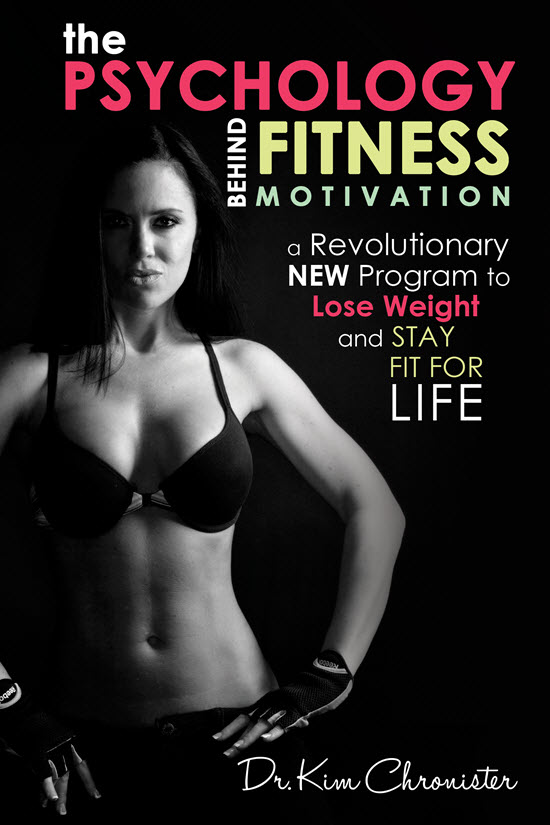
Now that I finally have a device (my new iPad) to download ebooks, I'm putting it to good use. My latest read is The Psychology Behind Fitness Motivation: A Revolutionary New Program to Lose Weight and Stay Fit for Life by Health Psychologist Dr. Kim Chronister. In the book Dr. Kim describes the concept of a Motivational Interview – which sounds exactly like what I suggest you use, whenever you've been asked for help or advice from a member.
Motivational Interviewing for Exercise Motivation
An optimal technique that is supported by the research for exercise motivation is motivational interviewing (MI). When you are seeking the motivation to gain results (for a better body, sharper mind, etc. from regular exercise) motivational interviewing falls into the “what you need” category to get you “what you want”…results.
MI has been shown to be enhanced when MI is combined with other effective treatment methods such as cognitive behavioral therapy (which was discussed in the previous chapter). The technique of motivational interviewing can be used to improve a person’s motivation to change and it can be effective in facilitating behavioral change.
In a clinical setting, motivational interviewing is used by a therapist or other mental health or medical professional to help promote positive change in a client’s behavior. MI exercises are designed to help people recognize the need for changes in their behavior. As a first exercise, let’s say a motivational interviewer (i.e. psychologists, nurses, social workers, medical practitioners, physiotherapists, and dietitians) is meeting with a client trying to lose weight to alleviate chronic health problems. The motivational interviewer would emphasize the importance of the change, current information about why the client should make the alteration in his/her lifestyle, including many benefits. The motivational interviewer would then provide the steps and action plan to make these lifestyle changes. At the end of this chapter, you will be given tools based on the technique of motivational interviewing to help you in your personal fitness goals.
Near the end of the interview, Dr. Kim and I discuss her thoughts about a question I had; should Instructors take an active role in sales and marketing, especially Instructors who teach at a small studio?
What do you think? Should (or would) you be willing to sell/market/promote your studio's services to your participants? I'm not referring to you simply reading a few announcements before the start of class here. I mean communicating with members with the purpose of building rapport, suggesting upgrades, encouraging purchases, recruiting new participants… you know, selling what your studio has to offer.
Would you do that if you were rewarded financially?
I read this from ICI/PRO member Bill Jenks and clicked the donate link when I got to the end.
Hi Friends
A few weeks ago I shared a bit of my history with you. I wrote about meeting Laura, getting married and having a wonderful life together. I wrote about being each others best friends. I wrote that things changed last December. I wrote that on January 22, 2014 Laura was diagnosed with Amyotrophic Lateral Sclerosis (ALS). I shared our love for each other and our commitment to each other. I mentioned our marriage vows “to have and to hold, from this day forward, for better, for worse, for richer, for poorer, in sickness and in health, until death do us part”. Today I am writing to tell you that Laura passed away on Monday, June 16 at 7:00pm.
Today I am writing to tell you about the disease that progressed through Laura's life and how it caused her death. In December we new something was wrong. Laura began to stumble a bit when she walked and her beautiful handwriting became sloppy. In January the doctors told us Laura had Amyotrophic Lateral Sclerosis. ALS is also known as Lou Gehrig's Disease.
So what is ALS? The definition of Amyotrophic Lateral Sclerosis, or ALS, is a “progressive disease of the nerve cells in the brain and spinal cord that control voluntary muscle movement”.
But what does that mean? It means that when you want to pick up a glass of water your brain sends a signal down a nerve telling your arm, hand and fingers to move. To reach for the glass. To wrap your fingers around the glass. To pick up the glass. Someone with ALS wants to pick up a glass of water too but their nerves are failing and over time those nerves loose the ability to transmit the signal to the arm, the hand and the fingers. Someone with ALS can no longer pick up the glass of water. They progressively become paralyzed.
By mid January the nerves controlling Laura's tongue began to fail and her speech became slurred and she began to have difficulty chewing and swallowing food. The nerves controlling her legs and arms continued to deteriorate. In March she lost the ability to take even one step and the ability to even reach for the glass of water. In April she lost the ability to stand – to support her own body weight. By May she could no longer move her arms, her legs, speak or swallow anything solid. The nerves controlling her core muscles were failing too and she could no longer hold her self upright in a seated position.
Some other nerves were progressively failing too. As time passed Laura had a harder and harder time breathing. To inhale we use a muscle called the diaphragm. The nerves controlling the diaphragm progressively lost their ability to transmit the signal telling the diaphragm to move. Laura's body and brain continued to have the same need for oxygen that it had before ALS but now her failing nerves were starving her of that oxygen. For the last couple of days of her life Laura's breathing was labored and difficult. For the last 12 hours of her life she was gasping for air. She was unable to take in enough oxygen to sustain her life -she was suffocating. At 7:00pm on Monday, June 16 she died of respiratory failure caused by ALS.
ALS is a cruel disease. It takes your ability to move, to talk, to eat and even to breath. Through it all Laura kept smiling. She had ALS but it did not define her. She was always Laura with the beautiful quiet smile and big brown eyes. She made the most of her time. She spent time with friends. Time helping others finish some of her quilts. Time attending quilt classes. Time playing Canasta. She spent time with her family. Her sisters. Time with me. She will be missed.
Through it all the Evergreen Chapter of the ALS Association was there for us. When we needed information they were a phone call away. When we needed equipment it was there for us. When we had questions about how to manage some part of the disease process they had answers. They helped both Laura and I be less afraid. The Evergreen Chapter of the ALS Association provided the help and support we needed when we needed it. They were instrumental in Laura's comfort and happiness. They helped me to take the best care of Laura that I could. They provide that information, equipment, answers and support at no charge. They do it because the care. In order for the Evergreen Chapter of the ALS Association to continue to provide the support to families like Laura and I they need our help.
The Evergreen Chapter of the ALS Association holds the DoubleDay Bike Ride To Defeat ALS each July. The DoubleDay Ride is a two day non competitive bike ride on Saturday and Sunday, July 26 and 27. The ride will help raise funds to support people like Laura and I and to raise awareness of the need to find a treatment and a cure for ALS.
Laura and I rode in the Double Day Ride to Defeat ALS last year. That's us in the attached picture. We rode to honor Judy Marshall, our Team Captain Bob Vincent's sister. We rode in memory of Dr. Gene Berg (Laura's Dad) and for our friend Bob Ross. All three were taken by Lou Gehrig's Disease. This year we ride for Laura. Please join me and Team One Love to raise money to support people in our community with ALS and to spread awareness of the urgency to find a treatment and a cure.
It is easy to help the Evergreen Chapter of the ALS Association support families like Laura and I. Please follow this link to my personal page and click on “Donate To William” and follow the instructions. If you would like to join our team follow this link to the Team One Love page and click on “Join Team” and follow the instructions. In honor of Laura and to help other families like mine I will match, dollar for dollar, any donations made to Team One Love (up to $5000.00). Together we can make a difference. No donation is too small. Please follow the link to my personal page to donate today.
Together we can make a difference. Join us for the ride of someone else's life.
Bill Jenks
YMCA Group Cycle Instructor & Faculty
Spinning Star 3, Cycling Fusion & Keiser Cycling Instructor
Heart Zones Trainer Level 2
Follow me on Facebook