Our parents had an easier time deciding on a bicycle.
By Team ICG® Master Trainer Jim Karanas
If you teach an authentic style of Indoor Cycling and pattern your classes after riding a real bicycle, invariably students who have not ridden a bike for many years will ask you the above question. Unless you are an avid rider or coach people outdoors, as well as indoors, you may not have an educated response. If you read John’s recent post “Sticker Shock”, you may realize that our students really need our advice on how much of an investment to make.
Hundreds of articles online can answer the question. What I want to share with you is some of what I’ve personally learned through the years.
How Much Should I Spend?
Rule #1: The more you spend, the better the bike feels. This is one of the most direct, linear relationships on the planet — from the frame, to the wheels, to the components, to the tires. The more you spend, the more the bike rides like a dream. Rule #2: The more you ride, the more you’ll appreciate Rule #1. A Ferrari is wasted on me, but I can feel the difference between Ultegra and Dura Ace. The more you ride, the more you can appreciate the subtleties of a bicycle. Rule #3: Never bring your credit card until the 3rd shopping trip. Absolutely never. Obviously, this is to prevent impulse buying. On the other side, few things are more fun than buying a bike. You’ll feel like a kid again. Except now you’re responsible for your bills.
Which Type Of Bicycle Should I Get?
Rule #1: Speed hurts. A road bike hurts your back and your crotch the most and is the easiest to crash, but you get to go really fast, wear lots of cool gear, and shave your legs. Rule #2: Think DIRT if you don’t take yourself too seriously. If you want to ride ego-free and experience down-to-earth cool, then get a Mountain Bike and hit the trail with loosened inhibitions and a spirit of adventure. Rule #3: What’s the best bike in the world? The one you’re on. There’s nothing wrong with a hybrid.
Should I Buy New or Used?
Rule #1: A bike is like a pet. A bicycle works its way into your heart. Everyone who has sold a bike on Craigslist has sold a piece of his or her soul. You pray that you can find a good owner who will keep riding your bike. Rule #2: Every bike needs a wrench. A Wrench is the affectionate name given to a bike mechanic. One of the main reasons to buy a bike from a shop is that you build a relationship with that shop and with the mechanics who tweak your bike so it feels fantastic to ride. Rule #3: Pay homage to the beater. On the other hand, don’t overlook getting a broken-down wreck that has been neglected for decades and bringing it back to life. It will probably be your favorite bike ever.
Which Bike Shop Should I Go To?
Rule #1: Sandals with socks. The small, local shop will always have the best personalities, gentle souls who have dedicated themselves to helping others ride bicycles. The small shop will typically have great mechanics who have been there for years. They’ll know your name and be happy to see you. Rule #2: Bright lights. The Big-Box Shops always have bright lights for some reason, and everybody’s shirt is tucked in. They’re corporately owned and very professional. Some people like that. Rule #3: Buy something every time. Whichever type of shop you choose, be a good customer. A shop will take care of you if you support their business. Never drop into a shop, ask for a derailleur adjustment, and then just say “thanks”.
Okay, so this wasn’t the article you expected. You may have hoped I would talk about researching bikes online, or setting a price limit. You can Google that stuff.
When your students ask you about buying a bicycle, remember that bikes differ. They’re built for different situations and different terrain. Remember that riders differ in their dreams, goals and desire to ride a bike. Instead of being overly analytical, I suggest that being completely subjective — based on your student’s needs — about how much to spend, which bike to buy, where to buy it, and how to service it will be the best way for you to help the student decide.
Daylight Savings Time and warm weather are fast approaching. Students will begin to alter their training schedules to include more outdoor riding. I’ve always encouraged that. In teaching an authentic method of indoor cycling (my style of teaching is patterned after riding a real bicycle), I’ve always urged my students to try the real thing. As enjoyable as a class can be, there’s nothing like the open road or trail.
What if my compensation as an instructor were based on how many people came to class? This might pose a problem if I needed the revenue, or if my class were temporarily removed from the schedule due to lack of attendance. How can I stay true to my feelings of promoting outdoor rides when I need my students to keep coming to class?
I’ve found several ways to encourage my students to do both. There are a few ways in which indoor cycling trumps outdoor cycling.
1. Efficiency In Metabolic Training. If you base your class on sound training principles and implement heart rate and/or power, there’s no doubt that the student will obtain greater metabolic benefits from taking your class than from riding outdoors. Unless the student works with a coach, the metabolic impact of an outdoor ride depends on the course and how hard the rider intends to ride. In 45 minutes, I can impact a student’s metabolism beyond what many of them will be able to achieve in three hours of riding alone or with friends at a “social” pace.
2. Coaching. If you teach indoor cycling in an authentic way, the coaching that you provide is invaluable and will be missed by students when they ride outdoors. This means you must bring something more to class than just the music and a workout. If you teach principles of motivation, engagement, awareness and mindfulness, your students will miss hearing your words and the lessons you teach as they ride without you.
3. Technique. It may seem strange to say that riding a stationary bike can improve technique on a real bike. Yet, if you’re a technician at heart, it’s obvious that students need constant reminders to maintain good posture, pedal smoothly, and hold a consistent cadence. Without those reminders, many students will return to class after the outdoor season with new movement and postural habits that don’t benefit their overall development.
4. Fixed Gear. Unless students spend some time riding a “fixie”, their ability to pedal continuously and minimize coasting will weaken.
5. Socializing. There’s nothing like the feeling of a peloton — except maybe the feeling of a packed class, and the class is both friendly and safe. When you’re racing, the peloton is intense and not friendly, with racers vying for other riders’ wheels, potential crashes, and a lot of yelling. Group rides usually start friendly, but I’ve been in many that turned just as bad as a race. If you bring elements of the peloton experience to your class and support socialization, however, the experience is wonderful. At times I’ll say, “I want to start today’s ride as a group ride and encourage you to chat during the first song.” Then I’ll explain that a group ride begins loosely, but we’ll fall into a double paceline as we build the tempo.
6. Family Time. It’s difficult for people of different abilities to ride together outdoors, especially couples. Indoors, couples and families can enjoy more time together while they each get the workout that’s best for them.
I am thoroughly convinced that using the above methods and extolling the benefits of coming to class when it’s nice outside help me maintain good class participation when the weather is beautiful. I share my perspective on the above information during classes and, even while advocating the road or trail experience, remind them of the advantages of continuing to take my classes.
I feel the best regimen for most of my students is to split their time between indoor and outdoor training. I often encourage them to find ways to increase their total training time by not giving up classes for outdoor rides but, instead, doing both.
Hit class with me in the morning, and take a leisurely ride in the afternoon.
Get your conditioning done early when you’re fresh, and then just enjoy a refreshing ride later in the day.
Be in my class at 9 AM on Saturday. Don’t miss the joy the camaraderie in that class has been bringing you. Ride your bike to class and bring an extra kit. When class is done, get back out on the road and enjoy the beautiful weather.
There’s balance in combining indoor cycling with outdoor riding. I think it serves us well to nurture that and not forget it during good-weather days.
Early adopters of any new product or service are important in the fitness industry. They’re adventurous, even brave, individuals who put their business reputation on the line to promote something new before anyone else. They do this to differentiate from traditional fitness offerings and stay cutting edge.
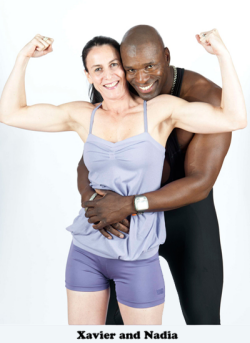
Body By X Skill Development & Training Center in Corte Madera, California (www.getfitmarin.com) was the third location in North America to offer indoor cycling classes featuring Myride+, allowing instructors to enhance their classes with video. It was also one of the first clubs in the U.S. to provide a virtual class schedule.
Body By X members learn to become comfortable with the uncomfortable, which Nadia and X feel is key to achieving fitness goals. They focus on mind as well as body, and their philosophy is teamwork.
What impressed me most about the Body by X cycling program was how quickly and effectively they implemented forward-motion video. They have scripted hundreds of IC workouts. Each features a specific ride, audio AND video profile, using Myride+ Destinations on Demand. They’ve even written scripts for each ride, giving detailed information about the video content.
The time spent developing their indoor cycling program has paid off in packed classes and happy members. I asked Nadia and X to describe it in their own words. Nadia replied:
“Our motive was to create a unique, safe fitness environment where we could help people reach their fitness goals and have fun. Our fitness center is for people of all ages. We have clients 7 years old and clients over 70.
“Xavier has been a personal trainer for over 25 years. I’m new to the fitness world and always felt intimidated by gyms. We combined our experiences to create a welcoming environment with fun classes that you can’t find everywhere.
“Indoor cycling is a safe and enjoyable way to get in cardiovascular condition. It’s an option for many people because it’s low impact, and you can do it regardless of your level of conditioning. Xavier’s knowledge of all kinds of music made it a logical offering at Body By X.”
When I asked what makes their indoor-cycling classes so successful and how video supports that, Nadia said, “Xavier’s dynamic, exuberant and optimistic personality makes his classes exhilarating. He motivates people to work harder than they think they can! The videos add the visual element. Xavier’s classes include lots of climbs, and the videos make participants feel they’re really climbing a hill. The intensity of his classes varies, but there are always points — often many — when participants are breathless. The videos keep people going. If they haven’t reached the top of the hill in the video, how can they stop?”
Nadia wanted to reach people new to cycling. She felt she could use her anxiety about the gym to make others feel at ease: “I fell in love with indoor cycling immediately. I had never experienced that endorphin rush and wanted to share it, to have people see that indoor cycling didn’t have to be about LOUD music and tons of sweat!”
Although there’s not a ton of what Nadia calls “sweat energy” in her classes, videos bring their own energy. “I’ve created a unique experience by using the videos to tell a story,” Nadia says. For each video, she creates a script with history or facts about the location. “My clients love the stories so much that if I don’t tell them where we’re riding soon enough, they’ll ask, Where are we? What’s this place about?”
Nadia continues, “At Body By X, we educate people about heart rate zone training. We use metabolic assessments to create custom cardio programs. Our clients learn that you don’t always have to do cardio at 110%. We tell them to use a combination of workouts, alternating easy, moderate and difficult.
“MyRide+ allows clients to ride to video on their own. Clients on 12-week custom cardio programs ask for flat rides to help them stay at zone 1 heart rates, or for mixed rides or climbs if the program requires them to raise their heart rates that day. Helping people stick to a challenging program this way is phenomenal.”
I asked how they decided to dedicate such an enormous effort to creating so many classes.
“Our personalities have played a role! We realized early on that our clients appreciate our differences. Yet, ultimately, our goals are the same: to create a state-of-the-art fitness center that is welcoming, safe and fun.
“We believe you shouldn’t do the same cardio every day, so we offer alternatives. Music has always been a vital motivational tool in indoor cycling classes, so we invested in a spectacular theater-like environment that includes a movie screen to show the videos.
“We want to immerse our cycling students in the experience, and creating stories about the videos does this. Videos are the next step in indoor cycling evolution, and we always want to be on the cutting edge. It separates us from other fitness centers. By offering unique classes that differ from anything else out there, we provide our clients with the tools to reach their fitness goals.”
Classes at Body by X certainly are unique, providing specific training, exciting music, the perfect video, and a wealth of information about where each video takes the students. What a ride!
Cuing the Console — Change is GOOD!! was designed towards the instructor that may be new to teaching with a console in front of them, and/or to the instructor who may be new to teaching indoor cycling in general. The goal is to construct a simple, easy to CUE class, but not necessarily just an “easy” ride!
Sometimes when we attend a conference or weekend workshop we come home really jazzed with all the new information and want to spend it all on Monday morning’s class! Or we try to emulate and teach EXACTLY like the presenter we listened to in the training but perhaps still question- “how do I make it MINE??” This profile is designed to help you speak in your language and convey your message in a fun, easy way!
This maybe a great bike, but completely inappropriate for a brand-new outdoor rider.
I'm listening to a recording of you, talking to member after a class last week. Would how you speak, and the words you choose, leave me feeling that your intent was to:
A: Educate them?
B: Impress them?
Last Sunday morning a participant approached me after a class I subbed at the Life Time Fitness HQ club. I call it the HQ club because it shares the parking lot of Lifetime's corporate offices in Chanhassen, MN.
I've forgotten her name, but she asked if I had a minute to advise her about purchasing a new bike. She explained how she had been riding indoors for about a year and was excited to test her new fitness outdoors this Spring.
“It sure looks and sounds like you have a lot of experience riding outdoors John, what brand of bike would you recommend for someone just getting started?”
THIS A TRAP!
Do I have a lot of knowledge about outdoor bicycles? Of course I do. If I chose to, I could have launched into an hour long dissertation about the virtues of carbon frames vs. aluminum frames, the specific differences between gruppos from Shimano, SRAM or Campagnolo, wheel choices and on and on – all with the intent of impressing her. But I didn't.
I could print my standard answer to this question on a business card; “I always recommend new riders start with the bicycle they will ride regularly.”This straightforward responseoften illicites a confused look from whomever I'm talking with. So I explain further, telling her…
“I love riding outdoors and I enjoy encouraging others as well. But riding outdoors, especially on the road, isn't for everyone. Because you don't know if cycling outdoors is really for you, my suggestion is to find a simple bike, start riding it and see if you enjoy it. You may have one hanging in your garage or one of your neighbors may have one you can borrow. Barring that, you could go to a local bike shop and find a reasonably priced cross-bike. Forget the special shoes and clips, the standard pedals are all that you need. Then I suggest finding a friend to ride with – it's safer and more fun riding with someone else. Then set yourself a goal for this summer of say 500 miles. If you reach it, promise yourself a new bicycle. Between now and then you'll have learned a lot that will help you make a good decision… but if you don't it's no big deal. You've just learned that outdoor riding just isn't for you, or you may find you only enjoy riding on the LRT trails.”
When I finished she looked like she wanted to hug me. Thank you, she said with a big smile. You have no idea how freeing it was to hear that. I have been getting dizzy with all the choices of bikes and really stressed about learning how to get in and out of my shoe clips. I'm having enough trouble here at the club. I have a friend who fell in a busy intersection when she couldn't un-clip. She called her husband to pick her up and I don't think she's ridden her bike since.
I'm not sure if you know him, but Tim Ferriss is a master communicator. He's the author of a number of best seller books including; The Four Hour Work Week and The Four Hour Chef. Both books are about learning the process of learning and then leveraging that skill to quickly become proficient in just about anything. A recent interview discussing the The Four Hour Chef included this:
Tim Ferriss: Yeah. And it's so easy. I mean, when you get to the highest levels, when you're talking to the best chefs in the world, they don't try to complicate it for you. That's what I realized. When you're talking to a lot of people who are kind of good, or really want to prevent you from being part of their world because they want to be some like, weird high priest of the blogosphere or whatever? They don't, they complicate things. But when you talk to, like, the Michael Jordans of cooking, like Grant Achatz, at Alinea in Chicago, where I spent two or three days, which is the #1 ranked restaurant in the US, while I was writing the book, or Marco Canora of Hearth in New York City, or you name it. I mean, Joshua Skenes of Saison in San Francisco. They are happy to give you simple techniques that will make you one of the best home cooks in the city. I mean, it does not have to be complicated at all.
Many of our students look to us as authorities or experts. We all have a unique opportunity to help others make positive lifestyle changes if we remember to avoid the trap of trying to impress and instead, concentrate on communicating effectively using simple techniques. Our Best Practices category of articles is an example of how we try to apply this here at ICI/PRO.
Can you think of a few areas where this could possibly apply to you?
Indoor-cycling instructors tend to plan their classes in one of two ways. Some start with music. They compile an audio profile of songs they enjoy and select the ride movement, cadence and intensity based on the song.
Others start with a fitness concept, let’s say endurance, and construct a ride profile of movements, cadence and intensity that supports the endurance workout. They then choose music to support their profile.
I also consider the length of a song and am a big fan of 10-minute songs. Song length is important with regard to conveying the fitness concept and giving students the necessary time to get the day’s message. My file of songs that last 10 minutes is huge, and I’m always on the lookout, sometimes purchasing entire collections just to get a good 10-minute song.
“Best” is subjective, of course, but here are my 10 favorite 10-minute songs and how I use them. I hope you find it useful.
Hallogallo by Neu! (10:07)
This is the optimal feel-the-rhythm-of-the-road song. It’s a dead-on beat-match of 80 rpm. After warm-up, throw the bike in a monster gear and haul ass down the road at 20 mph. Commit to the saddle, to one hand position, and to steady state just below threshold heart rate. I never get tired of this song.
Bigmouth by Underworld (10:08)
This is my favorite hill-acceleration song. Fall into a base-riding cadence of 65 rpm by riding to the beat. You can add accelerations in a variety of interval formats. I love the harmonica.
Mojave by Afro Celt Sound System (10:34)
This is the BEST descending-interval song ever. 4 minutes easy, 3 minutes moderate, 2 minutes hard, 1 minute very hard. Add the extra 34 seconds wherever you want. The first four minutes are mellow, and then the music moves into a kick-ass hill-climbing rhythm. Start seated and move to the standing position for the 2-minute interval, followed by a full acceleration, still standing, with 1 minute to go. Achieving a max heart rate was never easier.
Palladio (Symphony Mix) by Silent Nick (9:44)
The absolute best ascending resistance ladder (not a pyramid!) with fixed cadence on a hill climb. Maintain a rocking beat-match cadence of 75 rpm and add resistance every 2 minutes. Stand for the last 2 minutes, holding 75 rpm, and blow your legs to smithereens.
The Flow of Let Go by Anugama (10:31)
My favorite ambient 10 minutes dedicated to recovery. The music inspires you to follow your breath and turn the pedals in a smooth circle.
Adios Ayer (Paul Daley Remix) by Jose Padilla (9:37)
I love this song for the lightness it can help you bring to your pedaling technique at a high cadence. Ten minutes at 100 rpm in an easy gear, keeping your feet as light against the pedals as you can. Sit forward on the saddle and let your legs turn a soft, smooth rhythm. Surreal.
M’Bali Jo by Pili Pili (10:36)
This is a not-well-known jazz piece with a beat-match of 88 rpm. I love this song for intermittent jogs, maintaining the same cadence in both the standing and the seated position. The song has a wonderful natural build that encourages you to make the jogs longer and longer.
Things Can Change by Klangstrahler Projekt (10:06)
I’m happy that a KP song makes this list. With beat-match at 90 rpm, this song is good for many things. My favorite is a big-gear, ascending resistance ladder. Maintain 90 rpm in the saddle and add resistance every 2 minutes. You’ll find yourself trying to break the pedal axles by the end of the song.
Homage to Patagonia by Lemon Jelly (9:34)
Some of you may not like Lemon Jelly. They’re said to appeal to a listener demographic that I fit perfectly. I love their unusual themes and interesting rhythms. This song provides a wonderful beat-match of about 95 rpm. I use it mostly for fartlek training. Set your base cadence at 95 rpm. Mix in random, unstructured attacks with added resistance in the standing position. The song provides a rhythm that’s very catching when you drop back to the saddle.
Alone by Moby (10:47)
I saved the best for last — early Moby at his finest. This is my favorite dream piece and provides the perfect climbing rhythm. Stay supple with strong determination. Steady state. Timeless.