Today was the official launch of the Life Time Fitness Performance Cycle Winter training series. These classes are hosted at many of the LTF clubs around the country and the plan is for all of us to deliver similar formats, following the same nonlinear (or is it non-linear) periodization training program.
If the concept of nonlinear periodization is new to you, join the club. I first saw the term used in some of the educational material from Coach Troy Jacobson that was provided to us. It essentially means you don't follow the rigid training periodization calendar we're all familiar with; Endurance > Strength > Speed > Anaerobic > Race.
Here's a good description of nonlinear periodization from trainingpeaks.com
Lydiard-style periodization is known as linear periodization because the various major training stimuli (aerobic, anaerobic, strength, speed, etc.) are largely segregated from each other in the training process and arranged in a line in which each gives way to the next. This approach is distinct from nonlinear periodization, in which the various major training stimuli are mixed together throughout the entire cycle and only the emphasis changes from period to period.
Most of the newer periodization systems–those introduced since 1980–are nonlinear. One example is the so-called multi-pace training method developed by David Martin and Peter Coe. In their book, Better Training for Distance Runners, Martin and Coe wrote, “One sensible method for injury-free performance progress over the course of a macrocycle involves harmonious interdevelopment of strength, speed, stamina, and endurance all during the year, never eliminating any of these from the overall training plan… We tend to disagree with coaches who prescribe large volumes of solely longer-distance running over an initial period of weeks, followed by a similarly concentrated bolus of solely higher-intensity speed sessions over succeeding weeks.”
When I hear Nonlinear Periodization I think NOT BORING! Perfect for our Indoor Cycling classes where we really don't know exactly what our Athletes in class need, so let's give them a combination of; Endurance > Strength > Speed > Anaerobic.
I discussed this with Coach Troy during an Instructor call last week. His said he felt confident that our riders will see good progress, working in multiple energy zones in the same class = no mind numbing Long & Slow classes… or at least Long & Slow combined with some Strength > Speed > Anaerobic efforts to break up the monotony of a long class.
Why haven't I heard about this before?
Good question…
As this was the official Kick Off – we started with Spinervals 27.0 Threshold FTP Test .
Here's my Spotify FTP Class Playlist which tracks well with Epic RaceDay Indoor Cycling DVD — which includes a very intense 30 minute criterium race that is the perfect motivation for a 20 minute FTP assessment classes.
Instructor Tip
You can time the criterium to end right on cue with the completion of your 20 minute effort for an awesome finish – complete with the cheering crowd and ringing cow bells! At the initial start/options screen, select 60 min SFX – (no music > just the sound effects). I run the video from the beginning, not really following it until the start of the Crit. When you have 15 minutes left in the FTP assessment use the Skip >> on the DVD player remote to move forward to the next section = the final 15 minutes of the Crit. I keep the DVD sound down until the last 5 minutes. It's bicycle racing magic when they ring the Cow Bell signalling last lap / one minute to go!
Class length 75 minutes + Cool Down
Warm Up — 10 minutes. 5 minutes of gradual increases in wattage. During the second 5 mins. we’re finding the wattage where everyone is first noticing a change in breathing; VT1 / Aerobic Threshold = the top of the Recover Zone. This establishes a rough understanding of a base wattage that we use throughout the rest of class.
3 x 30 sec. Hard / 30 sec. Easy – Openers to AT/LT. I cue these by first having everyone find the amount of load @ 70 RPM that has them feeling they should (not just could) come out of the saddle. The 30 sec. Hard is then simply accelerating to 90+ RPM which results in some pretty impressive power numbers. The 30 sec. Easy is back to 70 RPM — many will stand during the Easy portion.
1 minute rest – I encourage riders to focus on their recovery. Once they feel calm in their breathing, bring back the Base level work wattage.
3 min. Hard Effort — Here's a “Best Effort” to establish a benchmark PTP Personal Threshold Power (top of the Perform Zone) or ride at 110% of FTP if known. It’s very helpful to riders to have that understanding of their personal upper wattage number. The “Best Effort” Threshold # + the Base Threshold # we found earlier form the three Power working zones I use in class.
2 min. Rest
3 x 1 min. Hard Effort x 1 min. Rest. These should be above the 3 minute average wattage.
3 min. Rest
20 min. TT / FTP Assessment effort – Quickly establish the average wattage at or near the 3 min. Interval. > Stage Button and then maintain. You may want to offer slight changes in cadence & load, while keeping wattage = to the initially established watts #. I was off the bike at the 10 min. to go, coaching, encouraging and then just watching them with a big smile on my face. This is a great group and they looked incredible – I'm so in my element with these classes 🙂
5 min. Rest
Base Wattage (aerobic) flat road to finish – use these time to congratulate everyone and give tell them a bit about what you have planned for them next week.
I wait all Fall for this!
Today (Dec 22nd 3013) starts my Sunday Performance Cycle Class at the Eden Prairie Life Time Athletic Club and I'm as happy as a pig in slop!!!
These classes are pure, unadulterated training for cyclists. No nonsense, no feeling like I need to entertain everyone.
We're soft-launching this winter's training program, the official start will be Jan 5th. Our first class in February will include a full 20 min FTP assessment + a weigh in so we can compute and then track everyone's Watts/Pound over the length of the program.
The beauty of this class is in its simplicity; each week follows specific training plans designed by LTF's Sr. Director- Endurance Sports Coaching, Troy Jacobson of Spinervals training DVDs. Instructors are free to create their own music playlists for these time & intensity based profiles.
Today we followed Coach Troy's Spinervals Competition 22.0 — Time Trialapalooza with a few modifications to accommodate cyclists who don't know their FTP – Functional Threshold Power.
NOTE: We ride FreeMotion S11.9 cycles with the Power/RPM console.
Class length 75 minutes + Cool Down
Warm Up – 10 minutes. 5 minutes of gradual increases in wattage. During the second 5 mins. we're finding the wattage where everyone is first noticing a change in breathing; VT1 / Aerobic Threshold = the top of the Recover Zone shown above. This establishes a rough understanding of a base wattage that we use throughout the rest of class.
3 x 30 sec. Hard / 30 sec. Easy – Openers to AT/LT. I cue these by first having everyone find the amount of load @ 70 RPM that has them feeling they should (not just could) come out of the saddle. The 30 sec. Hard is then simply accelerating to 90+ RPM which results in some pretty impressive power numbers. The 30 sec. Easy is back to 70 RPM – many will stand during the Easy portion.
2 minutes rest – I encourage riders to focus on their recovery. Once they feel calm in their breathing, bring back the Base level work wattage.
20 min. Tempo – Here I included a 4 min. “Best Effort” to establish a benchmark PTP Personal Threshold Power (top of the Perform Zone) or ride at 110% of FTP if known. It's very helpful to riders to have that understanding of their personal upper wattage number. The “Best Effort” Threshold # + the Base Threshold # we found earlier form the three Power working zones I use in class.
– 1 min. build at preferred cadence (suggested as 85-95 rpm) – press the Stage Button to reset the averages.
– 4 min. “Best Effort” This should hurt, but be do-able. I ask everyone to observe their average at the end and then…
– 15 min. reduce effort slightly (15% – 20%) and maintain wattage in between the two Thresholds.
I have everyone note the combined average, over the full 20 minutes, at the end of this effort. I'll use this wattage in the Tempo Intervals to follow.
5 min. Rest – Once breathing calms we bring back ~ Base Wattage and ride out of the saddle for a break.
15 min. Tempo – Quickly establish the average wattage from the 20 min. Interval. > Stage Button and then maintain. You may want to offer slight changes in cadence & load, while keeping wattage = to the initially established #.
5 min. Rest –
10 min Tempo – Time is shorter… so we should be able to work a little harder. Again quickly establish the average wattage from the 20 min. Interval + (if possible) add 10-20 watts > Stage Button and maintain
5 min. Rest
5 min. Tempo – What have you got left? I've got a really competitive group and although I heard some grumbling, they all appeared to push this 5 minutes at (some above) their PTP / FTP 🙂
Cool Down
Here's my Playlist from today's class in Spotify and Deezer – all are 10 minute+ songs. As this is a timed class, I don't worry about trying to match the efforts to the music.
You never know when something you say, will resonate with your class.
I subbed yesterday morning – a climbing day. I'm not sure where it came from*, but as I was encouraging everyone to recruit their hamstrings during one of a series of intervals above PTP** (Personal Threshold Power) I mentioned that our hamstrings are a bit like slacker teenagers – they'll do just about anything to avoid work. Then I started in with the excuses, using my best Spicoli voice :
WHAT! – why doesn't Carly have to do it?
Can't you see I'm sleeping?
Leave me alone!
I don't see you doing it!
What, exactly, is preventing you from changing the laundry?
That's crap, I always help out… I just don't want to right now.
Big smiles from many in the room.
Then a few started yelling out their own:
It's fine like it is Mom.
Why are you so mean to me?
I'll do it latter
Why is it only YOU notice?
Going with it I offered that as the ADULTS in the room, it's our responsibility to demand encourage our teenagers/hamstrings to pull their weight, especially when there's a big job/effort in front of us. We need to focus on the bottom of our pedal stroke. As we crosses it we need to reach down, grab the blanket, pull it off and feel the slacker becoming productive.
You'll know if you're doing it right… if you start hearing/feeling the slacker complaining – which you of course, ignore.
If you're teaching to a group with nearly grown kids, this maybe fun for you to play with. Let us know if it does.
*If I were to guess, it would have come from the frustration I felt coming home the previous night. Older daughter had stopped by to get her snowboard – they're already making snow here in MN. In order to retrieve her board from the garage rafters, she needed to move a bunch of summer stuff that I had neatly placed in a corner. Which was fine, except she didn't bother to put any of it back 🙁
** I incorporate a 3-5 minute Best Effort in each class, at around the 15 minute mark. Using the stage button to set the average, we use that wattage as each rider's PTP for the class. Not a true FTP, but a personal number everyone can work from when I cue them to be Below, @ or Above PTP.
I'm presenting a series of workshops this month for our “Club Athletes”.
Here are the workshop descriptions
Training With Power 101 – Learning the Language of Power Workshop
Now that we're riding Indoor Cycles with computers/monitors, you've got questions and we want to provide the answers. Participants will learn the language of power and how it will explain:
How do I work this computer?
What's all this information mean to me?
Why does it say; “USB” when I first turn it on?
Will it show my Heart Rate & how does HR compare to power/watts?
How many watts should I be making?
Will I see how many actual calories I'm burning in class?
I want to maintain my body weight and/or lose weight… how hard should I be working?
Can I compare my watts to my friend or the person riding next to me?
Training With Power 101 is a 30 endurance ride-workshop where we'll answer all these questions and more. Our goal for the workshop is to help everyone understand the basics of power and establish their personal baseline wattage that you can use as a guide for your future class workouts.
Prerequisites – none, other than a desire to improve your fitness.
Training With Power – FTP Assessment Class Workshop
Endurance athletes wanting to get fitter/stronger and faster are now training with power – a direct indication of the actual work they're creating and a fabulous indicator of changes to your fitness. Similar to training with Heart Rate, training with power is most effective using training zones based on a personal metric – a threshold wattage that's unique to each of us.
In the language of power, that threshold is called FTP or Functional Threshold Power. To accurately assess FTP, you'll need to complete an all-out 20 minute effort. We'll use the bike's computer to record your average wattage over the effort and then use that wattage to design your power training zones.
Our goal for this workshop is to help everyone understand the basics of training with power and establish their FTP (Functional Threshold Power) that you'll use as a guide for your future class workouts + track changes to gauge fitness improvements over the winter.
Prerequisites: Strong desire to improve your training efficiency = the 20 minute FTP effort will be very challenging – this is your all-out effort!
We suggest that for best results, you have one of more rest days before attempting this assessment.
Participants should bring their Heart Rate Monitor and a USB memory stick to record their effort for future comparison.
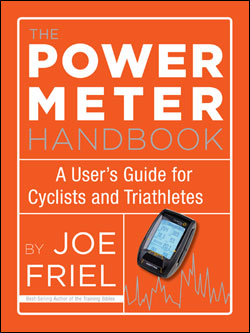
As I'm researching my presentation it occurred to me that you may be in a similar situation. So I thought it might be helpful to share my source material:
I'll be finishing up my presentation slides tomorrow, on the plane to the ECA Thrive fitness convention in Fort Lauderdale FL. Good thing I'm bugging out, we're supposed to experience our first snow of the year tonight – 3-5 inches. I might just stay there. Either way I'll be sharing what I put together this weekend.
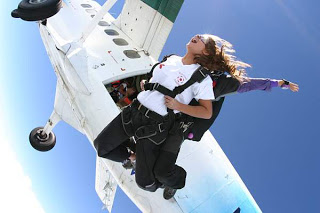
I had cooked up something special to celebrate our 25th wedding anniversary. My “plan” (which I kept a secret until yesterday morning) was to drive Amy to a rural town in Southern Minnesota where there's a company who offers Tandem Skydiving 🙂 That's right, I had planned for both Amy and myself to jump out of an airplane at 10,000 ft as a way to punctuate the start of our next 25 years together.
Unfortunately the clouds didn't cooperate and we have rescheduled this little adventure for next Sunday.
“Are you sure Amy's going to be OK doing that?” was the response I got from a few of the people I had confided in about my plans. Actually I was pretty sure she'd go along with the jump – Amy had mentioned to me last summer that she thought skydiving would be exciting and she's always talking about how much fun she had zip-lining in Mexico. To their credit, both kids felt Mom wouldn't be afraid to follow me out of a perfectly good airplane, so yes I was feeling pretty confident yesterday morning as we drove out of our neighborhood… up until the time I disclosed our destination.
I watched her face carefully for some indication of what she was thinking (she wasn't taking, just staring ahead with her lower jaw slightly moving in and out) and it must of taken 5 seconds or more before her lips slowly began to form a smile – indicating I wouldn't need to make a “U” turn back for home – and she sat up straight and asked how long it would be before we'd get there 🙂
Now I'll admit, expecting Amy to go along all of this only worked because I know her so well. I'm not sure I would have sprung this on her 27 years ago as my “plan” for one of our first dates… but what if I had?
What would I have had to do, to sell her on an activity many would consider completely crazy and all of us would feel is scary?
I'd need to sell her on the benefits of Skydiving!
There are a lot of benefits Amy (or me or you for that matter) could experience by jumping out an airplane and parachuting safely back to earth; cross it off her bucket list, over come a fear of heights, demonstrate to your date you're not afraid of a new challenge, impress friends & family members, etc…
Training with Power can be scary.
While not as scary as skydiving, I have been cooking up an exciting experience for my Thursday night classes starting in November. FTP assessments to help everyone learn their numbers and power training zones, as they come in from outdoors. Obviously I don't want to just spring this on them and I'm concerned that the 20 minute all-out-effort needed for an accurate FTP assessment, is potentially frightening to students. Not all, but there is a number of participants who continuously struggle through a 5 minute effort. They'd freak if I surprised them with an all out, 20 minute effort at threshold.
I'll need to be clever and and start the selling process early = starting this Thursday night. But what will I say?
Well that part's easy. I just printed out a couple of past articles we've published here.
This post by Gene Nacey seems very timely – follow the link for the full article.
1. Power Training will increase muscular strength.
With no gear indicators on most indoor bikes, you do not have assurance that you are stressing your leg muscles. I often call my strength classes “leg day in the gym”, this time though, we are using an indoor bike instead of leg machines. Would you go to your leg press machine and close your eyes and pick a weight stack? Would you ask someone to hand you a long bar with “surprise” weights for squats? Sounds silly, but with no gear or consistent resistance indicator, and the variability from one bike to the next, that is basically what you are doing.
2. Power Training will improve the toning of your leg muscles.
If you want better looking legs — and what guy doesn’t — you want to tone those muscles, not bulk them up. Strengthening them while in motion will deliver those results, not leg presses and squats. That type of weight training will produce bulk; not the smooth, longer toning effect most of the ladies like (and men who watch the ladies, like).
3. Power Training will improve your cardiovascular fitness as a natural by-product of focused training at higher intensities.
We often speak of Power Training and Heart Rate Training as if they are completely separate. In many ways they are, but the body remains an integrated unit; an organic “machine” where the systems commingle and complement, not compete. Generally if you train one, you improve the other, just not as specifically or as dramatically.
4. Power Training will help prevent “plateaus” in fitness development or weight loss.
This probably should have been listed #1. But if I did that, you might not have read the rest of these reasons. Just because you sweat and get tired after a workout, does not mean you are getting fitter or losing weight. Is it a waste? No, I’m not saying that. However, your body is incredibly smart. It will not work harder than it needs to. It is possible to workout the same way, every day, and feel good while you are doing it, but the results end up in the realm of maintaining, not gaining. Without an indication of resistance, even though you think you are “turning it up”, in many instances you are not, especially since most bikes that are chain driven will vary in the resistance they apply with the same degree of turn. Without a progressive increase of resistance or “gearing”, your body will soon get accustomed to the resistance you apply, and once again, no adaptation will occur. No stress, no adaptation. No adaptation, no change.
Now that StarTrac is shipping Spinner® Blade Ion Indoor Cycles with Power, there's a bunch of Instructors who need to be educated on how to effectively use this new training “tool” in their classes.
Spinning's new education program is called the SpinPowerâ„¢ program. It was developed by well known Power Training expert Angie Sturtevant who's the Director of Power-Based Training.
When ICI/PRO member Dennis Mellon told me that his club in Greenwood Village Colorado would be hosting a SpinPower training, I asked if he would be willing to share his experiences with our listeners.
Dennis Mellon is one of those smart, talented people we love to have on the Podcast. Here's his bio…
Dennis Mellon has been working in the Fitness Industry since 1992. He's a Certified Personal Trainer/Performance Enhancement Specialist through the National Academy of Sports Medicine as well as being a certified Spinning, Energy Zone and Indo-Row Instructor. He has a Bachelors Degree in Physical Education and a Minor in Coaching from the State University of New York College at Cortland. He spends most of his time at Greenwood Athletic and Tennis Club in Greenwood Village Colorado where he is a Personal Trainer, Masters Swim Team Coach, Indoor Cycling and CardioVascular Intervals instructor. Dennis was voted the Mountain West's top Spinning Instructor by Competitor Magazine in 2012. He has completed 8 Ironman distance triathlons, ultra distance mountain bike events, marathons and numerous shorter distance events.
Listen to the Podcast below or click here to subscribe to the free show in iTunes.
Please share this with your friends.
ICI/PRO is the leader in Power related class profiles and online education. You can sample hundreds of premium member articles, Podcasts and Audio Class Profiles as part of a trial subscription. Click here to get started.





 — you want to tone those muscles, not bulk them up. Strengthening them while in motion will deliver those results, not leg presses and squats. That type of weight training will produce bulk; not the smooth, longer toning effect most of the ladies like (and men who watch the ladies, like).