This Podcast is was last published on Feb 12, 2010, I have updated it with our new Podcast host information and I am representing it now. I hope you enjoy it, Joey
If you can measure it you can improve it. That's a big part of Indoor Cycling 2.0 where we use measuring tools to help us improve physically. When I saw that there was a device that can measure both the quality and quantity of sleep you get I had to know more about the Zeo Sleep Monitor.
The people at Zeo Inc. introduced me to The Sleep Doctor, Dr. Michael Breus and he joined me to discuss how your sleep can be improved and with it, your athletic performance. They were kind enough to provide me with one of their sleep monitors to use and I will posting my observations in the future.
Listen to the Podcast below or subscribe for free using iTunes
Below is a summary of an outstanding article that I read on Training Peaks. The original article published on March 28, 2019 · By Maria Simone can be found HERE.
Many slogans that you find about doing work can inspire and motivate! However, it’s only through doing the right work that you will make our big dreams a reality. We can think about doing the right work in three ways: consistency; discipline with intensity and volume; and recovery.
Consistency
Consistency is the most important element of any training plan. In order to build your fitness and prepare your body for the demands of race day, or a really hard class, you need to be able to train daily.
To train consistently, we need to plan ahead in order to balance training with other life priorities. Of course, in some cases, it may not be possible to fit the scheduled training on a particular day. If you are self-coached, review the rhythm of the plan. Consider whether it’s possible to swap days, shorten or modify a workout, or skip the session when unexpected conflicts arise. When all else fails, remember one day here and there won’t ruin your overall consistency. Try not to regularly miss key workouts or rethink the flow of the plan and/or your life schedule to set yourself up for success.
Discipline with Volume and Intensity
A second area where athletes unknowingly sabotage themselves is in their discipline sticking to intensity and volume targets. It’s important to stick to the targets for how hard or easy a workout should be (intensity) as well as how long or short a workout should be (volume). All too often athletes like pushing their endurance-based workouts into a tempo or Zone 3 effort because they feel like they aren’t working hard enough. Unfortunately, by raising the intensity, the athlete no longer reaps the endurance benefits, and they are not working hard enough to reap the benefits of a high-intensity session. We often see this in our classes. This is where we are doing work, but not the right work.
Recovery
Recovery is central
to your body’s ability to adapt to the training sessions. Training
breaks you down – recovery lets your body put itself back together.
How can we enhance recovery? The most important recovery tool is sleep. According to the National Sleep Foundation, sleep deprivation or “sleep debt” increases the production of the stress hormone cortisol while decreasing the production of glycogen. This combination means you won’t wake up feeling ready to tackle the day’s training session.
Beyond sleep, you can enhance recovery with daily nutrition, as well as properly fueling and hydrating before, during, and after workouts. If you aren’t putting the right gas in your tank, your car won’t work the way you want it to. If you aren’t incorporating a consistent recovery protocol into your training plan, then your body won’t adapt to the training stimulus.
Proper training isn’t just about doing the work. It is about doing the right
work, which includes a focus on consistency, discipline with your
intensity and volume, and recovery. Get the mix right, and you will
continue to see your body and mind working properly towards your next
big dream.
Protein Power: It’s Not Just for Muscles (Part 2 — Appetite Control)
By Joan Kent, PhD, and Shawn Bevington
Protein is used to make hormones, which are messengers in the body. They’re produced in one part of the body and then distributed — through blood, interstitial or other body fluid — to other organs or tissues. There they modify activity and function.
This brief post will focus on just a few hormones and how they affect appetite.
*CCK (Cholecystokinin) – Satiety is the feeling that you don’t need another meal because you’re still satisfied from the last one.
CCK is arguably the most powerful satiety hormone in the body. It reduces appetite by stimulating the function of the brain’s key satiety center, the VMH (ventromedial hypothalamus).
CCK is released when we eat protein and fats. It affects our food preferences by reducing the desire for carbs.
Anyone who suffers from an exaggerated desire for carbs probably needs to eat more protein. Vegans, for example, may experience strong cravings for carbs, including sugars. Finding a true protein source is a key factor in reducing vegans’ cravings. More on that in Part 3.
Eating adequate protein can also be key in conquering sugar addiction for this same reason.
*Ghrelin – Ghrelin increases appetite by stimulating the brain’s lateral hypothalamus. The LH can be seen as a ‘feeding’ center.
Eating protein can help to reduce ghrelin release. In healthy men, a high-protein breakfast decreased post-meal ghrelin levels more than a high-carb breakfast. The high-protein meal also slowed gastric emptying. Researchers attributed both effects to the secretion of CCK and glucagon, both triggered by protein.
*Glucagon – Glucagon is a hormone made in the pancreas. Insulin is, as well, but the functions of the two hormones are oppositional and work to balance glucose levels.
Insulin also tends to be a fat-storage hormone, while glucagon moves fats out of storage and into the blood stream so they can be utilized as fuel, rather than stored.
While many foods trigger the release of insulin, only protein foods trigger glucagon. Glucagon is also secreted when we exercise.
As mentioned above, glucagon and CCK seem to control appetite by modifying ghrelin levels.
Don’t miss protein and brain chemistry, age, and the vegan solution in Part 3, right here this week!
Shawn Bevington is a holistic health coach, certified by the National College of Exercise Professionals (NCEP). He has been a fitness trainer for six years, and boasts another seven years of activity in various programs, including football, shot-put, pro wrestling and other strenuous sports. Self-motivated, Shawn has spent years researching on his own – and putting that information into practice with his clients. His knowledge, skill and experience have made him a sought-after fitness trainer, both by clients and by colleagues who bring questions to him.
Dr. Joan Kent has a PhD in Psychoactive Nutrition. She was the first to document the brain chemical pathways of sugar addiction and to explain the sugar/fat seesaw hormonally and chemically. Joan has helped hundreds and hundreds of clients with metabolic conditions — diabetes, hypertension, heart disease, cancer — as well as clients with inflammation and mood disorders. Joan has written 2 best-selling books: Stronger Than Sugar, on conquering sugar addiction, and The Sugar-Free Workout, on fueling before, during and after training for optimal performance. Visit www.LastResortNutrition.com and grab your free gifts.
Frequently, I recommend protein powder to supplement dietary protein, but my clients aren't always sure exactly what to do once they have it. That’s the topic of this post.
Why Protein Is Important
Protein has numerous functions in the body, starting with the obvious one that it can be converted to glucose for energy.
Because I’ve covered protein in previous posts, I’ll keep this part brief. Protein is used to form hormones, enzymes, blood, body tissue, hemoglobin, antibodies, transport proteins, and much more.
As protein enters the small intestine, it triggers CCK, a powerful satiety hormone. CCK curbs carb cravings significantly. People who don’t get adequate protein often have strong sugar cravings.
Protein provides the amino acid precursors for brain chemicals that have many functions. Those amino acids can, for example, raise dopamine and norepinephrine for alertness and improved mood. Eating sufficient protein can reduce the need for caffeine — which triggers the same brain chemicals. But while caffeine depletes those chemicals, protein increases their production.
Another example is tryptophan, used by the brain to make serotonin. Serotonin enhances satiety and mood.
And protein provides several B vitamins that act as catalysts in forming all three of the brain chemicals above.
Why Protein Powder?
I’m not suggesting that you give up real foods and use protein powder instead. But protein powder is convenient. It’s light and portable and needs no refrigeration. Here are some suggestions for specific situations.[wlm_private ‘PRO-Platinum|PRO-Monthly|PRO-Gratis|PRO-Seasonal|Platinum-trial|Monthly-trial|PRO-Military|30-Days-of-PRO|90 Day PRO|Stages-Instructor|Schwinn-Instructor|Instructor-Bonus|28 Day Challenge']
Vegetarians / Vegans
Powdered protein is great for those who don’t want to eat meat. For vegans, who don’t eat any animal products, vegetable protein powder might be the best way to get high-quality protein in the diet.
Please recall that non-animal sources of ‘protein’ often aren’t. Nuts are not protein; they’re unsaturated fat. Beans, rice and quinoa are definitely carbs.
Vegans often experience sugar cravings. Vegetable protein powder could be a top method for vegans to stop cravings long-term.
Post-Training Fuel
As detailed in a previous post, refueling within 30 minutes is ideal. The best post-training meal is a combination of carb and protein in about a 3-to-1 ratio (the original research used 2 to 1).
Powdered protein will keep in a gym locker and mix with water as part of a solid post-workout “meal.” Just add good starch. Potatoes are excellent after workouts; other starches work, too.
Travel
Travel is an obvious time for the convenience of protein powder. A couple of years ago, I attended a 5-day seminar in a remote area. We were told it would feature only vegetarian cuisine. I brought 15 envelopes of raw vegetable protein powder and mixed one with water at the start of each meal. With my protein needs taken care of, I could enjoy the meal with no problem.
Conquering Sugar Addiction
For reasons explained above, having protein throughout the day can help you end sugar addiction by changing brain chemistry and preventing sugar cravings. Many brands of protein powder are out there, so find one with no junk — especially no sugar.
Don’t make the same mistake as a client of mine who had a serious sugar addiction. Instead of buying plain, unsweetened powder and mixing it with water (per my instructions), she bought French Vanilla and mixed it with orange juice. “The protein drinks are delicious!” she told me, but her sugar cravings got worse.
“Delicious” is usually a telltale sugar sign. Unsweetened protein — whey, pea, vegetable, soy, other — plus water won’t be delicious but will be helpful.
On the Go
Away from the office and a snack room, it might be difficult to find protein if you can’t stop for a meal. Depending on the hours you’ll be in the field, protein powder may help. Carbs are easy; we can find salads and other carbs almost anywhere.
Plan B
As suggested in a previous post, leave an envelope or two of protein powder in your car for emergencies. Take care of the protein and the rest of the meal will fall in place.
So skip granola bars, “energy” bars, chocolate-hazelnut spread, electrolyte drinks. The main benefit of protein powder is it’s a true protein source when ordinary foods aren’t available.
Have you ever felt as if your legs weren’t recovered enough for the day’s training? Do you ever look for quick ways to bring your legs back to full capacity, e.g., ice, massage, cross-training, stretching, so you can work hard again?
This post is about glutamine and its effects on recovery.
Glutamine is an amino acid, one of the most abundant amino acids in the body. It’s released when muscles contract. A long, hard training can deplete glutamine by 25% to 30% or more.
The significance of this is that glutamine is a fuel used not only by muscles, but also by immune cells. The immune system manages recovery of all types: illness, injury, surgery, and training. Glutamine is a fuel source for cells that line the GI tract, which guards against microorganisms that cause disease. In addition, glutamine facilitates glycogen synthesis, which is highly important after training.
For both optimal health and optimal recovery, glutamine needs to be replaced after training.
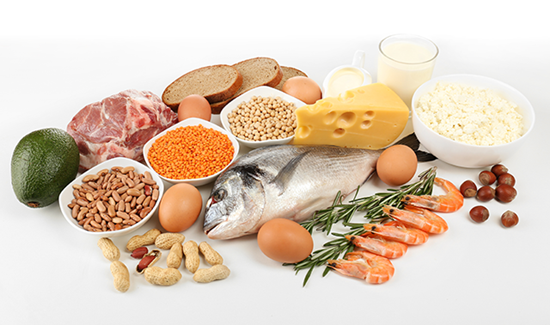
The obvious way to replace glutamine is through food selection. Since glutamine is an amino acid, many protein foods contain it. Examples of glutamine-containing proteins are: beef, fish, chicken, pork, eggs, egg whites, milk, yogurt, ricotta cheese, and cottage cheese.
Some vegetables also contain glutamine: Brussels sprouts, carrots, celery, kale, parsley, spinach, cabbage and others. Raw vegetables work better than cooked.
Glutamine can also be found in fruits: apples, apricots, avocado, bananas, cantaloupe, dates, figs, grapefruit, oranges, papaya, peaches, pears, persimmon, pineapple, and strawberries.
The long fruit list doesn’t contradict my previous posts that recommend minimizing sugars, including fructose, the sugar in fruit. I suggest limiting the number of fruit servings per day to one or two, and choosing your fruits from the above list to help with glutamine replacement.
Other foods that contain glutamine are: beans, soy, peanuts and other legumes; wheat, barley, beetroot, corn, nuts (small amount).
If you’ve been training hard enough to feel that you’re not recovering fully — even with these foods in your training diet — you might want to go with a glutamine supplement. I’m most familiar with glutamine powder, although it’s also sold in tablet form. If you use a supplement, try taking 1 heaping teaspoon (5 grams, the usual recommended dosage) before bed. Mix the powder into about an ounce of water and drink it, then drink a full glass of fresh water. Glutamine powder has worked well for me, but I’d like to hear from you if you give it a try.
One of the benefits of taking glutamine before bed is that it can trigger a release of human growth hormone. HGH is a complex topic, but it has been shown to have immune benefits and to aid in cell and muscle recovery.