Heart Zones Master Instructor Laura Sachs contributes our latest Audio PROfile.
Laura recently published an article about heart rate training in the June IDEA Fitness Journal. Here's an excerpt and you read the whole article here.
Heart Rate Monitor Benefits
If an athlete wants to train rather than just to work out, using a heart rate monitor to zone in on the right intensity can help track the workout in an intelligent way. Quantifying an activity makes it possible to plan a course of action based on the outcome measurements and the monitoring of that activity. Clients can use a heart rate monitor to gain an accurate picture of workout intensity, putting absolute numbers such as 160 beats per minute (bpm) into relative numbers or percentages of maximum or threshold.
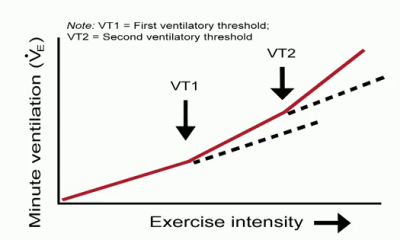
For example, if the number for a client’s low threshold (the first metabolic shift from increased intensity) is 140 bpm and the maximum heart rate (HRmax) from a field test measurement is 160 bpm, then the relative number (or percentage) is about 88% of HRmax (also referred to as Zone 3: Aerobic Zone). “Low threshold,” or “first threshold,” is referred to as T1 (Foster & Procari 2010).
Edwards has identified five heart rate zones, providing a simple way to set training zones based on participants’ specific response to exercise intensity.
For decades, fitness enthusiasts have used the 220-minus-age formula (age-adjusted maximum heart rate formula) to mathematically calculate HRmax and thereby derive cardiovascular training zones. According to Carl Foster, PhD, FACSM, professor of exercise and sports science at the University of Wisconsin, La Crosse, and past president of the American College of Sports Medicine, “The formula’s 220-minus-age is useless. There is no scientific validation for it.” To replace this generalized formula, Edwards has developed a half-dozen user-friendly field tests to determine both maximum and threshold heart rates that result in personalized zones for each individual. “The only way to safely and accurately estimate maximum heart rate,” she says, “is to take a submax field test. We can no longer rely on equations that were fabricated and invalid.”
After reading it I asked Laura to record this some of this as an Audio PROfile.
Here's your Spotify PRO/Playlist! Deezer. We have made every attempt to replicate the original playlist. In some instances the tracks specified were unavailable in Spotify. When necessary we have substituted individual songs of similar length and tried to maintain the Instructor's intent.
In a typical fitness conference “sponsorship”, Company A pays Event Promoter B a bunch of money to to be part of the event. That sounds good, but if you have been following us for any length of time you know that we don't always do what's “typical” here at ICI/PRO.
So when Chuck Cali from Zoning Fitness offered to become a sponsor of this year's conference I said; “only if your sponsorship will add value to the Instructors who attend!”
Chuck's response was “how about if we give the next 75 Instructors* who register a free $80.00 Blink Heart Rate Monitor?”
I love my Blink and see it as an excellent choice for the Club Athletes we teach each week. It's the perfect companion to the 2 Threshold / 3 Zone Heart Rate system we have been talking about.
Recomended by ACE – The American Council on Exercise
I asked Master Instructor Tom Scotto for his thoughts on Part 1 – Part 2 and Part3 of Is a 20 Minute Threshold Field Test realistic for your class?
Specifically I wanted to discuss the third article where I introduced the Two Threshold / Three Zone (2T/3Z) Heart Rate training system. This is the system that ACE is recommending to Personal Trainers and Group Fitness Instructors.
This interview ran a bit long so I have split it into two parts. (my preference is to keep each Podcast to around 20 minutes when possible)
Love to know your comments on this.
Does the Two Threshold / Three Zone Heart Rate training system make sense to you?
Would you be willing to try it in your class?
Do you see this as a better of worse alternative to what you are using now?
Do you look up at a room full of smiling, fit, self-directed, endurance athletes?
Or does your class more closely resemble the population where you live?
In Part 1 I shared survey results that showed that a 20 Minute Threshold Field Test isn't realistic (maybe practical would be a better word) for where most of us we teach – which is primarily large health clubs.
I also stated that;
It’s well documented that a 20 minute Threshold Field Test is effective in determining an Athlete’s T2 (Anaerobic/Lactate Threshold) or FTP (Functional Threshold Power).
Are we training real Athletes in our classes?
I now see that asking an additional question on the HR training survey regarding class makeup would have been helpful in getting a true understanding of class makeup. So please permit me to make this assumption based on personal experience of 15 years teaching (and attending classes) at small studios, large “Big Box” clubs and conversations with hundreds of Instructors; the majority of our students are what could be described as “Club Athletes” who attend class or workout 2-4 times a week. My observation is that a very small percentage <15% are true endurance athletes. Of course every class or club is different. Class format and the time of year has a large bearing on class composition. For example my 90 minute endurance classes in the winter are > 70% endurance athletes… but then that class is designed specifically for them.
The purpose of a 20 minute field test is to determine an accurate Threshold HR for the purpose of setting HR training zones. These HR zones will be used to structure training intensities for weeks or months in the future.
In an early post I talked about using your Heart Rate Monitor as a GPS instead of a Speedometer. I was trying to reinforce something that you already know; maintaining an effort at, or very close to, Threshold for any length of time is painful and difficult for anyone. Like you, Amy and I fall somewhere in that upper 15%. If we choose to, we could ride at a consistent RPE that we feel is our threshold for 20 minutes, for the purpose of determining our Threshold HR and be pretty close.
But what about the other 85% of the students in our classes? How many could maintain a true Threshold RPE over a 20 minute Threshold Field Test?
What happens to the accuracy of the test if your students are finding, over the course of the 20 minute test, a HR average that's somewhere in the middle of T1 & T2?
Fast forward a week, post field test.
All right class, You tell them, I want everyone to build their intensity to Threshold and we will keep it there for 4 minutes. Those students who made it to your Field Test last week are watching the numbers climb on their monitors to their newly determined Threshold HR. Except they find after a few minutes, they aren't really feeling the Threshold signals you are describing. Do they:
A. Ignore the physical clues (RPE) and go with the HR number you told them was their tested Threshold HR?
or
B. Ignore the Field Tested HR and instead push harder till they are feeling the physical Threshold clues you described?
As I see it:
Option A. Has them under training = missing out on potential fitness improvements.
and
Option B. Causes confusion and has some questioning why they took the test to begin with.
I am continually fascinated at the results of the Heart Rate Training Survey over 600 of you completed.
It's well documented that a 20 minute Threshold Field Test is effective in determining an Athlete's T2 (Anaerobic/Lactate Threshold) or FTP (Functional Threshold Power). In the past I've played the cheerleader for using 20 minute Threshold Field Tests in class…
Except for one problem… I can't offer them to my class where I teach… and based on what I'm seeing in the survey results, neither can (or do) most of you 🙁
Which makes sense. The majority of us teach at a large club and the option to schedule and conduct a special Threshold Field Test class really doesn't exist. I know from experience that trying to do something “special” is very difficult to get approval for, from management. Digging a little deeper into the survey shows me that of the 5.6% who report conducting a regularly scheduled Threshold Field Test, the majority teach at a small independent studios. Instructors at small facilities also report a much higher ability to effect changes in class formats and schedules.
Now contrast that with what looks to me as a very high percentage of us who teach with an emphasis on Heart Rate.
What this shows me is that there is a big discrepancy between our intent to help students train effectively with Heart Rate vs the realities of using a 20 Minute Threshold Field Test to help these students determine some Metabolic Marker they can use to accurately set their HR training zones.
Could you ever hear yourself saying this? Don't worry if you missed the Field Test last week Linda… we'll be having another one in six months 🙂
Some anonymous responses to the HR survey:
I personally hold Threshold test 2X year.
We do a threshold test twice a year. I include the zones when I teach and they follow The other instructors do not use it.
FTHR testing is done every 6-8 weeks and we throw in LT rides to give them a sense of what this feels like. They are told specifically, “if you haven't done the FTHR ride, please go off of the RPE scale of 1-10.” I qualify LT as a 5-6.
Wouldn't this be of more value to your students?
Every class I try to establish where LT/AT is, how it feels to be at, below, or above it, and how to move around them. Executed through a combination of speaking, cuing, and guiding them through it as the class goes on.