
by Joan Kent | May 31, 2021 | Big Box Instructor, Training With Power, Zone based Heart Rate Training

The debate over cardio vs. high-intensity interval training (HIIT) usually assumes that the issue is an either/or choice. In that debate, HIIT is usually compared to absurdly low levels of cardio exercise — not to the kinds of classes ICI-PRO instructors probably teach.
This post explores the evolutionary value of combining cardio and HIIT.
In his book Born To Run, Christopher McDougall reveals the blend of morphology, paleontology, anthropology, physics, and math that led to understanding how humans became the greatest distance runners in the animal kingdom.
There’s no way this short article could do justice to McDougall’s fascinating and detailed description of the emergence of homo sapiens over Neanderthals (they were parallel species), and the evolution of humans as supreme hunters — hundreds of thousands of years before the creation of the tools we associate with hunting (spearheads, bows and arrows).
A few of the evolutionary changes include:
– upright posture to allow deeper breathing and limit retention of sun heat
– the ability to release body heat through sweat, rather than panting like other mammals until they must rest or die of hyperthermia
– the ability to accelerate when the pursued animal has been run to exhaustion.
So human “persistence hunting” combined endurance running primarily, with some sprints. Humans evolved to run in conditions that no other animals can match, and it’s easier for us.
Good At Endurance, and For a Long Time
Endurance athletes can typically continue into what would be considered old age in other sports. In many cases, such as distance running, they can still out-perform teenagers or 20-year-olds until their mid-60s.
At his first double-marathon, the most notable thing my then-35-year-old coach, Jim Karanas, saw was the age of most of the runners, who were 45 to 55. He said it told him immediately that the ultra-run was more of a mental than a physical challenge.
When workouts are always high-intensity, over-training is likely. So are failure to recover fully and a high incidence of injury.
It’s also likely that someone will burn out after constant high-intensity work, making it feel like drudgery, instead of something to look forward to each day. Why not work out in a way that you’d enjoy making part of your schedule long-term? Why not create classes like that to bring your participants back over and over again?
Matt Fitzgerald, noted marathon runner and author, suggests endurance training primarily with 2 to 3 high-intensity trainings per week.
McDougall quotes researcher Dr. Dennis Bramble, who said, “If you don’t think you were born to run, you’re not only denying history. You’re denying who you are.”
But let’s not limit this to running. Endurance athletes of other types display similar results. Countless stories describe master’s cyclists in their 50s and up outperforming younger cyclists.
In his 50s, my coach raced against the cyclists in the 30-year-old category — because he found he could perform better against them than against the experienced racers his own age! Those guys kicked his butt when he was first starting to race.
He was also one of the few (and the oldest that weekend) to ride the notorious Furnace Creek 508 fast enough to qualify for RAAM.
So the choice isn’t really between short, intense intervals and long, slow cardio with a magazine. The right kind of training is not either/or, but both.
(The cardio, of course, should be hard enough to cause a training effect, not help you catch up on your reading.)
This perfect combination is effective, enjoyable, sustainable over the long haul, and entirely in sync with our evolutionary nature.
Originally posted 2018-03-09 09:00:44.

by Joan Kent | Feb 26, 2021 | Big Box Instructor, Instructor Tips and Tricks
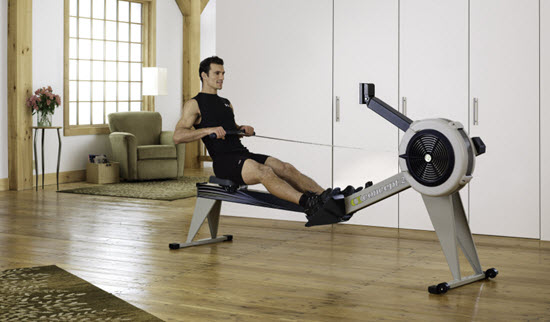
What do you do when you want to train but need a break from cycling? Indoor rowing is an excellent alternative. If you’re into power training, this is for you.
Most of my teaching of indoor cycling was done in Performance Max, a program that included both cycling and indoor rowing. I took the program as a participant for 14 years and taught it in a different location for 12. This post covers the basics of starting to row.
Truly, the only indoor rowing machine worth using is the Concept 2 Rowing Ergometer (“erg” for short). Yes, other rowing machines exist, but no one who rows takes them seriously. The Concept 2 is the gold standard. The current models are the D and the E (slightly higher off the floor). The longest-standing model is the C, which was the one-and-only for many, many years. (I have one, love it, and wouldn’t trade it for a D for anything!)
If you have access to a Concept 2 erg and are new to rowing, learn correct technique from the start. It’s easier to learn it the right way than to unlearn the mistakes that people commonly make when trying to row on their own. If you teach at a gym with an instructor who really knows rowing, that’s ideal because you’ll get good instruction and correction. Years of teaching rowing have shown me that correction is essential.
If you don’t have either an erg or personal instruction, visit the superb Concept 2 website (concept2.com). This 5-minute video teaches rowing technique step by step and repeats the steps clearly and slowly.
There’s also an “erg finder”. Enter your location, the type of facility you want (e.g., health & fitness club), and the distance you’re willing to travel. You’ll get a list of clubs with addresses and the number of available ergs there. You might want to call to verify the info. (When I looked for ergs in San Francisco, the club I taught at for years was listed as having only 1 erg; that was wrong. Farther down the list, though, the same club was listed again, accurately, with 17.)
Once you’ve learned to row, you can take advantage of Concept 2’s Workout of the Day. You can choose short (30 minutes), medium (40-45 minutes), or long (60+ minutes). It’s available on the website daily — or can even be delivered to your inbox.
A few points to keep in mind:
– Rowing is not an upper-body activity. It’s a full-body activity that centers on leg power. Sliding seats were added to rowing shells in the 1870s to optimize the superior power of the lower body. The best training I’ve heard on this came from a Performance Max instructor who rowed on the U.S. National team: “The arms are an afterthought.”
– Rowing has a definite learning curve. In the beginning, it may feel frustrating not to have sufficient power in your stroke to reach a high heart rate. That will change with practice. Believe me, rowing heart rates can go very high, typically higher than in cycling.
– Because of the learning curve, novices often use a higher damper setting than necessary. The damper opens the drum to let in more air, increasing the resistance. Skilled rowers, however, use a moderate setting and create effort by accelerating quickly at the start of the stroke (the catch).
– The most common mistake is bending the knees too soon after you finish the stroke. (This will make sense once you’ve watched the video or gotten some instruction.) It’s almost instinctive and can be difficult to correct. One effective correction is to stop rowing and hold for 2 seconds after you’ve extended the arms before letting your knees bend. Repeat with each stroke for a few minutes.
– Rowing should NOT be done with a straight back. Curving the shoulders slightly forward will engage your core and protect your back. A straight back is more likely to be injured.
Holding an even and consistent pace can be difficult to learn. Jim Karanas, who created the PMax program, always said rowing builds character: With every stroke, the computer tells you you’re a failure [i.e., your pace is off], but you have to keep going.
Working on pace feels like moving meditation. Skilled rowers doing sustained efforts even look relaxed and meditative.
So here’s to a character-building, meditative yet exciting alternative to cycling. I think you’ll like it. You might even find yourself adding it to your training on a regular basis.
Podcast: Play in new window | Download
Originally posted 2014-07-07 08:42:14.
by Joan Kent | Feb 7, 2021 | Master Instructor Blog
By Team ICG® Master Trainer Joan Kent
It’s possible, even likely, that you have cycling class members with hypertension. It’s possible that they’ve been told by their doctors to cut back on salt in their diets. If not, it’s still possible that they’re cutting back on salt because that’s the prevailing wisdom for controlling blood pressure.
As we all know, sodium is loss in sweat. The more we sweat, the more we lose. Long and/or intense trainings or hot environments result in greater sweat production and greater sodium loss. Symptoms of low sodium can include disorientation, nausea, fatigue, even seizures or collapse. Even in a controlled indoor environment, warm outdoor temperatures can increase sweating.
As important as sodium levels are, it’s obviously not a good idea for our students to cut back on salt intake without letting the prescribing M.D. know that they take cycling classes and often sweat profusely in them. In warmer weather, this becomes even more important.
But this post isn’t just about salt. High-carb diets may raise blood pressure because of the increased insulin they trigger. There are several mechanisms by which high levels of insulin can raise blood pressure.
High insulin levels increase sympathetic nervous system activity, leading to vasoconstriction. That increases both heart rate and blood pressure.
Insulin also stimulates the proliferation/multiplication of the smooth muscle cells lining the arteries. That may narrow the size of the arterial opening (lumen) and increase blood pressure, sort of in the same way that a narrower hose can increase water pressure.
Insulin promotes the production of serotonin, a brain chemical that’s also a vasoconstrictor. Vasoconstriction can raise blood pressure. The relationship between insulin levels and serotonin production is pretty much linear, so the more insulin secreted — say, in response to a high-carb diet — the more serotonin is produced. The more serotonin, the more vasoconstriction, and so on.
As mentioned in a previous post, high insulin levels can increase production of series 2 prostaglandins, which are hormones that control cellular functions. Among their numerous negative health consequences, Series 2 prostaglandins cause inflammation and increase blood pressure.
So what should we recommend for our cycling students?
First, it’s always a good idea to stay away from simple (or as I like to call them, junky) carbs and limit alcohol. That can help to keep insulin levels from skyrocketing.
Second, avoiding all-carb meals/snacks is another good idea. Meals and snacks that include protein and healthful, unsaturated fats have less impact on insulin levels.
Third, avoid processed (also junky) foods that are loaded with sodium that we consumers can’t control.
Fourth, modify — but don’t eliminate — salt. We need it to replace what we lose in a cycling class. The upper limit is 2300 mg, or 1500 mg for older or hypertension-prone individuals. But for someone who sweats profusely, it might be possible to exceed those limits safely to a degree. It’s also possible to go too low, and one way of gauging that is by urine production. If you feel you can’t hold 50% of your water intake, that’s a sign that you could need more salt.
As some of you may be aware, there’s a long-standing table salt/sea salt debate raging. Some sources maintain that the natural minerals in sea salt reduce the overall sodium content. Or that the larger size of sea salt crystals reduces the amount of salt in a teaspoon. Or that the more intense flavor of some sea salts encourages reduced consumption. These factors are said to make sea salt more healthful, but arguments appear to be inconclusive. One suggestion for sea salt users might be to take a kelp tablet daily to compensate for the absence of iodine that’s typically added to table salt. Or to buy sea salt with added iodine. Iodine’s necessary to prevent goiter.
Rather than join the Great Salt Debate, my point in this post is to encourage moderate consumption of salt among our cycling participants concerned with sodium and hypertension, primarily to avoid the negative consequences of low sodium.
Even more importantly, I’d encourage smart consumption of the best carbs to avoid the various mechanisms — related to insulin secretion — that can and DO cause hypertension, even with a low-sodium diet.
Originally posted 2013-07-01 08:22:47.

by Joan Kent | Jan 23, 2021 | Engage Your Students

Because I work in different fitness environments, I see different approaches to health and fitness.
In one gym, the equipment and the personal trainers focus almost entirely on strength training. Cardio is secondary, and done while watching TV — with that level of intensity, and that level of discipline. Stretching is often skipped.
In gyms with classes, cardio may become the focus. Strength training may become secondary, and flexibility may be limited to a few stretches at the end of the class.
How’s This For ‘Old School’ Thinking?
I’ve always advocated full fitness programs that include C-V, strength, and flexibility work. This post will cover cardio programs.
The benefits of cardiovascular work are familiar:
– enhanced tidal volume, air to lungs
– greater blood volume
– greater stroke volume, blood ejected by the heart per beat
– expanded capillary network
– greater size and density of mitochondria
– improved sensitivity of muscle to insulin
– enhanced free fatty acid oxidation to spare muscle glycogen.
Moderate to moderately high cardio training feels great, is excellent for recovery days, and can be enjoyable, thus self-perpetuating.
Benefits of HIIT
Higher intensity work can also improve most of the factors in the above list, along with a few others. The benefits of alternating HIIT with moderate to moderately high cardio are considerable.
Intensity improves VO2 max, increases glycogen storage capacity, and raises lactate threshold.
High-intensity training has been shown to increase HDL-cholesterol and decrease blood pressure.
HIIT offers a greater post-exercise metabolic boost than moderate cardio, and that can help reduce body fat.
Regular HIIT improves tolerance to high-intensity work and promotes faster recovery through more efficient removal of metabolic waste.
The human growth hormone and insulin-like growth factor stimulated by interval work can enhance muscle volume and definition.
Finally, the ability to do more work in less time may make it possible to maintain training when time is short.
And There’s Cross-Training
Varying activities may offer additional benefits on a localized muscular level. Cross-training can give overworked muscles a needed rest, while keeping the cardio work consistent.
Not every change of activity represents true cross-training, however. That’s one reason I’ve always been a huge fan of Kranking®.
Most cardio relies on the legs — and typically the same muscles — while the Krankcycle® gives the legs a complete rest. Adding Kranking workouts regularly allows training intensity to remain extremely high on the days of complete leg rest — and raises the overall workload throughout the workout week.
That last point combines cross-training and HIIT perfectly. It’s the best of both worlds.
My recommendation: Start nagging your fitness facility to buy a few Krankcycles. They typically don’t know the benefits, so they don’t have any.
What About Training Formats?
One way to incorporate different training formats is to focus 3-4 times a week on “serious” longer cardio, while incorporating 2-3 shorter workouts of high-intensity intervals. If you’re cross-training on the Krankcycle, the number of high-intensity workouts is up to you. Even daily might not be a problem.
Important note: Contrary to common belief, “cardio” is not necessarily easy. As I’ve covered in previous posts, well-trained individuals — both athletes and fitness enthusiasts — can go hard AND long.
Looking in a different direction, taking a class that “sounds” the same every day, week after week, may fail to offer variety. I’ve known good instructors with extremely limited teaching repertoires. Does every class include those “Come on, kill yourself!” comments? Is every class a ride through imaginary terrain, but never a real training? Would adding a different instructor occasionally — or a different type of class — work better for you?
Perhaps a future post can cover the benefits of both strength and flexibility work. I’ve long been an advocate of Active-Isolation Stretching (AIS) and weight lifting.
The older I get, the more important each of the 3 aspects of fitness feels.
Originally posted 2017-04-04 07:29:34.

by Joan Kent | Jan 17, 2021 | Instructor Training

Let me start with a clarification. This post is not about missed business opportunities or client fees. It’s about the disappointment of not getting to serve prospective clients with needs that were tailor-made for my expertise, for one reason or another.
Helping people get results is something I’m committed to doing. Not to be able to do so when I know how effectively my guidelines and suggestions could turn things around for them is disappointing, even frustrating.
Here are a few examples. Maybe you have a few similar examples of your own, participants who dropped out before they could benefit from your program.
Missed Client #1
A self-described sugar addict contacted me to schedule an appointment. During the appointment, she revealed her health and mood issues. She had many.
In general, clients like this don’t actually have 100 things wrong with them. More typically, they have one or two underlying problems that may manifest through multiple signs and symptoms. In this woman’s case, it seemed obvious that how she was eating was the cause of virtually all of her problems. I was certain we could have effected a dramatic change in her health and wellbeing.
The appointment was scheduled for an hour, but I let it run about 45 minutes over that because she seemed to need to talk. By the end, I was quite pressed for time, so I made a single, easy-to-follow food suggestion. I then sent her a carefully outlined plan of how we’d work together.
Her reason for not working with me was the cost, no chance to discuss payment options.
Missed Client #2
Clients who’ve had success with my system refer others to me, which I greatly appreciate. Yet sometimes I don’t get a chance to work with those referrals.
One successful client was able to bring his diabetes, erratic glucose, high triglycerides and high blood pressure under control by following my guidelines.
He wanted his friend, also diabetic, to get similar benefits, so he told the friend about me. Unfortunately, he added, “She’ll tell you to stop eating sugar.”
The friend’s response was, “I’m not ready to do that,” and that was the end.
In actuality, I would never tell a new client to stop eating sugar. There are quite a few steps I’d have him or her take first before we even looked at any sugar problem.
Could I have helped this diabetic gentleman? I have absolute confidence that the answer is “yes.” But I never even met him so it was a non-starter.
Missed Client #3
Carol (not her real name) recently signed up on my website for nutrition coaching. She described her problem in ways that I knew would respond to my system:
– negative reactions to sugar and white flour
– powerlessness over those foods
– a pattern of skipping meals till she was starving
– symptoms of ADD, anxiety, persistent fears, negative thinking, irritability
– a possible learning disorder.
“I always feel like I’m hanging on by a thread,” she wrote. “I’m 49 and OVERWHELMED.”
The items on her list would have responded extremely well to changes in food — and the results could have been life changing. I contacted her initially by email, and followed up with a phone call. She never replied.
These are only a few examples out of many, sparked by year-end ruminations. If I hadn’t had such success with other clients this year — and believe so strongly in what I do — it would matter far less.
Maybe you specialize in power training, or functional strength training on the bike. Maybe you’re a superb personal trainer in addition to being a superb indoor cycling instructor. Maybe you’ve had similar disappointments with some of your participants.
End-of-year disappointments aside, what’s great about what we do is the number of people we do get to help — and that, of course, is the best thing to focus on for the holidays, and going forward into the new year.
Originally posted 2015-12-22 08:22:19.
