
by Joey Stabile | Feb 3, 2019 | Audio PROfiles, Best Practices, Class Work-Sets, Creativity Indoor Classes, Instructor Training, KEEPING IT FUN, Master Instructor Blog, PRO/Playlists, Training With Power
Welcome to the The Weekly Ride by Cycling Fusion
Welcome to our new era of The Weekly Ride, you get:
- Full Ride PDF
- Apple Music Playlist
- Spotify Playlist
- File to Download the Ride directly into My Fitness DJ (Yes, no Programming)
- The Ride will be available for purchase in the iClass Builder Store (No Programming)
- A Podcast of the ride being delivered by a master instructor.
(more…)

by Joey Stabile | Jan 30, 2019 | Best Practices, Cycling Fusion, Instructor Training
 The foot to pedal connection could be the single most important aspect of how the rider fits on the bike in addition to the safety aspects of a good connection. Due to the inertia and momentum that can be created by the weighted flywheel, it is necessary for riders to keep their feet secured to the bike at all times when riding.
Most indoor bikes are equipped with toe cages and straps to secure a rider’s foot to the pedal. The rider inserts their foot into the plastic or metal cage and tightens the attached strap to ensure their foot will not come out while pedaling.
Many indoor bikes now provide clipless pedals. Although this can appear to be an oxymoron, clipless pedals use a cleat that is attached to the bottom of a cycling shoe which then “clips” into the pedal. The cleats and pedals can come in various sizes depending on the make and model. Currently, the most common are SPD® (Shimano® Pedaling Dynamics) although a few facilities still use the older LOOK® (red cleat) pedals. Contact your facility to learn which pedal options are available for the bikes you are going to use.
There are large benefits of using clipless pedals over flat pedals in terms of comfort and efficiency. There are several good reasons to ride clipped in which include: 1) Riding clipped in allows you to recruit more of the muscles in your leg, more efficiently. While flat pedals tend to get the most drive when you push down, the clipless pedals also create forward movement when you pull up. 2) Provided your cleats are set up correctly and your saddle height and fore/aft position is right, you’ll be clipping yourself into the optimum position — limiting the chance of injury and improving efficacy. 3) Your feet won’t slide around like they can do on flat pedals.
To get clipped in, start with one foot already attached, and at the top of the pedal stroke. Push down with the clipped-in foot, and sit on the saddle. When the unattached pedal comes to meet your foot, rest the cleat attached to your shoe over the top of the pedal, and apply pressure. To release yourself from clipless pedals, you simply need to twist your ankle outwards.
If you have never used clipless pedals before, we strongly recommend that you take a few moments to practice getting in and out of the pedals when not in front of the class.
Cycle science (As printed in Mountain Bike Rider)
“According to sports scientist Will Harrison, “The type of pedal we use will alter technique and the lines we choose. Clipless can knock our confidence at first, however they can help us with better power, control and efficiency”.
That’s exactly what we wanted to test- do clipless really affect power that much? We jumped onto the Wattbike and found a big difference.”

Read more at https://www.mbr.co.uk/news/clipless-versus-flats-359866#xbcDgLH7U3m2Ivoz.99
by Joey Stabile | Jan 28, 2019 | Best Practices, Cycling Fusion, Instructor Training
Let's talk a little bit about resistance today. While I do not want to get into the “how much should I add” debate, there certainly is a minimum amount of resistance that every rider should
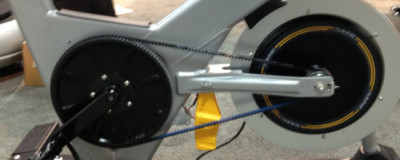
Big drive gear x small driven gear = very fast flywheel RPM
have on their bike. The true importance of resistance comes about due to the existance of a flywheel on an IC Bike.
Most indoor bikes have a weighted wheel (called a flywheel) to provide inertia and simulate the feel of riding a bicycle outdoors. It is important that riders remain in control of the flywheel at all times, particularly at higher RPMs, and not let the flywheel control them. Indoor bikes are designed with a knob, or lever, for controlling the amount of resistance placed on the flywheel which consequently affects how hard a rider will have to work in order to pedal the bike. This resistance can be either mechanical (the traditional friction pad) or it can be magnetic. The primary advantage of magnetic resistance is that it does not wear down over time, so it should provide a more consistent resistance over the life of the IC Bike. It should be noted that even with the last of friction and wear, magnetic resistance should be routinely calibrated due to operation cable stretching and general wear. This can be especially important on IC Bikes where the wattage is calculated (usually using the distance of the magnet from the wheel) rather than measured with a strain gauge.
Generally, I start my riders off at enough resistance to produce 25% to 50% of their bodyweight in pounds in watts (Watts/LB = 0.25) which generally is enough to keep them settle in the saddle and provides a good starting point. Riders should NOT pedal the bike without resistance at any time and should be encouraged to use the appropriate amount of resistance at all speeds and effort levels. Lack of appropriate resistance is the primary cause of “Hip Popping” in riders which is where the hips bounce quickly on the seat as the rpms are increased. There should be at least enough resistance on the bike to keep the hips settled and smooth in the saddle.
Please look for the next section of this series for the continued conversation and some safety specifics.
by Joey Stabile | Jan 5, 2019 | Best Practices, Cycling Fusion, Instructor Training
The overall concern of any fitness professional should be safety. We must always make every effort to provide a safe environment for those taking our classes. Health clubs and fitness studios a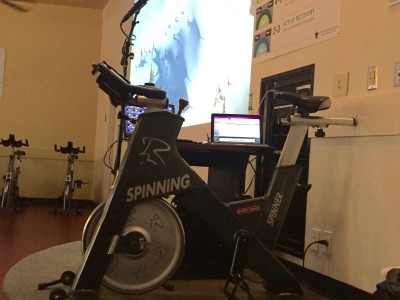 re responsible for providing a safe environment and equipment for their members and staff. As instructors, our responsibility is to ensure that every aspect of our indoor cycling class, from specific training concepts to the use of the bikes, is conducted using safety guidelines.
Currently, there is a vast amount of discussion in the indoor cycling industry over what truly represents safe practices. On one side of the debate is the “Keep it real” faction. Their side of the safety story is that instructors should not do anything on an inside bike that they would not do on their bicycle. They consider anything outside of their limited movements on the indoor bike as dangerous and harmful to the students. This stance always evokes some debate in itself as there are many movements and riding styles that are done on bicycles that certainly even the boldest of instructors would never attempt on an indoor bike. For example, jumping on mountain and bmx bicycles, hopping over potholes or curbs on a road bicycle and many other necessary elements of outdoor riding that should never make their way into the studio. Generally, the rides from this group of instructors focus on a training objective and the music is considered secondary. This group considers themselves the traditional or pure indoor cycling instructors.
The other side of the debate is held by the “Rhythm” indoor cycling instructors. This group seemingly has a most things go approach to indoor cycling and often their rides include the use of small hand weights, quickly cycling jumps (or tap backs) and other non-traditional movements on the indoor bike. They contend that there is no scientific, or medical, evidence that would suggest that the movements they perform on the indoor bike are actually dangerous or cause injury to the students. Generally, the rides from this group of instructors focus on the music and the dancing on the bike and the clear training objective is considered secondary.
We look at this debate from a wider perspective. As a group exercise professional, we believe that your job is to get people off of the couch and entice them to join in an active lifestyle. We like to take the middle road on teaching styles: all rides should contain sound and clear training principles, but we also realize that music is perhaps the most important aspect of the ride construction. While delivering a quality class that gives the rider’s results is important, people with not continue to train with you unless the music is something they like and most importantly fits the work being performed in BPM, emotion and intensity.
Please look for the next section of this series for the continued conversation and some safety specifics.
by Joey Stabile | Jan 4, 2019 | Audio PROfiles, Best Practices, Class Work-Sets, Creativity Indoor Classes, Instructor Training, KEEPING IT FUN, Master Instructor Blog, PRO/Playlists, Training With Power
Welcome to the The Weekly Ride by Cycling Fusion
Welcome to our new era of The Weekly Ride, you get:
- Full Ride PDF
- Apple Music Playlist
- Spotify Playlist
- File to Download the Ride directly into My Fitness DJ (Yes, no Programming)
- The Ride will be available for purchase in the iClass Builder Store (No Programming)
- A Podcast of the ride being delivered by a master instructor.
(more…)
