The Weekly Ride – 04/30/18 Get Springy

The Weekly Ride – 04/30/18 Get Springy

Welcome to the The Weekly Ride by Cycling Fusion

No more hunting for new music or counting out cues to develop your ride profile.  Here is your ready to ride profile for a fully choreographed ride, that can be displayed from your phone, or printed out onto cue cards for your class.  This ride is timed out, down to the second, to make your life as easy as possible!

(more…)

Originally posted 2018-05-09 08:10:21.

Is the Atkins Diet for Endurance Athletes?

Is the Atkins Diet for Endurance Athletes?

Adapted from an article by KIERA CARTER on Sep 4, 2019 in Bicycling.

No matter how you slice it, low-carb is the current diet trend: The keto diet restricts your carb consumption to an almost negligible amount, a gluten-free diet–though not intentionally low-carb–forces you to look closely at your carb intake, and the Paleo diet is lower in carbs due to omitting sugars, grains, and processed foods.

But before any of these carb-conscious eating styles became a “thing”, there was the Atkins diet. Maybe your parents tried it in the 90s or maybe you’re just hearing about it now as it resurges in popularly (about 333,000 Instagram posts now feature the hashtag #atkinsdiet), either way, you should know this: A seriously low-carb diet could affect your performance as an endurance athlete–and not always in a good way. Here’s what to keep in mind before following this–or any–low-carb diet.

What is the Atkins diet?

Cardiologist Robert Atkins, M.D., published his book Dr. Atkins’ Diet Revolution in 1972, arguing that a low-carb diet–not the low-fat, high-carb diet popular at the time–was ideal for weight loss and heart health.

By the 90s, an updated version of the book became a bestseller as people started to question the virtues of eating low-fat-everything. The first version of the diet was essentially the Atkins 20, noted below, but a modern-day Atkins diet falls into three, more flexible categories:

● Atkins 20: Twenty grams of net carbs a day (that’s total carbs minus fiber); ideal for people with over 40 pounds to lose; the first phase is marketed as a ketogenic diet, then you gradually add more carbs over the next three phases.

● Atkins 40: Forty grams of net carbs a day; ideal for people with less than 40 pounds to lose.

● Atkins 100: One-hundred grams of net carbs a day; ideal for people who want to maintain their weight.

Is Atkins the same as keto?

Even though the Atkins diet is gaining more popularity alongside its low-carb cousin, the keto diet, they’re not exactly the same: A keto diet prioritizes fat in order to put your body into a state of ketosis, meaning your body produces ketones for energy, instead of relying on sugar.

That means that the macronutrient percentages of a keto diet are aggressive: about 85 percent fat, 10 percent protein, and 5 percent carbs. The Atkins diet is also low in carbs, but there’s more balance between fat and protein: Even the more aggressive Atkins 20 plan is 20 to 30 percent protein and 60 to 70 percent fat. That’s because the goal isn’t all about creating a ketone-producing state, which requires more fat; the ultimate goal is to limit carbs.

But aren’t carbs important for endurance athletes?

Most experts still say “yep.” Camila Oliveira, a Ph.D. candidate in nutrition and metabolism at the University of Alberta in Canada, notes that several health and nutrition organizations recommend three to five grams of carbs per kilogram of body weight when training lightly or resting, and eight to 12 grams per kilogram when training more than four to five hours a day. That’s a minimum of 204 grams of carbs for a 150-pound person, twice as much as the least aggressive Atkins plan.

What about net carbs versus total carbs?

To be fair, the Atkins diet focuses on net carbs, which is the total carbs minus fiber, and the current recommendations don’t take this into consideration.

But even though fiber is indeed important (and suggests you’re not eating a ton of empty carb-heavy foods loaded with sugar), this concept isn’t as simple as you’d think.

“The amount of nutrients your body absorbs depends on more than just the fiber content,” she says. Other macro and micronutrients, fiber type, food consistency, and the overall health of your digestive tract also play a role. For that reason, she still suggests sticking to the carb recommendations above. “They’re evidence-based and should be safe for most athletes,” she says.

Plus, the average American only eats about 15 grams of fiber a day–and should be eating 25 to 30 grams–so it’s not like we’re talking about subtracting a ton of fiber from your total; you’d still be above the Atkins 100 threshold if you ate 204 grams of carbs, then subtracted 30 grams of fiber.

And unlike Atkins, the above recommendations are based on your body weight, which matters. “The amount of nutrients required to maintain a body of 260 pounds is very different from the amount required to a body of 130 pounds,” Oliveira says.

Are there any athletic advantages to following a low-carb diet?

Some people still love it. Heimowitz notes that Atkins brand ambassador Zach Bitter has found endurance success in the diet: He says a low-carb diet helps him avoid the highs and lows associated with carb-fueling, a common claim among keto dieters. And a Military Medicine study shows that a ketogenic diet promotes weight loss without compromising athletic performance in military personnel. But that study was small, and the overall body of research still suggests sticking to a more carb-friendly diet for endurance performance.

“There’s currently no evidence proving that very low carbohydrate intake improves performance to a greater extent than normal carbohydrate intake,” Oliveira says. She notes a Journal of Physiology study finding that a low-carb, high-fat diet did just the opposite–and says we need more research before recommending a keto or Atkins diet to athletes.

So, should you try an Atkins diet for any other reason, and what should you keep in mind?

“The goal of the Atkins diet is to lose weight, so if your goal is to increase endurance performance, the Atkins diet may not be the most effective approach,” Glassman says.

But the diet may work for you if weight loss is your primary goal, and you try it out during your off-season (there’s a huge difference between training for an endurance event and hopping on the bike at the gym for 30 minutes). “There’s ease and clarity in being told exactly what you can eat while still enjoying a high-fat and high-protein diet,” Glassman says.

And a JAMA Internal Medicine study shows that both a low-carb/protein and a high-carb vegetarian diet can help you lose weight, so you can pick your poison (err, passion?) if dropping pounds is your main goal. Because the truth is, there are multiple ways to lose weight; the key is finding the diet that works for your lifestyle, you can stick to long term, and supports your other hobbies and workouts (say, cycling).

“Unless you have very specific athletic goals, you don’t need to stress about the numbers and grams–just include a mix of carbohydrates and protein,” Glassman says, noting that you still need to be aware of the types of foods you’re eating (i.e. don’t eat butter and steak all day). Otherwise, “experiment to see what feels best for your body.”

Originally posted 2019-09-06 04:29:55.

Have You Pleased Most?

Have You Pleased Most?

This week I have the extraordinary privilege to be working from my balcony in Punta Cana. I have never been to an all inclusive resort before, and it is quite the experience. The grounds are beautiful, you can go to any of the many restaurants or bars on the property, and there always seems to be a smiling face nearby ready to wait on your next need.

Last night we attended an outdoor band that was playing and there were six younger people that were hired by the resort to provide entertainment and get the crowd dancing etc… While all of them were great dancers, the lead young man was simply incredible. His feet were light and fast, and yet somehow thoughtful and deliberate. He was smiling from ear to ear, and seemed to be having as much fun doing his job as we were joining him on the dance floor. As talented at this young man was, one of his gifts seemed to be the ability to dance with a wide range of partners (guests that he would engage) and have them seem comfortable and loose. You could see the transformation in the people in only one minute: they went from thinking “oh, no, I can't dance with him, he is too good” to relaxing and enjoying themselves and then going back to their tables only to return to the dance floor with their spouse or partner.

It really got me thinking about customer service and how that impacts our industry and profession. Yes, being an indoor cycling instructor is, well at least should be, a profession. We have customers (riders) and it is really our job to guide them through this fitness experience that we have (hopefully) spent time and effort creating. In many ways, we should be presenting an image similar to this young man's for not just our riders, but all of those that are in the club or studio.

As with any great performer, his performance moved me, and has me thinking….Am I providing a high quality performance for my riders and most importantly, am I providing that experience to most of my riders or only just a few? As with most instructors, I have a core group of 10 or so people (about a third of the class) that seem to be in all of the classes I teach. They are all cyclists (they ride outdoors) and they work hard, they work very hard. They are inspirational to teach to and certainly in the midst of a very tough set they help to get me to the other side. But what about the other 20 or so people in that room? I am reaching them? Is my class actually fun and enjoyable, or has it become a 60 minute grueling experience?

I have often heard group exercise instructors talk about the class they just delivered and the gist of the conversation always seems to revolve around “killing” the people, or it being the “hardest” class they have had or something similar. Very rarely, if ever, do you I have pleasure of hearing about how they had the entire class pedaling to the beat and enjoying themselves. I am not sure that I myself have ever measured the success of one of my classes by the number of smiles I have seen on the participant's faces; but perhaps I should. Some, well really most, of my riders will never be on a triathlon course, so I should be mindful about training them like they headed there in three weeks.

So I challenge you, take a few moments and think about your next class. Are you providing great customer service? Are you including most of the riders, and not just your hardcore following? Are your riders having fun? As for myself, when I return I plan to taking the time to be sure that I am dancing with all of my customers, not just the cyclists!


Originally posted 2018-04-02 07:00:10.

The Weekly Ride – 06/04/18 Mixed Ride

The Weekly Ride – 06/04/18 Mixed Ride

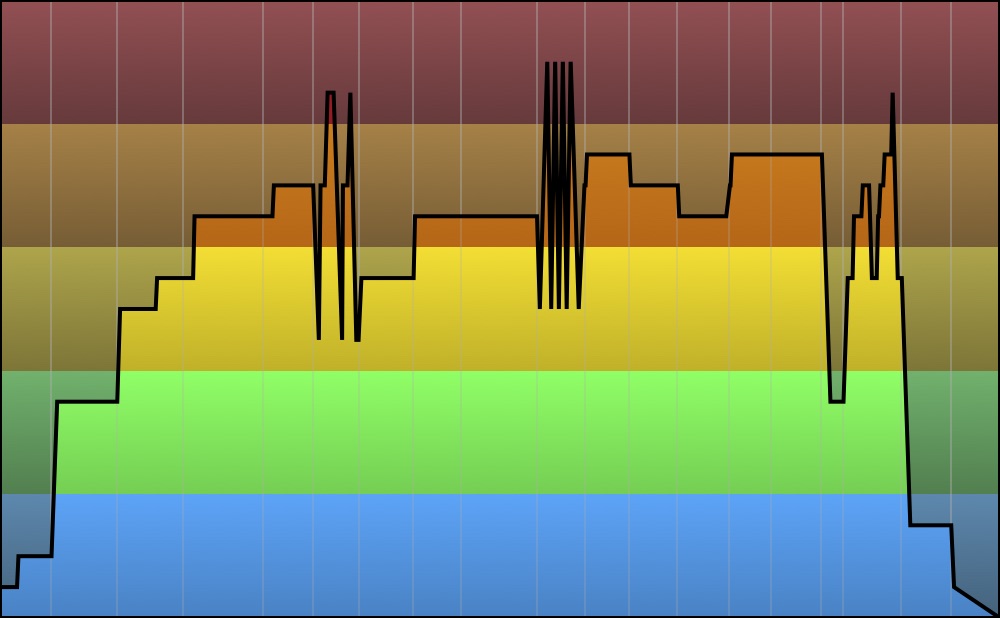
Welcome to the The Weekly Ride by Cycling Fusion

No more hunting for new music or counting out cues to develop your ride profile.  Here is your ready to ride profile for a fully choreographed ride, that can be displayed from your phone, or printed out onto cue cards for your class.  This ride is timed out, down to the second, to make your life as easy as possible!
(more…)

Originally posted 2018-06-12 06:36:07.

The Weekly Ride – 011419 January Ride – Amy Smith

The Weekly Ride – 011419 January Ride – Amy Smith

Welcome to the The Weekly Ride by Cycling Fusion

Welcome to our new era of The Weekly Ride, you get:
  • Full Ride PDF
  • Apple Music Playlist
  • Spotify Playlist
  • File to Download the Ride directly into My Fitness DJ (Yes, no Programming)
  • The Ride will be available for purchase in the iClass Builder Store (No Programming)
  • A Podcast of the ride being delivered by a master instructor.

(more…)

Originally posted 2019-01-26 10:30:41.