Anyone who knew Jim, loved him. He was a very influential part of creation of what all of us recognise as Indoor Cycling today. Jim's knowledge of training was unequaled, as was his wisdom and understanding of what Instructors needed to do, to truly meet the physical and emotional needs and expectations of their participants.
All of us here at ICI/PRO benefitted immensely from Jim's insightful articles and Podcasts. This post of his profoundly changed my perception of my role as an Indoor Cycling Instructor. Three simple concepts that began the slow process of opening my eyes and accepting both the appeal and value of non-traditional forms of Indoor Cycling…
Who am I to decide?
If a workout session has to produce a result, you have a paradigm for unhappiness. Instead, my current approach is to create a training session that allows a person to get whatever he/she needs from the workout without interference on my part.
Just present the opportunity
As an instructor/trainer, my job is to create a situation and an environment in which members can experience the benefits of physical exercise, and nothing more. Which benefits these are will vary with the individual, and it’s important that I never assume what they could or should be.
Then accept their choice without judgement
I offer suggestions but recognize that this is their path. I can't overshadow it with what I think they should do with, or gain from, their training. That’s not my job and would be a misuse of the trainer role.
Shortly before we lost Jim, he wrote Non-Authentic Indoor Cycling. If you haven't read it please take a moment and do so, because it describes his progressive vision for Indoor Cycling and what he felt would be our roles as Fitness Professionals.
If non-authentic IC is going to make a mark, why not embrace it for what it is — a way to train on the bike that makes (some) people fit and happy?
…
Why shouldn’t any and every indoor cycling program be taught by those who are truly qualified to teach indoor cycling? That would be the likes of us. We know indoor cycling best. We could create a program — inauthentic fluff, if you will — that’s still authentic in its safety, structure and cardiovascular benefit. Why not?
Interested in being part of a group of Instructors who believe like Jim did?
As promised, here's Krista Leopold's Indoor Cycling Class Profile; Beat Down!
Training Type: LT Intervals
Working HR Zones: 4
Total Class Length: 55 min
Objective and Intensity
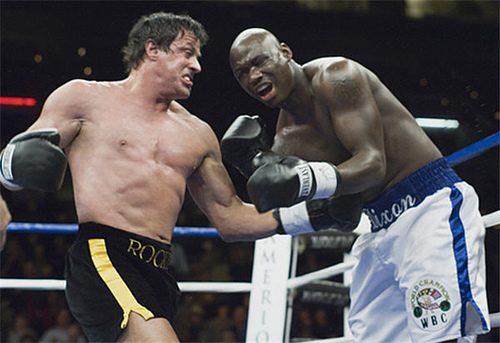
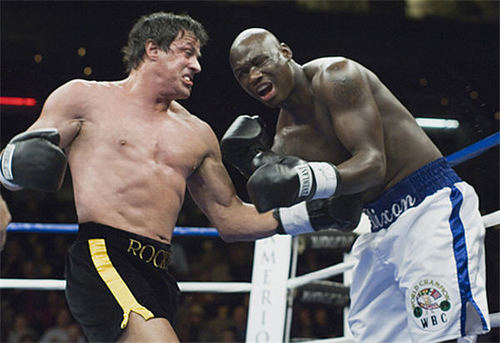
After recently being inspired by a boxing match I watched at the nail salon of all places, I decided to try to bring my riders into the ring for a full class. This ride is shaped by the structure of a boxing match. In professional boxing, boxers typically spar for 9-12 rounds of 3 minutes each with 1 minute in between each round. For our time constraints, we are going to fight for 10 rounds. Each round, we’ll use a different movement. Most of the rounds will be one movement sustained. In a couple of places, we’ll change it up.
For each round, we are going to work as close to LT as we can with opportunities to go higher than that sprinkled in. The challenge is to find that balance of intensity and restraint which will allow them to last a total of thirty working minutes. The average participant can sustain LT for 20 minutes. Since we’ll have short rest periods every 3 minutes, the ride presents an opportunity to push your limits while still being able to recover.
You can download Krista's trimmed to exact length and then fully mixed class playlist[wlm_private ‘PRO-Platinum|PRO-Monthly|PRO-Gratis|PRO-Seasonal|Platinum-trial|Monthly-trial|PRO-Military|30-Days-of-PRO|90 Day PRO|Stages-Instructor|Schwinn-Instructor|Instructor-Bonus|28 Day Challenge'] here – Right click > Save As.
As today marks the start of the Indoor Cycling season, I felt it would be helpful to you to explore the concept of Winter Training with a real expert on the subject, Gene Nacey from Cycling Fusion.
Gene has been offering a comprehensive Winter Training program for cyclists at his club in Pittsburgh for four years. Listen in as we discuss why offering a multi-week program could help you build your class numbers, increase retention and potentially add additional profitability to your club or studio this winter. Not to mention delivering some very fit cyclists to their outdoor season next spring 🙂
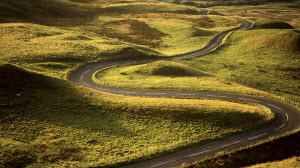
The road isn't segmented into definable sections… it flows along as one continuous, undulating strip of asphalt. Your cyclists may appreciate your class more if it flows like the road they ride. Here's why & how…
Common practice for many of us is to construct a class profile out of a playlist of songs:
Warmup songs followed by
Songs that communicate Flats
Songs the communicate Climbs
Interval songs
Recovery songs
Cooldown songs
etc…
The end of each song signals a transition. We'll use that brief change to cue the next segment “now we're going up!” or “nice flat road ahead” or something similar. A gap follows the end of each track – before a new section of road begins.
But the road really doesn't work that way, especially when it comes to random rollers or out-right climbs. Everything is connected. Flats flow into climbs, the downhills back to flats and the flats are broken up by rollers. Your; speed, heart rate, power and even your ability to recover once over the summit, was determined long before you needed to shift down with the increase in grade.
I wish I was wearing a recording Heart Rate monitor this past Tuesday night, because a graph that showed the 2 1/2 hours of my HR would have told the tale much better than I can describe here in words.
Everything on the road is connected… there are few, if any, gaps… I'm realizing now that I had been training my class (and myself) like there were.
It was the first Tuesday night Life Time Fitness outdoor group ride. Me and my very fast VeloVie Vitesse showed up with a just a little bit of anxiety. “Which group are you riding with, John… the “B's” or will you being going out with the “A” group?” Great question and at that point I hadn't really decided. Of the 40 or so riders in attendance, I recognised almost everyone as either other Instructors or past participants. Maybe it was just me, but I got the sense that some of my regulars were watching to see what I was going to do.
These are well organized rides, with designated “Ride Leaders” who are paid LTF employees. After a brief welcome and introduction of the A, B and C leaders it was time to roll out. “A' group goes first. “Riding with us John?” Of course I was. My pride and ego didn't leave me with any other choice 🙁
The LTF “A” group has a well deserved reputation as an ego driven, hammer fest. Even though this was night #1 you wouldn't have known it. They start out fast and only get faster. The first 30 minutes are spent working our way out of town, to some very nice rural country roads. Here's where the fun begins and the reality of how everything on the road is connected came front & center to me.
If I can slot in tight behind a big guy, hanging with a paceline @ 26mph is a near threshold, continuous effort. Challenging, but doable. CoRd 6, as it winds west of the cities, flows through a series of rollers. Each change in grade required a substantial increase in power to maintain my sheltered place in the group.
The downhills that follow aren't for recovery. Nope. They're for building back your average speed. Well that's my theory anyway because once I crossed each summit I was forced to shift up to keep with the acceleration that followed each short climb.
I found myself trying to do two things at once (well three if you count staying focussed on my chosen wheel);
Fight to recover from the previous effort…
While mentally preparing for would come next
I've described this as “recovering on the run” to my class. How your group doesn't slow/stop at the top of a climb to give you a chance to rest. They keep going. If you're committed to stay with them, you need to accept whatever reduction in effort you're offered and use it to recover as best you can. Over time, with a slight reduction on power output, your HR will come down. You just need to wait for it – or slip off the back and soft pedal until the “B” group catches you.
I told this story to my class this morning. How out on the road everything is connected. There are no “gaps” between segments. Only small changes in effort. And while I talked about my ride… we rode a class without gaps. Flats flowed into rollers and we accelerated down the back. Slight reductions in effort on the flats, followed by more of the same.
I know that whenever I'm feeling the need to get more creative, I'll attend someone else's cycling class. Typically Amy's Saturday morning Evolution class at Fife Time. Not having to focus on delivering the class myself, after about 15 minutes I tend to zone-out and new ideas just start coming to me. I know I'm not the only person who experiences this – actually I feel it's pretty common amongst endurance athletes.
I describe pedaling along, blissfully oblivious to what's happening around you (inside or outdoors) as JRA – Just Riding Along. You might call it being in a state of Zen, or in-the-zone or your “happy place”. If you've ever felt you were in a place where time seems to both stand still and fly by, you know what I'm talking about.
Last year I talked about how you, as the Instructor, can distract your participants who are enjoying their time JRA by calling out the equivalent of SQUIRREL.
It turns out that there's a bunch of neuroscience that goes on while we are aerobic. You'll learn a lot about the science of what's happening to your brain during exercise from this video that feature neuroscientist/group fitness instructor Dr. Wendy Suzuki.
Creativity Indoor Cycling?
So if our riders are already benefiting from the mental/creative stimulation that comes from participating our our classes, why not promote this benefit? Better yet, why not structure classes to actually enhance the experience?
The long, steady efforts are magical in their ability to bring on JRA 🙂 If you really want people to zone out and get into their own heads, this 15 minute track from the ZENDURANCE profile is nearly guaranteed to do the trick.
Next I'm thinking I would create a slideshow of random images of interesting geometric shapes and colors. Maybe cool architecture, bridges & buildings, flowers & plants, etc… I don't think I'd include pictures of people or animals that could trigger emotional responses – that's at least my initial idea.
The important part would be that riders wouldn't need to maintain their attention, like you do when you're watching a video. Maybe instead of class > Keeping it Fun, you offer > Keeping it Interesting?
Cuing would be the real challenge. Maybe you don't cue anything beyond the introduction. Or, you might offer a word problem or show a series of brain exercises from Lumosity.com or other online resourse with each song changes.
What ever you come up with, it will be important to properly identify the class format and include its description on your class schedule.
Brainstorming sessions?
Your Creativity Indoor Classes could potentially have value to a local company looking to solve a problem or develop a new product. Bring in a big white board and then team up with a moderator who writes down all the new ideas, while you guide the class. The possibilities are endless and structured properly, could be a very profitable class you could offer.