UPDATED 9/14 – We are no longer recommending the company involved in this podcast. When we renewed this month we were told we could no longer add an “additional insured” to Amy's policy unless we paid an extra $155.00. This is totally ridiculous in our eyes and we have gone back to Markel Insurance for Amy's liability insurance.
Indoor Cycling is experiencing a boom, with new bouquet studios popping up pretty much everywhere. This is great because all these new studios = more places for us to teach. But there's a small catch. Many of these new studios hire Fitness Instructors as independent contractors, not as true employees, but it shouldn't scare you away from teaching there.
There are multiple advantages for teaching as a self-employed contractor (you may be able to expense your fitness clothes and mileage) and a few disadvantages. The biggest being there's a very good chance the studio's general liability insurance won't protect you if someone gets hurt and sues you personally for millions of dollars 🙁
Professional Liability Insurance is designed to protect Instructors (you) and your family's financial assets, in the event that you're sued by a client. Many fitness businesses require contractors to have their own policy.
In a previous post; Low Cost Fitness Instructor Professional Liability Insurance I explain where I found a great deal (saved us $58.00) on an annual policy for Amy. I contacted the company for someone to interview and they provided Coleen Kelly, their Vice President Program Management for Aon Affinity and HPSO — Healthcare Providers Service Organization where we purchased Amy's insurance. This is no longer the case 🙁
Listen to my interview below (sound quality is low as we couldn't use Skype) and if you have additional questions you can call HPSO's info line 1.800.982.9491
Here's a great opportunity for Indoor Cycling Instructors and Studio Owners to attract and serve a new demographic of riders – active seniors!
With over 12 MILLION members and 13,000 locations, SilverSneakers is a kind of quiet giant in the fitness industry. Participating senior citizens, across America, can take advantage of free access to health clubs and wellness centers that's paid through their health insurance.
The SilverSneakers FLEX program is designed for individual Fitness Instructors wanting to offer classes and activities at non-traditional locations. I've never stopped to ask, but I'll bet the large group of seniors we pass exercising in a local park on our Sunday AM bike ride is a FLEX class.
FLEX could be the perfect way to add some additional classes to your studio's schedule. Our FLEX approved Parkinson's Cycling classes are best conducted between 10:00 and noon. Seniors tend to eat dinner early (join us for the 4:30 blue plate special) so they might be open to a Senior Cycling class around 3:00pm.
FLEX Instructors are paid directly by SilverSneakers, so there's no cost to the participants. You can learn more by listening to this interview with Stephanie Wong – the Vice President, Field Operations for SilverSneakers' parent company Healthways, Inc. You can email her with questions; stephanie.wong@healthways.com
SilverSneakers is an industry-leading fitness program for older adults. It is delivered through a nationwide network of participating fitness locations such as YMCAs, Curves®, gyms, wellness centers and other facilities.
Our qualified SilverSneakers instructors will have the training and skills necessary to meet the needs of a rapidly growing population that values high-quality, personalized service.
Interested in finding out about our new FLEX instructor program? Click Here to download the program brochure.
Interested in becoming a SilverSneakers instructor? Click Here for more information.
I've been doing some consulting with potential cycling studio start-ups and a common question has been; should I consider leasing vs. conventional financing / paying cash?
My feeling is (to use the expression) Cash Is King for any small fitness business. If you listen to any of the past interviews (you'll find them here) I've done with Indoor Cycling Studio Owners, there are two common themes that keep coming up:
Studio build out and equipment costs are always considerably more than what's initially forecast in the business plan.
The business's cash flow doesn't ramp up as quickly as forecast.
Does it make sense to lease your Indoor Cycles… and possibly some of your other upfront hard costs like the audio/AV system, computers, technology PIQ/Spivi and possibly your studio's website? Saving your available cash or line of credit to carry you through a slow start (or surprise expense) maybe a good strategy. But it's a rather complex question to just offer a simple answer.
So I've found a fitness equipment leasing expert and I have an interview scheduled with him for this Tuesday Nov 4th. I met Joe Schmitz from F.I.T. Leasing at the past IDEA fitness conference and felt very comfortable talking with him. He's been in the equipment leasing business for a long time and he's agreed to help me explore the ins and outs of leasing.
When does leasing make sense for a new studio – or an existing studio looking to upgrade to new equipment?
When doesn't it?
Should I lease my indoor cycles directly from the manufacturer?
What other costs can be included, besides new Indoor Cycles?
What is the approval process?
Is it more difficult to get approved for a lease vs. a bank or SBA loan?
What documentation will you need?
Is there anything you want to do, or prepare for, in advance of needing your lease funds?
What happens at the end of the lease?
Explain any tax benefits of leasing vs. conventional financing or paying cash
Do you have specific questions you would like me to ask Joe? Let us know by Tuesday Nov 4th 10:00 central.
This interview will be published by Friday next week.
Please use the contact form below to explain your questions with as much detail as possible. Also include additional methods of contacting you if you'd like a personal response.
My friend Sally Edward is looking for a National Club Sales Manager. Her HEARTZONES Display Training system is becoming very popular – they're closing in on 400 schools using the Heart Zones System.
The Heart Zones products and services target a wide spectrum of end users, from competitive athletes to everyday health-seekers. Heart Zones’ offerings will help people seeking weight loss, renewed levels of energy, sports performance, and emotional fitness results. In the last two years, Heart Zones has transformed itself into a fitness technology company with wearable technologies coupled with its patented training methodology to create its first hero product, the Heart Zones System. The Heart Zones System is a group fitness technology designed to motivate users to get fit using wearable sensors, real-time data feedback, and custom reporting and assessment to tailor programs specifically to the needs of each individual.
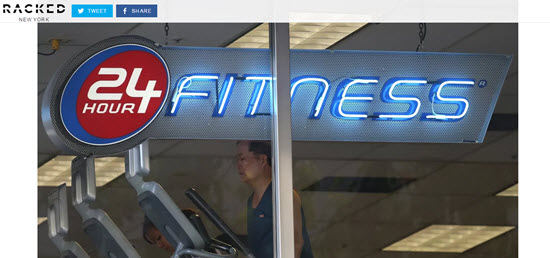
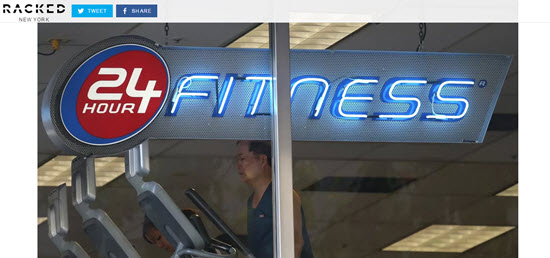
Interesting article from RACKED.com that is promoting the virtue of Big Box fitness clubs – while recognizing how the boutique studios have been getting all the press and recognition over the past few years.
Do Classes at Regular Gyms Hold Up Against Boutique Fitness?
If you own your own spin shoes, are constantly laundering leggings, and have downloaded the Mindbody app to your iPhone, odds are you're in deep with fancy fitness – and have the scary credit card bills to prove it. Boutique exercise is eating our budgets alive like bottles of wine at mid-week dinners used to (before socializing and sweating came hand-in-hand), and it's crazy how it got away from us so easily.
Those who aren't math-inclined might view the all-inclusive Classpass buffet and studio bulk-class deals as a free-for-all, but the truth is that it's costing you $1,500 a year at the very least. And that's without the occasional full-priced SoulCycle class and unavoidable last-minute cancellation fees.
But what if we told you there was a glorious place that had enough classes to keep your newly athletic heart content, not to mention showers aplenty, shiny equipment, and towels free of charge? It's the place you left in the cold the second spin studios started popping up on every corner –€” your good ol' neighborhood gym. So, we asked ourselves a newfangled question: Are we all out of our minds for spending this much money to take these fitness classes when we could have them for so much less?
Like the random Pilates mat class you went to near your office and hated, not all New York gyms are created equal, so we dove in first-hand to see if we're all fooling ourselves with the studio experience, and whether hitting the same gym classes on the regular – more than the three times Classpass would let you –€” could get you just as fit (and having just as much fun) as all our beloved bourgeois boutique spots.
While visiting four of New York's biggest power players, we learned a lot. Generally speaking, gym classes feel short compared to boutique fitness, and we've been battling for a spot in class sign-ups or in the second row with more vigor than necessary. Gyms have less competitive crowds and have embraced advanced sign-ups, too – even holding spots for spontaneous members who stroll in minutes before the start time. Trading in the complimentary rose water face cleanser for padlocks and crowds of people wasn't easy, though. Fingers crossed that we can hopefully save you from sweating your account balance instead of your workout in 2016.
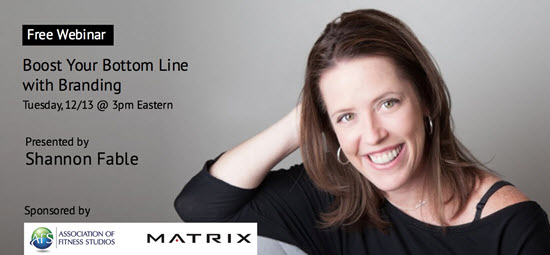
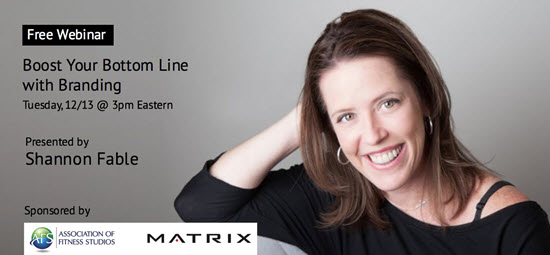
Shannon Fable, 2013 IDEA and 2006 ACE Instructor of the Year, will show you the three key components to distinguishing your studio/gym in a noisy fitness world. Walk away with several activities to further clarify your brand and boost your bottom line with minimal effort.
What you'll learn:
What is a brand & why you need to more sharply define yours!
How clearly identifying your ideal client and target market can enhance your promotion efforts
Why defining the #1 result you provide is important (and harder than it looks)
Strategies for standing out in a noisy fitness landscape.
Simple steps for creating a compelling brand that leads people to your door
It's today at 3:00 est
Signup here even if you can't attend the live event – you'll get access to the recording you can view when it convenient.