
by Joan Kent | Jun 15, 2015 | Engage Your Students, Health and Wellness

The current nutrition buzz is that sugar’s bad news. It is.
The fact that admitting this is considered a new direction by nutritionists, dietitians and the public shows how off-base the nutrition field was for such a long time. It even makes the nutrition field appear ridiculous.
At least, to me. I’ve been blasting sugar for 20+ years, at times getting blasted back for doing it.
But it’s worth tracking the events, so we can blame the culprits who deserve it….
Once Upon a Time, Sugar Was Bad
In science journals in the 1970s, sugar’s negative health effects were getting lots of attention. Films were available — some very good. A popular book was written on problems of sugar consumption: Sugar Blues, by William Dufty.
Interestingly, Sugar Blues was written before much (if anything) was known about the brain chemicals triggered by sugar. And way before any connection was made between sugar and appetite, cravings, health, moods, and more.
It wasn’t till 1975 that endorphin (beta-endorphin) was “discovered.” So the 1974 book was a little ahead of its time. And yet it was timely because scientists were researching sugar.
That wasn’t good news for the sugar industry. And the sugar industry is a powerful lobby in Washington, D.C.
If you don’t think food industry lobbyists influence the government, an eye-opening book is Food Politics by Marion Nestle. She describes the laborious, frustrating process of developing the original Food Guide Pyramid.[wlm_private ‘PRO-Platinum|PRO-Monthly|PRO-Gratis|PRO-Seasonal|Platinum-trial|Monthly-trial|PRO-Military|30-Days-of-PRO|90 Day PRO|Stages-Instructor|Schwinn-Instructor|Instructor-Bonus|28 Day Challenge']
Nestle was working for the USDA and visited daily by beef and dairy industry reps. Their complaints — and the pressure they applied — were significant factors in the Food Guide Pyramid, released in 1991.
Those complaints made the original Pyramid vague and confusing for consumers in several ways. Years later, it had to be revised for clarification. (That’s a side issue, but stay with me.)
The take-home point is that the food industries are the real constituents of the USDA. We, the consumers, are not. Our health is of far less concern to that government agency than placating its constituents.
Which brings us back to sugar in the late 1970s.
The sugar industry didn’t care for the scientific emphasis on the health problems linked with sugar and began working its evil.
Sugar Devil Spins Fat As the Enemy
By 1984, fats had been designated the new Dietary Demon.
From that point until the late 1990s — and beyond — we suffered through the low-fat craze. And a craze it was, although it was disguised as the Right Way To Eat.
Some people still believe it! They even cite Ancel Keys, whose work has since been debunked by several sources.
During that time, several things happened — none good, except for the sugar industry.
First, scientists turned away from sugar and began looking at fats.
They investigated health problems linked with high-fat diets, saturated fats, red meats, cheeses, and other “bad fats.” New scientific findings emerged and found their way into mainstream media.
In 1995, an entire supplement of the American Journal of Clinical Nutrition (AJCN) published the papers from a conference on dietary sugar.
The presenters were hand-selected from researchers whose names I immediately recognized. They consistently found that sugar had no negative consequences on health, weight, or even cavities.
Do I have to tell you that funding for these scientists come from makers of sugary food products?
Here’s the take-away: After the conference, all companies attending (General Mills, Kraft, and other big sugar-users you know) could “legitimately” claim that their reps had attended a scientific conference — where it was conclusively shown that sugar is not bad for any reason whatsoever.
Also during the low-fat craze, the food industry developed low-fat and nonfat versions of their products. Conveniently for the sugar industry — and not coincidentally — the products used sugar to replace the flavor lost when fat was removed.
One example? Cream cheese. The full-fat product contains no sugar, but the nonfat version did and does. A line of low-fat frozen foods — ironically named Healthy Choice — added sugar to every product, including soup. Other companies followed.
Product developers even created artificial fats. Remember Olean and Olestra? (How about the side effects, such as anal leakage? Perhaps that’s a story for a different post.)
With all of these low- and nonfat foods available, dietary fat fell far below the original recommendation of 30%.
That 30% had been endorsed by the American Heart Association and the American Cancer Society — until the low-fat craze hit us.
My clinical observation was that protein intake fell, too, especially among women. Protein contains fat — sometimes a lot — so women who were concerned with weight loss just let that go. They started eating carbs, and lots of them.[/wlm_private]
Part 2 is about how we became a nation of sugar junkies and what happened when fitness professionals finally saw the light.
by Joan Kent | Jun 1, 2015 | Engage Your Students, Health and Wellness

Recently, a client who very seldom gets sick and who is typically quite vigilant about her nutrition told me she got a respiratory infection. This brief post describes what she learned from not sticking with her nutrition guidelines and is meant to be a caution for anyone who finds value in it.
Apparently, while the client was feeling quite under the weather, she simply stopped paying attention to her usual, healthful diet. One evening, after a day of less attentive eating — nothing actually junky — she noticed that she felt, in her words, “absolutely terrible.” She assumed that her health had taken a turn for the worse, until she reflected on how her “food day” had gone.
Throughout that day, she had eaten almost no protein and lots of starchy carbs. It was then that she remembered how insulin-triggering carbs affect inflammation: they trigger series 2 prostaglandins.
What Are Prostaglandins?
As outlined in a previous post, prostaglandins are short-lived, hormone-like chemicals. They’re released by cells and travel through the interstitial fluid to neighboring target cells. Prostaglandins regulate many cellular functions and come in 3 types. All types are derived from foods (specific fatty acids), and depend on enzymes for their formation.
What Insulin Does
Insulin changes the enzymes that act on the fats we eat. When we eat high quantities of insulin-triggering foods (usually carbs) — or when we eat insulin-triggering carbs by themselves — the enzymes shift in the direction that brings on series 2 prostaglandin formation.
Type 2 prostaglandins promote pain and inflammation, while types 1 and 3 work in the opposite direction and can reduce both pain and inflammation.
We Can Fix Things With Food
Fortunately, the client was pro-active enough to go back to her usual diet of mostly vegetables, along with protein and moderate quantities of complex carbs and healthful fats. She started noticing that she felt better within several hours.
This advice could fit right in with the “No Days Off” message from several months ago. Mainly, I hope it serves as a helpful message for your students, if they ever get sick.
by Joan Kent | May 26, 2015 | Engage Your Students, Health and Wellness, Master Instructor Blog
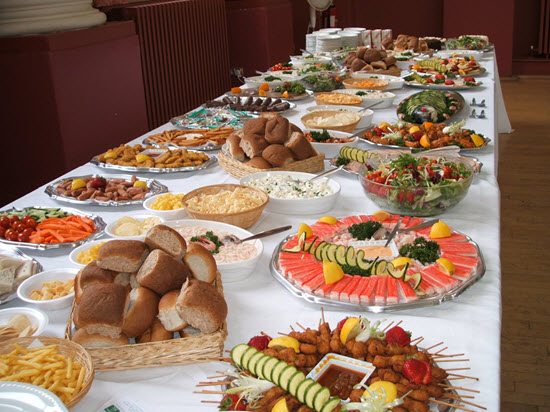
As a nutritionist, I find that my food is under scrutiny all the time. Recently, I attended a weeklong seminar that had nothing to do with nutrition, but my food was still scrutinized.
Every morning started with a different fitness activity. Afterward, the instructor gave us breakfast guidelines, recommending that we eat just fruit “because it’s easy to digest.”
I know better than to start my day with a plate of sugar, so I went to the buffet and put together a meal that was appropriate for me.
Because this will be relevant in a moment, here was my breakfast:[wlm_private ‘PRO-Platinum|PRO-Monthly|PRO-Gratis|PRO-Seasonal|Platinum-trial|Monthly-trial|PRO-Military|30-Days-of-PRO|90 Day PRO|Stages-Instructor|Schwinn-Instructor|Instructor-Bonus|28 Day Challenge'] spinach, walnuts and a poached egg. The buffet didn’t have poached eggs alone; they were part of the eggs Benedict. But I simply eat around unwanted foods, so I ate the egg and left the English muffin and Canadian bacon on my plate. No sauce.
A woman in the seminar walked over to my table and said I wasn’t complying with the fitness instructor’s guidelines. She pointed her finger at each item on my plate, one at a time, and criticized it. This happened while I was still eating my meal.
If you’re thinking it was inappropriate for her to do that, I agree. Perhaps to my discredit, I objected to her behavior, and explained my objection to the fitness instructor’s guidelines to start the day with sugar.
What can we take from this? (Other than not to criticize other people’s food while they’re eating!)
– Know your nutrition needs. These may be different from your likes. Know what you need to thrive and feel good. Seek out those foods, no matter what.
– Don’t let other people’s guidelines steer you away from the foods you know are best for you. The myth that fruit is healthful persists. Many people still have no idea that fructose — the sugar in fruit — is arguably the most unhealthful sugar. Stay with what works for you, no matter what.
– Navigate a buffet carefully to find what you need, especially vegetables. I found the spinach for my breakfast at the omelet station. Diced tomatoes and mushrooms were also there. If there are no salads, a burrito station can provide lettuce, tomatoes, peppers and more. You get the idea. Find vegetables, no matter what.
– Know how to find what you need on a restaurant menu. Friends laugh at me because my meals “always look the same.” They do: protein, vegetables, complex starch, healthful fat. Do I care if my friends laugh? Absolutely not. I just want the meal I want — and have learned to create it, no matter what.
For example, I’ve ordered two salads for my main course when the menu offered nothing better. In the south, I’ve ordered fried chicken and scraped off the breading with my fork. Keep your needs in mind and forget the rest — including the House Specialty! It’s frequently a high-fat, sauce-laden extravaganza that might make you feel ill afterward.
– Pay attention to how you feel after a meal — both good and bad. If everyone else felt good after a meal but you didn’t, that food wasn’t for you. If you felt great, try to duplicate that meal as closely as possible at other times and places.
– Remember your protein needs above all. Keep it as lean as possible. The fitness instructor told us protein is overrated — but he knew nothing about foods and brain chemistry.
If you’re a sugar addict who’s trying to stay away from sugar, protein is key. It will help you survive and thrive as you give up sugar. If you need to carry envelopes of protein powder with you, do it. I’ve done that many times. Get your protein, no matter what.
– Don’t worry about the opinions of others. You deserve to eat right and feel good. No matter what![/wlm_private]
by John | May 15, 2015 | Engage Your Students, Health and Wellness, KEEPING IT FUN

Just this week I posted about how talking in class can prevent weight loss. Now there's a new study from Kent State that identifies texting as a detriment to burning calories during exercise.
Texting during exercise could prevent weight loss: Study
Kent State University researchers Jacob Barkley, Ph.D., and Andrew Lepp, Ph.D., as well as Kent State alumni Michael Rebold, Ph.D., and Gabe Sanders, Ph.D., assessed how common smartphone uses — texting and talking — interfere with treadmill exercise.
The researchers, from Kent State’s College of Education, Health and Human Services, found that when individuals use their smartphones during exercise for texting or talking, it causes a reduction in exercise intensity.
“Exercising at a lower intensity has been found to reduce the health benefits of exercise and fitness improvements over time,” Barkley said.
The results of the study and the widespread use of smartphones during exercise help explain the results of a previous study conducted at Kent State by the same researchers, which found a negative relationship between smartphone use and cardiorespiratory fitness.
“These findings are important because poor cardiorespiratory fitness is associated with an increased prevalence of cardiovascular disease risk factors, such as higher cholesterol and blood pressure levels, which could potentially lead to premature mortality,” said Rebold, who worked on the study while at Kent State and now serves as an assistant professor of exercise science at Bloomsburg University of Pennsylvania.
Of course you already knew this – nice to know it's supported by science.

by John | May 14, 2015 | Best Practices, Engage Your Students, Health and Wellness, Instructor Tips and Tricks, Instructor Training, KEEPING IT FUN

You need to exhale all those fat calories away! Image credit www.wikihow.com/
I'm constantly on the hunt for clever ways to encourage my class to focus (a polite way of saying SHUT UP) and work hard. Over the years my best success has come from equating the work we're doing to weight loss. After all, interest in burning calories is universal – doesn't matter who it is (cyclist, club athlete, new mother, etc..) everyone in my class is interested in either reducing or maintaining their body fat percentage.
I've learned a new one today and can't wait to give it a try:
OK – you two talking in the back. Do you realise you're preventing fat from escaping your body?
It might sound crazy, but it's true. Science has shown that when you burn body fat, after giving up it's energy, fat is converted to CO2 (carbon dioxide) and H2O (Water) and leaves your body when you exhale.
We talk a lot about dieting and burning off fat, but we actually have a lot of misconceptions about weight loss. Some people think fat is converted into energy or heat–a violation of the law of conservation of mass–while others think that the fat is somehow excreted or even converted to muscle. I was told early on that you can never lose your fat cells (adipose) once you gain them…they just shrink if you work it off.
Well, according to Andrew Brown from the University of New South Wales and Australian TV personality (slash former physicist) Ruben Meerman, when you lose weight, you exhale your fat. Their new calculations, based on existing knowledge about biochemistry, were published in the British Medical Journal this week.
A little research on the subject lead me to this excellent video from ABC.net.AU that describes the process of converting Fat to energy in a way that you'll be able to share with your class.
So I might be taking some technical liberties here, by saying that talking is preventing fat calories from escaping. I'm willing to distort the science a little if it gets the larger point across… which is:
If you're talking you're not working as hard as you should and not burning the calories you could!
There's no disputing that science!
Podcast: Play in new window | Download

by Joan Kent | May 11, 2015 | Engage Your Students, Health and Wellness

Image credit jokeroo.com
Sleep difficulties can take several different forms. Let’s look at one.
If you have trouble falling asleep at night, one easy solution is to eat a small portion of carbohydrate, preferably starch, about an hour or so before bed. Starch examples include quinoa, potato, rice, sweet potato, pumpkin, oats, even pasta.
What Starches Do[wlm_private ‘PRO-Platinum|PRO-Monthly|PRO-Gratis|PRO-Seasonal|Platinum-trial|Monthly-trial|PRO-Military|30-Days-of-PRO|90 Day PRO|Stages-Instructor|Schwinn-Instructor|Instructor-Bonus|28 Day Challenge']
Starches stimulate insulin, and insulin allows a specific amino acid (tryptophan) to reach the brain. When tryptophan reaches the brain, it’s used to make serotonin.
Serotonin relaxes us and allows us to fall asleep. It’s also converted to melatonin, the sleep hormone. Melatonin has the additional benefit of anti-inflammatory action, which is one reason sleep is so good for us.
When Starch Doesn’t Work, Add Turkey
If you try starch and still can’t fall asleep, another suggestion is to start your pre-bed food ritual with a little bit of turkey, which contains a relatively high amount of tryptophan. Eating carb together with turkey will have the same effect that you may have experienced after a Thanksgiving dinner — feeling sleepy after the meal.
Although turkey is usually blamed for that sleepiness, the tryptophan wouldn’t reach the brain readily if we didn’t eat carbs with it. Several larger and more abundant amino acids compete with tryptophan for brain entry. In effect, they block tryptophan and prevent it from reaching the brain.
Those competing amino acids are used to form dopamine and norepinephrine, which make us alert.
How Carbs Help
When carbs trigger insulin release, the insulin transports amino acids throughout the body. They can then be used for the various functions that aminos are used for: formation of antibodies, hormones, receptor sites, enzymes, and more.
At that point, tryptophan — smaller in size and less plentiful — can reach the brain. It can then be converted to serotonin.
Why Starches? Why Not Sugar?
Some people tend to crave sugar before bed, but eating it can backfire for a couple of reasons.
Sugar triggers the release of endorphins and dopamine. As mentioned above, dopamine is a brain alertness chemical, so it could wake us up, rather than allowing us to fall asleep. Some people are more sensitive to the dopamine effect of sugar and might find themselves “wired” after eating sugar.
Starches, in contrast, tend to produce relaxation without that wired feeling.
Another Problem With Sugar
Another way sugar can backfire has to do with glucose. This could wake us up in the middle of the night.
Sugar tends to trigger high insulin secretion. That effect is much more pronounced in some people than in others. (Those people are called “carbohydrate sensitive”, but don’t be confused by the name. We’re still talking about sugar before bed, rather than starch.)
In someone who is sensitive to sugar in this way, the extra insulin might cause glucose levels to drop very low. It might seem as if the low glucose would make someone so tired that they’d stay asleep all night and even having trouble waking in the morning.
Instead, the drop in glucose tends to cause us to wake up in the middle of the night and have difficulty going back asleep, even if we feel tired.
So starch again seems to be a better solution.
Bottom line
Eat protein throughout the day, and eat less protein with your dinner. Eat a small portion of starch about an hour or so before bedtime. Add turkey if it doesn’t work. Avoid late-night sugar.[/wlm_private]
————————————————————————————-
Note from John: Last Thursday a participant asked me; “John, where do you find all of these helpful tidbits about eating? I'm a sugar addict like you (I share my own personal struggles with my class) and appreciate your helpful reminders.” I responded by telling her that Dr. Joan Kent, our resident nutritionist at my website ICI/PRO, publishes these weekly. I simply copy down a few notes or print the article and share the info during recoveries.
